
BuddhistCatholicContemplativeEvangelicalGeneral ChristianHinduJewishLatter-day SaintMuslimNew VisionsProgressive Christian
Beliefs
- Buddhist
- Catholic
- Contemplative
- Evangelical
- General Christian
- Hindu
- Jewish
- Latter-day Saint
- More Voices
- Muslim
- New Visions
- Pagan
- Progressive Christian
Topics
- Religion News
- Food and Religion
- Sports and Religion
- Religious Art
- Religious Music and Entertainment
- Religious Events
- History and Religion
- Style and Religion
- Politics and Religion
- Women in Religion
- Recreation Outdoors and Religion
- Business Finance and Religion
- Careers Workplace and Religion
- Education and Religion
- Family Parenting and Religion
- Health Fitness and Religion
- Home and Religion
- Relationships and Religion
- Technology and Religion
- Travel and Religion
Columnists
- Buddhist Columnists
- Business Finance and Religion Columnists
- Careers Workplace and Religion Columnists
- Catholic Columnists
- Contemplative Columnists
- Education and Religion Columnists
- Evangelists Columnists
- Family Parenting and Religion Columnists
- General Christian Columnists
- Health Fitness and Religion Columnists
- Hindu Columnists
- History and Religion Columnists
- Home and Religion Columnists
- Jewish Columnists
- More Voices Columnists
- Latter Day Columnists
- Muslim Columnists
- New Visions Columnists
- Nonreligious Columnists
- Pagan Columnists
- Politics and Religion Columnists
- Progressive Columnists
- Recreation Outdoors and Religion Columnists
- Relationships and Religion Columnists
- Religion News Columnists
- Religious Art Columnists
- Religious Events Columnists
- Religious Music and Entertainment Columnists
- Sports and Religion Columnists
- Style and Religion Columnists
- Technology and Religion Columnists
- Travel and Religion Columnists
- Women in Religion Columnists
Resource Library
- 2026 Calendar
- Library of World Religions
- The 100 Most Holy Places on Earth
- Patheos Answers
- Podcasts
- Videos
- Faith Leaders Database
- Anglican Episcopalian
- Bahai
- Baptist
- Buddhism
- Christianity
- Confucianism
- Eastern Orthodoxy
- Hinduism
- Holiness and Pentecostal
- ISKCON
- Islam
- Judaism
- Lutheran
- Methodist
- The Church of Jesus Christ of Latter-day Saints
- New Age
- Paganism
- Presbytarian and Reformed
- Protestantism
- Religion Behind the Scenes
- Roman Catholic
- Scientology
- Shia Islam
- Sikhism
- Sufism
- Sunni Islam
- Taoism
- Zen
- See all religions
Research Tools
 Ad-Free & Subscriber Log-In Subscription Support
Ad-Free & Subscriber Log-In Subscription Support
Follow Patheos 

- Trending:
- Forgiveness
- |
- Marriage
- |
- Consciousness
- |
- Death Penalty
- |
- Election
- |
- Halloween
 Muslimah Media Watch
- Home
- Muslim
- Religion News
- Intersections: Where Do We Go From Here?
Intersections: Where Do We Go From Here?
Last updated on: March 28, 2013 at 2:00 am by Guest Contributor
Intersections: Where Do We Go From Here? 2013-03-27T15:04:06-04:00 Guest Contributor
Patheos Explore the world's faith through different perspectives on religion and spirituality! Patheos has the views of the prevalent religions and spiritualities of the world.
This post was written by guest contributor Nur Laura Caskey.
This article is not meant as a statement, but as a question. A very long, multidimensional question, but one that I feel is pertinent and needed. It is also meant partly as a supplement to my own fear-driven inability to act in the moment to contest injustice, and to briefly reveal how privilege and oppression can be kept in place through the appropriation of the methods of hegemony.
It strikes me, again and again, how often discourses around Muslims in America tend to follow defensive reactionary lines that re-appropriate racialized notions of Muslims. Looking specifically at the case of women, issues pertinent to women who also follow Islam in one way or another are classified mainly as “Muslim issues” in a way that appears to support a binary by which a Muslim woman is affected solely by “Muslim issues” and not the cloud of other intersecting factors other than religious identification that also shape her identity in a society. On my side, I would like to provide an example to counter this trend, and to begin examining what being a Muslim woman in America means by using the theory of “intersectionality“: per Patricia Hill Collins, the “interlocking systems of oppression” (e.g., race, class, gender, sexuality) that work in tandem rather than singularly to affect the life situations and life chances of individuals.
Recently I got a crash course in the reality of this as I took a train, alone, from New Orleans, Louisiana to Los Angeles, California. As a woman, even one who could be called “White,” traveling alone I face obstacles, stresses, and dangers not inherent in travel for a man – but as a woman wearing a scarf that could potentially identify me as Muslim, these obstacles, stresses, and dangers become palpably increased.
However, for someone else on the train, this was brought up a notch further by nature of her physical features, demeanor, and nationality. There was a young woman who got on somewhere in the middle of Texas who had a strong country accent and demeanor, was wearing a T-shirt with a giant cross on it, nails done up in neon colors, hair straightened with bleached highlights in it, and who claimed to those who would listen that her family came from Somalia. This fascinated me; in every way, she appeared a Black American from Texas fitting into mainstream media expectations of “Blackness,” yet she outspokenly claimed her identity as African (to note: I make a distinction in this article between those Americans who are fairly recent immigrants from Africa, regardless of skin color, and use Black American to mean those who identify or are identified as “Black,” regardless of skin color).
As the trip progressed, the young woman got extremely drunk and began talking loudly on the phone, rambling about various different topics regarding racism, discrimination, and sexism – comparing her situation to that of Black Americans and slavery – and outspokenly contesting any attempt to silence her. It was generally agreed between some of the passengers that, as she was traveling alone and inebriated, there was most likely something going on in her life that was making her act out in such a way; however, this woman ultimately ended up being escorted off the train with a police presence for being publicly drunk. I should note here that the only alcohol she consumed was that sold on the train. Also, this was going on at the same time that a White man sitting behind me had been shouting at, cursing, threatening to hit, and berating his four-year-old son the entire trip. Not a word was said to this man. No police presence was necessary for his outbursts.
As I watched this all unfold, Dr. Cornell West’s theory in his book Race Matters of a mass consumer media that preys on the realities of Black pain and suffering began to surface in my mind. Here was a woman who most likely came from a Muslim background – whether she identified as such is another question – and who identified as Somali, yet who seemed to embody media-driven presentations of mainstream “American-ness” in a way that mirrored Dr. West’s predictions of “cultural denudement” and “spiritual impoverishment” that stem from a lack of alternative outlets for release of the pain of discrimination.
I’ve written elsewhere criticizing the push by many immigrant Muslims and their children to follow mainstream presentations of United States culture, but after this incident I began to feel I had missed something very important. Not only was I playing into racialized binaries of thought in my evaluation, but what about the huge role that media plays here and abroad in predicating life courses and identity issues for those in America? The young Somali-American woman’s actions and reactions were likely both a result of internalized representations of herself and external influences affecting her behavior. It was her open voicing of issues such as discrimination and racism – in addition to perceptions of her as female and Black/African-American – that made the attendants and other passengers uncomfortable enough to consider her worthy of a police escort off the train. Yet at the same time, her sporting straight blonde highlights and a huge cross on her shirt seemed to be a move to align herself with mainstream “American” culture and possibly distance herself from any identification with Islam, if she did in fact have a connection to the religion. Overlooking for the time being other very pertinent social issues brought up in the above account, I’d like to use this narrative to focus briefly on how intersectionality can work through media images that don’t necessarily pertain to Muslim women in ways that still dramatically affect Muslim women.
So how does the intersectionality of negative media representations of those deemed “not White” and female (here, here, and here for just a few examples) alongside media portrayals of gender expectations and beauty continually underline identity issues for women in the United States and their identification with traits that would mark them as “Other”? In my experience with Muslim women in California, where there is both one of the highest concentrations of Muslims in the U.S. and also the highest attention paid to consumerism and media outlets, what I’ve observed amongst young Muslim women is very similar to what I saw in the young Somali-American woman on the train: what could almost be labeled an overcompensation on the part of the women to identify with mainstream media definitions of beauty and “normality.”
This becomes even more noticeable to me if the young woman wears hijab, as media-promoted notions of beauty become concretely tied to physicality rather than a focus on the multiple different kinds of beauty. In reaction to (and also in support of) this, the idea of hijab becomes re-constructed – through popular discourse spread through social media that take Qur’anic verses and Muslim philosophers out of context, and also through many shuyukh – into a kind of shield to guard and confine that physicality, often in a way that re-imagines women and their beauty as things. Women willingly help promote these ideas of themselves (I’m guilty of this on several counts, unfortunately), but at the same time a noticeable trend for me amongst many of the younger generation is to escape from these standards by following typical outlets for release underhandedly condoned by the media: mass consumerism, voluntary hypersexualization of the self through excessive make-up, accessories, and clothing, and extremely low self-esteem brought on by trying to fit in. This is not to say that this is typical of all young Muslim American females, but that this is a common phenomenon I have noticed amongst young Muslim women in an area very strongly influenced by media trends that place less emphasis on community as an outlet for support.

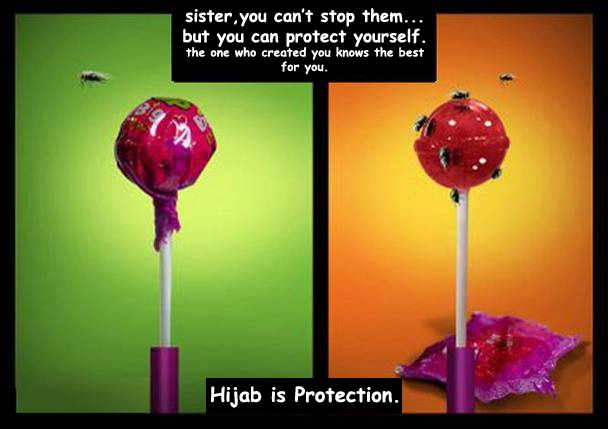
The general pain of being deemed a minority or “Other” is preyed on by consumerist media in a way that ends up ultimately enhancing negative feelings like lack of self-love and social isolation through a combination of factors directly related to how one feels one is perceived. This touches on issues that affect all people, but as intersectionality theories point out, the negative effects become more acute the more factors for discrimination are added on, and sometimes “negative effects” can mean dramatically affecting a person’s life chances simply because of how they are perceived. For the Somali-American woman on the train, her alignment with mainstream media standards – especially those for Black beauty and Black behavior – came with the price of being physically punished for it. It is possible that an identification of her as Muslim played a part in her chastisement, but I would say that an association with media images of Black female stereotypes played a bigger role in the train travelers’ negative behaviors towards her, and in influencing the young woman’s own behavior in trying to fit in with perceived “American” standards. In addition, gender (mis)representations in mainstream media and media cues for how to attain gender “normality” affect young female Americans’ perceptions of self- regardless of physical features or religion- and others’ actions towards them. In other words, media stereotypes of Black women such as the “Sapphire” trope instigated people to see this young woman as a threat, but media-supported patriarchal beliefs of women as more easily dominated influenced how those perceptions of her were acted on. Bringing this back around, skewed gender representations and skewed ethnic/racial representations link up with Islamophobic media stereotypes to adversely affect Muslim women in ways outside easily-defined categories of religion, gender, or ethnicity.
Outside-in perceptions of Muslims and Muslim women specifically that generate Islamophobia and racialized portrayals of Muslims affect us in very real ways – but what we should also be paying close attention to is the added effect that media representations of gender, class, and ethnicity/race play internally for Muslim women (reference back to this MMW article) and for those reacting to the presence of Muslim women. The effects of intersectional forms of oppression are very real, and, to me at least, adherence to media expectations seems to play a large part in the continuation of hegemony through self-esteem issues brought on by it. The issue of representation in media becomes far more than a question of just religion or ethnicity or physical features, and critiques of media representation must also focus their efforts on these in terms of intersectionality in order to attain a more comprehensive picture of the problems at hand.
Previous Post

March 27, 2013
Muslimahs in Beauty Pageants
Next Post
March 29, 2013 Friday Links | March 29, 2013
Browse Our Archives
Select a Category Advertisements Art/Theater Books/Magazines Cinema Comics/Cartoons Culture/Society Events Fashion Film Friday Links Merchandise/Commodities MMW Announcements MMW Highlights Music/Radio News Photography Politics Profile Ramadan 2012 Ramadan 2013 Ramadan 2014 Ramadan 2015 Roundtable Satire Social Media Sports Technology/Science Television Uncategorized Video Web
Select a Month November 2015 October 2015 September 2015 August 2015 July 2015 June 2015 May 2015 April 2015 March 2015 January 2015 December 2014 November 2014 October 2014 September 2014 July 2014 June 2014 May 2014 April 2014 March 2014 February 2014 January 2014 December 2013 November 2013 October 2013 September 2013 August 2013 July 2013 June 2013 May 2013 April 2013 March 2013 February 2013 January 2013 December 2012 November 2012 October 2012 September 2012 August 2012 July 2012 June 2012 May 2012 April 2012 March 2012 February 2012 January 2012 December 2011 November 2011 September 2011 August 2011 July 2011 June 2011 May 2011 April 2011 March 2011 February 2011 January 2011 December 2010 November 2010 October 2010 September 2010 August 2010 July 2010 June 2010 May 2010 April 2010 March 2010 February 2010 January 2010 December 2009 November 2009 October 2009 September 2009 August 2009 July 2009 June 2009 May 2009 April 2009 March 2009 February 2009 January 2009 December 2008 November 2008 October 2008 September 2008 August 2008 July 2008 June 2008 May 2008 April 2008 March 2008 February 2008 January 2008 December 2007 November 2007 October 2007 September 2007 August 2007
Follow Us!
TAKE THE
Religious Wisdom Quiz
Which prophet lamented over Israel's oppression of the poor?
Select your answer to see how you score.
Joel Amos Obadiah Hosea
Related posts from Muslimah Media Watch

#PrayforParis, Muslim Women and Third World Violence


Hate Crimes and Mother Tongues

Interview with Comedian Eman El Husseini
TRENDING AT PATHEOS Muslim

25 Years Later: How Much Has Changed for...
As we approach the 25th anniversary of September 11th, I’ve found myself...

Podcast: Third Spaces & The Rise of Yemeni...
In the latest episode of The Artistic Foodies Podcast, hosts Abbas...

HalalFest Picks: Best 60 Halal Spots for Super...
Back in 2016, I came up with a list of 29...

Unity Is America’s Strength — Division Is Its...
by Hidayatullah Ahsan When Valentina Gomez, a Republican candidate for Congress in...

Zohran Mamdani and New York’s Fight Against Islamophobia
This past June, against all odds, Zohran Mamdani won the Democratic primary...

What the Fourth of July Means to a...
As we mark another Fourth of July, millions of Americans will celebrate...
view all Muslim blogs
Ad-Free & Subscriber Log-In Subscription Support
- About Us
- 2026 Calendar
- Videos
- Podcasts
- Library of World Religions
- Faith In Media Tracker
- Advertise With Us
- Write for Us
- Privacy Policy
- Terms of Service
- Do Not Sell My Data
- Contact Us
- Radiant Digital
- Manage Newsletter Subscriptions
- Unsubscribe From Notifications
- Sitemap
Copyright 2008-2026, Patheos. All rights reserved.
Subscription Support Ad-Free & Subscriber Log-In
Follow Patheos