
BuddhistCatholicContemplativeEvangelicalGeneral ChristianHinduJewishLatter-day SaintMuslimNew VisionsProgressive Christian
Beliefs
- Buddhist
- Catholic
- Contemplative
- Evangelical
- General Christian
- Hindu
- Jewish
- Latter-day Saint
- More Voices
- Muslim
- New Visions
- Pagan
- Progressive Christian
Topics
- Religion News
- Food and Religion
- Sports and Religion
- Religious Art
- Religious Music and Entertainment
- Religious Events
- History and Religion
- Style and Religion
- Politics and Religion
- Women in Religion
- Recreation Outdoors and Religion
- Business Finance and Religion
- Careers Workplace and Religion
- Education and Religion
- Family Parenting and Religion
- Health Fitness and Religion
- Home and Religion
- Relationships and Religion
- Technology and Religion
- Travel and Religion
Columnists
- Buddhist Columnists
- Business Finance and Religion Columnists
- Careers Workplace and Religion Columnists
- Catholic Columnists
- Contemplative Columnists
- Education and Religion Columnists
- Evangelists Columnists
- Family Parenting and Religion Columnists
- General Christian Columnists
- Health Fitness and Religion Columnists
- Hindu Columnists
- History and Religion Columnists
- Home and Religion Columnists
- Jewish Columnists
- More Voices Columnists
- Latter Day Columnists
- Muslim Columnists
- New Visions Columnists
- Nonreligious Columnists
- Pagan Columnists
- Politics and Religion Columnists
- Progressive Columnists
- Recreation Outdoors and Religion Columnists
- Relationships and Religion Columnists
- Religion News Columnists
- Religious Art Columnists
- Religious Events Columnists
- Religious Music and Entertainment Columnists
- Sports and Religion Columnists
- Style and Religion Columnists
- Technology and Religion Columnists
- Travel and Religion Columnists
- Women in Religion Columnists
Resource Library
- 2026 Calendar
- Library of World Religions
- The 100 Most Holy Places on Earth
- Patheos Answers
- Podcasts
- Videos
- Faith Leaders Database
- Anglican Episcopalian
- Bahai
- Baptist
- Buddhism
- Christianity
- Confucianism
- Eastern Orthodoxy
- Hinduism
- Holiness and Pentecostal
- ISKCON
- Islam
- Judaism
- Lutheran
- Methodist
- The Church of Jesus Christ of Latter-day Saints
- New Age
- Paganism
- Presbytarian and Reformed
- Protestantism
- Religion Behind the Scenes
- Roman Catholic
- Scientology
- Shia Islam
- Sikhism
- Sufism
- Sunni Islam
- Taoism
- Zen
- See all religions
Research Tools
 Ad-Free & Subscriber Log-In Subscription Support
Ad-Free & Subscriber Log-In Subscription Support
Follow Patheos 

- Trending:
- Forgiveness
- |
- Marriage
- |
- Consciousness
- |
- Death Penalty
- |
- Election
- |
- Halloween
 Muslimah Media Watch
- Home
- Muslim
- Religion News
- Pink Yemen Taxi
Pink Yemen Taxi
Last updated on: January 30, 2013 at 5:27 am by woodturtle
Pink Yemen Taxi 2013-01-29T12:56:15-04:00 woodturtle
Patheos Explore the world's faith through different perspectives on religion and spirituality! Patheos has the views of the prevalent religions and spiritualities of the world.
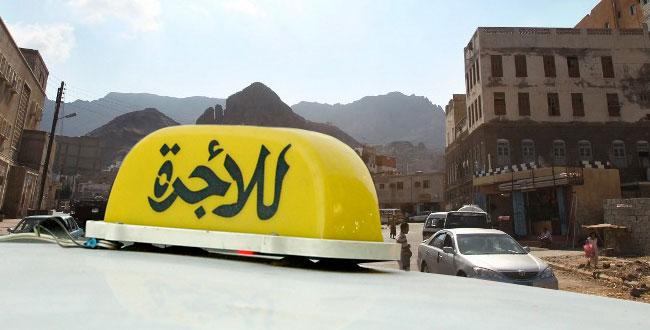
Taxi in Yemen. Source: Radio Netherlands Worldwide.
In recent years, women-only taxi services offering convenient and safe transit have sprung up in major cities all over the globe. These “pink taxis,” driven by women for women, offer a variety of benefits — not only giving women the option of avoiding harassment by male drivers, but also offer employment opportunities, business ownership, and in some cases, empowered transit in funky, candy pink rides decked out with lady magazines, beauty kits, and alarm buttons.
In Beirut, they’re styled as fierce competition to the standard transit system, brought about by one woman’s entrepreneurial vision, and follows similar models set up in Dubai, Cairo and Tehran. In Kuwait and London they’re “women-run businesses” offering “secure modes of transit” helping female customers feel less vulnerable when riding alone with a male driver. Moscow’s taxis are all about girl power, while Mexico City’s pink taxis are fantastically “girly” while helping address the problem of leering male drivers. But Yemen? Yemen doesn’t have a women-only taxi service and that’s because Yemen is too tribal and slow to change, to even consider allowing women to drive taxis.
Well, that’s according to a recent article by Radio Netherlands Worldwide. While initially promising (and Fugees inspiring), the title completely misled me into thinking a new, pink revolution had already hit the streets of Sana’a: “Pink taxis for Yemen: ready or not.” Apparently, not.
It didn’t take long to realize the point of the article was not to celebrate a new social and entrepreneurial opportunity for women — but to use the absence of pink taxis as a social commentary, highlighting gender segregation and the restriction of women’s employment due to “tribal tradition.”
The article leads by over-emphasizing Yemen’s culture of gender segregation. “Men and women practically lead separate lives,” with segregated weddings, women-only Internet cafes, and asks, “if so many places have separate facilities for women, then why are there no women-only taxis?” It’s a fair enough question. Taking a taxi with a male driver is awkward for many women and while of course not every male driver is a predator, there are many documented cases of sexual harassment by taxi drivers in Yemen. So in a country that is so obviously divided upon gender lines, why hasn’t segregation entered into the transportation sector?
Belqis Mohammed, the only named woman interviewed for the article gives us the answer. She keeps a screen saver of a pink cab on her computer, comes from a “conservative family,” and explains that while women are allowed to drive, no one, not even Belqis herself who dreams of running her own taxi service, would trespass against societal expectations. It’s just not acceptable for women to become taxi drivers.
According to the article, women drivers are absolutely “forbidden” as families prefer the more traditional professions of teaching and medicine for their daughters. Driving taxis isn’t safe. And even though women are allowed to drive, society is not ready to accept women taxi drivers — certainly not when “everybody carries a gun in this country.”
Gun slinging aside, the same could be said of almost any society. The taxi driving profession is overwhelmingly dominated by men, and people are surprised to find women driving taxis. So it’s unfair to use the tired images of guns, tribes and “niqab at the wheel” to help add substance to a story that isn’t there (yet). Now, it’s certainly exciting to think that a women-only taxi service might be coming to Yemen — but this article could have done more than rely on broad generalizations to illustrate the problem of Yemen’s “gender gap.” It’s almost frivolous to use the absence of “pink taxis” to discuss social taboos, when acute gender discrimination and poverty is responsible for high illiteracy rates for women, women continue to struggle against forced marriages, and are currently fighting for political equity
Especially when the Yemen Post also picked up the story, and used it as an opportunity to highlight Yemen’s “new breed of female entrepreneur” – painting a completely different picture of women in Yemen. Traditional ideas about women’s employment are mentioned in passing, and the focus of the Yemen Post article is clearly to encourage more positive steps in the future, concluding with, “women of Yemen are most definitely determined to pioneer social change by establishing themselves as equal citizens on all levels.”
While the Radio Netherlands article fairly represents some of the restrictions and challenges that Yemeni women have to live with, perhaps a better question would be to ask why is it more socially acceptable for women to be janitors and coffee servers in male dominated environments like government offices, where there are more, extended opportunities to interact? Or explore the social barriers experienced by some female entrepreneurs who, according to social mores, cannot approach large company administrations to market their companies, and have to hire men to interact with male customers. Or instead, gauge the reaction of local women to the emergence of private sector taxi companies, with their easily tracked, metred cars and standard fares (reducing the amount of interaction between customer and driver needed to haggle over prices), which now provide many women with a safer option when travelling alone.
There is one thing that I liked about the article, and that was it’s subtle message of hope for change in the future. Today’s Yemen might not have “pink taxis,” but according to my husband’s Yemeni family, “controlling women is becoming increasingly harder to do with more women graduating from every single university department, employers are increasingly opting for women employees, and women are taking over the role of bread winners for many families.” So, ready or not, social change is happening — and hopefully for Belqis, it’ll come in a pink Yemen taxi.
Previous Post

January 29, 2013
Book Review: Sophia Al-Maria's “The Girl Who Fell To Earth”
Next Post

January 31, 2013 The Tiger Hunter: Interview with Filmmaker Lena Khan
Browse Our Archives
Select a Category Advertisements Art/Theater Books/Magazines Cinema Comics/Cartoons Culture/Society Events Fashion Film Friday Links Merchandise/Commodities MMW Announcements MMW Highlights Music/Radio News Photography Politics Profile Ramadan 2012 Ramadan 2013 Ramadan 2014 Ramadan 2015 Roundtable Satire Social Media Sports Technology/Science Television Uncategorized Video Web
Select a Month November 2015 October 2015 September 2015 August 2015 July 2015 June 2015 May 2015 April 2015 March 2015 January 2015 December 2014 November 2014 October 2014 September 2014 July 2014 June 2014 May 2014 April 2014 March 2014 February 2014 January 2014 December 2013 November 2013 October 2013 September 2013 August 2013 July 2013 June 2013 May 2013 April 2013 March 2013 February 2013 January 2013 December 2012 November 2012 October 2012 September 2012 August 2012 July 2012 June 2012 May 2012 April 2012 March 2012 February 2012 January 2012 December 2011 November 2011 September 2011 August 2011 July 2011 June 2011 May 2011 April 2011 March 2011 February 2011 January 2011 December 2010 November 2010 October 2010 September 2010 August 2010 July 2010 June 2010 May 2010 April 2010 March 2010 February 2010 January 2010 December 2009 November 2009 October 2009 September 2009 August 2009 July 2009 June 2009 May 2009 April 2009 March 2009 February 2009 January 2009 December 2008 November 2008 October 2008 September 2008 August 2008 July 2008 June 2008 May 2008 April 2008 March 2008 February 2008 January 2008 December 2007 November 2007 October 2007 September 2007 August 2007
Follow Us!
TAKE THE
Religious Wisdom Quiz
What does "Salem" (as in Melchizedek, king of Salem) mean?
Select your answer to see how you score.
Light Joy Ark Peace
Related posts from Muslimah Media Watch

#PrayforParis, Muslim Women and Third World Violence


Hate Crimes and Mother Tongues

Interview with Comedian Eman El Husseini
TRENDING AT PATHEOS Muslim

25 Years Later: How Much Has Changed for...
As we approach the 25th anniversary of September 11th, I’ve found myself...

Podcast: Third Spaces & The Rise of Yemeni...
In the latest episode of The Artistic Foodies Podcast, hosts Abbas...

HalalFest Picks: Best 60 Halal Spots for Super...
Back in 2016, I came up with a list of 29...

Unity Is America’s Strength — Division Is Its...
by Hidayatullah Ahsan When Valentina Gomez, a Republican candidate for Congress in...

Zohran Mamdani and New York’s Fight Against Islamophobia
This past June, against all odds, Zohran Mamdani won the Democratic primary...

What the Fourth of July Means to a...
As we mark another Fourth of July, millions of Americans will celebrate...
view all Muslim blogs
Ad-Free & Subscriber Log-In Subscription Support
- About Us
- 2026 Calendar
- Videos
- Podcasts
- Library of World Religions
- Faith In Media Tracker
- Advertise With Us
- Write for Us
- Privacy Policy
- Terms of Service
- Do Not Sell My Data
- Contact Us
- Radiant Digital
- Manage Newsletter Subscriptions
- Unsubscribe From Notifications
- Sitemap
Copyright 2008-2026, Patheos. All rights reserved.
Subscription Support Ad-Free & Subscriber Log-In
Follow Patheos