
BuddhistCatholicContemplativeEvangelicalGeneral ChristianHinduJewishLatter-day SaintMuslimNew VisionsProgressive Christian
Beliefs
- Buddhist
- Catholic
- Contemplative
- Evangelical
- General Christian
- Hindu
- Jewish
- Latter-day Saint
- More Voices
- Muslim
- New Visions
- Pagan
- Progressive Christian
Topics
- Religion News
- Food and Religion
- Sports and Religion
- Religious Art
- Religious Music and Entertainment
- Religious Events
- History and Religion
- Style and Religion
- Politics and Religion
- Women in Religion
- Recreation Outdoors and Religion
- Business Finance and Religion
- Careers Workplace and Religion
- Education and Religion
- Family Parenting and Religion
- Health Fitness and Religion
- Home and Religion
- Relationships and Religion
- Technology and Religion
- Travel and Religion
Columnists
- Buddhist Columnists
- Business Finance and Religion Columnists
- Careers Workplace and Religion Columnists
- Catholic Columnists
- Contemplative Columnists
- Education and Religion Columnists
- Evangelists Columnists
- Family Parenting and Religion Columnists
- General Christian Columnists
- Health Fitness and Religion Columnists
- Hindu Columnists
- History and Religion Columnists
- Home and Religion Columnists
- Jewish Columnists
- More Voices Columnists
- Latter Day Columnists
- Muslim Columnists
- New Visions Columnists
- Nonreligious Columnists
- Pagan Columnists
- Politics and Religion Columnists
- Progressive Columnists
- Recreation Outdoors and Religion Columnists
- Relationships and Religion Columnists
- Religion News Columnists
- Religious Art Columnists
- Religious Events Columnists
- Religious Music and Entertainment Columnists
- Sports and Religion Columnists
- Style and Religion Columnists
- Technology and Religion Columnists
- Travel and Religion Columnists
- Women in Religion Columnists
Resource Library
- 2026 Calendar
- Library of World Religions
- The 100 Most Holy Places on Earth
- Patheos Answers
- Podcasts
- Videos
- Faith Leaders Database
- Anglican Episcopalian
- Bahai
- Baptist
- Buddhism
- Christianity
- Confucianism
- Eastern Orthodoxy
- Hinduism
- Holiness and Pentecostal
- ISKCON
- Islam
- Judaism
- Lutheran
- Methodist
- The Church of Jesus Christ of Latter-day Saints
- New Age
- Paganism
- Presbytarian and Reformed
- Protestantism
- Religion Behind the Scenes
- Roman Catholic
- Scientology
- Shia Islam
- Sikhism
- Sufism
- Sunni Islam
- Taoism
- Zen
- See all religions
Research Tools
 Ad-Free & Subscriber Log-In Subscription Support
Ad-Free & Subscriber Log-In Subscription Support
Follow Patheos 

- Trending:
- Forgiveness
- |
- Marriage
- |
- Consciousness
- |
- Death Penalty
- |
- Election
- |
- Halloween
 Muslimah Media Watch
- Home
- Muslim
- Religion News
- Looking “Pretty”: Muslim Women and the World of Cosmetics
Looking “Pretty”: Muslim Women and the World of Cosmetics
Last updated on: October 23, 2012 at 2:00 am by eren
Looking “Pretty”: Muslim Women and the World of Cosmetics 2012-10-22T18:53:20-04:00 eren
Patheos Explore the world's faith through different perspectives on religion and spirituality! Patheos has the views of the prevalent religions and spiritualities of the world.
After graduating and finding myself sub-employed in the world of retail, I have had the opportunity to closely explore the cosmetics industry. While in university I acquired my Makeup Artistry certification from a recognized school in Canada because I enjoyed colour and makeup so much. Since I was a child I enjoyed playing with my mom’s cosmetics, and I used to long for the day that I would be allowed to wear lipsticks and eye shadows.
Yet, after working so closely in the cosmetics industry, it is easy to see the challenges that come along with gender and the politics of ethnicity, which, I must admit, have made my love for makeup wane.
The cosmetics industry is often a place where beauty standards are created, defined and imposed. It is based on dreams (and training materials often indicate: “sell dreams, not products”) and on the idea that women need “help” to be beautiful or even to look healthy (thus the creams and treatments).
Cosmetics companies contribute to ideas of hegemonic beauty while exploiting them for profit. Whereas this is not surprising, the profit that comes from individual cosmetic counters is enormous. In North America (including Canada, the U.S. and Mexico) stores such as Sears, the Bay, Macy’s, and Holt Renfrew, and their associates set daily targets ranging between $100 and $5000 dollars for each individual beauty advisor in a counter (thus the annoying cosmetics ladies chasing you around, especially on slow days).
While working at the counter, I have realized that a large portion of my clients are Muslim women; nonetheless, the industry does not seem to acknowledge this trend. As I have explored in previous posts, Muslim women have claimed a place as designers, models and stakeholders within the fashion industry; however, they hardly seem to have a place in typical Western-style cosmetic houses.
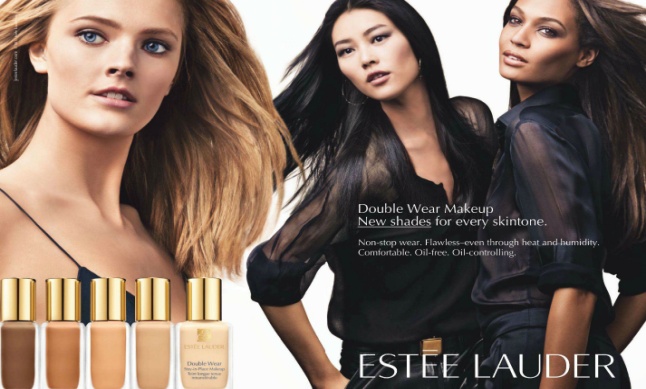
Estee Lauder 2012 “ethnic diversity” ad. Via Asian Models Blog.
Despite the options, big Western cosmetic brands like Estee Lauder and Lancôme are popular options around the world, including some Muslim-majority countries. For instance, the Gulf countries, of which the UAE is often recognized as the fashion capital, are now a big cosmetics market. Not only did Vogue choose the Emirates to open a high-end café outpost, but last year it was reported that Emirati women spend 38% more money in cosmetics than women in France.
Even without mentioning issues of animal testing, dangerous chemicals in treatments or ingredients that may be of particular concern to some Muslim women like pork by-products and alcohol, the industry as a whole presents challenges. For example, although houses like Clinique and Estee Lauder currently offer wider selection of makeup colours (such as foundations), many other makeup houses would not be able to colour-match a lot of non-white women, leaving out a whole bunch of ethnicities. Besides, even when these two brands offer slightly more colour options, cosmetics training in Western countries focuses on whiter demographics or the target ethnic market of the brand (for example, Shideido tends to focus on Asian women), which means that your average Western-trained cosmetics consultant has no idea how to help women with non-Caucasian complexions.
What is more, many Muslim women (although not all) go along with the trend. Lighter makeup and “brightening” and whitening products are popular not only among South and East Asian populations but also in other countries, of which Nigeria is the highest consumer. Whitening and lightening products are used to prevent and treat pigmentation, while brightening ones treat dullness and fatigue. However, these products tend to promise a “brighter,” “lighter” and “better” complexion, whatever that means. As one of my clients put it once: “they make us feel that whiter is beautiful and we go with it.”
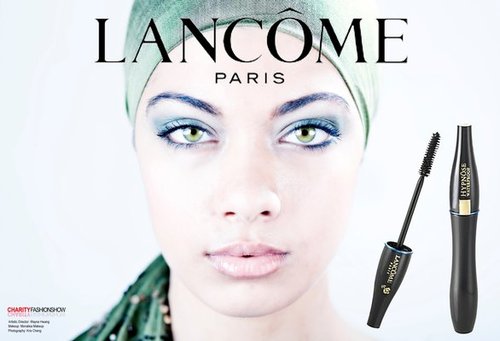
Lancome ad. Via MuslimWomanConvertsReverts, which tagged the picture as a representation of hijab fashion.
Racialized notions of what women should aim for are sometimes more obvious when dealing with niqabis in North American cosmetic counters. A few years ago, while I was shopping with a niqabi friend, we decided to stop at MAC. She was looking for a concealer, but instead of being allowed to choose the color she thought would suit her, the cosmetics girl decided to give her a darker shade, while assuring her that it has the right colour. The cosmetics girl just assumed that niqab equals East and East equals dark.
In addition, imaging continues to be a problem. One would think that with Muslim women spending great amounts of money in cosmetics, these houses would broaden the images that they use in their advertisements. Yet, we see mainly white-Western models, rarely one or two “minorities” and of course (almost) no hijabis.
Just like with Barbie or “Muslim” Barbie, whom I discussed few weeks ago, the cosmetics industry calls for particular standards. It teaches us that “whiter” is more valuable, even when the majority of the market is non-white, and it also endorses that Western is better (many of us still believe that French equals better cosmetics, Chanel being one example).
The reality is that this is an industry that it is not about to change. The companies involved strongly rely on the fact that we follow their trends and accept their imaging. However, there are alternatives out there. Most countries have locally produced cosmetics, and while I cannot speak for all of them, I can tell you that Mexico produces some excellent no-name avocado oil mascaras and eye liners!
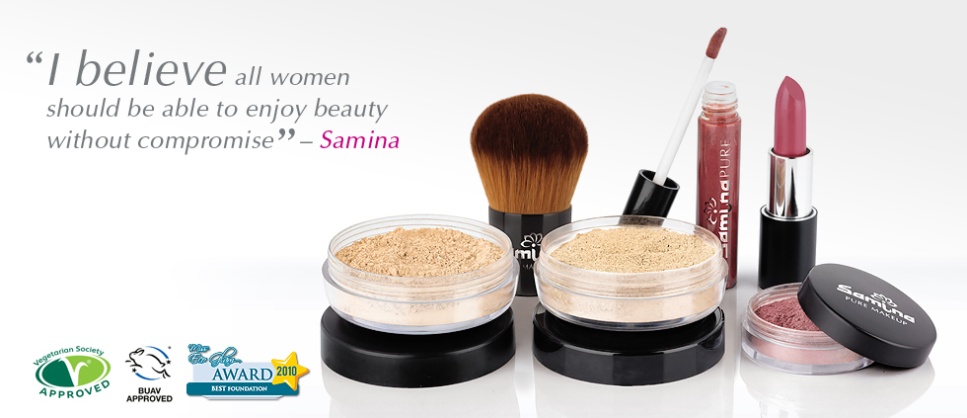
Samina Pure Makeup. Via saminapuremakeup.co.uk.
Likewise, I have come across few lines designed by Muslim women for Muslim women. Some of these brands, which have been reviewed on sites like Muslimah in Reverie and Sweet Modesty are often defined as “halal” options and are not only alcohol- and pork-free but also cruelty-free. Some of these also provide mineral and vegan options.
Though I cannot guarantee that representations of diverse women in their advertising images will be better among these brands, at least there is an effort to accommodate Muslim women of a variety of ethnicities, and an attempt to address some Muslim women’s concerns as far as alcohol, pork and cruelty goes.
My hope for the ladies who enjoy cosmetics is that eventually they will use cosmetics for and by themselves, not because companies “sell dreams” and “aids” for non-white, non-Western, non-young imperfections.
Previous Post

October 22, 2012
Booby-Traps and Breastfeeding in Guinea
Next Post
October 24, 2012 Book Review: The Islamophobia Industry
Browse Our Archives
Select a Category Advertisements Art/Theater Books/Magazines Cinema Comics/Cartoons Culture/Society Events Fashion Film Friday Links Merchandise/Commodities MMW Announcements MMW Highlights Music/Radio News Photography Politics Profile Ramadan 2012 Ramadan 2013 Ramadan 2014 Ramadan 2015 Roundtable Satire Social Media Sports Technology/Science Television Uncategorized Video Web
Select a Month November 2015 October 2015 September 2015 August 2015 July 2015 June 2015 May 2015 April 2015 March 2015 January 2015 December 2014 November 2014 October 2014 September 2014 July 2014 June 2014 May 2014 April 2014 March 2014 February 2014 January 2014 December 2013 November 2013 October 2013 September 2013 August 2013 July 2013 June 2013 May 2013 April 2013 March 2013 February 2013 January 2013 December 2012 November 2012 October 2012 September 2012 August 2012 July 2012 June 2012 May 2012 April 2012 March 2012 February 2012 January 2012 December 2011 November 2011 September 2011 August 2011 July 2011 June 2011 May 2011 April 2011 March 2011 February 2011 January 2011 December 2010 November 2010 October 2010 September 2010 August 2010 July 2010 June 2010 May 2010 April 2010 March 2010 February 2010 January 2010 December 2009 November 2009 October 2009 September 2009 August 2009 July 2009 June 2009 May 2009 April 2009 March 2009 February 2009 January 2009 December 2008 November 2008 October 2008 September 2008 August 2008 July 2008 June 2008 May 2008 April 2008 March 2008 February 2008 January 2008 December 2007 November 2007 October 2007 September 2007 August 2007
Follow Us!
TAKE THE
Religious Wisdom Quiz
What is the book of songs and prayers in the Bible called?
Select your answer to see how you score.
Matthew Genesis Psalms Proverbs
Related posts from Muslimah Media Watch

#PrayforParis, Muslim Women and Third World Violence


Hate Crimes and Mother Tongues

Interview with Comedian Eman El Husseini
TRENDING AT PATHEOS Muslim

25 Years Later: How Much Has Changed for...
As we approach the 25th anniversary of September 11th, I’ve found myself...

Podcast: Third Spaces & The Rise of Yemeni...
In the latest episode of The Artistic Foodies Podcast, hosts Abbas...

HalalFest Picks: Best 60 Halal Spots for Super...
Back in 2016, I came up with a list of 29...

Unity Is America’s Strength — Division Is Its...
by Hidayatullah Ahsan When Valentina Gomez, a Republican candidate for Congress in...

Zohran Mamdani and New York’s Fight Against Islamophobia
This past June, against all odds, Zohran Mamdani won the Democratic primary...

What the Fourth of July Means to a...
As we mark another Fourth of July, millions of Americans will celebrate...
view all Muslim blogs
Ad-Free & Subscriber Log-In Subscription Support
- About Us
- 2026 Calendar
- Videos
- Podcasts
- Library of World Religions
- Faith In Media Tracker
- Advertise With Us
- Write for Us
- Privacy Policy
- Terms of Service
- Do Not Sell My Data
- Contact Us
- Radiant Digital
- Manage Newsletter Subscriptions
- Unsubscribe From Notifications
- Sitemap
Copyright 2008-2026, Patheos. All rights reserved.
Subscription Support Ad-Free & Subscriber Log-In
Follow Patheos