
BuddhistCatholicContemplativeEvangelicalGeneral ChristianHinduJewishLatter-day SaintMuslimNew VisionsProgressive Christian
Beliefs
- Buddhist
- Catholic
- Contemplative
- Evangelical
- General Christian
- Hindu
- Jewish
- Latter-day Saint
- More Voices
- Muslim
- New Visions
- Pagan
- Progressive Christian
Topics
- Religion News
- Food and Religion
- Sports and Religion
- Religious Art
- Religious Music and Entertainment
- Religious Events
- History and Religion
- Style and Religion
- Politics and Religion
- Women in Religion
- Recreation Outdoors and Religion
- Business Finance and Religion
- Careers Workplace and Religion
- Education and Religion
- Family Parenting and Religion
- Health Fitness and Religion
- Home and Religion
- Relationships and Religion
- Technology and Religion
- Travel and Religion
Columnists
- Buddhist Columnists
- Business Finance and Religion Columnists
- Careers Workplace and Religion Columnists
- Catholic Columnists
- Contemplative Columnists
- Education and Religion Columnists
- Evangelists Columnists
- Family Parenting and Religion Columnists
- General Christian Columnists
- Health Fitness and Religion Columnists
- Hindu Columnists
- History and Religion Columnists
- Home and Religion Columnists
- Jewish Columnists
- More Voices Columnists
- Latter Day Columnists
- Muslim Columnists
- New Visions Columnists
- Nonreligious Columnists
- Pagan Columnists
- Politics and Religion Columnists
- Progressive Columnists
- Recreation Outdoors and Religion Columnists
- Relationships and Religion Columnists
- Religion News Columnists
- Religious Art Columnists
- Religious Events Columnists
- Religious Music and Entertainment Columnists
- Sports and Religion Columnists
- Style and Religion Columnists
- Technology and Religion Columnists
- Travel and Religion Columnists
- Women in Religion Columnists
Resource Library
- 2026 Calendar
- Library of World Religions
- The 100 Most Holy Places on Earth
- Patheos Answers
- Podcasts
- Videos
- Faith Leaders Database
- Anglican Episcopalian
- Bahai
- Baptist
- Buddhism
- Christianity
- Confucianism
- Eastern Orthodoxy
- Hinduism
- Holiness and Pentecostal
- ISKCON
- Islam
- Judaism
- Lutheran
- Methodist
- The Church of Jesus Christ of Latter-day Saints
- New Age
- Paganism
- Presbytarian and Reformed
- Protestantism
- Religion Behind the Scenes
- Roman Catholic
- Scientology
- Shia Islam
- Sikhism
- Sufism
- Sunni Islam
- Taoism
- Zen
- See all religions
Research Tools
 Ad-Free & Subscriber Log-In Subscription Support
Ad-Free & Subscriber Log-In Subscription Support
Follow Patheos 

- Trending:
- Forgiveness
- |
- Marriage
- |
- Consciousness
- |
- Death Penalty
- |
- Election
- |
- Halloween
 Muslimah Media Watch
- Home
- Muslim
- Religion News
- Smultron for Suhur: Nomadic Memories of Ramadans Abroad
Smultron for Suhur: Nomadic Memories of Ramadans Abroad
Last updated on: April 13, 2014 at 2:33 pm by tasnim
Smultron for Suhur: Nomadic Memories of Ramadans Abroad 2014-04-13T14:33:18-04:00 tasnim
Patheos Explore the world's faith through different perspectives on religion and spirituality! Patheos has the views of the prevalent religions and spiritualities of the world.

Nothing says summer in Sweden like smultron.
I like the long dark winter months in Sweden. This is something that tends to make people question my sanity. But even I will admit summers here are special, as everything seems to burst into exuberant life, Mother Nature in a hurry to her work done before the cold weather returns. Though the summer is short, the days are long: in the north, the sun never sets. Where we live, there were about four hours of night on the first day of Ramadan. That is hardly enough time to fit in two meals, so I tend to skip the “Scamble for Suhur,” which occurs at about 2 am in our home. One night though, I discovered a bowl of freshly-picked smultron in the fridge – smultron being the tiny wild strawberries that grow everywhere in Sweden and abundantly in our garden. They proved irresistible, the perfect suhur snack.
So far in my life, I’ve lived in two countries in the Arab world where Ramadan announces itself with neon lights, empty streets at sunset and everyone staying up till dawn. Otherwise, we have been living “barra” as people say in Libya – abroad, in the diaspora, or, to translate barra literally, “outside.” There is a proverb I heard constantly growing up: “Ya bani fi gheir bladak, la leik wa la li awladak” – you who builds in a country not your own, it is not yours and it won’t be for your children. This was the wisdom offered by elderly women, full of life and wrinkles, who commandeered the tea ceremony in my grandmother’s home. Along with my glass of tea and almonds, I would get the chiding question: ”When are you all coming home?”
This year, many grandmothers will stop asking that question, as families and friends we have known over the years are returning in a homeward bound wave to Libya after over two decades abroad, planning on building their lives there now that Gaddafi is gone. My family went through this cycle of immigration, living abroad, and returning – and then we repeated it. Which, though an unsettling way to grow up, gave me the advantage of having lived for years in my country of origin, experiencing Ramadan amidst the hustle and bustle of a large extended family, and getting acquainted with the Ramadan siesta, sleeping the afternoons away on mattresses with the wooden shutters closed except for a chink allowing a single ray of sunlight into the room.
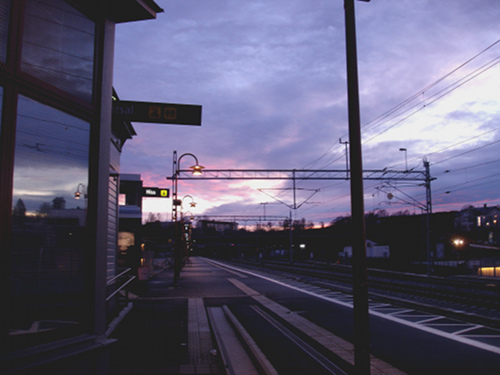
Another maghreb, another journey
We’re a family that is never far from packing tape and boxes. Wrapping fragile china in newspapers and the anxiety of moving house are as familiar as the cool openness of airports. We have literally moved more times than my twenty-five years. And so, inevitably, one year the first day of Ramadan coincided with the first day after moving into another new home: the walls were glaringly white, the rooms had the antiseptic quality of an unlived in space. We had just moved across the country, from west Libya to a city close to Egypt, a part of the world where people cook by hooking up gas cannisters to the oven, and since we had no such cannisters with us, we used a hotplate to make our iftar. But we were really not in the mood to start unpacking, and so by the time it was sunset, despite the hotplate situation, we had a veritable feast, which we ate on the floor surrounded by unopened boxes.
That day to me sums up our semi-nomadic existence. It has become a family narrative, as though we’ve become imprinted with a need to change our environment constantly: if there is no move after three years, a strange kind of restlessness sets in.
One of the few constants in this nomadic life has been the effort to make Ramadan and Eid special. When my siblings and I were younger and my parents were doing the inevitable competition with Christmas, we would wake up on the kebira (the eve of Ramadan or Eid) to find that the house had undergone a metamorphosis with tinsel and candles and lanterns and incense. Nowadays we don’t do more than light a couple of candles as we break our fast – but being together around the iftar table was and is always at the heart of Ramadan in our home, wherever we happen to be.
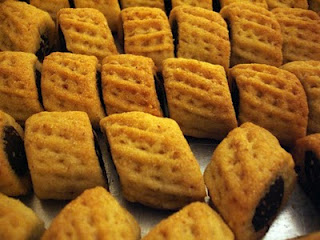
Magrood – Libyan date-filled semolina cookies.
Every iftar begins with dates and milk, bseisa and huwera, and if we’re really making an effort, khushaf and the thirst-quenching qamar al din. Then we pray and sit down for the self-explanatory aromatic Libyan soup. Alongside this, there is at least one kind of stuffed pastry burek, or the Libyan speciality of mubatan, potato wedges stuffed with minced meat. Everything has to be a calibrated amount to avoid food piling up in the fridge – extravagant iftars equal leftovers, since people tend not to eat much after fasting for twenty hours. Unless, of course, we have guests – which demands a table groaning under the weight of the food and a moratorium on cooking the next day.
After the iftar, its time for Arabic coffee with Ramadan sweets: kunafa, or qatayef, or fritters in syrup known as lugmet al qadi – in our family, these honeyed sweets are only ever eaten during Ramadan, a rule which is adhered to strictly, as though making them some other time of the year would go against the laws of nature. Then there are the Eid cookies, which in Libya are made communally, neighbors and friends getting together during the last five days of Ramadan, and making trays and trays of cookies, from the traditional such as magrood and ghrayba to the new inventions every year. In Libya, cookies are taken very seriously. In fact, food in general is taken seriously – and for more on that, see my Libyan food blog, and check out the Ramadan tag.
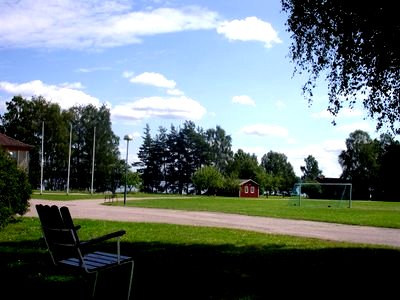
Summer in Sweden.
On the last day of Ramadan, children in Libya run around the streets chanting “El youm kebira u bukra eid, ifrah ya maula eltob jedid” – “Today is the eve and tomorrow is eid, be happy for your clothes are new.” To me the new clothes that are traditionally bought before Eid symbolize the newness of a soul after a month of fasting, hopefully having reconnected with your faith and been reinvigorated by the sense of personal commitment that comes with fasting which, maybe more than any other worship, is wholly between you and God. Growing up in so many different countries, Ramadan for me was not simply about a spiritual reconnecting, it was about the struggle to be connected with “home” – and realizing that for me at least it isn’t where the heart is, or any other platitude, but coming to terms with always being temporarily here, in this moment, in this place, and trying to live that moment to the fullest.
I remember one Ramadan we bought an adhan clock so we would hear the call to prayer as we broke our fast, recreating the Ramadan we had the year before in Egypt. Towards the end of the month the batteries ran out, and we didn’t replace them. It wasn’t the same as “back home,” my parents said, where the a cappella adhan song echoed across the city, and you knew everyone was breaking the fast together, and felt the sense of community that this inspires.
And yet, you can find a sense of community in the most unexpected places. I recently went into a crystal souvenir shop in Stockholm with a Swedish convert friend to buy a gift, and we noticed the display with Islamic art and jewellery, as the shopkeeper there greeted us with Ramadan Kareem.
Every time we move to a new place, traditions merge with what is there and produce a new memory. This year, that memory will be a handful of smultron for suhur, bringing together Sweden, summer, strawberries – and Ramadan.
For more on Ramadan, and to read the rest of the posts in MMW’s Ramadan 2012 series, click here.
Previous Post

August 7, 2012
The First Ramadan
Next Post
August 9, 2012 Ramadan Dawah
Browse Our Archives
Select a Category Advertisements Art/Theater Books/Magazines Cinema Comics/Cartoons Culture/Society Events Fashion Film Friday Links Merchandise/Commodities MMW Announcements MMW Highlights Music/Radio News Photography Politics Profile Ramadan 2012 Ramadan 2013 Ramadan 2014 Ramadan 2015 Roundtable Satire Social Media Sports Technology/Science Television Uncategorized Video Web
Select a Month November 2015 October 2015 September 2015 August 2015 July 2015 June 2015 May 2015 April 2015 March 2015 January 2015 December 2014 November 2014 October 2014 September 2014 July 2014 June 2014 May 2014 April 2014 March 2014 February 2014 January 2014 December 2013 November 2013 October 2013 September 2013 August 2013 July 2013 June 2013 May 2013 April 2013 March 2013 February 2013 January 2013 December 2012 November 2012 October 2012 September 2012 August 2012 July 2012 June 2012 May 2012 April 2012 March 2012 February 2012 January 2012 December 2011 November 2011 September 2011 August 2011 July 2011 June 2011 May 2011 April 2011 March 2011 February 2011 January 2011 December 2010 November 2010 October 2010 September 2010 August 2010 July 2010 June 2010 May 2010 April 2010 March 2010 February 2010 January 2010 December 2009 November 2009 October 2009 September 2009 August 2009 July 2009 June 2009 May 2009 April 2009 March 2009 February 2009 January 2009 December 2008 November 2008 October 2008 September 2008 August 2008 July 2008 June 2008 May 2008 April 2008 March 2008 February 2008 January 2008 December 2007 November 2007 October 2007 September 2007 August 2007
Follow Us!
TAKE THE
Religious Wisdom Quiz
Which Persian king allowed Ezra to take Jewish exiles and gifts to Jerusalem?
Select your answer to see how you score.
Artaxerxes Nebuchadnezzar Darius Cyrus
Related posts from Muslimah Media Watch
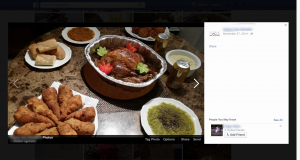
Facebook Foodies: Libyan Women’s Visibility Online

When Beggars Give You The Salam Nod

There is Baraka in Receiving the Gift: On...
TRENDING AT PATHEOS Muslim

25 Years Later: How Much Has Changed for...
As we approach the 25th anniversary of September 11th, I’ve found myself...

Podcast: Third Spaces & The Rise of Yemeni...
In the latest episode of The Artistic Foodies Podcast, hosts Abbas...

HalalFest Picks: Best 60 Halal Spots for Super...
Back in 2016, I came up with a list of 29...

Unity Is America’s Strength — Division Is Its...
by Hidayatullah Ahsan When Valentina Gomez, a Republican candidate for Congress in...

Zohran Mamdani and New York’s Fight Against Islamophobia
This past June, against all odds, Zohran Mamdani won the Democratic primary...

What the Fourth of July Means to a...
As we mark another Fourth of July, millions of Americans will celebrate...
view all Muslim blogs
Ad-Free & Subscriber Log-In Subscription Support
- About Us
- 2026 Calendar
- Videos
- Podcasts
- Library of World Religions
- Faith In Media Tracker
- Advertise With Us
- Write for Us
- Privacy Policy
- Terms of Service
- Do Not Sell My Data
- Contact Us
- Radiant Digital
- Manage Newsletter Subscriptions
- Unsubscribe From Notifications
- Sitemap
Copyright 2008-2026, Patheos. All rights reserved.
Subscription Support Ad-Free & Subscriber Log-In
Follow Patheos