
BuddhistCatholicContemplativeEvangelicalGeneral ChristianHinduJewishLatter-day SaintMuslimNew VisionsProgressive Christian
Beliefs
- Buddhist
- Catholic
- Contemplative
- Evangelical
- General Christian
- Hindu
- Jewish
- Latter-day Saint
- More Voices
- Muslim
- New Visions
- Pagan
- Progressive Christian
Topics
- Religion News
- Food and Religion
- Sports and Religion
- Religious Art
- Religious Music and Entertainment
- Religious Events
- History and Religion
- Style and Religion
- Politics and Religion
- Women in Religion
- Recreation Outdoors and Religion
- Business Finance and Religion
- Careers Workplace and Religion
- Education and Religion
- Family Parenting and Religion
- Health Fitness and Religion
- Home and Religion
- Relationships and Religion
- Technology and Religion
- Travel and Religion
Columnists
- Buddhist Columnists
- Business Finance and Religion Columnists
- Careers Workplace and Religion Columnists
- Catholic Columnists
- Contemplative Columnists
- Education and Religion Columnists
- Evangelists Columnists
- Family Parenting and Religion Columnists
- General Christian Columnists
- Health Fitness and Religion Columnists
- Hindu Columnists
- History and Religion Columnists
- Home and Religion Columnists
- Jewish Columnists
- More Voices Columnists
- Latter Day Columnists
- Muslim Columnists
- New Visions Columnists
- Nonreligious Columnists
- Pagan Columnists
- Politics and Religion Columnists
- Progressive Columnists
- Recreation Outdoors and Religion Columnists
- Relationships and Religion Columnists
- Religion News Columnists
- Religious Art Columnists
- Religious Events Columnists
- Religious Music and Entertainment Columnists
- Sports and Religion Columnists
- Style and Religion Columnists
- Technology and Religion Columnists
- Travel and Religion Columnists
- Women in Religion Columnists
Resource Library
- 2026 Calendar
- Library of World Religions
- The 100 Most Holy Places on Earth
- Patheos Answers
- Podcasts
- Videos
- Faith Leaders Database
- Anglican Episcopalian
- Bahai
- Baptist
- Buddhism
- Christianity
- Confucianism
- Eastern Orthodoxy
- Hinduism
- Holiness and Pentecostal
- ISKCON
- Islam
- Judaism
- Lutheran
- Methodist
- The Church of Jesus Christ of Latter-day Saints
- New Age
- Paganism
- Presbytarian and Reformed
- Protestantism
- Religion Behind the Scenes
- Roman Catholic
- Scientology
- Shia Islam
- Sikhism
- Sufism
- Sunni Islam
- Taoism
- Zen
- See all religions
Research Tools
 Ad-Free & Subscriber Log-In Subscription Support
Ad-Free & Subscriber Log-In Subscription Support
Follow Patheos 

- Trending:
- Forgiveness
- |
- Marriage
- |
- Consciousness
- |
- Death Penalty
- |
- Election
- |
- Halloween
 Muslimah Media Watch
- Home
- Muslim
- Religion News
- Book Review – Sufi Narratives of Intimacy: Ibn Arabi, Gender, and Sexuality
Book Review – Sufi Narratives of Intimacy: Ibn Arabi, Gender, and Sexuality
Last updated on: August 21, 2012 at 2:00 am by safiyyah
Book Review – Sufi Narratives of Intimacy: Ibn Arabi, Gender, and Sexuality 2012-08-20T22:21:08-04:00 safiyyah
Patheos Explore the world's faith through different perspectives on religion and spirituality! Patheos has the views of the prevalent religions and spiritualities of the world.
This review was originally published at Muslim Views.
Research in the areas of Islamic and Gender Studies often overlap when it comes to the question of women in the Islamic spiritual tradition. What does Sufism offer to men and women seeking out paths of equality and egalitarianism? How does maleness or femaleness influence spirituality, and is the notion of the un-gendered soul a tenable one in the context of a hyper-gendered legal tradition? Is it possible to go beyond socially instituted gender norms, to more fundamental questions about what it means to be a human being, and use these notions to then create new gender discourses? These are some of the questions Dr Sa’diyya Shaikh, a Senior Lecturer at the University of Cape Town’s Religious Studies department, grapples with in her latest publication, Sufi Narratives of Intimacy: Ibn Arabi, Gender and Sexuality. She handles the complex spheres of gender and Sufism with the intellectual finesse and critical maturity required for such an endeavour, displaying an in-depth working knowledge of the tradition.
Shaikh provides a unique and ground-breaking reading of the works of thirteenth century Andalusian Arab Muslim scholar, Sufi saint and philosopher Muḥyiddin Muḥammad ibn ‘Alī ibn Muḥammad ibn ‘Arabi (d.1240). Shaikh reads his work through a feminist lens by which she focuses on the question of gendered roles and functionalities in the Islamic tradition – going beyond the legal trappings into more ontological questions that she feels must be answered in order to reshape and redefine contemporary understandings of Islam and gender justice.
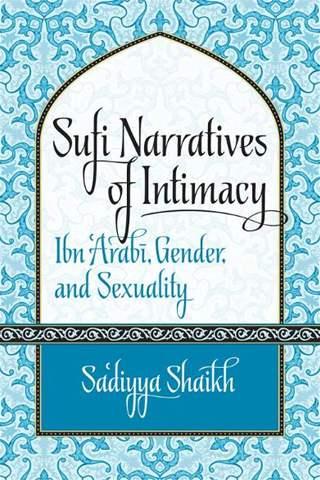
Sufi Narratives of Intimacy: Ibn Arabi, Gender, and Sexuality.
The works of Ibn `Arabi are pertinent particularly because they offer a different or alternate way of articulating gender from within a classical Islamic framework. Whilst not entirely divergent from traditional norms – Ibn `Arabi does offer novel devices of understanding human nature and male-female relationships – he does communicate different views on controversial topics in current gender debates on matters like women’s imamate (leadership) for salah, dress and even interpersonal interactions. These are read in the context of his expertise as a legal and philosophical thinker who sought to get to the very core of existential questions, whilst living and interacting in a very specific social milieu with a specific set of structures which dictated gender norms. Shaikh uncovers these ideas and tensions from within his work which has hitherto been isolated from the English speaking world, without implying that he provides the answers to all gender dilemmas within the tradition, acknowledging that even though some male scholars like Ibn `Arabi dissent from the leading patriarchal imperatives in some writings, these same scholars support such norms in other places. Shaikh’s emphasis and insistence on reading Ibn `Arabi in his own context is significant in relation to contemporary hermeneutics, which have recently begun to give importance to the role of circumstance and historical location in the interpretation of texts.
Shaikh provides a critical study of Ibn `Arabi’s works, and also generally on tassawuf and gendered thinking with an honesty that does not claim Sufism to be the safe-haven for Islamic feminism – she clearly divulges that
“Sufism does not automatically cure people of sexism. In its historical development and its multiple contexts, Sufism, like all other areas of Islamic thought, has been characterized by tensions between patriarchal inclinations and gender-egalitarian impulses.”
This is important in the face of global power politics of hegemony which have created an imagery of “good Muslims” as being a part of passive and submissive Sufi orders. Shaikh instead offers the suggestion that aspects of Ibn `Arabi’s work, and by extension the essence of Sufism can form a springboard or base from which to develop other unique and alternate understandings of how men and women exist as gendered beings with legitimacy and integrity.
Her work is written in a narrative style that is accessible to both the academic and general audience, and is highly recommended to anyone interested in the areas of spirituality and gender studies.
Previous Post

August 20, 2012
Ramadan Recap: More Stories
Next Post
August 22, 2012 Wall of Shame: Ramadan Television in Egypt
Browse Our Archives
Select a Category Advertisements Art/Theater Books/Magazines Cinema Comics/Cartoons Culture/Society Events Fashion Film Friday Links Merchandise/Commodities MMW Announcements MMW Highlights Music/Radio News Photography Politics Profile Ramadan 2012 Ramadan 2013 Ramadan 2014 Ramadan 2015 Roundtable Satire Social Media Sports Technology/Science Television Uncategorized Video Web
Select a Month November 2015 October 2015 September 2015 August 2015 July 2015 June 2015 May 2015 April 2015 March 2015 January 2015 December 2014 November 2014 October 2014 September 2014 July 2014 June 2014 May 2014 April 2014 March 2014 February 2014 January 2014 December 2013 November 2013 October 2013 September 2013 August 2013 July 2013 June 2013 May 2013 April 2013 March 2013 February 2013 January 2013 December 2012 November 2012 October 2012 September 2012 August 2012 July 2012 June 2012 May 2012 April 2012 March 2012 February 2012 January 2012 December 2011 November 2011 September 2011 August 2011 July 2011 June 2011 May 2011 April 2011 March 2011 February 2011 January 2011 December 2010 November 2010 October 2010 September 2010 August 2010 July 2010 June 2010 May 2010 April 2010 March 2010 February 2010 January 2010 December 2009 November 2009 October 2009 September 2009 August 2009 July 2009 June 2009 May 2009 April 2009 March 2009 February 2009 January 2009 December 2008 November 2008 October 2008 September 2008 August 2008 July 2008 June 2008 May 2008 April 2008 March 2008 February 2008 January 2008 December 2007 November 2007 October 2007 September 2007 August 2007
Follow Us!
TAKE THE
Religious Wisdom Quiz
Who built an ark to survive a great flood?
Select your answer to see how you score.
Paul Noah Joseph Moses
Related posts from Muslimah Media Watch

Book review: Jewels of Allah by Nina Ansary

Book Review: Faïza Zerouala's Voices Behind the Veil

Making Sense of “the Other”: A Review of...

TRENDING AT PATHEOS Muslim

25 Years Later: How Much Has Changed for...
As we approach the 25th anniversary of September 11th, I’ve found myself...

Podcast: Third Spaces & The Rise of Yemeni...
In the latest episode of The Artistic Foodies Podcast, hosts Abbas...

HalalFest Picks: Best 60 Halal Spots for Super...
Back in 2016, I came up with a list of 29...

Unity Is America’s Strength — Division Is Its...
by Hidayatullah Ahsan When Valentina Gomez, a Republican candidate for Congress in...

Zohran Mamdani and New York’s Fight Against Islamophobia
This past June, against all odds, Zohran Mamdani won the Democratic primary...

What the Fourth of July Means to a...
As we mark another Fourth of July, millions of Americans will celebrate...
view all Muslim blogs
Ad-Free & Subscriber Log-In Subscription Support
- About Us
- 2026 Calendar
- Videos
- Podcasts
- Library of World Religions
- Faith In Media Tracker
- Advertise With Us
- Write for Us
- Privacy Policy
- Terms of Service
- Do Not Sell My Data
- Contact Us
- Radiant Digital
- Manage Newsletter Subscriptions
- Unsubscribe From Notifications
- Sitemap
Copyright 2008-2026, Patheos. All rights reserved.
Subscription Support Ad-Free & Subscriber Log-In
Follow Patheos