
BuddhistCatholicContemplativeEvangelicalGeneral ChristianHinduJewishLatter-day SaintMuslimNew VisionsProgressive Christian
Beliefs
- Buddhist
- Catholic
- Contemplative
- Evangelical
- General Christian
- Hindu
- Jewish
- Latter-day Saint
- More Voices
- Muslim
- New Visions
- Pagan
- Progressive Christian
Topics
- Religion News
- Food and Religion
- Sports and Religion
- Religious Art
- Religious Music and Entertainment
- Religious Events
- History and Religion
- Style and Religion
- Politics and Religion
- Women in Religion
- Recreation Outdoors and Religion
- Business Finance and Religion
- Careers Workplace and Religion
- Education and Religion
- Family Parenting and Religion
- Health Fitness and Religion
- Home and Religion
- Relationships and Religion
- Technology and Religion
- Travel and Religion
Columnists
- Buddhist Columnists
- Business Finance and Religion Columnists
- Careers Workplace and Religion Columnists
- Catholic Columnists
- Contemplative Columnists
- Education and Religion Columnists
- Evangelists Columnists
- Family Parenting and Religion Columnists
- General Christian Columnists
- Health Fitness and Religion Columnists
- Hindu Columnists
- History and Religion Columnists
- Home and Religion Columnists
- Jewish Columnists
- More Voices Columnists
- Latter Day Columnists
- Muslim Columnists
- New Visions Columnists
- Nonreligious Columnists
- Pagan Columnists
- Politics and Religion Columnists
- Progressive Columnists
- Recreation Outdoors and Religion Columnists
- Relationships and Religion Columnists
- Religion News Columnists
- Religious Art Columnists
- Religious Events Columnists
- Religious Music and Entertainment Columnists
- Sports and Religion Columnists
- Style and Religion Columnists
- Technology and Religion Columnists
- Travel and Religion Columnists
- Women in Religion Columnists
Resource Library
- 2026 Calendar
- Library of World Religions
- The 100 Most Holy Places on Earth
- Patheos Answers
- Podcasts
- Videos
- Faith Leaders Database
- Anglican Episcopalian
- Bahai
- Baptist
- Buddhism
- Christianity
- Confucianism
- Eastern Orthodoxy
- Hinduism
- Holiness and Pentecostal
- ISKCON
- Islam
- Judaism
- Lutheran
- Methodist
- The Church of Jesus Christ of Latter-day Saints
- New Age
- Paganism
- Presbytarian and Reformed
- Protestantism
- Religion Behind the Scenes
- Roman Catholic
- Scientology
- Shia Islam
- Sikhism
- Sufism
- Sunni Islam
- Taoism
- Zen
- See all religions
Research Tools
 Ad-Free & Subscriber Log-In Subscription Support
Ad-Free & Subscriber Log-In Subscription Support
Follow Patheos 

- Trending:
- Forgiveness
- |
- Marriage
- |
- Consciousness
- |
- Death Penalty
- |
- Election
- |
- Halloween
 Muslimah Media Watch
- Home
- Muslim
- Religion News
- Book Review – Obama and the Middle East: The End of America’s Moment?
Book Review – Obama and the Middle East: The End of America’s Moment?
Last updated on: June 26, 2012 at 2:00 am by merium
Book Review – Obama and the Middle East: The End of America’s Moment? 2012-06-25T13:04:49-04:00 merium
Patheos Explore the world's faith through different perspectives on religion and spirituality! Patheos has the views of the prevalent religions and spiritualities of the world.
In Obama and the Middle East: The End of American’s Moment?, a new book by one of the foremost scholars on Middle East politics, Fawaz A. Gerges looks at America’s progress (or lack thereof) in the Middle East. Paying special attention to President Obama’s policies in the region, Gerges argues that the United States is losing influence in the Middle East and that President Obama’s strategy for the region merely resembles those of past administrations. Rising world multipolarity and the revolutionary changes sweeping across the Middle East serve to contextualize Gerges’ argument of America’s declining influence.
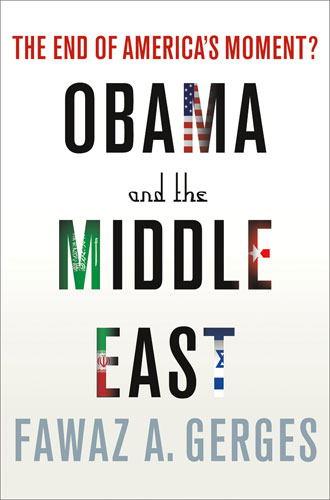
Cover of Obama and the Middle East. Image via Macmillan.
Looking US foreign policy objectives in the Middle East under various administrations (with particular focus on Bush’s two terms and under current President Obama), Gerges reasons that “the region’s importance lay in preserving western access to two-thirds of the world’s oil reserves, the longstanding commitment to the security and well-being of Israel and the stability of America’s traditional arab allies, particularly Saudi Arabia, the Gulf sheikdoms and Egypt” (p. 17). The uprisings by the “Tahrir generation” was the first tangible sign of America’s disengagement in the ME. “While Obama officials debated what to say and do, protesters seized the moment” (p. 107) allowing them to finally be the real force of democratic change in their countries. Ultimately, Gerges concludes, the real challenge facing President Obama is whether “he can align US foreign policy with progressive and democratic voices in the region” (p. 246).
The book also reviews the historical context of America’s involvement in the Middle East – from the end of World War II to the post-Cold War era. In addition to President Obama’s policies in the region, the Bush Doctrine that supplied the ideological foundation for the “global war on terrorism” and the hunt for Al Qaeda (the invasion of Afghanistan and the war in Iraq) is similarly discussed. Gerges actually dedicates an entire chapter to the “war on terror.” A requisite chapter on the Israeli-Palestinian Peace process is also provided. The “pivotal states” of Egypt, Iran and Turkey are considered as emerging regional contenders for challenging American dominance in the ME. Finally, Gerges concludes that while foreign policy in the Middle East under President Obama has more continuity with the past than real change, he concedes that “an attempt has also been made to normalize America’s relations with Muslims and to make a break with the Bush legacy of moral crusading and social engineering.”
The book is incredibly well researched and I happen to largely agree with his premise that U.S. dominance in the Middle East is declining. Gerges, however, does not take into account the politicization of women’s rights in the Middle East and the role of this phenomenon in facilitating the implementation of Bush’s Freedom Agenda. In his chapter “The Bush Doctrine,” Gerges discusses the Freedom Agenda, which the former President believed would “reinforce fragile democracies, support democratic dissidents in countries suffering from oppressive rule and promote human rights”. The underlying logic was that by transforming the structure of Middle Eastern – mostly Muslim – societies, the U.S., post 9-11, would eradicate the root causes of extremism. The invasion of Iraq was part and parcel of the Freedom Agenda. But Gerges does not touch upon how the former President depicted the invasion of Iraq as a path to women’s empowerment which happened to fit under his doctrine to promote human rights in the Middle East.
In the book, What Kind of Liberation?: Women and the Occupation of Iraq, authors Nadje Al-Ali and Nicola Pratt explain how Condoleezza Rice and Laura Bush were part of a campaign to reassure the world that the U.S. was actually concerned with women’s liberation in Iraq. The book actually concludes that women in Iraq are worse off, a conclusion further supported by scholarly work on the rights of women post-American occupation.
In Leila Ahmed’s seminal Women and Gender in Islam: Historical Roots of a Modern Debate, she explains that European colonizers used the pretext of Muslims mistreating women as a justifiable reason for colonial domination. This premise in part facilitated American occupation of Iraq in the present day (the search for WMDs being the main imperative for then-President Bush). The U.S. National Security Strategy under Obama (and Secretary Clinton) states, “Countries are more peaceful and prosperous when women are accorded full and equal rights and opportunity.” While this statement holds true when applied to individual nations, further efforts to politicize women’s rights in predominantly Muslim countries will continue to be met with discord and may serve to further detract the U.S. from its foreign policy objectives.
Conversely, in “Paradise Beneath Her Feet,” Council on Foreign Relations expert Isobel Coleman proposes an alternative solution to the beneficiaries of American foreign policy. She makes the case that the emerging Islamic feminist movement is the most effective way to empower women in the “greater Middle East,” a region that she takes to Iran, Pakistan, Afghanistan, Iraq, and Saudi Arabia. She argues that Islamic feminism holds special credibility and grassroots appeal and can ultimately benefit the stability and prosperity of the greater Middle East in addition to their relationships with the West. Coleman also recommends that the U.S. limit its role to providing “technical expertise” and “financial assistance,” the latter of which in particular can be problematic in some Muslim nations where Western aid is perceived to come with an agenda.
The Middle East is a key foreign policy area for the U.S., and since the region is host to the current Arab Spring, war- and occupation-ravaged Iraq, and a number of other issues, the status of women in the region is a cross-cutting issue and one that is continuously pushed under the microscope. It has therefore become important to take into account the challenges of gendering development through U.S. foreign policy. Foreign policy experts are now beginning to consider how a “gender perspective” is relevant not only to those concerned with making the world better for women, but also to anybody who cares about military effectiveness, alliance stability, democracy promotion, actionable intelligence, the stem of pandemic disease, or successful nation-building. In this respect, while Gerges provides a meticulous assessment on America’s declining role in the Middle East, a gendered analysis on how America’s foreign policy engagements affect the female half of the population in this region would be an important perspective to include in his analysis. In the end, while promoting gender-based development in developing countries is important, a homegrown movement that understands the economic and social deficiencies of oppressing women is the most efficient way to ensure real change. The question however remains: will foreign policy under President Obama allow for such movements in the Middle East to meet with success?
Previous Post

June 25, 2012
Re-Humanize Me: Risky or Repetitive?
Next Post

June 27, 2012 The “Muslim Kristallnacht” and a Swiss Twittergate
Browse Our Archives
Select a Category Advertisements Art/Theater Books/Magazines Cinema Comics/Cartoons Culture/Society Events Fashion Film Friday Links Merchandise/Commodities MMW Announcements MMW Highlights Music/Radio News Photography Politics Profile Ramadan 2012 Ramadan 2013 Ramadan 2014 Ramadan 2015 Roundtable Satire Social Media Sports Technology/Science Television Uncategorized Video Web
Select a Month November 2015 October 2015 September 2015 August 2015 July 2015 June 2015 May 2015 April 2015 March 2015 January 2015 December 2014 November 2014 October 2014 September 2014 July 2014 June 2014 May 2014 April 2014 March 2014 February 2014 January 2014 December 2013 November 2013 October 2013 September 2013 August 2013 July 2013 June 2013 May 2013 April 2013 March 2013 February 2013 January 2013 December 2012 November 2012 October 2012 September 2012 August 2012 July 2012 June 2012 May 2012 April 2012 March 2012 February 2012 January 2012 December 2011 November 2011 September 2011 August 2011 July 2011 June 2011 May 2011 April 2011 March 2011 February 2011 January 2011 December 2010 November 2010 October 2010 September 2010 August 2010 July 2010 June 2010 May 2010 April 2010 March 2010 February 2010 January 2010 December 2009 November 2009 October 2009 September 2009 August 2009 July 2009 June 2009 May 2009 April 2009 March 2009 February 2009 January 2009 December 2008 November 2008 October 2008 September 2008 August 2008 July 2008 June 2008 May 2008 April 2008 March 2008 February 2008 January 2008 December 2007 November 2007 October 2007 September 2007 August 2007
Follow Us!
TAKE THE
Religious Wisdom Quiz
True or False: Ezekiel was commanded to lie on his left side for 390 days and his right side for 40 days.
Select your answer to see how you score.
TRUE FALSE
Related posts from Muslimah Media Watch

Book review: Jewels of Allah by Nina Ansary



Why British MP’s statements defending Muslim women do...
TRENDING AT PATHEOS Muslim

25 Years Later: How Much Has Changed for...
As we approach the 25th anniversary of September 11th, I’ve found myself...

Podcast: Third Spaces & The Rise of Yemeni...
In the latest episode of The Artistic Foodies Podcast, hosts Abbas...

HalalFest Picks: Best 60 Halal Spots for Super...
Back in 2016, I came up with a list of 29...

Unity Is America’s Strength — Division Is Its...
by Hidayatullah Ahsan When Valentina Gomez, a Republican candidate for Congress in...

Zohran Mamdani and New York’s Fight Against Islamophobia
This past June, against all odds, Zohran Mamdani won the Democratic primary...

What the Fourth of July Means to a...
As we mark another Fourth of July, millions of Americans will celebrate...
view all Muslim blogs
Ad-Free & Subscriber Log-In Subscription Support
- About Us
- 2026 Calendar
- Videos
- Podcasts
- Library of World Religions
- Faith In Media Tracker
- Advertise With Us
- Write for Us
- Privacy Policy
- Terms of Service
- Do Not Sell My Data
- Contact Us
- Radiant Digital
- Manage Newsletter Subscriptions
- Unsubscribe From Notifications
- Sitemap
Copyright 2008-2026, Patheos. All rights reserved.
Subscription Support Ad-Free & Subscriber Log-In
Follow Patheos