
BuddhistCatholicContemplativeEvangelicalGeneral ChristianHinduJewishLatter-day SaintMuslimNew VisionsProgressive Christian
Beliefs
- Buddhist
- Catholic
- Contemplative
- Evangelical
- General Christian
- Hindu
- Jewish
- Latter-day Saint
- More Voices
- Muslim
- New Visions
- Pagan
- Progressive Christian
Topics
- Religion News
- Food and Religion
- Sports and Religion
- Religious Art
- Religious Music and Entertainment
- Religious Events
- History and Religion
- Style and Religion
- Politics and Religion
- Women in Religion
- Recreation Outdoors and Religion
- Business Finance and Religion
- Careers Workplace and Religion
- Education and Religion
- Family Parenting and Religion
- Health Fitness and Religion
- Home and Religion
- Relationships and Religion
- Technology and Religion
- Travel and Religion
Columnists
- Buddhist Columnists
- Business Finance and Religion Columnists
- Careers Workplace and Religion Columnists
- Catholic Columnists
- Contemplative Columnists
- Education and Religion Columnists
- Evangelists Columnists
- Family Parenting and Religion Columnists
- General Christian Columnists
- Health Fitness and Religion Columnists
- Hindu Columnists
- History and Religion Columnists
- Home and Religion Columnists
- Jewish Columnists
- More Voices Columnists
- Latter Day Columnists
- Muslim Columnists
- New Visions Columnists
- Nonreligious Columnists
- Pagan Columnists
- Politics and Religion Columnists
- Progressive Columnists
- Recreation Outdoors and Religion Columnists
- Relationships and Religion Columnists
- Religion News Columnists
- Religious Art Columnists
- Religious Events Columnists
- Religious Music and Entertainment Columnists
- Sports and Religion Columnists
- Style and Religion Columnists
- Technology and Religion Columnists
- Travel and Religion Columnists
- Women in Religion Columnists
Resource Library
- 2026 Calendar
- Library of World Religions
- The 100 Most Holy Places on Earth
- Patheos Answers
- Podcasts
- Videos
- Faith Leaders Database
- Anglican Episcopalian
- Bahai
- Baptist
- Buddhism
- Christianity
- Confucianism
- Eastern Orthodoxy
- Hinduism
- Holiness and Pentecostal
- ISKCON
- Islam
- Judaism
- Lutheran
- Methodist
- The Church of Jesus Christ of Latter-day Saints
- New Age
- Paganism
- Presbytarian and Reformed
- Protestantism
- Religion Behind the Scenes
- Roman Catholic
- Scientology
- Shia Islam
- Sikhism
- Sufism
- Sunni Islam
- Taoism
- Zen
- See all religions
Research Tools
 Ad-Free & Subscriber Log-In Subscription Support
Ad-Free & Subscriber Log-In Subscription Support
Follow Patheos 

- Trending:
- Forgiveness
- |
- Marriage
- |
- Consciousness
- |
- Death Penalty
- |
- Election
- |
- Halloween
 Muslimah Media Watch
- Home
- Muslim
- Religion News
- Book Review: The Good Muslim
Book Review: The Good Muslim
Last updated on: May 17, 2012 at 2:00 am by Guest Contributor
Book Review: The Good Muslim 2012-05-16T14:39:15-04:00 Guest Contributor
Patheos Explore the world's faith through different perspectives on religion and spirituality! Patheos has the views of the prevalent religions and spiritualities of the world.
This piece was written by Sarah Farrukh, and originally posted at altmuslimah.
Written by Tahmima Anam, The Good Muslim is the story of an educated, “modern” woman who loses her brother to Islamic fundamentalism. And perhaps this storyline is why the book has garnered so many rave reviews and literary awards—because Western critics and audiences enjoy literature that confirms their worst suspicions about Muslims. Its premise, a young woman’s struggle to find meaning in a post-war, newly-independent Bangladesh that had emerged out of one of the darkest periods of the Indian subcontinent’s history, intrigued me.
As someone who reviews books from a faith-based perspective, the book’s title, The Good Muslim, also piqued my interest. Although I had not read Anam’s preceding book A Golden Age, I picked this one up.
Alas, the novel didn’t deliver.
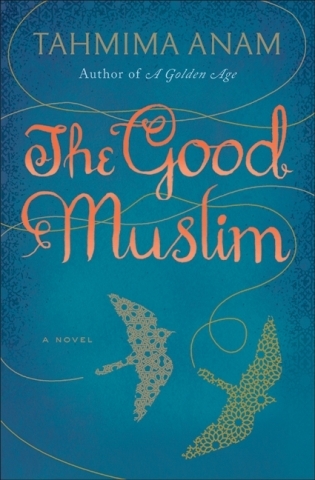
Cover of The Good Muslim. Image via Wikipedia.
One of the reasons I can’t say I enjoyed this piece of writing is its tiresome motif of a “modern” woman in a “backward” society. The protagonist, Maya, is a doctor and a fiercely independent woman who left home after her war veteran brother Sohail became so distant and deeply religious that she knew their relationship would never return to its happier, easy state again. Maya’s strong intellect and will continuously puts her at odds with her environment: she writes for an underground radical publication, she is banished from a village for defending a pregnant woman, and she alone pleads with her brother to not send his son to the local madrassa. Her bright and bold character is admirable in theory, but for someone who has never lived outside of Bangladesh, she persistently gives one the impression of being a foreigner in her own country. In a tumultuous, confused world, she appears to be the only one who has any common sense or consistency to her principles, a contrast I found suspiciously simplistic.
Anam makes yet another severe and therefore overly simple and naïve contrast in her book. She uses Islam to delineate stark “before” and “after” scenarios in Maya’s household. Prior to the war, Maya, her brother, and their college friends lived in a carefree, open world where they attended debates, music recitals, and poetry readings without giving a thought to religion and its place in their lives (and it is Maya’s insistence upon holding on to this distant past that later alienates her from her family and community). After the war however, Sohail returns home so haunted by the atrocities he both witnessed and committed that he completely disavows his older self, finding refuge in the rules and absolutes of religion. As Sohail burns his books, which he sees as the useless relics of his educated past, there is a haunting echo: “There can only be One.” Apparently, tawhid—belief in the Oneness of God, that everyone and everything is connected to Him—leaves no room for a literary inner existence. This sort of rigid either/or mindset that Anam paints in Maya’s household is both inaccurate and off-putting in its simplicity.
By describing Maya’s home life before the war as ideal and afterwards as bleak, Anam carelessly suggests that the human condition would be so much better “only if it weren’t for religion.” I acknowledge that there are men like Sohail who turn to religion to make sense of war and poverty, and, in seeking this refugee, they become zealous and extreme. I even accept that religion can become a source of harm for one who has experienced a dark side of human existence like war. What does sit well with me however, is Anam’s implication that Sohail becomes a neglectful father, distant brother, and absent son because religion—rather than war—left him psychologically damaged.
The ostracized but heroic Maya serves as a likable enough guide to take the reader though this foreign, exotic land, but the increasingly predictable stereotypes used by Anam–the overbearing religious patriarch, the child who falls victim to a sexual predator in a religious institution, and a religion that demands its adherents disavow all worldly pursuits—feel trite. This book will not resonate with someone who might know something of war or its aftermath. It is intended to speak to Western readers who can relate enough to Maya’s carefree pre-war life but remain far enough removed from her post-war reality that they can easily identify with her alienation and shake their heads disapprovingly at the atrocities taking place “over there.” It is disconcerting to think that a book which paints such a simplistic, skewed portrait of Islam and Muslims has garnered so many awards.
Previous Post

May 15, 2012
Maria Toor Pakay vs. the World
Next Post

May 18, 2012 Friday Links | May 18, 2012
Browse Our Archives
Select a Category Advertisements Art/Theater Books/Magazines Cinema Comics/Cartoons Culture/Society Events Fashion Film Friday Links Merchandise/Commodities MMW Announcements MMW Highlights Music/Radio News Photography Politics Profile Ramadan 2012 Ramadan 2013 Ramadan 2014 Ramadan 2015 Roundtable Satire Social Media Sports Technology/Science Television Uncategorized Video Web
Select a Month November 2015 October 2015 September 2015 August 2015 July 2015 June 2015 May 2015 April 2015 March 2015 January 2015 December 2014 November 2014 October 2014 September 2014 July 2014 June 2014 May 2014 April 2014 March 2014 February 2014 January 2014 December 2013 November 2013 October 2013 September 2013 August 2013 July 2013 June 2013 May 2013 April 2013 March 2013 February 2013 January 2013 December 2012 November 2012 October 2012 September 2012 August 2012 July 2012 June 2012 May 2012 April 2012 March 2012 February 2012 January 2012 December 2011 November 2011 September 2011 August 2011 July 2011 June 2011 May 2011 April 2011 March 2011 February 2011 January 2011 December 2010 November 2010 October 2010 September 2010 August 2010 July 2010 June 2010 May 2010 April 2010 March 2010 February 2010 January 2010 December 2009 November 2009 October 2009 September 2009 August 2009 July 2009 June 2009 May 2009 April 2009 March 2009 February 2009 January 2009 December 2008 November 2008 October 2008 September 2008 August 2008 July 2008 June 2008 May 2008 April 2008 March 2008 February 2008 January 2008 December 2007 November 2007 October 2007 September 2007 August 2007
Follow Us!
TAKE THE
Religious Wisdom Quiz
True or False: 2 Peter warns that false teachers will secretly introduce destructive heresies.
Select your answer to see how you score.
FALSE TRUE
Related posts from Muslimah Media Watch

Book review: Jewels of Allah by Nina Ansary

Book Review: Faïza Zerouala's Voices Behind the Veil

Making Sense of “the Other”: A Review of...

TRENDING AT PATHEOS Muslim

25 Years Later: How Much Has Changed for...
As we approach the 25th anniversary of September 11th, I’ve found myself...

Podcast: Third Spaces & The Rise of Yemeni...
In the latest episode of The Artistic Foodies Podcast, hosts Abbas...

HalalFest Picks: Best 60 Halal Spots for Super...
Back in 2016, I came up with a list of 29...

Unity Is America’s Strength — Division Is Its...
by Hidayatullah Ahsan When Valentina Gomez, a Republican candidate for Congress in...

Zohran Mamdani and New York’s Fight Against Islamophobia
This past June, against all odds, Zohran Mamdani won the Democratic primary...

What the Fourth of July Means to a...
As we mark another Fourth of July, millions of Americans will celebrate...
view all Muslim blogs
Ad-Free & Subscriber Log-In Subscription Support
- About Us
- 2026 Calendar
- Videos
- Podcasts
- Library of World Religions
- Faith In Media Tracker
- Advertise With Us
- Write for Us
- Privacy Policy
- Terms of Service
- Do Not Sell My Data
- Contact Us
- Radiant Digital
- Manage Newsletter Subscriptions
- Unsubscribe From Notifications
- Sitemap
Copyright 2008-2026, Patheos. All rights reserved.
Subscription Support Ad-Free & Subscriber Log-In
Follow Patheos