
BuddhistCatholicContemplativeEvangelicalGeneral ChristianHinduJewishLatter-day SaintMuslimNew VisionsProgressive Christian
Beliefs
- Buddhist
- Catholic
- Contemplative
- Evangelical
- General Christian
- Hindu
- Jewish
- Latter-day Saint
- More Voices
- Muslim
- New Visions
- Pagan
- Progressive Christian
Topics
- Religion News
- Food and Religion
- Sports and Religion
- Religious Art
- Religious Music and Entertainment
- Religious Events
- History and Religion
- Style and Religion
- Politics and Religion
- Women in Religion
- Recreation Outdoors and Religion
- Business Finance and Religion
- Careers Workplace and Religion
- Education and Religion
- Family Parenting and Religion
- Health Fitness and Religion
- Home and Religion
- Relationships and Religion
- Technology and Religion
- Travel and Religion
Columnists
- Buddhist Columnists
- Business Finance and Religion Columnists
- Careers Workplace and Religion Columnists
- Catholic Columnists
- Contemplative Columnists
- Education and Religion Columnists
- Evangelists Columnists
- Family Parenting and Religion Columnists
- General Christian Columnists
- Health Fitness and Religion Columnists
- Hindu Columnists
- History and Religion Columnists
- Home and Religion Columnists
- Jewish Columnists
- More Voices Columnists
- Latter Day Columnists
- Muslim Columnists
- New Visions Columnists
- Nonreligious Columnists
- Pagan Columnists
- Politics and Religion Columnists
- Progressive Columnists
- Recreation Outdoors and Religion Columnists
- Relationships and Religion Columnists
- Religion News Columnists
- Religious Art Columnists
- Religious Events Columnists
- Religious Music and Entertainment Columnists
- Sports and Religion Columnists
- Style and Religion Columnists
- Technology and Religion Columnists
- Travel and Religion Columnists
- Women in Religion Columnists
Resource Library
- 2026 Calendar
- Library of World Religions
- The 100 Most Holy Places on Earth
- Patheos Answers
- Podcasts
- Videos
- Faith Leaders Database
- Anglican Episcopalian
- Bahai
- Baptist
- Buddhism
- Christianity
- Confucianism
- Eastern Orthodoxy
- Hinduism
- Holiness and Pentecostal
- ISKCON
- Islam
- Judaism
- Lutheran
- Methodist
- The Church of Jesus Christ of Latter-day Saints
- New Age
- Paganism
- Presbytarian and Reformed
- Protestantism
- Religion Behind the Scenes
- Roman Catholic
- Scientology
- Shia Islam
- Sikhism
- Sufism
- Sunni Islam
- Taoism
- Zen
- See all religions
Research Tools
 Ad-Free & Subscriber Log-In Subscription Support
Ad-Free & Subscriber Log-In Subscription Support
Follow Patheos 

- Trending:
- Forgiveness
- |
- Marriage
- |
- Consciousness
- |
- Death Penalty
- |
- Election
- |
- Halloween
 Muslimah Media Watch
- Home
- Muslim
- Religion News
- I Heart Humsafar
I Heart Humsafar
Last updated on: March 12, 2012 at 2:00 am by merium
I Heart Humsafar 2012-03-11T17:46:15-04:00 merium
Patheos Explore the world's faith through different perspectives on religion and spirituality! Patheos has the views of the prevalent religions and spiritualities of the world.
This post contains some spoilers.
While I was visiting family and friends these past winter holidays, there was one sigh on everyone’s lips: Humsafar. Even as I write this, I’m taking a deep breath, feeling both exhilarated and wishful, thinking about Khirad and Asher, and their various relationship trials and tribulations. And if you’re already shaking your head in dismay, no, this is not another piece on South Asian dating traditions but rather a reference to the main protagonists of a very popular TV series taking Pakistan (and many South Asian communities abroad) by storm.
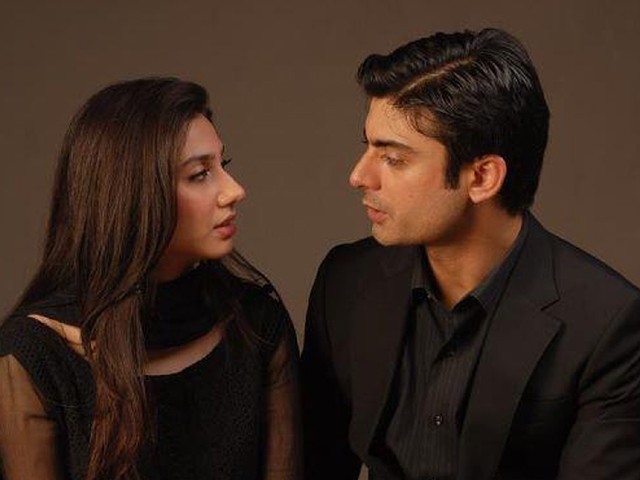
Main characters of Humsafar. Image via The Express Tribune.
“Humsafar” translates literally to “travelling companion” and this is where English can be so limiting. In actuality, “Humsafar,” an Urdu word, conveys a perfectly nuanced reference to one’s soul mate. It alludes to a partnership, a companion or significant other that helps you face the complexities of life’s pleasures and challenges. Based on a novel by Farhat Ishtiaq and a production of Hum TV, the show tells the story of a young woman, Khirad, as she enters into an arranged marriage with the more affluent and worldly Asher. The story unfolds as the couple faces a number of challenges, both at home, as a newly married couple with expectations to succeed, and externally, from people within Asher’s upper class, social network, some of whom look down at Khirad’s purported small town naïveté. Also complicating the events is Khirad’s mother-in-law, providing the requisite foil to Khirad’s happy ending with Asher. While this story is not original, the superb acting by the leads is both compelling and engrossing. The chemistry between the main protagonists is particularly noteworthy. For the first time, as an avid TV junkie, I was able to associate the Western TV idiom of “UST” or “unresolved sexual tension” with the main leads, and fervently hoped for a happy ending.
The story develops likes a primetime soap, minus the oft exaggerated sexual exploits found in some Western TV shows. Overt romantic displays of affection are not tolerated between characters (let alone living *cough* breathing souls outside of television) and any references to such are implicit, so that romantic encounters include minimal hand holding; gentle, slowly drawn-out shoulder touches; and gazing/staring into each other’s eyes whilst a slightly melodramatic soundtrack soars to a climax. To good effect, I might add – Humsafar employs this effectively throughout the show.
Pakistani TV dramas (as they are oft referred to) usually carry some elements of prevailing socio-economic and political conditions though Humsafar does not break any social or cultural barriers – gendered roles are obvious and patriarchal undertones are prevalent. What it has successfully accomplished instead is making its characters exceedingly relatable, explaining in part the show’s popularity.
Unfortunately, however, it plays upon common stereotypes of Pakistani women. Mother- and daughter-in-law entanglements are common fodder for TV melodramas and Humsafar is no different. Its execution of this particular storyline was, in my opinion, a surprise development, with the viewers learning of the character’s evil intentions much later in the show; kudos to the director for shaking things up.
Additionally, it continues to play the woman-as-victim card, something prevalent in other TV shows that I had the opportunity to watch over winter break (I’m looking at you, Meri Zaat Zara-e-Benishan). My mother (an avid fan too) jokingly suggested that, with all the tears that Khirad has wept during the course of the show, she should be exceedingly dehydrated by now. But jokes aside, after being treated abysmally by her husband and mother, Khirad returns to Asher, seeking his support when she is unable to provide for her daughter’s medical fees. While such follow-through is consistent with religious laws and therefore expected, the show was unable to suggest circumstances whereby Khirad would have acquired financial independence – for example, as a career woman in her own right, since she’s depicted as being studious and having a fondness for mathematics, making the idea of her forging a successful career path entirely plausible.
Sara is another romantic foil to Asher and Khirad’s burgeoning romance; she is depicted as a rich, society girl with a cold heart. While Khirad speaks exclusively in Urdu, Sara peppers her conversation with English phrases and expressions; Khirad observes the hijab on several occasions while Sara wears body defining western clothes; Sara works while Khirad stays at home – the list goes on. Ultimately, the stereotypical English speaking, Western dressing and working single women in affluent circles as Godless and manipulative – not to mention shrill – is doing Pakistani women of similar backgrounds a disservice.
I watched the series finale with millions of my fellow Pakistanis this week and I can finally breathe a sigh of relief. It was a worthy ending; Asher and Khirad were united, and their precocious 4 year old Hareem was icing on the cake. While I wince through some of the less-than-accurate (read stereotypical) portrayals of women in Pakistani society on Humsafar, I leave the show immensely entertained. This speaks volumes, considering I haven’t been this enraptured by a Pakistani TV show in almost a decade. The story isn’t ideal, but if you’re looking for love triangles, deaths, jealousy, malicious mothers-in-law, bits of medical drama, exceedingly good-looking leads oozing chemistry, and all the other staples of a Pak TV drama, do give Humsafar a try.
Previous Post

March 9, 2012
Friday Links | March 9, 2012
Browse Our Archives
Select a Category Advertisements Art/Theater Books/Magazines Cinema Comics/Cartoons Culture/Society Events Fashion Film Friday Links Merchandise/Commodities MMW Announcements MMW Highlights Music/Radio News Photography Politics Profile Ramadan 2012 Ramadan 2013 Ramadan 2014 Ramadan 2015 Roundtable Satire Social Media Sports Technology/Science Television Uncategorized Video Web
Select a Month November 2015 October 2015 September 2015 August 2015 July 2015 June 2015 May 2015 April 2015 March 2015 January 2015 December 2014 November 2014 October 2014 September 2014 July 2014 June 2014 May 2014 April 2014 March 2014 February 2014 January 2014 December 2013 November 2013 October 2013 September 2013 August 2013 July 2013 June 2013 May 2013 April 2013 March 2013 February 2013 January 2013 December 2012 November 2012 October 2012 September 2012 August 2012 July 2012 June 2012 May 2012 April 2012 March 2012 February 2012 January 2012 December 2011 November 2011 September 2011 August 2011 July 2011 June 2011 May 2011 April 2011 March 2011 February 2011 January 2011 December 2010 November 2010 October 2010 September 2010 August 2010 July 2010 June 2010 May 2010 April 2010 March 2010 February 2010 January 2010 December 2009 November 2009 October 2009 September 2009 August 2009 July 2009 June 2009 May 2009 April 2009 March 2009 February 2009 January 2009 December 2008 November 2008 October 2008 September 2008 August 2008 July 2008 June 2008 May 2008 April 2008 March 2008 February 2008 January 2008 December 2007 November 2007 October 2007 September 2007 August 2007
Follow Us!
TAKE THE
Religious Wisdom Quiz
How many books does the Old Testament have?
Select your answer to see how you score.
39 50 51 41
Related posts from Muslimah Media Watch


Has Quantico got positive female Muslim roles covered?

When Invisibility is a Superpower: Farah Nazan in...

Making Sense of “the Other”: A Review of...
TRENDING AT PATHEOS Muslim

25 Years Later: How Much Has Changed for...
As we approach the 25th anniversary of September 11th, I’ve found myself...

Podcast: Third Spaces & The Rise of Yemeni...
In the latest episode of The Artistic Foodies Podcast, hosts Abbas...

HalalFest Picks: Best 60 Halal Spots for Super...
Back in 2016, I came up with a list of 29...

Unity Is America’s Strength — Division Is Its...
by Hidayatullah Ahsan When Valentina Gomez, a Republican candidate for Congress in...

Zohran Mamdani and New York’s Fight Against Islamophobia
This past June, against all odds, Zohran Mamdani won the Democratic primary...

What the Fourth of July Means to a...
As we mark another Fourth of July, millions of Americans will celebrate...
view all Muslim blogs
Ad-Free & Subscriber Log-In Subscription Support
- About Us
- 2026 Calendar
- Videos
- Podcasts
- Library of World Religions
- Faith In Media Tracker
- Advertise With Us
- Write for Us
- Privacy Policy
- Terms of Service
- Do Not Sell My Data
- Contact Us
- Radiant Digital
- Manage Newsletter Subscriptions
- Unsubscribe From Notifications
- Sitemap
Copyright 2008-2026, Patheos. All rights reserved.
Subscription Support Ad-Free & Subscriber Log-In
Follow Patheos