
BuddhistCatholicContemplativeEvangelicalGeneral ChristianHinduJewishLatter-day SaintMuslimNew VisionsProgressive Christian
Beliefs
- Buddhist
- Catholic
- Contemplative
- Evangelical
- General Christian
- Hindu
- Jewish
- Latter-day Saint
- More Voices
- Muslim
- New Visions
- Pagan
- Progressive Christian
Topics
- Religion News
- Food and Religion
- Sports and Religion
- Religious Art
- Religious Music and Entertainment
- Religious Events
- History and Religion
- Style and Religion
- Politics and Religion
- Women in Religion
- Recreation Outdoors and Religion
- Business Finance and Religion
- Careers Workplace and Religion
- Education and Religion
- Family Parenting and Religion
- Health Fitness and Religion
- Home and Religion
- Relationships and Religion
- Technology and Religion
- Travel and Religion
Columnists
- Buddhist Columnists
- Business Finance and Religion Columnists
- Careers Workplace and Religion Columnists
- Catholic Columnists
- Contemplative Columnists
- Education and Religion Columnists
- Evangelists Columnists
- Family Parenting and Religion Columnists
- General Christian Columnists
- Health Fitness and Religion Columnists
- Hindu Columnists
- History and Religion Columnists
- Home and Religion Columnists
- Jewish Columnists
- More Voices Columnists
- Latter Day Columnists
- Muslim Columnists
- New Visions Columnists
- Nonreligious Columnists
- Pagan Columnists
- Politics and Religion Columnists
- Progressive Columnists
- Recreation Outdoors and Religion Columnists
- Relationships and Religion Columnists
- Religion News Columnists
- Religious Art Columnists
- Religious Events Columnists
- Religious Music and Entertainment Columnists
- Sports and Religion Columnists
- Style and Religion Columnists
- Technology and Religion Columnists
- Travel and Religion Columnists
- Women in Religion Columnists
Resource Library
- 2026 Calendar
- Library of World Religions
- The 100 Most Holy Places on Earth
- Patheos Answers
- Podcasts
- Videos
- Faith Leaders Database
- Anglican Episcopalian
- Bahai
- Baptist
- Buddhism
- Christianity
- Confucianism
- Eastern Orthodoxy
- Hinduism
- Holiness and Pentecostal
- ISKCON
- Islam
- Judaism
- Lutheran
- Methodist
- The Church of Jesus Christ of Latter-day Saints
- New Age
- Paganism
- Presbytarian and Reformed
- Protestantism
- Religion Behind the Scenes
- Roman Catholic
- Scientology
- Shia Islam
- Sikhism
- Sufism
- Sunni Islam
- Taoism
- Zen
- See all religions
Research Tools
 Ad-Free & Subscriber Log-In Subscription Support
Ad-Free & Subscriber Log-In Subscription Support
Follow Patheos 

- Trending:
- Forgiveness
- |
- Marriage
- |
- Consciousness
- |
- Death Penalty
- |
- Election
- |
- Halloween
 Muslimah Media Watch
- Home
- Muslim
- Religion News
- Book Review: Desperate in Dubai
Book Review: Desperate in Dubai
Last updated on: March 29, 2012 at 2:00 am by safiyyah
Book Review: Desperate in Dubai 2012-03-28T13:43:15-04:00 safiyyah
Patheos Explore the world's faith through different perspectives on religion and spirituality! Patheos has the views of the prevalent religions and spiritualities of the world.
Desperate in Dubai, a cheeky exposé novel based on the original blog written by Ameera al-Hakawati (a pseudonym), revolves around the lives of four women who live, love, and labour in the sparkling Gulf city of Dubai.
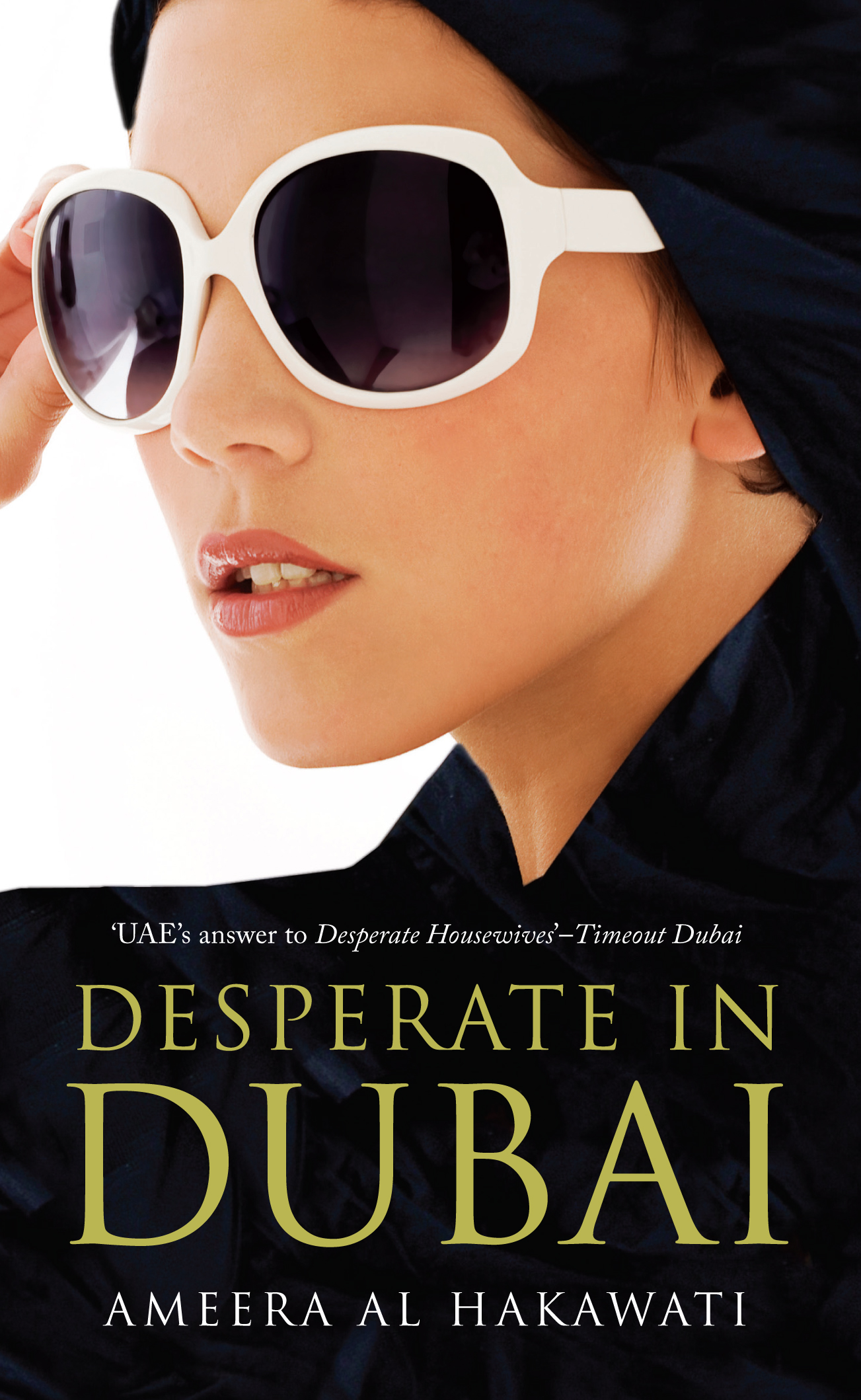
Cover of Desperate in Dubai.
I recently had the chance to catch up with al-Hakawati in Dubai, to chat about her book, her faith, and the politics of anonymous writing as a Muslim woman.
British-born Al-Hakawati says she knew she had to write a book about Dubai the moment she arrived in what she describes as the “craziness and diversity” of the city. She initially chose to write anonymously due to the salacious nature of the book, particularly as she would be writing about Arab and Muslim women in an Arab country. Later on, her anonymity developed into more than a tactic to avoid censorship, and became what she calls a “liberating tool,” allowing her to write at leisure about taboo subjects concerning Muslim women, such as sexuality and extra-marital relationships. She was able to explore the lives of Muslim women, without worrying about what people thought about her as a Muslimah. She has faced some hiccups along the way, with her blog being banned and her books being temporarily taken off the shelves in Dubai.
Al-Hakawati felt it important to delve into aspects of women’s lives that are normally brushed under the carpet – issues like falling in love, dating, secret marriages, getting pregnant, experimenting with drugs, alcohol and men; things which do happen in reality but which Muslims like to believe do not. She writes, not to condone these actions, but to highlight the challenges facing Muslim women in the real world. She did receive a lot of criticism on the blog for writing about Muslims doing “sinful things,” but felt the issues too important to be deterred.
I read the book on the flight home from Dubai, and although it was light reading and at times simplistic or exaggerated, I did enjoy that it cast light upon aspects of Muslim women’s lives that are normally viewed through Orientalist lenses. Fashion, hijab, relationships, sex, and marriage are intertwined and feature throughout the book, and are written in as a normal part of the women’s lives. As a Muslim and a woman herself, al-Hakawati’s voice certainly lends authenticity to the narrative, which revolves around four main female characters, three of whom are Muslim.
Of the three Muslim characters in the book, one is Arab-Emirati, another of Moroccan descent, and the third a British-born Indian. Al-Hakawati chose these identities as a representation of the diversity of Muslim women, whom she feels are often lumped into the same category despite varying cultural, linguistic and national differences. The fourth character is a Lebanese Christian.
Al-Hakawati chose to write about Emirati women because a book about Dubai would be incomplete without them. Her character is a confident and rebellious young woman, constrained by her culture but always finding ways to get around it. Often viewed as exotic creatures, Emirati women are brought down to earth in al-Hakawati’s writing, which avoids falling into the usual “oppressed Arab women” storyline, despite delving into issues of patriarchy and the subjugation of women in the Gulf.
The headscarf – that seemingly ever-politicized piece of cloth – is a symbol of faith, culture and fashion in the book. For Nadia (the Moroccan), it is part and parcel of her religious identity and she manages to have a great fashion sensibility about it. For Lady Luxe (the Emirati), the headscarf, together with the abaya is a cultural necessity dictated as appropriate public decorum, and not as a symbol of piety, which al-Hakawati feels many Muslims fall into the trap of believing. Lady Luxe, despite not having any spiritual connection to hijab, has great business acumen and is an up-coming abaya designer. Sugar (the British Indian), with her strong religious convictions, does not wear the hijab, but would like to; she feels it might enhance her faith, but is too encumbered about the way she would look to do so.
As these women go about their lives, searching for love, money and happiness, religion is always present, in varying degrees of importance. I found it refreshing that religious symbols like mosques, the call to prayer, the prayer itself, hijab, halal food, and so on, are written with a sense of casualness, as not the usual air of mystery that surrounds it in much fictional work.
Whilst Desperate in Dubai is not a literary masterpiece, I enjoyed the book for its fun and spicy nature, particularly as I could relate to some of the struggles faced by the characters, as only a Muslimah can. Al-Hakawati admitted to having serious doubts about her work, often asking herself if this kind of writing is compatible with her religious convictions – coming to the realization that she was writing to highlight the everyday challenges facing Muslim women, not to titillate. I think she did so well, and adds value to the dearth of authentic literature about contemporary Muslim women.
Previous Post

March 28, 2012
Which Muslim Women Should Every Person Know?
Next Post
March 30, 2012 Friday Links | March 30, 2012
Browse Our Archives
Select a Category Advertisements Art/Theater Books/Magazines Cinema Comics/Cartoons Culture/Society Events Fashion Film Friday Links Merchandise/Commodities MMW Announcements MMW Highlights Music/Radio News Photography Politics Profile Ramadan 2012 Ramadan 2013 Ramadan 2014 Ramadan 2015 Roundtable Satire Social Media Sports Technology/Science Television Uncategorized Video Web
Select a Month November 2015 October 2015 September 2015 August 2015 July 2015 June 2015 May 2015 April 2015 March 2015 January 2015 December 2014 November 2014 October 2014 September 2014 July 2014 June 2014 May 2014 April 2014 March 2014 February 2014 January 2014 December 2013 November 2013 October 2013 September 2013 August 2013 July 2013 June 2013 May 2013 April 2013 March 2013 February 2013 January 2013 December 2012 November 2012 October 2012 September 2012 August 2012 July 2012 June 2012 May 2012 April 2012 March 2012 February 2012 January 2012 December 2011 November 2011 September 2011 August 2011 July 2011 June 2011 May 2011 April 2011 March 2011 February 2011 January 2011 December 2010 November 2010 October 2010 September 2010 August 2010 July 2010 June 2010 May 2010 April 2010 March 2010 February 2010 January 2010 December 2009 November 2009 October 2009 September 2009 August 2009 July 2009 June 2009 May 2009 April 2009 March 2009 February 2009 January 2009 December 2008 November 2008 October 2008 September 2008 August 2008 July 2008 June 2008 May 2008 April 2008 March 2008 February 2008 January 2008 December 2007 November 2007 October 2007 September 2007 August 2007
Follow Us!
TAKE THE
Religious Wisdom Quiz
Which prophet raised a dead boy to life for the Shunammite woman?
Select your answer to see how you score.
Elisha Elijah Isaiah Samuel
Related posts from Muslimah Media Watch

Book review: Jewels of Allah by Nina Ansary

Book Review: Faïza Zerouala's Voices Behind the Veil

Making Sense of “the Other”: A Review of...

TRENDING AT PATHEOS Muslim

25 Years Later: How Much Has Changed for...
As we approach the 25th anniversary of September 11th, I’ve found myself...

Podcast: Third Spaces & The Rise of Yemeni...
In the latest episode of The Artistic Foodies Podcast, hosts Abbas...

HalalFest Picks: Best 60 Halal Spots for Super...
Back in 2016, I came up with a list of 29...

Unity Is America’s Strength — Division Is Its...
by Hidayatullah Ahsan When Valentina Gomez, a Republican candidate for Congress in...

Zohran Mamdani and New York’s Fight Against Islamophobia
This past June, against all odds, Zohran Mamdani won the Democratic primary...

What the Fourth of July Means to a...
As we mark another Fourth of July, millions of Americans will celebrate...
view all Muslim blogs
Ad-Free & Subscriber Log-In Subscription Support
- About Us
- 2026 Calendar
- Videos
- Podcasts
- Library of World Religions
- Faith In Media Tracker
- Advertise With Us
- Write for Us
- Privacy Policy
- Terms of Service
- Do Not Sell My Data
- Contact Us
- Radiant Digital
- Manage Newsletter Subscriptions
- Unsubscribe From Notifications
- Sitemap
Copyright 2008-2026, Patheos. All rights reserved.
Subscription Support Ad-Free & Subscriber Log-In
Follow Patheos