
BuddhistCatholicContemplativeEvangelicalGeneral ChristianHinduJewishLatter-day SaintMuslimNew VisionsProgressive Christian
Beliefs
- Buddhist
- Catholic
- Contemplative
- Evangelical
- General Christian
- Hindu
- Jewish
- Latter-day Saint
- More Voices
- Muslim
- New Visions
- Pagan
- Progressive Christian
Topics
- Religion News
- Food and Religion
- Sports and Religion
- Religious Art
- Religious Music and Entertainment
- Religious Events
- History and Religion
- Style and Religion
- Politics and Religion
- Women in Religion
- Recreation Outdoors and Religion
- Business Finance and Religion
- Careers Workplace and Religion
- Education and Religion
- Family Parenting and Religion
- Health Fitness and Religion
- Home and Religion
- Relationships and Religion
- Technology and Religion
- Travel and Religion
Columnists
- Buddhist Columnists
- Business Finance and Religion Columnists
- Careers Workplace and Religion Columnists
- Catholic Columnists
- Contemplative Columnists
- Education and Religion Columnists
- Evangelists Columnists
- Family Parenting and Religion Columnists
- General Christian Columnists
- Health Fitness and Religion Columnists
- Hindu Columnists
- History and Religion Columnists
- Home and Religion Columnists
- Jewish Columnists
- More Voices Columnists
- Latter Day Columnists
- Muslim Columnists
- New Visions Columnists
- Nonreligious Columnists
- Pagan Columnists
- Politics and Religion Columnists
- Progressive Columnists
- Recreation Outdoors and Religion Columnists
- Relationships and Religion Columnists
- Religion News Columnists
- Religious Art Columnists
- Religious Events Columnists
- Religious Music and Entertainment Columnists
- Sports and Religion Columnists
- Style and Religion Columnists
- Technology and Religion Columnists
- Travel and Religion Columnists
- Women in Religion Columnists
Resource Library
- 2026 Calendar
- Library of World Religions
- The 100 Most Holy Places on Earth
- Patheos Answers
- Podcasts
- Videos
- Faith Leaders Database
- Anglican Episcopalian
- Bahai
- Baptist
- Buddhism
- Christianity
- Confucianism
- Eastern Orthodoxy
- Hinduism
- Holiness and Pentecostal
- ISKCON
- Islam
- Judaism
- Lutheran
- Methodist
- The Church of Jesus Christ of Latter-day Saints
- New Age
- Paganism
- Presbytarian and Reformed
- Protestantism
- Religion Behind the Scenes
- Roman Catholic
- Scientology
- Shia Islam
- Sikhism
- Sufism
- Sunni Islam
- Taoism
- Zen
- See all religions
Research Tools
 Ad-Free & Subscriber Log-In Subscription Support
Ad-Free & Subscriber Log-In Subscription Support
Follow Patheos 

- Trending:
- Forgiveness
- |
- Marriage
- |
- Consciousness
- |
- Death Penalty
- |
- Election
- |
- Halloween
 Muslimah Media Watch
- Home
- Muslim
- Religion News
- Revisiting Miriam Cooke’s “Muslimwoman”
Revisiting Miriam Cooke’s “Muslimwoman”
Last updated on: January 11, 2012 at 2:00 am by tasnim
Revisiting Miriam Cooke’s “Muslimwoman” 2012-01-09T20:47:51-04:00 tasnim
Patheos Explore the world's faith through different perspectives on religion and spirituality! Patheos has the views of the prevalent religions and spiritualities of the world.
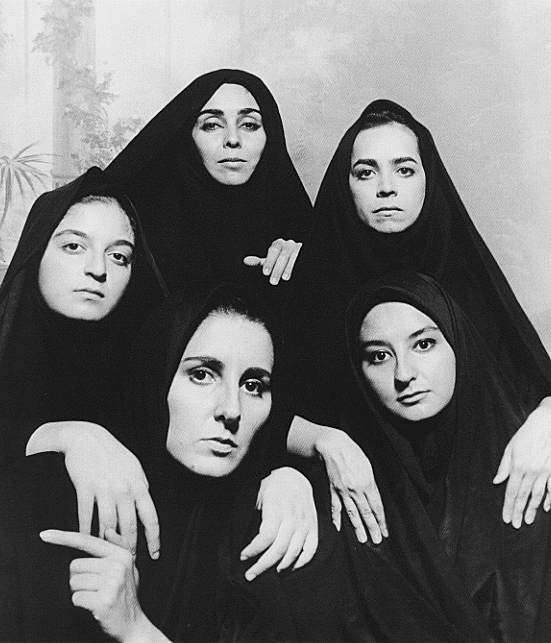
Shirin Neshat, Women of Allah.
Miriam Cooke has described her use of “Muslimwoman” in one word as a reference to embracing and performing a singular gendered and religious identity, a way of reflecting the intertwining of gender and religion and describing this erasure of diversity. In 2008, in her essay on deploying this term, Cooke explained:
The neologism Muslimwoman draws attention to the emergence of a new singular religious and gendered identification that overlays national, ethnic, cultural, historical, and even philosophical diversity. A recent phenomenon tied to growing Islamophobia, this identification is created for Muslim women by outside forces, whether non-Muslims or Islamist men. Muslimwoman locates a boundary between “us” and “them.” As women, Muslim women are outsider/insiders within Muslim communities where, to belong, their identity increasingly is tied to the idea of the veil. As Muslims, they are negotiating cultural outsider/insider roles in Muslim-minority societies.
As the drama around the rediscovered visibility of the Muslim woman in the modern world takes another manifestation post-2011, Cooke’s use of the ”Muslimwoman” is worth revisiting, particularly her argument about its deployment as a tool of political consciousness. As she points out:
Some women reject The Muslimwoman identification and others embrace it. Its uniformity across gulfs of difference intensifies an awareness of the global community in which they participate, a cosmopolitan consciousness that connects strangers who recognize an unprecedented commonality in terms of religion and gender. Their political consciousness qua Muslimwoman affirms the inextricable bond between gender and religion.
In combining these two words used to evoke a singular identity, Cooke follows Islamicist Sherman Jackson’s use of the term Blackamerican and Joan Martin’s term blackwoman. In Cooke’s case, however, there’s the danger of slippage between Arab and Muslim, which relates to Cooke’s own background in Arabic literature, including her co-edited anthology of Arab feminist writing, Opening the Gates, and War’s Other Stories: Women Writers on the Lebanese Civil War.
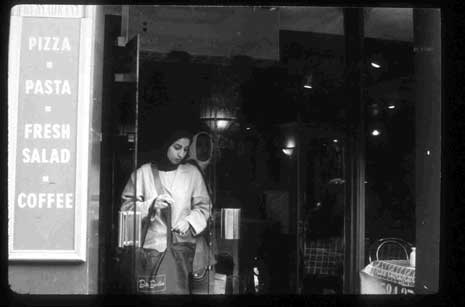
Photograph by Shekaiba Wakili
This problem appears in Women Claim Islam: Claiming Islamic Feminism Through Literature, where Cooke speaks of how “women’s unprecedented independence as a result of the revolution in reproduction technology, and their massive entry into the paid workforce has begun to erode the patriarchal system” and notes that “Arab women, historically invisible, are part of this trend.” In an explanation of this new visibility, she coins another term, “tribal modernity,” which sums up an imagined past and anticipated future. Examining the mandate to be modern, she connects modernity to image and explores how image is affected by the presence of women in public space as leaders and intellectuals. Again, post-2011, this is particularly relevant with the drive for women’s increased political participation in “the Middle East.”
Yet how new is the new visibility of the Muslimwoman? Cooke herself notes that anxiety and curiousity about the new prominence of Muslim women goes back to the colonial era when Muslim women’s appearance was pivotal to their role in both the Muslim and the Orientalist imaginary.
It is noteworthy that Cooke has to set up a distinction between writers like Nawal Saadawi who have been writing since the 60’s and Peninsula women before she begins narrating her meeting a group of women journalists in Saudia Arabia in 1983 who called themselves the “Muhariryat” (playing on the double meaning of muharir as both editor and liberator) and her return in 1999, at the first Saudi women’s conference.
This illustrates a sense that you have to push back and restrict what Muslim woman means in order to have it be a permanently groundbreaking field. However, Cooke does take up the costs of the fetishization of the “Muslimwoman” and capitalizing on this newly lucrative identity by writing for the market in the popularity of works by “native informants” Ayan Hirsi Ali, Kola Boof, Irshad Manji and Azar Nafisi, as well as the hoaxes such as Norma Khouri’s Forbidden Love. To this might be added the reception of artists such as Ghada Amer, Shahzia Sikander, and Shirin Neshat, and how any perceived departures from the framework of “Muslimwoman” affect this reception. For example, G. Roger Denson celebrates Neshat as Artist of the Decade for reflecting “the ideological war being waged between Islam and the secular world over matters of gender, religion, and democracy,” even as he recognizes:
Neshat’s departures from her usual subject of Iranian women, which we see in her 2002 series Tooba, a reference to the feminine Tree of Paradise cited in the Qur’an but which Neshat shot in Oaxaca, Mexico, and her most recent series, Games of Desire, which references the Laotian customs and signage of courtship among elderly men and women.
This raises questions of when and how artists like Fatima Tuggar and Zarina Hashmi and Dolly Unithan are seen as Muslim rather than Nigerian or Indian or Malaysian, when non-Muslim artists with “Muslim” names such as Laylah Ali are driven into this category, and what recognizable “Muslimwoman” art looks like.
If the “Muslimwoman” takes into account the shift from placing women into national categories to always putting them in a Muslim basket post 9/11, perhaps post-2011 there has been a shift in the other direction, even as the place of Muslim women is a constant refrain, as Tunisian, Egyptian, Libyan, Yemeni and Syrian women are called on to speak for their countries undergoing uprisings, as in the case of the rise to prominence of Tawakkul Karman.
This gendering of the Arab Spring offers the hope that a new dynamic can result from this turning point where the ”Muslimwoman” becomes a potential tool of collective agency even as it fragments into women within the political and religious contexts around them and within the diversity of their own individual lives.
Previous Post

January 10, 2012
Reviving the Spirit Without Recognizing Half The Audience?
Next Post
January 12, 2012 Book Review: The Crescent Directive
Browse Our Archives
Select a Category Advertisements Art/Theater Books/Magazines Cinema Comics/Cartoons Culture/Society Events Fashion Film Friday Links Merchandise/Commodities MMW Announcements MMW Highlights Music/Radio News Photography Politics Profile Ramadan 2012 Ramadan 2013 Ramadan 2014 Ramadan 2015 Roundtable Satire Social Media Sports Technology/Science Television Uncategorized Video Web
Select a Month November 2015 October 2015 September 2015 August 2015 July 2015 June 2015 May 2015 April 2015 March 2015 January 2015 December 2014 November 2014 October 2014 September 2014 July 2014 June 2014 May 2014 April 2014 March 2014 February 2014 January 2014 December 2013 November 2013 October 2013 September 2013 August 2013 July 2013 June 2013 May 2013 April 2013 March 2013 February 2013 January 2013 December 2012 November 2012 October 2012 September 2012 August 2012 July 2012 June 2012 May 2012 April 2012 March 2012 February 2012 January 2012 December 2011 November 2011 September 2011 August 2011 July 2011 June 2011 May 2011 April 2011 March 2011 February 2011 January 2011 December 2010 November 2010 October 2010 September 2010 August 2010 July 2010 June 2010 May 2010 April 2010 March 2010 February 2010 January 2010 December 2009 November 2009 October 2009 September 2009 August 2009 July 2009 June 2009 May 2009 April 2009 March 2009 February 2009 January 2009 December 2008 November 2008 October 2008 September 2008 August 2008 July 2008 June 2008 May 2008 April 2008 March 2008 February 2008 January 2008 December 2007 November 2007 October 2007 September 2007 August 2007
Follow Us!
TAKE THE
Religious Wisdom Quiz
What is the Christian response to being wronged?
Select your answer to see how you score.
Forgive Hold a grudge Gossip Revenge
Related posts from Muslimah Media Watch

#PrayforParis, Muslim Women and Third World Violence


Hate Crimes and Mother Tongues

Interview with Comedian Eman El Husseini
TRENDING AT PATHEOS Muslim

25 Years Later: How Much Has Changed for...
As we approach the 25th anniversary of September 11th, I’ve found myself...

Podcast: Third Spaces & The Rise of Yemeni...
In the latest episode of The Artistic Foodies Podcast, hosts Abbas...

HalalFest Picks: Best 60 Halal Spots for Super...
Back in 2016, I came up with a list of 29...

Unity Is America’s Strength — Division Is Its...
by Hidayatullah Ahsan When Valentina Gomez, a Republican candidate for Congress in...

Zohran Mamdani and New York’s Fight Against Islamophobia
This past June, against all odds, Zohran Mamdani won the Democratic primary...

What the Fourth of July Means to a...
As we mark another Fourth of July, millions of Americans will celebrate...
view all Muslim blogs
Ad-Free & Subscriber Log-In Subscription Support
- About Us
- 2026 Calendar
- Videos
- Podcasts
- Library of World Religions
- Faith In Media Tracker
- Advertise With Us
- Write for Us
- Privacy Policy
- Terms of Service
- Do Not Sell My Data
- Contact Us
- Radiant Digital
- Manage Newsletter Subscriptions
- Unsubscribe From Notifications
- Sitemap
Copyright 2008-2026, Patheos. All rights reserved.
Subscription Support Ad-Free & Subscriber Log-In
Follow Patheos