
BuddhistCatholicContemplativeEvangelicalGeneral ChristianHinduJewishLatter-day SaintMuslimNew VisionsProgressive Christian
Beliefs
- Buddhist
- Catholic
- Contemplative
- Evangelical
- General Christian
- Hindu
- Jewish
- Latter-day Saint
- More Voices
- Muslim
- New Visions
- Pagan
- Progressive Christian
Topics
- Religion News
- Food and Religion
- Sports and Religion
- Religious Art
- Religious Music and Entertainment
- Religious Events
- History and Religion
- Style and Religion
- Politics and Religion
- Women in Religion
- Recreation Outdoors and Religion
- Business Finance and Religion
- Careers Workplace and Religion
- Education and Religion
- Family Parenting and Religion
- Health Fitness and Religion
- Home and Religion
- Relationships and Religion
- Technology and Religion
- Travel and Religion
Columnists
- Buddhist Columnists
- Business Finance and Religion Columnists
- Careers Workplace and Religion Columnists
- Catholic Columnists
- Contemplative Columnists
- Education and Religion Columnists
- Evangelists Columnists
- Family Parenting and Religion Columnists
- General Christian Columnists
- Health Fitness and Religion Columnists
- Hindu Columnists
- History and Religion Columnists
- Home and Religion Columnists
- Jewish Columnists
- More Voices Columnists
- Latter Day Columnists
- Muslim Columnists
- New Visions Columnists
- Nonreligious Columnists
- Pagan Columnists
- Politics and Religion Columnists
- Progressive Columnists
- Recreation Outdoors and Religion Columnists
- Relationships and Religion Columnists
- Religion News Columnists
- Religious Art Columnists
- Religious Events Columnists
- Religious Music and Entertainment Columnists
- Sports and Religion Columnists
- Style and Religion Columnists
- Technology and Religion Columnists
- Travel and Religion Columnists
- Women in Religion Columnists
Resource Library
- 2026 Calendar
- Library of World Religions
- The 100 Most Holy Places on Earth
- Patheos Answers
- Podcasts
- Videos
- Faith Leaders Database
- Anglican Episcopalian
- Bahai
- Baptist
- Buddhism
- Christianity
- Confucianism
- Eastern Orthodoxy
- Hinduism
- Holiness and Pentecostal
- ISKCON
- Islam
- Judaism
- Lutheran
- Methodist
- The Church of Jesus Christ of Latter-day Saints
- New Age
- Paganism
- Presbytarian and Reformed
- Protestantism
- Religion Behind the Scenes
- Roman Catholic
- Scientology
- Shia Islam
- Sikhism
- Sufism
- Sunni Islam
- Taoism
- Zen
- See all religions
Research Tools
 Ad-Free & Subscriber Log-In Subscription Support
Ad-Free & Subscriber Log-In Subscription Support
Follow Patheos 

- Trending:
- Forgiveness
- |
- Marriage
- |
- Consciousness
- |
- Death Penalty
- |
- Election
- |
- Halloween
 Muslimah Media Watch
- Home
- Muslim
- Religion News
- Nina Burleigh’s Contradictory Discussion of “Oxymoronic Creatures”
Nina Burleigh’s Contradictory Discussion of “Oxymoronic Creatures”
Last updated on: January 25, 2012 at 2:00 am by diana
Nina Burleigh’s Contradictory Discussion of “Oxymoronic Creatures” 2012-01-22T14:50:14-04:00 diana
Patheos Explore the world's faith through different perspectives on religion and spirituality! Patheos has the views of the prevalent religions and spiritualities of the world.
Slate recently ran a piece about Azza al Garf, dubbing her a “culturally regressive trailblazer,” and likening her to well-known American female conservatives such as Michele Bachman and Sarah Palin. Azza al Garf, a female member of the Muslim Brotherhood’s Freedom and Justice Party who was recently elected to the post-revolutionary Egyptian Parliament, had not been coy about her intentions should she win a seat in the new Parliament.
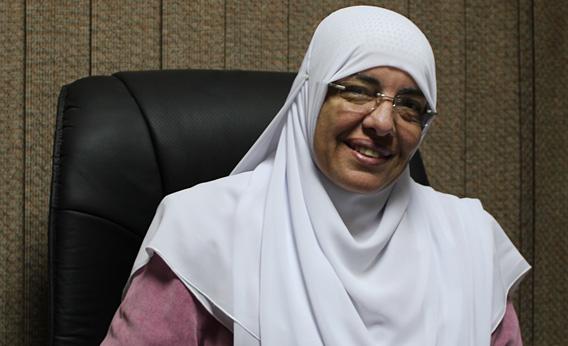
Azza al Garf. Photo via Slate.
As reported earlier by Egypt Independent, Azza al Garf claimed that if she won, she would work toward reversing “women’s and children’s laws that were promulgated in the defunct [Mubarak] epoch and violate Islamic Sharia and human nature.”
This is disconcerting, as some of the “women’s and children’s laws” publicized during Mubarak’s time are, for example, laws that give women the right to divorce, that criminalize female circumcision, and that give women the right to register their children even if the father is unknown. Whether al Garf was referring to these laws or not remains to be seen.
While there is legitimacy in the doubts Slate author Nina Burleigh raises, as to whether a conservative female Member of Parliament can mirror the changes which Egyptian women hope to see from the new government, her approach is all wrong.
Instead of writing an insightful article on what Azza al Garf’s election to Parliament means or might mean for women’s rights in Egypt, she instead resorts to making stereotypical deductions and drawing subjective parallels between al Garf and her supposed Western “counterparts”.
The first of such grossly derisive comments is made in Burleigh’s first paragraph when she describes the men of the Muslim Brotherhood Party as having “protuberant prayer calluses on their foreheads resembling large warts.” Such abrasive sentiments show Burleigh’s true colors—an attitude of intolerance and disregard for others’ religious practices. Not to mention painting the hackneyed picture of “scary” Muslim men.
The article goes on to call al Garf, and other women members of the party, “oxymoronic creatures: culturally regressive trailblazers.” How exactly these women are “culturally regressive” and whose culture Burleigh is referring to is not made clear. Burleigh does not point out specific policies that al Garf endorses that may drive the struggle for women’s rights in Egypt into a backsliding motion, but instead draws parallels between al Garf and American female conservatives like Bachman and Palin to illustrate that al Garf is a “culturally regressive trailblazer.”
What do these women have in common? According to Burleigh, it is their religiosity tjat puts these women in a state of “regression.” Burleigh states that for al Garf “religiosity is a full immersion that permeates every aspect of life” and she readily relies on supernatural guidance in political involvements. Burleigh implies that religiosity is incompatible with concepts of justice, equality, and even feminism, pigeonholing all women who are “conservative” or “religious” as those who would be likely to not “support policies that would actually improve the real lives of women.”
Burleigh seems to forget that there are in fact Egyptian women and Muslim women, some of which identify as feminists, who fight to progress women’s rights yet, would still consider their religion to permeate every aspect of their life, including informing those very struggles for equality and justice.
Interestingly enough, Burleigh is a bit of an oxymoronic theorist herself. While she seemingly blames al Garf’s chosen religiosity as the common denominator in regressive ideals regarding women’s rights, she also expresses the opinion that this position of “regression” is, contrariwise, imposed by Muslim men. This is indicated by Burleigh’s statement that, “al Garf and her ilk dare not crow about it,” referring to their “second-place” status within the Freedom and Justice Party, which prevents them from voting for party leaders or serving on top committees. Her description of Egypt’s women as “swaddled in scarves and floor-length gowns—the restrictive costume a direct result of decades of social pressure from the Muslim Brotherhood,” also suggests their religiosity and “regression” is enforced by men.
So which is it? Is it the “scary” men imposing regressive sanctions on women and women’s rights? Or is it the religion that these women choose to follow that is inherently degenerating to women’s rights?
Either recycled argument Burleigh is propagating is an ancient reverberation in the ears of Muslim women. Burleigh does nothing to tell readers exactly which ideas of Azza al Garf show her “unabashed commitment to policies that limit or reverse women’s rights.” Nor did she do anything in the way of furthering the conversation with al Garf on issues such as abortion or female circumcision.
An insightful conversation on these issues, rather than drawn out overgeneralizations about the supposed parallels between “Western” and “Eastern” female conservatives would have given readers a chance to examine how al Garf and other women elected to Egypt’s new Parliament might change the sociopolitical landscape for women’s rights in Egypt. Burleigh instead gave us the timeworn stereotypes we have grown so weary of hearing.
Thank you Nina Burleigh for playing the entitled and pedestrian role of speculation, saving neither nuance nor articulation, wavering between “saving” and Islamophobic rhetoric, and flirting with intolerance.
Previous Post

January 24, 2012
Choose Your Caption: Niqab as Illustrative of, Well, Everything
Next Post
January 26, 2012 Marching with Dignity - "Sisters" or Not
Browse Our Archives
Select a Category Advertisements Art/Theater Books/Magazines Cinema Comics/Cartoons Culture/Society Events Fashion Film Friday Links Merchandise/Commodities MMW Announcements MMW Highlights Music/Radio News Photography Politics Profile Ramadan 2012 Ramadan 2013 Ramadan 2014 Ramadan 2015 Roundtable Satire Social Media Sports Technology/Science Television Uncategorized Video Web
Select a Month November 2015 October 2015 September 2015 August 2015 July 2015 June 2015 May 2015 April 2015 March 2015 January 2015 December 2014 November 2014 October 2014 September 2014 July 2014 June 2014 May 2014 April 2014 March 2014 February 2014 January 2014 December 2013 November 2013 October 2013 September 2013 August 2013 July 2013 June 2013 May 2013 April 2013 March 2013 February 2013 January 2013 December 2012 November 2012 October 2012 September 2012 August 2012 July 2012 June 2012 May 2012 April 2012 March 2012 February 2012 January 2012 December 2011 November 2011 September 2011 August 2011 July 2011 June 2011 May 2011 April 2011 March 2011 February 2011 January 2011 December 2010 November 2010 October 2010 September 2010 August 2010 July 2010 June 2010 May 2010 April 2010 March 2010 February 2010 January 2010 December 2009 November 2009 October 2009 September 2009 August 2009 July 2009 June 2009 May 2009 April 2009 March 2009 February 2009 January 2009 December 2008 November 2008 October 2008 September 2008 August 2008 July 2008 June 2008 May 2008 April 2008 March 2008 February 2008 January 2008 December 2007 November 2007 October 2007 September 2007 August 2007
Follow Us!
TAKE THE
Religious Wisdom Quiz
What does "Jordan" (as in Jordan River) mean?
Select your answer to see how you score.
To open To heal To anoint To descend
Related posts from Muslimah Media Watch

#PrayforParis, Muslim Women and Third World Violence



Why British MP’s statements defending Muslim women do...
TRENDING AT PATHEOS Muslim

25 Years Later: How Much Has Changed for...
As we approach the 25th anniversary of September 11th, I’ve found myself...

Podcast: Third Spaces & The Rise of Yemeni...
In the latest episode of The Artistic Foodies Podcast, hosts Abbas...

HalalFest Picks: Best 60 Halal Spots for Super...
Back in 2016, I came up with a list of 29...

Unity Is America’s Strength — Division Is Its...
by Hidayatullah Ahsan When Valentina Gomez, a Republican candidate for Congress in...

Zohran Mamdani and New York’s Fight Against Islamophobia
This past June, against all odds, Zohran Mamdani won the Democratic primary...

What the Fourth of July Means to a...
As we mark another Fourth of July, millions of Americans will celebrate...
view all Muslim blogs
Ad-Free & Subscriber Log-In Subscription Support
- About Us
- 2026 Calendar
- Videos
- Podcasts
- Library of World Religions
- Faith In Media Tracker
- Advertise With Us
- Write for Us
- Privacy Policy
- Terms of Service
- Do Not Sell My Data
- Contact Us
- Radiant Digital
- Manage Newsletter Subscriptions
- Unsubscribe From Notifications
- Sitemap
Copyright 2008-2026, Patheos. All rights reserved.
Subscription Support Ad-Free & Subscriber Log-In
Follow Patheos