
BuddhistCatholicContemplativeEvangelicalGeneral ChristianHinduJewishLatter-day SaintMuslimNew VisionsProgressive Christian
Beliefs
- Buddhist
- Catholic
- Contemplative
- Evangelical
- General Christian
- Hindu
- Jewish
- Latter-day Saint
- More Voices
- Muslim
- New Visions
- Pagan
- Progressive Christian
Topics
- Religion News
- Food and Religion
- Sports and Religion
- Religious Art
- Religious Music and Entertainment
- Religious Events
- History and Religion
- Style and Religion
- Politics and Religion
- Women in Religion
- Recreation Outdoors and Religion
- Business Finance and Religion
- Careers Workplace and Religion
- Education and Religion
- Family Parenting and Religion
- Health Fitness and Religion
- Home and Religion
- Relationships and Religion
- Technology and Religion
- Travel and Religion
Columnists
- Buddhist Columnists
- Business Finance and Religion Columnists
- Careers Workplace and Religion Columnists
- Catholic Columnists
- Contemplative Columnists
- Education and Religion Columnists
- Evangelists Columnists
- Family Parenting and Religion Columnists
- General Christian Columnists
- Health Fitness and Religion Columnists
- Hindu Columnists
- History and Religion Columnists
- Home and Religion Columnists
- Jewish Columnists
- More Voices Columnists
- Latter Day Columnists
- Muslim Columnists
- New Visions Columnists
- Nonreligious Columnists
- Pagan Columnists
- Politics and Religion Columnists
- Progressive Columnists
- Recreation Outdoors and Religion Columnists
- Relationships and Religion Columnists
- Religion News Columnists
- Religious Art Columnists
- Religious Events Columnists
- Religious Music and Entertainment Columnists
- Sports and Religion Columnists
- Style and Religion Columnists
- Technology and Religion Columnists
- Travel and Religion Columnists
- Women in Religion Columnists
Resource Library
- 2026 Calendar
- Library of World Religions
- The 100 Most Holy Places on Earth
- Patheos Answers
- Podcasts
- Videos
- Faith Leaders Database
- Anglican Episcopalian
- Bahai
- Baptist
- Buddhism
- Christianity
- Confucianism
- Eastern Orthodoxy
- Hinduism
- Holiness and Pentecostal
- ISKCON
- Islam
- Judaism
- Lutheran
- Methodist
- The Church of Jesus Christ of Latter-day Saints
- New Age
- Paganism
- Presbytarian and Reformed
- Protestantism
- Religion Behind the Scenes
- Roman Catholic
- Scientology
- Shia Islam
- Sikhism
- Sufism
- Sunni Islam
- Taoism
- Zen
- See all religions
Research Tools
 Ad-Free & Subscriber Log-In Subscription Support
Ad-Free & Subscriber Log-In Subscription Support
Follow Patheos 

- Trending:
- Forgiveness
- |
- Marriage
- |
- Consciousness
- |
- Death Penalty
- |
- Election
- |
- Halloween
 Muslimah Media Watch
- Home
- Muslim
- Religion News
- Women, War & Peace Reviewed
Women, War & Peace Reviewed
Last updated on: December 6, 2011 at 2:00 am by Azra
Women, War & Peace Reviewed 2011-12-05T22:53:29-04:00 Azra
Patheos Explore the world's faith through different perspectives on religion and spirituality! Patheos has the views of the prevalent religions and spiritualities of the world.
In October and November of this year, PBS aired a five part series, “Women, War & Peace,” in the United States. The series website explains: “Women, War & Peace spotlights the stories of women in conflict zones from Bosnia to Afghanistan and Colombia to Liberia, placing women at the center of an urgent dialogue about conflict and security, and reframing our understanding of modern warfare.”
Several of the episodes in the series focus on conflicts that Muslim women face and resist around the world: Bosnian women in I Came to Testify tell their story of war and rape at the hands of Serbian forces, and their courageous journey that led to rape to be considered a crime in international law. The award-winning Pray the Devil Back to Hell tells the story of this year’s Nobel prize winner Leymah Gbowee’s activism in the organization she helped found, “The Women of Liberia Mass Action for Peace,” which brought Christian and Muslim Liberian women together to collectively promote peace in their country. And Peace Unveiled (sigh—another veil pun title) looks at the political activism of the Afghan Women’s Network and their work to promote the rights of women in Afghanistan.
These women’s stories are difficult to listen to—the violence, setbacks, and social norms they face seem immeasurable at times. The episodes highlight the complexity of how conflict affects their everyday lives. A Bosnian woman who testified at the Hague, Witness 99, shares her thoughts after the trial towards the end of I Came to Testify; the accompanying scene shows a Bosnian woman who visits the grave of a family member to offer her prayers:
“I was glad that everyone would answer for what they had done, but it wasn’t a very harsh sentence…You know that rape is the worst form of humiliation for any woman. But that was the goal—to kill a woman’s dignity.”
Another insightful segment from Pray the Devil Back to Hell describes how the collaboration between Muslim and Christian Liberian women came to be. Asatu Ban Kenneth, now the assistant director of the Liberian National Police, speaks up at a church where Leymah Gbowee had presented the work of the Christian Women’s Peace Initiative:
“I’m the only Muslim in this church…God is up. We’re all serving the same God. This is not only for the Christian women. I want to promise you all today that I’m going to move it forward with the Muslim women.”
The secretary of the organization explains that there were some initial concerns by the members of its newfound interfaith nature:
“But the message that we took on: Can the bullet pick and choose? Does the bullet know Christian from Muslim?”
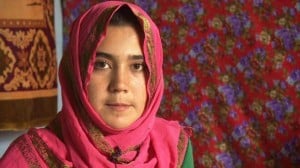
The impact of conflict on women’s personal, family lives remains a prevalent theme throughout the series. In Peace Unveiled, one of the women featured throughout the episode explains why she continues her work to increase women’s participation at peace negotiations in Afghanistan:
“I don’t want to go back. I want to make it easy for my daughters. We will struggle. We will struggle until the last breath. We cannot do anything alone. We are part of the world.”
From all of these wrenching situations they find themselves in, these women continue to challenge political systems that do not value their voice—sometimes with the assistance of outsiders but always with the strength of their own personal convictions—using nonviolent methods to promote change in their countries. The series ultimately sends a positive message of hope and change.
When hearing about the conflicts in these countries in conventional news reports, it is rare to hear about the stories from women’s perspectives. It was nice to watch a series where women predominated and shared their experience with conflict. Stories of their challenges and their work to address the violence they face is rarely, if at all, a perspective that is mentioned.
I can’t recall another television series that explores how women address the impact of political strife from different parts of the world. Instead, we often hear third-person accounts of the violence these women face, as opposed to the efforts of women on the ground who actively work to engage with the systems they live with to promote their well-being.
Two weeks ago, we looked at the problematic depiction of Saudi women in Amnesty UK’s video, “How not to be punished for being a woman.” This unfortunate video is only one of several videos Amnesty produced in attempt to educate the public about the abuses women (often Muslim) suffer around the world. In another film, a British actress highlights the plight of Afghan women under Taliban rule from her flat in London.
Looking at both videos, a theme emerges: that women from these countries have no agency and make little effort to combat the social rules of the societies where they live. This one-sided narrative does little to promote discussion of how social conventions can change, or to consider the inspiring work that actually happens on the ground. These powerful stories can’t be reduced to “humorous” educational human rights videos. It is in the face of videos like those that the stories of the Women, War, and Peace series are especially important, giving us a more intricate picture of courageous, strong women not as victims but instead as actors shaping the context around them.
You can watch all five episodes of the series at PBS’s “Women, War & Peace” website.
Previous Post

December 5, 2011
Hijab: As Seen on TV
Next Post
December 7, 2011 Riding in Cars with Satan
Browse Our Archives
Select a Category Advertisements Art/Theater Books/Magazines Cinema Comics/Cartoons Culture/Society Events Fashion Film Friday Links Merchandise/Commodities MMW Announcements MMW Highlights Music/Radio News Photography Politics Profile Ramadan 2012 Ramadan 2013 Ramadan 2014 Ramadan 2015 Roundtable Satire Social Media Sports Technology/Science Television Uncategorized Video Web
Select a Month November 2015 October 2015 September 2015 August 2015 July 2015 June 2015 May 2015 April 2015 March 2015 January 2015 December 2014 November 2014 October 2014 September 2014 July 2014 June 2014 May 2014 April 2014 March 2014 February 2014 January 2014 December 2013 November 2013 October 2013 September 2013 August 2013 July 2013 June 2013 May 2013 April 2013 March 2013 February 2013 January 2013 December 2012 November 2012 October 2012 September 2012 August 2012 July 2012 June 2012 May 2012 April 2012 March 2012 February 2012 January 2012 December 2011 November 2011 September 2011 August 2011 July 2011 June 2011 May 2011 April 2011 March 2011 February 2011 January 2011 December 2010 November 2010 October 2010 September 2010 August 2010 July 2010 June 2010 May 2010 April 2010 March 2010 February 2010 January 2010 December 2009 November 2009 October 2009 September 2009 August 2009 July 2009 June 2009 May 2009 April 2009 March 2009 February 2009 January 2009 December 2008 November 2008 October 2008 September 2008 August 2008 July 2008 June 2008 May 2008 April 2008 March 2008 February 2008 January 2008 December 2007 November 2007 October 2007 September 2007 August 2007
Follow Us!
TAKE THE
Religious Wisdom Quiz
True or False: The mystery hidden for ages is Christ in us, the hope of glory.
Select your answer to see how you score.
TRUE FALSE
Related posts from Muslimah Media Watch



Has Quantico got positive female Muslim roles covered?
TRENDING AT PATHEOS Muslim

25 Years Later: How Much Has Changed for...
As we approach the 25th anniversary of September 11th, I’ve found myself...

Podcast: Third Spaces & The Rise of Yemeni...
In the latest episode of The Artistic Foodies Podcast, hosts Abbas...

HalalFest Picks: Best 60 Halal Spots for Super...
Back in 2016, I came up with a list of 29...

Unity Is America’s Strength — Division Is Its...
by Hidayatullah Ahsan When Valentina Gomez, a Republican candidate for Congress in...

Zohran Mamdani and New York’s Fight Against Islamophobia
This past June, against all odds, Zohran Mamdani won the Democratic primary...

What the Fourth of July Means to a...
As we mark another Fourth of July, millions of Americans will celebrate...
view all Muslim blogs
Ad-Free & Subscriber Log-In Subscription Support
- About Us
- 2026 Calendar
- Videos
- Podcasts
- Library of World Religions
- Faith In Media Tracker
- Advertise With Us
- Write for Us
- Privacy Policy
- Terms of Service
- Do Not Sell My Data
- Contact Us
- Radiant Digital
- Manage Newsletter Subscriptions
- Unsubscribe From Notifications
- Sitemap
Copyright 2008-2026, Patheos. All rights reserved.
Subscription Support Ad-Free & Subscriber Log-In
Follow Patheos