
BuddhistCatholicContemplativeEvangelicalGeneral ChristianHinduJewishLatter-day SaintMuslimNew VisionsProgressive Christian
Beliefs
- Buddhist
- Catholic
- Contemplative
- Evangelical
- General Christian
- Hindu
- Jewish
- Latter-day Saint
- More Voices
- Muslim
- New Visions
- Pagan
- Progressive Christian
Topics
- Religion News
- Food and Religion
- Sports and Religion
- Religious Art
- Religious Music and Entertainment
- Religious Events
- History and Religion
- Style and Religion
- Politics and Religion
- Women in Religion
- Recreation Outdoors and Religion
- Business Finance and Religion
- Careers Workplace and Religion
- Education and Religion
- Family Parenting and Religion
- Health Fitness and Religion
- Home and Religion
- Relationships and Religion
- Technology and Religion
- Travel and Religion
Columnists
- Buddhist Columnists
- Business Finance and Religion Columnists
- Careers Workplace and Religion Columnists
- Catholic Columnists
- Contemplative Columnists
- Education and Religion Columnists
- Evangelists Columnists
- Family Parenting and Religion Columnists
- General Christian Columnists
- Health Fitness and Religion Columnists
- Hindu Columnists
- History and Religion Columnists
- Home and Religion Columnists
- Jewish Columnists
- More Voices Columnists
- Latter Day Columnists
- Muslim Columnists
- New Visions Columnists
- Nonreligious Columnists
- Pagan Columnists
- Politics and Religion Columnists
- Progressive Columnists
- Recreation Outdoors and Religion Columnists
- Relationships and Religion Columnists
- Religion News Columnists
- Religious Art Columnists
- Religious Events Columnists
- Religious Music and Entertainment Columnists
- Sports and Religion Columnists
- Style and Religion Columnists
- Technology and Religion Columnists
- Travel and Religion Columnists
- Women in Religion Columnists
Resource Library
- 2026 Calendar
- Library of World Religions
- The 100 Most Holy Places on Earth
- Patheos Answers
- Podcasts
- Videos
- Faith Leaders Database
- Anglican Episcopalian
- Bahai
- Baptist
- Buddhism
- Christianity
- Confucianism
- Eastern Orthodoxy
- Hinduism
- Holiness and Pentecostal
- ISKCON
- Islam
- Judaism
- Lutheran
- Methodist
- The Church of Jesus Christ of Latter-day Saints
- New Age
- Paganism
- Presbytarian and Reformed
- Protestantism
- Religion Behind the Scenes
- Roman Catholic
- Scientology
- Shia Islam
- Sikhism
- Sufism
- Sunni Islam
- Taoism
- Zen
- See all religions
Research Tools
 Ad-Free & Subscriber Log-In Subscription Support
Ad-Free & Subscriber Log-In Subscription Support
Follow Patheos 

- Trending:
- Forgiveness
- |
- Marriage
- |
- Consciousness
- |
- Death Penalty
- |
- Election
- |
- Halloween
 Muslimah Media Watch
- Home
- Muslim
- Religion News
- An Interview with Nausheen Dadabhoy
An Interview with Nausheen Dadabhoy
Last updated on: March 28, 2011 at 12:00 am by eren
An Interview with Nausheen Dadabhoy 2011-03-28T00:00:12-04:00 eren
Patheos Explore the world's faith through different perspectives on religion and spirituality! Patheos has the views of the prevalent religions and spiritualities of the world.
The earthquake that shook Pakistan and Kashmir in 2005 killed thousands and left millions homeless. Pakistani-American Nausheen Dadabhoy felt it was her responsibility to give a voice to those affected by the earthquake. Through visits to hospitals and camps, Dadabhoy met Ruqiya and Khalida, two women whose lives had changed due to the disaster.
In “The Ground Beneath Their Feet: A Tale of Pakistani Women,” Dadabhoy presents the story of these two women, who courageously had to redefine their lives after being injured in the earthquake. Having to renounce to the traditional roles prescribed in some sectors of Pakistani society because of their disabilities, Ruqiya and Khalida have to reconsider their lives as disabled women in a society that values women as able-bodied homemakers and mothers.
We interviewed Dadabhoy about her project, which is almost complete. You can support the project here and here.
MMW: Could you tell us more about your inspiration to tell the story of Ruqiya and Khalida?
ND: As a Pakistani-American I was deeply affected by the tragedy, and as a filmmaker I felt the need to go to Pakistan and tell the story of those affected by the disaster.
Two weeks after the earthquake, I arrived in Kashmir and toured the affected area. I visited many Internally Displaced People (IDP) camps and makeshift hospitals. When I got to the Melody Relief and Rehabilitation Center (MRRC) in Islamabad, the situation of the patients struck me as tragic and in need of more attention. The MRRC is a clinic for women who suffered spinal cord injuries during the earthquake and are now paraplegic.
I knew that the women at the MRRC had now lost value in society. They would not only struggle with their new disability, but also need to redefine their roles as women. Though I was born and raised in the United States, as a Pakistani woman I know the difficulties that these women face. By deciding to become a filmmaker, I chose a non-traditional career path, and in doing so I faced many challenges from my culture. The women at the MRRC are forced into a position of challenging their culture, not by choice, but by circumstance.
MMW: In your Facebook page you explain that both women were the opposite of each other, what do you think contributed to Ruqiya being able to deal with the situation better than Khalida?
ND: Ruqiya’s sister Bushra was at the hospital caring for her. Her fiancé still wanted to marry her, and she knew that she would have a place in her brother’s home even if she didn’t marry. She had a great sense of security about her future. Ruqiya comes from the capital of Kashmir, Muzaffarabad, so she knew that she could get the care she needed at home.
Khalida’s family, on the other hand, comes from a very mountainous region, and she knew that she would be unable to go home and live in her village again. They don’t have the facilities in her village to care for her, and she would just be trapped between the four walls of her home. Khalida had no future to look forward to, and she was very depressed. She lost the use of her legs while trying to help her blind father escape from their home, but they both got trapped beneath the rubble, and her father died. This obviously contributed heavily to her initial outlook.
MMW: What role do the family and society play in the identity-restructuring process that both women have gone through?
ND: Their families play huge role in their lives. This is a very communal society. These women do not make decisions for themselves, but their elders and male relatives make decisions for them, since they are considered more educated. Khalida’s family broke many of these conventions, and allowed her to make her own decision about what would be best for her. She has three older brothers, and even though one opposed her, the rest of the family told her to do whatever made her happy, and not to worry about how society would judge her, because they supported her. In the end Khalida does not return to her village, but moves to the big city of Muzaffarabad where she has a job and has become independent. Khalida’s family did not want her to feel limited by her disability, so they gave her more freedom than she would have had before the injury.
Ruqiya’s family created the opposite situation for her. Though her fiancé still wanted to marry her, they refused to let her get married, because they didn’t feel that anyone would care for her as well as they care for her. Ruqiya had a job similar to Khalida, working at a facility teaching self-sufficiency to newly disabled individuals. Ruqiya’s father asked her to quit, because he didn’t think it was appropriate for his daughter to be working outside the home, and her mother worried about her when she was out of the house. Ruqiya now spends all of her time at home watching television, and feeling ashamed of her disability.
MMW: Does the film reflect specific views on women and Islam particular to their own context? How?
ND: I have not made any statements about Islam, but this film does show the role of women in a Muslim society. But I think it’s a more cultural/socio-economic discussion than religious. In terms of rural Pakistani communities, women are seen as homemakers and caretakers. They go from their father’s home to their husband’s home. Both the girls left school as a young age to help out in the home, and were waiting to get married when the earthquake struck. After they were paralyzed, they didn’t know what kind of future they would have, because they had suddenly lost their worth in society. If they couldn’t cook, clean and take care of the home, then no man would want them as a wife.
In Kashmir there is no industry, so it’s very hard for men to find work. Many Kashmiris serve in the Pakistan military, or move to Karachi or Islamabad for work. Though I found that Kashmiri society valued women’s education more than I expected, it’s not like the American culture that I grew up in where you’re encouraged to get educated to have a career. Furthermore, there aren’t many jobs for women or men. Some women do work as schoolteachers or health workers, but even if a woman works outside the home she must still come home and make sure that the house is clean and dinner is on the table.
The film is meant to help audiences understand this different social structure, so that women in Islamic societies aren’t seen as oppressed. Their goals and values are very different from ours in the U.S. The sign of a successful woman there is someone who is married and has children.
MMW: How do you hope to impact Muslims with this film?
ND: It is important to me that Americans identify with Pakistanis and Muslims as people and not just as the “other.” News stories in the United States about Pakistan are often related to political unrest or terrorism. In our current social climate in the United States, Islamaphobia seems to be on the rise. I feel it is more important than ever for Americans to experience the life of an ordinary family in Pakistan, so that terrorism does not become Pakistan’s and the Muslim world’s preeminent identifying characteristic.
The Ground Beneath Their Feet shows a truthful and detailed view of a Pakistani family life while trying to deal with a very atypical situation. The pain and suffering that Ruqiya and Khalida face in order to take back their lives is very human and universal. The film reveals the similarities in family dynamics, values, and the everyday struggles that all people face. I hope that audience can draw parallels between their own families and the ones depicted in the film.
Previous Post

March 25, 2011
Friday Links | March 25, 2011
Next Post
March 29, 2011 CNN and the Muslim Women Next Door
Browse Our Archives
Select a Category Advertisements Art/Theater Books/Magazines Cinema Comics/Cartoons Culture/Society Events Fashion Film Friday Links Merchandise/Commodities MMW Announcements MMW Highlights Music/Radio News Photography Politics Profile Ramadan 2012 Ramadan 2013 Ramadan 2014 Ramadan 2015 Roundtable Satire Social Media Sports Technology/Science Television Uncategorized Video Web
Select a Month November 2015 October 2015 September 2015 August 2015 July 2015 June 2015 May 2015 April 2015 March 2015 January 2015 December 2014 November 2014 October 2014 September 2014 July 2014 June 2014 May 2014 April 2014 March 2014 February 2014 January 2014 December 2013 November 2013 October 2013 September 2013 August 2013 July 2013 June 2013 May 2013 April 2013 March 2013 February 2013 January 2013 December 2012 November 2012 October 2012 September 2012 August 2012 July 2012 June 2012 May 2012 April 2012 March 2012 February 2012 January 2012 December 2011 November 2011 September 2011 August 2011 July 2011 June 2011 May 2011 April 2011 March 2011 February 2011 January 2011 December 2010 November 2010 October 2010 September 2010 August 2010 July 2010 June 2010 May 2010 April 2010 March 2010 February 2010 January 2010 December 2009 November 2009 October 2009 September 2009 August 2009 July 2009 June 2009 May 2009 April 2009 March 2009 February 2009 January 2009 December 2008 November 2008 October 2008 September 2008 August 2008 July 2008 June 2008 May 2008 April 2008 March 2008 February 2008 January 2008 December 2007 November 2007 October 2007 September 2007 August 2007
Follow Us!
TAKE THE
Religious Wisdom Quiz
What happened to the prison doors when Paul and Silas were praying and singing hymns?
Select your answer to see how you score.
They miraculously unlocked An angel opened them An earthquake shook the prison and the doors flew open A guard opened them
Related posts from Muslimah Media Watch

Making Sense of “the Other”: A Review of...
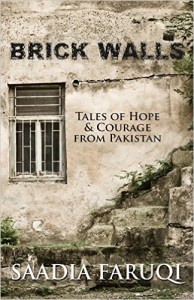
Review of Brick Walls by Saadia Faruqi
TRENDING AT PATHEOS Muslim

25 Years Later: How Much Has Changed for...
As we approach the 25th anniversary of September 11th, I’ve found myself...

Podcast: Third Spaces & The Rise of Yemeni...
In the latest episode of The Artistic Foodies Podcast, hosts Abbas...

HalalFest Picks: Best 60 Halal Spots for Super...
Back in 2016, I came up with a list of 29...

Unity Is America’s Strength — Division Is Its...
by Hidayatullah Ahsan When Valentina Gomez, a Republican candidate for Congress in...

Zohran Mamdani and New York’s Fight Against Islamophobia
This past June, against all odds, Zohran Mamdani won the Democratic primary...

What the Fourth of July Means to a...
As we mark another Fourth of July, millions of Americans will celebrate...
view all Muslim blogs
Ad-Free & Subscriber Log-In Subscription Support
- About Us
- 2026 Calendar
- Videos
- Podcasts
- Library of World Religions
- Faith In Media Tracker
- Advertise With Us
- Write for Us
- Privacy Policy
- Terms of Service
- Do Not Sell My Data
- Contact Us
- Radiant Digital
- Manage Newsletter Subscriptions
- Unsubscribe From Notifications
- Sitemap
Copyright 2008-2026, Patheos. All rights reserved.
Subscription Support Ad-Free & Subscriber Log-In
Follow Patheos