
BuddhistCatholicContemplativeEvangelicalGeneral ChristianHinduJewishLatter-day SaintMuslimNew VisionsProgressive Christian
Beliefs
- Buddhist
- Catholic
- Contemplative
- Evangelical
- General Christian
- Hindu
- Jewish
- Latter-day Saint
- More Voices
- Muslim
- New Visions
- Pagan
- Progressive Christian
Topics
- Religion News
- Food and Religion
- Sports and Religion
- Religious Art
- Religious Music and Entertainment
- Religious Events
- History and Religion
- Style and Religion
- Politics and Religion
- Women in Religion
- Recreation Outdoors and Religion
- Business Finance and Religion
- Careers Workplace and Religion
- Education and Religion
- Family Parenting and Religion
- Health Fitness and Religion
- Home and Religion
- Relationships and Religion
- Technology and Religion
- Travel and Religion
Columnists
- Buddhist Columnists
- Business Finance and Religion Columnists
- Careers Workplace and Religion Columnists
- Catholic Columnists
- Contemplative Columnists
- Education and Religion Columnists
- Evangelists Columnists
- Family Parenting and Religion Columnists
- General Christian Columnists
- Health Fitness and Religion Columnists
- Hindu Columnists
- History and Religion Columnists
- Home and Religion Columnists
- Jewish Columnists
- More Voices Columnists
- Latter Day Columnists
- Muslim Columnists
- New Visions Columnists
- Nonreligious Columnists
- Pagan Columnists
- Politics and Religion Columnists
- Progressive Columnists
- Recreation Outdoors and Religion Columnists
- Relationships and Religion Columnists
- Religion News Columnists
- Religious Art Columnists
- Religious Events Columnists
- Religious Music and Entertainment Columnists
- Sports and Religion Columnists
- Style and Religion Columnists
- Technology and Religion Columnists
- Travel and Religion Columnists
- Women in Religion Columnists
Resource Library
- 2026 Calendar
- Library of World Religions
- The 100 Most Holy Places on Earth
- Patheos Answers
- Podcasts
- Videos
- Faith Leaders Database
- Anglican Episcopalian
- Bahai
- Baptist
- Buddhism
- Christianity
- Confucianism
- Eastern Orthodoxy
- Hinduism
- Holiness and Pentecostal
- ISKCON
- Islam
- Judaism
- Lutheran
- Methodist
- The Church of Jesus Christ of Latter-day Saints
- New Age
- Paganism
- Presbytarian and Reformed
- Protestantism
- Religion Behind the Scenes
- Roman Catholic
- Scientology
- Shia Islam
- Sikhism
- Sufism
- Sunni Islam
- Taoism
- Zen
- See all religions
Research Tools
 Ad-Free & Subscriber Log-In Subscription Support
Ad-Free & Subscriber Log-In Subscription Support
Follow Patheos 

- Trending:
- Forgiveness
- |
- Marriage
- |
- Consciousness
- |
- Death Penalty
- |
- Election
- |
- Halloween
 Muslimah Media Watch
- Home
- Muslim
- Religion News
- Masking the Problem: Afghanistan’s “Niqab” Program
Masking the Problem: Afghanistan’s “Niqab” Program
Last updated on: January 11, 2011 at 12:00 am by sarahaji
Masking the Problem: Afghanistan’s “Niqab” Program 2011-01-11T00:00:26-04:00 sarahaji
Patheos Explore the world's faith through different perspectives on religion and spirituality! Patheos has the views of the prevalent religions and spiritualities of the world.
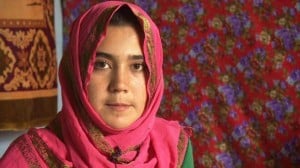
Just when I thought we were past discussing the experiences of Muslim women in dichotomies and distorted imagery, CNN pulls out this gem about Afghanistan’s most talked-about talk show: “Niqab.” “The Mask,” as American media have translated it, features “Afghan women [who] dare to speak out on [the] taboo subject of abuse by husbands.” This time, the women televised are, in fact, masked—half the mask “pale blue, the color [of the burqa] symbolizing the oppression of women; the other half white, representing innocence.” As though this simplistic, dichotomous analysis (which, incidentally, removes all agency from the show’s women) isn’t enough, CNN goes on to write that these women, heretofore silenced (multiple meanings, of course) and concealed (ditto) are “speaking out” at long last, their stories of abuse and torture spilling from loosed-and-liberated lips.
I dramatize, of course, to underscore the absurdity of the reporting. The article, like its contemporaries, toes the line between objecting to the rape and abuse of women and objecting to the customs surrounding marriage more generally. And while the latter is by no stretch ideal, it’s certainly very different from the former, and deserves a more nuanced look than it’s being given here.
But the stories are true and real, and though CNN pulls only snippets of their tragedy and sets them against the standard backdrop of this-is-the-struggle-of-Afghanistan-today-and-forever, “Niqab” features them prominently every segment. There’s the story of Yasmin, who was 13 when her family married her off for $1,000. She was beaten and tortured by her in-laws. There’s the story of Saraya, who was married to a 58-year-old man with a rape record when she was just 15. As they and other women tell their stories on air, a studio audience of human rights experts and lawyers legitimizes the conversation by assuring Afghan viewers that the abuse is neither legal nor Islamic.
The businessman behind the television catharsis is 28-year-old Sami Mahdi. He’s young, he’s good-looking, and he’s scooping up women from shelters and refugee camps and plopping them in front of a camera, albeit masked. As the National Post reports, Mahdi is ready to shake things up in Afghanistan: he hopes to launch other live shows at his station, 1TV, with topics such as “Should the country decentralize its government?” and “Does Afghanistan need the international forces and coalition to stay beyond 2014?”
While the idea of bringing serious dialogue to Afghanistan via talk show is certainly refreshing, “Niqab” is different. Mahdi himself admits that even when he wasn’t sure of the concept of the show, he was “very sure of the mask.” (I’m not sure whether that means that he saw the need for its protective anonymity, or whether it was perhaps metaphorically relevant). Mahdi claims that while he’s not sure his program can change the lives of the women behind the masks, he hopes it will change the lives of other women by changing the minds of Afghan men. He plainly acknowledges that the women on air are victims, and likely always will be.
There seems, inevitably, something exploitative about “Niqab.” I say that with some hesitation, though, because it’s nevertheless ground-breaking television in Afghanistan. Still, there isn’t enough of an orientation toward action—at least, not enough of that orientation to justify the slightly disturbing components of the talk show. First, there’s Mahdi himself, who’s center-stage in the American media discussing his idea to spotlight abused women and “giving them a voice.” Except that he’s a man, utterly removed from (and yet the only real face of) his female guests’ horrors. The women behind their masks are scared and upset, and the audience is scared and upset, but that’s about it. Everyone is scared and upset for women and their status in Afghanistan—and perhaps that’s because none of the stories are focused on survival, or on finding help, or even providing resources.
The idea, as far as CNN and other outlets have reported—and as far as Mahdi himself has said—is to precipitate an emotional catharsis on camera and hope that it makes some men think about their actions. But with Mahdi’s increased access to NGOs, shelters, the human rights commission and the ministry of women’s affairs, he has a unique opportunity to use his reality-show stage more productively, sparking debate and distinguishing survivors from victims, empowerment from defeat.
Previous Post

January 10, 2011
Sacrificing Sakineh: Western Intervention and Iranian Politics
Next Post
January 13, 2011 Gender Bender: Abdulaziz’s Al Qahtani’s Lahd Exhibition
Browse Our Archives
Select a Category Advertisements Art/Theater Books/Magazines Cinema Comics/Cartoons Culture/Society Events Fashion Film Friday Links Merchandise/Commodities MMW Announcements MMW Highlights Music/Radio News Photography Politics Profile Ramadan 2012 Ramadan 2013 Ramadan 2014 Ramadan 2015 Roundtable Satire Social Media Sports Technology/Science Television Uncategorized Video Web
Select a Month November 2015 October 2015 September 2015 August 2015 July 2015 June 2015 May 2015 April 2015 March 2015 January 2015 December 2014 November 2014 October 2014 September 2014 July 2014 June 2014 May 2014 April 2014 March 2014 February 2014 January 2014 December 2013 November 2013 October 2013 September 2013 August 2013 July 2013 June 2013 May 2013 April 2013 March 2013 February 2013 January 2013 December 2012 November 2012 October 2012 September 2012 August 2012 July 2012 June 2012 May 2012 April 2012 March 2012 February 2012 January 2012 December 2011 November 2011 September 2011 August 2011 July 2011 June 2011 May 2011 April 2011 March 2011 February 2011 January 2011 December 2010 November 2010 October 2010 September 2010 August 2010 July 2010 June 2010 May 2010 April 2010 March 2010 February 2010 January 2010 December 2009 November 2009 October 2009 September 2009 August 2009 July 2009 June 2009 May 2009 April 2009 March 2009 February 2009 January 2009 December 2008 November 2008 October 2008 September 2008 August 2008 July 2008 June 2008 May 2008 April 2008 March 2008 February 2008 January 2008 December 2007 November 2007 October 2007 September 2007 August 2007
Follow Us!
TAKE THE
Religious Wisdom Quiz
Who passed by in the Parable of the Good Samaritan before the Samaritan helped?
Select your answer to see how you score.
Two robbers Priest and Levite Rich man and Lazarus Soldier and merchant
Related posts from Muslimah Media Watch



Has Quantico got positive female Muslim roles covered?
TRENDING AT PATHEOS Muslim

25 Years Later: How Much Has Changed for...
As we approach the 25th anniversary of September 11th, I’ve found myself...

Podcast: Third Spaces & The Rise of Yemeni...
In the latest episode of The Artistic Foodies Podcast, hosts Abbas...

HalalFest Picks: Best 60 Halal Spots for Super...
Back in 2016, I came up with a list of 29...

Unity Is America’s Strength — Division Is Its...
by Hidayatullah Ahsan When Valentina Gomez, a Republican candidate for Congress in...

Zohran Mamdani and New York’s Fight Against Islamophobia
This past June, against all odds, Zohran Mamdani won the Democratic primary...

What the Fourth of July Means to a...
As we mark another Fourth of July, millions of Americans will celebrate...
view all Muslim blogs
Ad-Free & Subscriber Log-In Subscription Support
- About Us
- 2026 Calendar
- Videos
- Podcasts
- Library of World Religions
- Faith In Media Tracker
- Advertise With Us
- Write for Us
- Privacy Policy
- Terms of Service
- Do Not Sell My Data
- Contact Us
- Radiant Digital
- Manage Newsletter Subscriptions
- Unsubscribe From Notifications
- Sitemap
Copyright 2008-2026, Patheos. All rights reserved.
Subscription Support Ad-Free & Subscriber Log-In
Follow Patheos