
BuddhistCatholicContemplativeEvangelicalGeneral ChristianHinduJewishLatter-day SaintMuslimNew VisionsProgressive Christian
Beliefs
- Buddhist
- Catholic
- Contemplative
- Evangelical
- General Christian
- Hindu
- Jewish
- Latter-day Saint
- More Voices
- Muslim
- New Visions
- Pagan
- Progressive Christian
Topics
- Religion News
- Food and Religion
- Sports and Religion
- Religious Art
- Religious Music and Entertainment
- Religious Events
- History and Religion
- Style and Religion
- Politics and Religion
- Women in Religion
- Recreation Outdoors and Religion
- Business Finance and Religion
- Careers Workplace and Religion
- Education and Religion
- Family Parenting and Religion
- Health Fitness and Religion
- Home and Religion
- Relationships and Religion
- Technology and Religion
- Travel and Religion
Columnists
- Buddhist Columnists
- Business Finance and Religion Columnists
- Careers Workplace and Religion Columnists
- Catholic Columnists
- Contemplative Columnists
- Education and Religion Columnists
- Evangelists Columnists
- Family Parenting and Religion Columnists
- General Christian Columnists
- Health Fitness and Religion Columnists
- Hindu Columnists
- History and Religion Columnists
- Home and Religion Columnists
- Jewish Columnists
- More Voices Columnists
- Latter Day Columnists
- Muslim Columnists
- New Visions Columnists
- Nonreligious Columnists
- Pagan Columnists
- Politics and Religion Columnists
- Progressive Columnists
- Recreation Outdoors and Religion Columnists
- Relationships and Religion Columnists
- Religion News Columnists
- Religious Art Columnists
- Religious Events Columnists
- Religious Music and Entertainment Columnists
- Sports and Religion Columnists
- Style and Religion Columnists
- Technology and Religion Columnists
- Travel and Religion Columnists
- Women in Religion Columnists
Resource Library
- 2026 Calendar
- Library of World Religions
- The 100 Most Holy Places on Earth
- Patheos Answers
- Podcasts
- Videos
- Faith Leaders Database
- Anglican Episcopalian
- Bahai
- Baptist
- Buddhism
- Christianity
- Confucianism
- Eastern Orthodoxy
- Hinduism
- Holiness and Pentecostal
- ISKCON
- Islam
- Judaism
- Lutheran
- Methodist
- The Church of Jesus Christ of Latter-day Saints
- New Age
- Paganism
- Presbytarian and Reformed
- Protestantism
- Religion Behind the Scenes
- Roman Catholic
- Scientology
- Shia Islam
- Sikhism
- Sufism
- Sunni Islam
- Taoism
- Zen
- See all religions
Research Tools
 Ad-Free & Subscriber Log-In Subscription Support
Ad-Free & Subscriber Log-In Subscription Support
Follow Patheos 

- Trending:
- Forgiveness
- |
- Marriage
- |
- Consciousness
- |
- Death Penalty
- |
- Election
- |
- Halloween
 Muslimah Media Watch
- Home
- Muslim
- Religion News
- Within a Dream World: A Look at “Women Without Men”
Within a Dream World: A Look at “Women Without Men”
Last updated on: November 29, 2010 at 12:00 am by Azra
Within a Dream World: A Look at “Women Without Men” 2010-11-29T00:00:41-04:00 Azra
Patheos Explore the world's faith through different perspectives on religion and spirituality! Patheos has the views of the prevalent religions and spiritualities of the world.
Women Without Men, directed by Shirin Neshat, looks at the visually evocative and at times interspersing lives of four women in Iran in the early 1950s. It is a time of political unrest, as Prime Minister Mossadegh faced increasing opposition from US and British-backed movements. The film explores the women’s relationships with men and their understanding of sexuality, friendship, faith, and political involvement. It is based on Shahrnush Parsipur’s Women Without Men: A Novel of Modern Iran, first published in 1989.
The film is beautifully shot. Neshat’s background in photography is clearly apparent, as each scene could easily exist as a series of photographs. The colors of the film are rich. At times I was reminded of Guillermo Del Toro’s Pan’s Labyrinth, not only for the beautiful cinematography, but also for its similar (albeit far more understated) use of magical realism during a time of stark political change. I found myself wondering about how both films use female protagonists and the setting of a natural space to drive their narrative, leaving male characters in the background of their experience.
The film follows four women in Tehran who are from different ages, economic backgrounds, and religious fervor. There is Zarin, a young waif who works at a brothel for an overbearing madam. One day, a customer appears without a face. Frightened, she flees the brothel and scrubs herself raw at a public bath. She never speaks during the film.
There is Munis, who at 30 is more interested in hearing about the political upheaval on the radio instead of her inconvenient single status from her brother Amir Khan. Soon after her death Munis is reborn in a moment of magical realism, unearthed by a friend during her brother’s wedding, and joins a young group of (all male) revolutionaries.

Munis in stark contrast to a sea of men at a political protest following her rebirth. Image from the movie website.
There is Faezeh, Munis’s best friend who has a crush on Munis’s recently-engaged brother. Faezeh tells indifferent Munis: “You should hear the rumors about her. They say she’s not a virgin.” Faezeh later must come to terms with her own sense of sexuality and understanding of a feminine ideal after a group of men rape her.
And then there is Fakhri, a distinguished 50-year-old woman who leaves an emotionally abusive husband to live in an orchard away from the city. This magical place becomes an idyll where Zarin, Faezeh, and Fakhri are able to be themselves away from the expectations society places upon them.

Fakhri considers buying the orchard. Image from the movie's website.
The scenes from the film could easily stand on their own (the film started as a video installation). In one memorable scene, Zarin runs through the streets of the city after she visits the public bath and pauses in front of a group of men who are in sujood. They remain in prostration before her as she looks at them from a pillar; after a moment, they arise to see her. She scampers away soon afterwards. The image is striking—it is as if the men are seeking atonement before her (a woman).
Each woman must arrive at her own conclusion of how to live their lives, absent from the influence of men. In her rebirth, Munis is able to act as a revolutionary, free of the pressure to marry. Faezeh embraces her own understanding of femininity while at the orchard following her rape, refusing to abide by an “ideal Muslim woman” identity Amir Khan expects. Fakhri asserts her individuality by leaving her husband to live at the orchard, and arrives at her own understanding of motherhood through providing a loving and restorative environment to Faezeh and Zarin. Zarin, unfortunately, is unable to recover from her experience with men while at the orchard.
This could be the story of four women from anywhere, irrespective of their culture or religious beliefs, and how they find solace on their own terms (sometimes with loving support from each other) from the damaging societal expectations of how women “should” live. A rich allegory, it is a film that requires multiple viewings in order to see the different layers of meaning within it.

Munis & Faezeh trek to the orchard. Image from the movie's website.
Near the end of the film, there is a shot of Faezeh returning triumphantly back to Tehran on the well-traveled dirt road after recuperating at Fakhri’s magical orchard. Almost half the screen is sky and the other half earth—a reminder of the half-dream and half-real world women find themselves in as they walk between an identity of their own and the identity forced upon them by society. It is a recurring, lonesome course that women take for the duration of their lives.
Previous Post

November 26, 2010
No need to go undercover to get to know Muslims
Next Post
November 30, 2010 Looking at the Mother of a Nation: Fatima Jinnah
Browse Our Archives
Select a Category Advertisements Art/Theater Books/Magazines Cinema Comics/Cartoons Culture/Society Events Fashion Film Friday Links Merchandise/Commodities MMW Announcements MMW Highlights Music/Radio News Photography Politics Profile Ramadan 2012 Ramadan 2013 Ramadan 2014 Ramadan 2015 Roundtable Satire Social Media Sports Technology/Science Television Uncategorized Video Web
Select a Month November 2015 October 2015 September 2015 August 2015 July 2015 June 2015 May 2015 April 2015 March 2015 January 2015 December 2014 November 2014 October 2014 September 2014 July 2014 June 2014 May 2014 April 2014 March 2014 February 2014 January 2014 December 2013 November 2013 October 2013 September 2013 August 2013 July 2013 June 2013 May 2013 April 2013 March 2013 February 2013 January 2013 December 2012 November 2012 October 2012 September 2012 August 2012 July 2012 June 2012 May 2012 April 2012 March 2012 February 2012 January 2012 December 2011 November 2011 September 2011 August 2011 July 2011 June 2011 May 2011 April 2011 March 2011 February 2011 January 2011 December 2010 November 2010 October 2010 September 2010 August 2010 July 2010 June 2010 May 2010 April 2010 March 2010 February 2010 January 2010 December 2009 November 2009 October 2009 September 2009 August 2009 July 2009 June 2009 May 2009 April 2009 March 2009 February 2009 January 2009 December 2008 November 2008 October 2008 September 2008 August 2008 July 2008 June 2008 May 2008 April 2008 March 2008 February 2008 January 2008 December 2007 November 2007 October 2007 September 2007 August 2007
Follow Us!
TAKE THE
Religious Wisdom Quiz
Who was the brother of Moses and helped him confront Pharaoh?
Select your answer to see how you score.
Joseph David Joshua Aaron
Related posts from Muslimah Media Watch

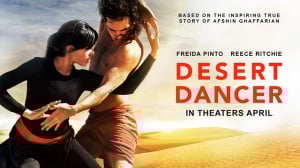
Review of Desert Dancer (2015)


On Hany Abu Asad’s Omar and the “Missing...
TRENDING AT PATHEOS Muslim

25 Years Later: How Much Has Changed for...
As we approach the 25th anniversary of September 11th, I’ve found myself...

Podcast: Third Spaces & The Rise of Yemeni...
In the latest episode of The Artistic Foodies Podcast, hosts Abbas...

HalalFest Picks: Best 60 Halal Spots for Super...
Back in 2016, I came up with a list of 29...

Unity Is America’s Strength — Division Is Its...
by Hidayatullah Ahsan When Valentina Gomez, a Republican candidate for Congress in...

Zohran Mamdani and New York’s Fight Against Islamophobia
This past June, against all odds, Zohran Mamdani won the Democratic primary...

What the Fourth of July Means to a...
As we mark another Fourth of July, millions of Americans will celebrate...
view all Muslim blogs
Ad-Free & Subscriber Log-In Subscription Support
- About Us
- 2026 Calendar
- Videos
- Podcasts
- Library of World Religions
- Faith In Media Tracker
- Advertise With Us
- Write for Us
- Privacy Policy
- Terms of Service
- Do Not Sell My Data
- Contact Us
- Radiant Digital
- Manage Newsletter Subscriptions
- Unsubscribe From Notifications
- Sitemap
Copyright 2008-2026, Patheos. All rights reserved.
Subscription Support Ad-Free & Subscriber Log-In
Follow Patheos