
BuddhistCatholicContemplativeEvangelicalGeneral ChristianHinduJewishLatter-day SaintMuslimNew VisionsProgressive Christian
Beliefs
- Buddhist
- Catholic
- Contemplative
- Evangelical
- General Christian
- Hindu
- Jewish
- Latter-day Saint
- More Voices
- Muslim
- New Visions
- Pagan
- Progressive Christian
Topics
- Religion News
- Food and Religion
- Sports and Religion
- Religious Art
- Religious Music and Entertainment
- Religious Events
- History and Religion
- Style and Religion
- Politics and Religion
- Women in Religion
- Recreation Outdoors and Religion
- Business Finance and Religion
- Careers Workplace and Religion
- Education and Religion
- Family Parenting and Religion
- Health Fitness and Religion
- Home and Religion
- Relationships and Religion
- Technology and Religion
- Travel and Religion
Columnists
- Buddhist Columnists
- Business Finance and Religion Columnists
- Careers Workplace and Religion Columnists
- Catholic Columnists
- Contemplative Columnists
- Education and Religion Columnists
- Evangelists Columnists
- Family Parenting and Religion Columnists
- General Christian Columnists
- Health Fitness and Religion Columnists
- Hindu Columnists
- History and Religion Columnists
- Home and Religion Columnists
- Jewish Columnists
- More Voices Columnists
- Latter Day Columnists
- Muslim Columnists
- New Visions Columnists
- Nonreligious Columnists
- Pagan Columnists
- Politics and Religion Columnists
- Progressive Columnists
- Recreation Outdoors and Religion Columnists
- Relationships and Religion Columnists
- Religion News Columnists
- Religious Art Columnists
- Religious Events Columnists
- Religious Music and Entertainment Columnists
- Sports and Religion Columnists
- Style and Religion Columnists
- Technology and Religion Columnists
- Travel and Religion Columnists
- Women in Religion Columnists
Resource Library
- 2026 Calendar
- Library of World Religions
- The 100 Most Holy Places on Earth
- Patheos Answers
- Podcasts
- Videos
- Faith Leaders Database
- Anglican Episcopalian
- Bahai
- Baptist
- Buddhism
- Christianity
- Confucianism
- Eastern Orthodoxy
- Hinduism
- Holiness and Pentecostal
- ISKCON
- Islam
- Judaism
- Lutheran
- Methodist
- The Church of Jesus Christ of Latter-day Saints
- New Age
- Paganism
- Presbytarian and Reformed
- Protestantism
- Religion Behind the Scenes
- Roman Catholic
- Scientology
- Shia Islam
- Sikhism
- Sufism
- Sunni Islam
- Taoism
- Zen
- See all religions
Research Tools
 Ad-Free & Subscriber Log-In Subscription Support
Ad-Free & Subscriber Log-In Subscription Support
Follow Patheos 

- Trending:
- Forgiveness
- |
- Marriage
- |
- Consciousness
- |
- Death Penalty
- |
- Election
- |
- Halloween
 Muslimah Media Watch
- Home
- Muslim
- Religion News
- Last Say on Niqab Should be From a Woman Who Wears It. Obviously.
Last Say on Niqab Should be From a Woman Who Wears It. Obviously.
Last updated on: September 1, 2010 at 12:00 am by alicia
Last Say on Niqab Should be From a Woman Who Wears It. Obviously. 2010-09-01T00:00:05-04:00 alicia
Patheos Explore the world's faith through different perspectives on religion and spirituality! Patheos has the views of the prevalent religions and spiritualities of the world.
I took the a brief moment from work to watch a 12-minute segment on BBC’s Newsnight about why British women choose to wear the niqab and why more women are wearing it in unprecedented numbers. Like any Muslim feminist, I hung onto every word and hoped nobody said something that has already been said before, ad nauseam: “Muslim women who cover their faces are deluded and oppressed.”
But tonight was a little different: it was a program that provided the panacea to what I’ve been railing against since the talks about the French burqa ban exploded in the media. Finally, a whole segment—a brief but precious 152 minutes—on prime time British television was dedicated to only women in hijab and niqab talking about their sartorial choices and views about their British identity. No self-righteous, media-hogging commentators or “experts” were in sight. This was a rare occasion!
Women in niqab have appeared on British television numerous times, but usually in a situation where they are embroiled in a heated debate surrounded by detractors who were often white and male, or Muslim liberals who have little patience for other Muslims who do not fit some absurd model minority mould (Taj Hargey and Yasmin Alibhai Brown, I’m talking to you). Tonight’s program featured three British women, three out of four in niqab, and no one else talking over their heads.
The segment was, however, structured to be a story with two halves. On one side of the debate, three young British women, Rumaysa, Sara, and Ruman, chose to veil their faces, and on the other, one woman, Khola, who had previously done so but currently wears the headscarf. She is against the niqab.
They spoke about their concern for their safety in public spaces, an issue that grabs my heart, even as a hijab-less woman. Any kind of harassment against women—be it sexist, racist, or Islamophobic—is an attack on all women. But the main reason these women were on television is to explain the growing trend of British-born women who take up the niqab.
Debates about Muslim women’s hijab have been rejuvenated following proposals for new British laws to mimic those in France and Belgium. Similar re-assessments about identity and citizenship seem to fuel debates behind the ban, and I was pleased that the women on Newsnight went straight for the jugular of the issue, asserting their British-ness and even their Western-ness.
It shouldn’t be a big deal, calling yourself British or Western. You can have a passport to prove it. But identity can be a tricky beast. It’s tricky when you’re surrounded by people who want to define you and deny your selfhood. Identity is so precious, especially for people in power, who want sole control in determining who’s “in” and who’s “out,” using the language of identity, values, rights, and citizenship, as if they own it.
This has boiled down to whether the niqab (or hijab) is part of British identity and in line with British values. The answer to this should be left to open-ended interpretation, and something a person should be free and confident to define for herself. The women make it a point to say that their mothers do not cover their faces, and that the break with their parent’s generation and religious expectations is part of their process of carving out a uniquely British identity.
Behind the “why” in the question why women choose to cover their faces is a direction towards a potentially productive conversation about gender and clothing. If the non-Muslim British society at large can understand why certain women need to conceal their hair, face, and other parts of their body, then maybe certain irrational, racist, Islamophobic fears can finally be laid to rest.
But to argue that women’s choices in clothes are no one’s business but the wearer’s is to deny the position of society in helping a woman make that choice. Rumaysa, one of the women on the program, argues that by covering her face, her voice becomes the defining element of her identity. But more importantly, it helps her achieve a higher level of spirituality.
Her arguments make perfect sense, but I then wondered why these avenues for spirituality and identity are for women only. Men do not retreat from the world on a daily basis in a niqab or insist on being defined by his voice, thoughts, and ideas rather than the way he looks. These questions will be met with a variety of responses, most I figure will say I’m being a ridiculous, but such responses will certainly point towards the way society works and how that is implicated in why men do not wear the niqab.
By the end of the program, I felt happy that the attention concerning the niqab is taken away from right- and left-wing pundits for once, but I can only be sure that this is only momentarily. Before long they will make noise again, wondering aloud why women should cover their faces.
Previous Post

August 31, 2010
Regressive Redemption in CII's Ramadan Serial
Next Post
September 2, 2010 Riz Khan on Afghan Women
Browse Our Archives
Select a Category Advertisements Art/Theater Books/Magazines Cinema Comics/Cartoons Culture/Society Events Fashion Film Friday Links Merchandise/Commodities MMW Announcements MMW Highlights Music/Radio News Photography Politics Profile Ramadan 2012 Ramadan 2013 Ramadan 2014 Ramadan 2015 Roundtable Satire Social Media Sports Technology/Science Television Uncategorized Video Web
Select a Month November 2015 October 2015 September 2015 August 2015 July 2015 June 2015 May 2015 April 2015 March 2015 January 2015 December 2014 November 2014 October 2014 September 2014 July 2014 June 2014 May 2014 April 2014 March 2014 February 2014 January 2014 December 2013 November 2013 October 2013 September 2013 August 2013 July 2013 June 2013 May 2013 April 2013 March 2013 February 2013 January 2013 December 2012 November 2012 October 2012 September 2012 August 2012 July 2012 June 2012 May 2012 April 2012 March 2012 February 2012 January 2012 December 2011 November 2011 September 2011 August 2011 July 2011 June 2011 May 2011 April 2011 March 2011 February 2011 January 2011 December 2010 November 2010 October 2010 September 2010 August 2010 July 2010 June 2010 May 2010 April 2010 March 2010 February 2010 January 2010 December 2009 November 2009 October 2009 September 2009 August 2009 July 2009 June 2009 May 2009 April 2009 March 2009 February 2009 January 2009 December 2008 November 2008 October 2008 September 2008 August 2008 July 2008 June 2008 May 2008 April 2008 March 2008 February 2008 January 2008 December 2007 November 2007 October 2007 September 2007 August 2007
Follow Us!
TAKE THE
Religious Wisdom Quiz
What river did the Israelites cross to enter the Promised Land?
Select your answer to see how you score.
Tigris River Euphrates River Jordan River Nile River
Related posts from Muslimah Media Watch

Friday Links - American flag hijabs, hate crimes,...


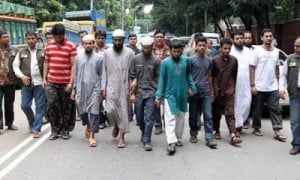
Bangladeshi Women, Media and the “Helpers of Allah”
TRENDING AT PATHEOS Muslim

25 Years Later: How Much Has Changed for...
As we approach the 25th anniversary of September 11th, I’ve found myself...

Podcast: Third Spaces & The Rise of Yemeni...
In the latest episode of The Artistic Foodies Podcast, hosts Abbas...

HalalFest Picks: Best 60 Halal Spots for Super...
Back in 2016, I came up with a list of 29...

Unity Is America’s Strength — Division Is Its...
by Hidayatullah Ahsan When Valentina Gomez, a Republican candidate for Congress in...

Zohran Mamdani and New York’s Fight Against Islamophobia
This past June, against all odds, Zohran Mamdani won the Democratic primary...

What the Fourth of July Means to a...
As we mark another Fourth of July, millions of Americans will celebrate...
view all Muslim blogs
Ad-Free & Subscriber Log-In Subscription Support
- About Us
- 2026 Calendar
- Videos
- Podcasts
- Library of World Religions
- Faith In Media Tracker
- Advertise With Us
- Write for Us
- Privacy Policy
- Terms of Service
- Do Not Sell My Data
- Contact Us
- Radiant Digital
- Manage Newsletter Subscriptions
- Unsubscribe From Notifications
- Sitemap
Copyright 2008-2026, Patheos. All rights reserved.
Subscription Support Ad-Free & Subscriber Log-In
Follow Patheos