
BuddhistCatholicContemplativeEvangelicalGeneral ChristianHinduJewishLatter-day SaintMuslimNew VisionsProgressive Christian
Beliefs
- Buddhist
- Catholic
- Contemplative
- Evangelical
- General Christian
- Hindu
- Jewish
- Latter-day Saint
- More Voices
- Muslim
- New Visions
- Pagan
- Progressive Christian
Topics
- Religion News
- Food and Religion
- Sports and Religion
- Religious Art
- Religious Music and Entertainment
- Religious Events
- History and Religion
- Style and Religion
- Politics and Religion
- Women in Religion
- Recreation Outdoors and Religion
- Business Finance and Religion
- Careers Workplace and Religion
- Education and Religion
- Family Parenting and Religion
- Health Fitness and Religion
- Home and Religion
- Relationships and Religion
- Technology and Religion
- Travel and Religion
Columnists
- Buddhist Columnists
- Business Finance and Religion Columnists
- Careers Workplace and Religion Columnists
- Catholic Columnists
- Contemplative Columnists
- Education and Religion Columnists
- Evangelists Columnists
- Family Parenting and Religion Columnists
- General Christian Columnists
- Health Fitness and Religion Columnists
- Hindu Columnists
- History and Religion Columnists
- Home and Religion Columnists
- Jewish Columnists
- More Voices Columnists
- Latter Day Columnists
- Muslim Columnists
- New Visions Columnists
- Nonreligious Columnists
- Pagan Columnists
- Politics and Religion Columnists
- Progressive Columnists
- Recreation Outdoors and Religion Columnists
- Relationships and Religion Columnists
- Religion News Columnists
- Religious Art Columnists
- Religious Events Columnists
- Religious Music and Entertainment Columnists
- Sports and Religion Columnists
- Style and Religion Columnists
- Technology and Religion Columnists
- Travel and Religion Columnists
- Women in Religion Columnists
Resource Library
- 2026 Calendar
- Library of World Religions
- The 100 Most Holy Places on Earth
- Patheos Answers
- Podcasts
- Videos
- Faith Leaders Database
- Anglican Episcopalian
- Bahai
- Baptist
- Buddhism
- Christianity
- Confucianism
- Eastern Orthodoxy
- Hinduism
- Holiness and Pentecostal
- ISKCON
- Islam
- Judaism
- Lutheran
- Methodist
- The Church of Jesus Christ of Latter-day Saints
- New Age
- Paganism
- Presbytarian and Reformed
- Protestantism
- Religion Behind the Scenes
- Roman Catholic
- Scientology
- Shia Islam
- Sikhism
- Sufism
- Sunni Islam
- Taoism
- Zen
- See all religions
Research Tools
 Ad-Free & Subscriber Log-In Subscription Support
Ad-Free & Subscriber Log-In Subscription Support
Follow Patheos 

- Trending:
- Forgiveness
- |
- Marriage
- |
- Consciousness
- |
- Death Penalty
- |
- Election
- |
- Halloween
 Muslimah Media Watch
- Home
- Muslim
- Religion News
- Driving Me Crazy: The BBC’s Muslim Driving School
Driving Me Crazy: The BBC’s Muslim Driving School
Last updated on: January 27, 2010 at 12:00 am by ayaan
Driving Me Crazy: The BBC’s Muslim Driving School 2010-01-27T00:00:36-04:00 ayaan
Patheos Explore the world's faith through different perspectives on religion and spirituality! Patheos has the views of the prevalent religions and spiritualities of the world.
The BBC is airing a six-episode television series, called Muslim Driving School, about Muslim women who are learning to drive. The show purports to not only follow these women as they learn, but to provide an insight into their inner lives.
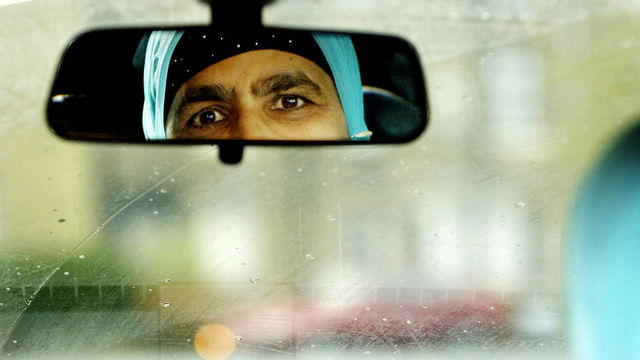
Taslima. Image via BBC website.
Muslim Driving School is billed as being about British Muslim women, but from the introduction onward, a narrower focus is introduced–a focus on mostly Asian Muslim women, from what are described as “traditional” Muslim communities, living in northern mill towns such as Bradford and Burnley. The publicity describes the show as an “intimate and revelatory insight” into the lives of the women featured. Throughout the show there is an unambiguous depiction of the women and their lives from the standpoint of an outsider, represented for the consumption of other outsiders. The minor details of their lives are held up as revelation, while a distanced appraisal of an ostensibly alien culture is supposedly intimacy.
The terms “Asian” and “Muslim” are used interchangeably throughout the program. Asian women’s husbands make choices for them, Muslim women do not speak to men who are not part of their mahram – generalizations are used to paint the group as a whole in broad brushstrokes, while a series of exceptions to the rule are presented. At one point an imam is brought in to tell us that he thinks that Muslim women should have the right to drive and the right to work, as though these are revolutionary concepts for Muslim women or there aren’t any number of religious scholars, both today and throughout history, who haven’t agreed with these concepts. These particular women are shown as being part of a vanguard of change, a change catalyzed by the influence of British society.
Driving is explicitly presented as being about more than pleasure or transportation, as the narration gushes about the “revving engines” of “revolution” sounding across the country. In relation to Muslim women, it seems, driving should be perceived differently – not a “pleasure pursuit,” but a route to social and economic independence, something that is shown as being rare or absent in the past.Driving is seen to be not only a freedom, but a symbol of and a model for wider freedoms being attained by Muslim women, a particular generation of Muslim women, and a particular generation of immigrants.
Taslima (pictured above left), a 58-year-old grandmother who came to Britain from Pakistan to be married at 13 is learning to drive in order to be able to provide transportation for her ill husband–after he had previously told her that there was no need for her to learn to drive when he was able. Zaida, a driving instructor who runs a school with her husband, pushed past her family’s objections and learned to drive as teenager, turning her passion into a career, specializing in teaching women to drive, but she explains her student Taslima’s lack of confidence on the road as being a sympton of a wider lack of assertiveness and inability to make firm decisions, not only in Taslima herself, but in Asian women as a whole. She insists that her children will have the ability to make choices she wasn’t able to.

Aysha.
Samia is an effusive eighteen-year-old who has recently gotten out of a failed arranged marriage in Pakistan and now wishes to have her own car. Aysha (nee Stacey, pictured right) stands alone as an example of British culture being affected by (a) Muslim culture. She’s moved from a life of “drink and drugs” to embracing religion and becoming a part of the family of Korsa, her driving instructor. The show is markedly ambivalent to Aysha’s choices, in comparison to the overwhelmingly positive portrayal of the other women who are shown to be becoming more anglicized, at one point asking if she wears the niqab in order to crush “Stacey,” her previous self, and highlighting her estrangement from her mother.
Subsequently, Muslim Driving School represents a narrative of Muslim women gaining forward momentum–the evolution of a feminist sensibility shaped by the admixture of an intrinsically “traditional” Muslim culture and an apparently liberal British culture. But ultimately, the focus on driving as a mechanism for change is a stretch.
Muslim Driving School is available to watch for U.K. residents on the BBC iPlayer here and here. The third episode will be airing on BBC 2 at 22.00 on Tuesday.
Previous Post

January 26, 2010
The Poor White Women: Yasmin Alibhai-Brown on White Female Converts
Next Post
January 28, 2010 Define Yourself: Discussions of Women, Feminism, and the Arab World
Browse Our Archives
Select a Category Advertisements Art/Theater Books/Magazines Cinema Comics/Cartoons Culture/Society Events Fashion Film Friday Links Merchandise/Commodities MMW Announcements MMW Highlights Music/Radio News Photography Politics Profile Ramadan 2012 Ramadan 2013 Ramadan 2014 Ramadan 2015 Roundtable Satire Social Media Sports Technology/Science Television Uncategorized Video Web
Select a Month November 2015 October 2015 September 2015 August 2015 July 2015 June 2015 May 2015 April 2015 March 2015 January 2015 December 2014 November 2014 October 2014 September 2014 July 2014 June 2014 May 2014 April 2014 March 2014 February 2014 January 2014 December 2013 November 2013 October 2013 September 2013 August 2013 July 2013 June 2013 May 2013 April 2013 March 2013 February 2013 January 2013 December 2012 November 2012 October 2012 September 2012 August 2012 July 2012 June 2012 May 2012 April 2012 March 2012 February 2012 January 2012 December 2011 November 2011 September 2011 August 2011 July 2011 June 2011 May 2011 April 2011 March 2011 February 2011 January 2011 December 2010 November 2010 October 2010 September 2010 August 2010 July 2010 June 2010 May 2010 April 2010 March 2010 February 2010 January 2010 December 2009 November 2009 October 2009 September 2009 August 2009 July 2009 June 2009 May 2009 April 2009 March 2009 February 2009 January 2009 December 2008 November 2008 October 2008 September 2008 August 2008 July 2008 June 2008 May 2008 April 2008 March 2008 February 2008 January 2008 December 2007 November 2007 October 2007 September 2007 August 2007
Follow Us!
TAKE THE
Religious Wisdom Quiz
What does Proverbs 22:6 say about training a child?
Select your answer to see how you score.
Children should be seen and not heard. Train up a child in the way he should go, and when he is old he will not depart from it. Guide the young, and they will not stumble. Teach a child discipline, and he will live in wisdom.
Related posts from Muslimah Media Watch


Has Quantico got positive female Muslim roles covered?
When Invisibility is a Superpower: Farah Nazan in...
Are we Truly Breaking Stereotypes about Muslim Women?
TRENDING AT PATHEOS Muslim

25 Years Later: How Much Has Changed for...
As we approach the 25th anniversary of September 11th, I’ve found myself...

Podcast: Third Spaces & The Rise of Yemeni...
In the latest episode of The Artistic Foodies Podcast, hosts Abbas...

HalalFest Picks: Best 60 Halal Spots for Super...
Back in 2016, I came up with a list of 29...

Unity Is America’s Strength — Division Is Its...
by Hidayatullah Ahsan When Valentina Gomez, a Republican candidate for Congress in...

Zohran Mamdani and New York’s Fight Against Islamophobia
This past June, against all odds, Zohran Mamdani won the Democratic primary...

What the Fourth of July Means to a...
As we mark another Fourth of July, millions of Americans will celebrate...
view all Muslim blogs
Ad-Free & Subscriber Log-In Subscription Support
- About Us
- 2026 Calendar
- Videos
- Podcasts
- Library of World Religions
- Faith In Media Tracker
- Advertise With Us
- Write for Us
- Privacy Policy
- Terms of Service
- Do Not Sell My Data
- Contact Us
- Radiant Digital
- Manage Newsletter Subscriptions
- Unsubscribe From Notifications
- Sitemap
Copyright 2008-2026, Patheos. All rights reserved.
Subscription Support Ad-Free & Subscriber Log-In
Follow Patheos