
BuddhistCatholicContemplativeEvangelicalGeneral ChristianHinduJewishLatter-day SaintMuslimNew VisionsProgressive Christian
Beliefs
- Buddhist
- Catholic
- Contemplative
- Evangelical
- General Christian
- Hindu
- Jewish
- Latter-day Saint
- More Voices
- Muslim
- New Visions
- Pagan
- Progressive Christian
Topics
- Religion News
- Food and Religion
- Sports and Religion
- Religious Art
- Religious Music and Entertainment
- Religious Events
- History and Religion
- Style and Religion
- Politics and Religion
- Women in Religion
- Recreation Outdoors and Religion
- Business Finance and Religion
- Careers Workplace and Religion
- Education and Religion
- Family Parenting and Religion
- Health Fitness and Religion
- Home and Religion
- Relationships and Religion
- Technology and Religion
- Travel and Religion
Columnists
- Buddhist Columnists
- Business Finance and Religion Columnists
- Careers Workplace and Religion Columnists
- Catholic Columnists
- Contemplative Columnists
- Education and Religion Columnists
- Evangelists Columnists
- Family Parenting and Religion Columnists
- General Christian Columnists
- Health Fitness and Religion Columnists
- Hindu Columnists
- History and Religion Columnists
- Home and Religion Columnists
- Jewish Columnists
- More Voices Columnists
- Latter Day Columnists
- Muslim Columnists
- New Visions Columnists
- Nonreligious Columnists
- Pagan Columnists
- Politics and Religion Columnists
- Progressive Columnists
- Recreation Outdoors and Religion Columnists
- Relationships and Religion Columnists
- Religion News Columnists
- Religious Art Columnists
- Religious Events Columnists
- Religious Music and Entertainment Columnists
- Sports and Religion Columnists
- Style and Religion Columnists
- Technology and Religion Columnists
- Travel and Religion Columnists
- Women in Religion Columnists
Resource Library
- 2026 Calendar
- Library of World Religions
- The 100 Most Holy Places on Earth
- Patheos Answers
- Podcasts
- Videos
- Faith Leaders Database
- Anglican Episcopalian
- Bahai
- Baptist
- Buddhism
- Christianity
- Confucianism
- Eastern Orthodoxy
- Hinduism
- Holiness and Pentecostal
- ISKCON
- Islam
- Judaism
- Lutheran
- Methodist
- The Church of Jesus Christ of Latter-day Saints
- New Age
- Paganism
- Presbytarian and Reformed
- Protestantism
- Religion Behind the Scenes
- Roman Catholic
- Scientology
- Shia Islam
- Sikhism
- Sufism
- Sunni Islam
- Taoism
- Zen
- See all religions
Research Tools
 Ad-Free & Subscriber Log-In Subscription Support
Ad-Free & Subscriber Log-In Subscription Support
Follow Patheos 

- Trending:
- Forgiveness
- |
- Marriage
- |
- Consciousness
- |
- Death Penalty
- |
- Election
- |
- Halloween
 Muslimah Media Watch
- Home
- Muslim
- Religion News
- “Forced to Marry”: A Look at the Documentary
“Forced to Marry”: A Look at the Documentary
Last updated on: December 8, 2011 at 11:33 pm by Muslimah Media Watch
“Forced to Marry”: A Look at the Documentary 2011-12-08T23:33:51-04:00 Muslimah Media Watch
Patheos Explore the world's faith through different perspectives on religion and spirituality! Patheos has the views of the prevalent religions and spiritualities of the world.
Last week’s “Friday Links” linked to a story of a documentary about forced marriages of young Pakistani-British girls to men in Pakistan. I followed the link and decided to watch this new British documentary. I found the film, called Forced to Marry and which aired on BBC Two on December 1st: fascinating, frustrating, disturbing, chilling, sad, and, at times, hopeful and heartening.

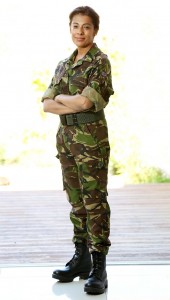
Saira Khan. Image via BBC Two
The film, which was filmed, produced, and directed by Ruhi Hamid and narrated and presented by Saira Khan, begins with the dire statistics that each year thousands of girls from Britain are taken abroad and are forced to marry, many of them in Pakistan. In fact, Khan notes that more British people are forced into marriage in Pakistan than in any other country. In the documentary, Khan follows staff members Albert David, Neelam Farooq (both Pakistanis), and Theepan Salvaratnam (British Vice Consul) of a unit set up in Pakistan by the British Foreign Office which finds and rescues British girls in Pakistan who have been forced into marriages, in hopes of finding out why young British Pakistanis are being forced to marry.
In the documentary, we are presented with the cases of four British Pakistani girls – Tanya, Aaliyah, Zara, and Rubina (all aliases) – who the unit tries to rescue. With each rescue attempt, I found myself getting nervous and tense. The unit confronts those involved (without showing their faces on camera) and the chance of confrontations becoming tense and dangerous always seem high. However, each confrontation is resolved in some way or another, as the unit is intent on keeping tensions and altercations of any kind at a far distance.
The documentary is eye-opening as it tells the stories of the girls in order to to explain this particular, and seemingly increasing (a 40-45% increase in just one year), problem the U.K. and Pakistan face. When telling such stories, one has to perform a sensitive balancing act: expose the problem without stigmatizing a marginalized community. This documentary does this well. First, the documentary ensures to clarify the difference between forced and arranged marriages, the latter of which are still very common in South Asian cultures. The documentary also mentions numerous times that such forced marriages are un-Islamic.
At one point this distinction becomes bittersweet when Khan speaks with young British Pakistani girls about the issue and they state that it is not Islam but rather the culture. So in defending religion, they implicate culture. I was not sure how to feel about this. I cannot deny that the issues of family honour and “parents know best” are not a part of South Asian culture, but such expressions (i.e., forced marriages) are extreme. Yet, working as a double edged sword, this same depiction of culture as the culprit portrays the parents of the girls as victims of the culture, bound by traditions of honour and having to fall to the pressures of families and bradries (brotherhoods, or castes). This, because it is obvious that the young girls profiled in the film are torn and conflicted. They want to leave Pakistan, they do not want to be forced, but at the same time they love their parents and do not want to hurt them, despite their parents forcing them into marriages. By depicting the parents as victims just as much as victimizers, one sees the complexity of the issue as well as the inner struggles of the girls being rescued.
The film ends back in the U.K., with Khan speaking with British Pakistani writer and broadcaster Ziauddin Sardar who has written books on British Asians. He calls for a reform of laws criminalizing forced marriages. A law which has since become reality. He accurately points out that the attempt of the parents to create closer ties with family in Pakistan by forcing to marriage their children to family in Pakistan has actually ended up tearing families apart.
The film left me feeling sad for the young girls who although portrayed as victims in some ways, were also the ones who instigated the rescues. They were always given the choice of leaving or staying. The unit was just a means for them to escape. And the unit, although a British initiative, was made up mainly of Pakistanis rescuing British girls. However, I wondered, as did Khan, about the many girls the unit was not able to help.
The film left me feeling angry at the parents who force their children to marry to uphold traditions that they may hold dear but which are detrimental for the children involved. The film left me feeling frustrated at the loyalty some of the girls felt to either their parents or in-laws. However, being South Asian myself, I understand that sense of loyalty, honour, and respect. I also understand my own privilege for having parents who would never force me to do anything, thus making my adherence to such cultural practices easy. The film also left me feeling hopeful that there are resources for these young girls (and apparently boys as well). Finally, I felt sad for the Pakistani girls who are forced into marriages, who do not have the Pakistani government to come to their rescue. The issue of forced marriages in Pakistan, of both Pakistani nationals as well as British (and others perhaps), is obviously a problem which must be highlighted and thus such documentaries are a necessity.
You can watch the documentary below, or on YouTube here. I highly recommend watching it.
http://www.youtube.com/watch?v=yR7rGn4MRJ0&feature=PlayList&p=C70826DC8B1122CC&index=0&playnext=1
Previous Post

December 22, 2008
Not Australia's Next Top Model: Iktimal Hage-Ali
Next Post
December 23, 2008 Fly Girls: the NYT's essentialist profile of Emirati flight attendants
Browse Our Archives
Select a Category Advertisements Art/Theater Books/Magazines Cinema Comics/Cartoons Culture/Society Events Fashion Film Friday Links Merchandise/Commodities MMW Announcements MMW Highlights Music/Radio News Photography Politics Profile Ramadan 2012 Ramadan 2013 Ramadan 2014 Ramadan 2015 Roundtable Satire Social Media Sports Technology/Science Television Uncategorized Video Web
Select a Month November 2015 October 2015 September 2015 August 2015 July 2015 June 2015 May 2015 April 2015 March 2015 January 2015 December 2014 November 2014 October 2014 September 2014 July 2014 June 2014 May 2014 April 2014 March 2014 February 2014 January 2014 December 2013 November 2013 October 2013 September 2013 August 2013 July 2013 June 2013 May 2013 April 2013 March 2013 February 2013 January 2013 December 2012 November 2012 October 2012 September 2012 August 2012 July 2012 June 2012 May 2012 April 2012 March 2012 February 2012 January 2012 December 2011 November 2011 September 2011 August 2011 July 2011 June 2011 May 2011 April 2011 March 2011 February 2011 January 2011 December 2010 November 2010 October 2010 September 2010 August 2010 July 2010 June 2010 May 2010 April 2010 March 2010 February 2010 January 2010 December 2009 November 2009 October 2009 September 2009 August 2009 July 2009 June 2009 May 2009 April 2009 March 2009 February 2009 January 2009 December 2008 November 2008 October 2008 September 2008 August 2008 July 2008 June 2008 May 2008 April 2008 March 2008 February 2008 January 2008 December 2007 November 2007 October 2007 September 2007 August 2007
Follow Us!
TAKE THE
Religious Wisdom Quiz
What Christian group calls their places of worship "Kingdom Halls"?
Select your answer to see how you score.
Baptists Seventh-day Adventists Anglicans Jehovah’s Witnesses
Related posts from Muslimah Media Watch

Making Sense of “the Other”: A Review of...

Review of Brick Walls by Saadia Faruqi
TRENDING AT PATHEOS Muslim

25 Years Later: How Much Has Changed for...
As we approach the 25th anniversary of September 11th, I’ve found myself...

Podcast: Third Spaces & The Rise of Yemeni...
In the latest episode of The Artistic Foodies Podcast, hosts Abbas...

HalalFest Picks: Best 60 Halal Spots for Super...
Back in 2016, I came up with a list of 29...

Unity Is America’s Strength — Division Is Its...
by Hidayatullah Ahsan When Valentina Gomez, a Republican candidate for Congress in...

Zohran Mamdani and New York’s Fight Against Islamophobia
This past June, against all odds, Zohran Mamdani won the Democratic primary...

What the Fourth of July Means to a...
As we mark another Fourth of July, millions of Americans will celebrate...
view all Muslim blogs
Ad-Free & Subscriber Log-In Subscription Support
- About Us
- 2026 Calendar
- Videos
- Podcasts
- Library of World Religions
- Faith In Media Tracker
- Advertise With Us
- Write for Us
- Privacy Policy
- Terms of Service
- Do Not Sell My Data
- Contact Us
- Radiant Digital
- Manage Newsletter Subscriptions
- Unsubscribe From Notifications
- Sitemap
Copyright 2008-2026, Patheos. All rights reserved.
Subscription Support Ad-Free & Subscriber Log-In
Follow Patheos