
BuddhistCatholicContemplativeEvangelicalGeneral ChristianHinduJewishLatter-day SaintMuslimNew VisionsProgressive Christian
Beliefs
- Buddhist
- Catholic
- Contemplative
- Evangelical
- General Christian
- Hindu
- Jewish
- Latter-day Saint
- More Voices
- Muslim
- New Visions
- Pagan
- Progressive Christian
Topics
- Religion News
- Food and Religion
- Sports and Religion
- Religious Art
- Religious Music and Entertainment
- Religious Events
- History and Religion
- Style and Religion
- Politics and Religion
- Women in Religion
- Recreation Outdoors and Religion
- Business Finance and Religion
- Careers Workplace and Religion
- Education and Religion
- Family Parenting and Religion
- Health Fitness and Religion
- Home and Religion
- Relationships and Religion
- Technology and Religion
- Travel and Religion
Columnists
- Buddhist Columnists
- Business Finance and Religion Columnists
- Careers Workplace and Religion Columnists
- Catholic Columnists
- Contemplative Columnists
- Education and Religion Columnists
- Evangelists Columnists
- Family Parenting and Religion Columnists
- General Christian Columnists
- Health Fitness and Religion Columnists
- Hindu Columnists
- History and Religion Columnists
- Home and Religion Columnists
- Jewish Columnists
- More Voices Columnists
- Latter Day Columnists
- Muslim Columnists
- New Visions Columnists
- Nonreligious Columnists
- Pagan Columnists
- Politics and Religion Columnists
- Progressive Columnists
- Recreation Outdoors and Religion Columnists
- Relationships and Religion Columnists
- Religion News Columnists
- Religious Art Columnists
- Religious Events Columnists
- Religious Music and Entertainment Columnists
- Sports and Religion Columnists
- Style and Religion Columnists
- Technology and Religion Columnists
- Travel and Religion Columnists
- Women in Religion Columnists
Resource Library
- 2026 Calendar
- Library of World Religions
- The 100 Most Holy Places on Earth
- Patheos Answers
- Podcasts
- Videos
- Faith Leaders Database
- Anglican Episcopalian
- Bahai
- Baptist
- Buddhism
- Christianity
- Confucianism
- Eastern Orthodoxy
- Hinduism
- Holiness and Pentecostal
- ISKCON
- Islam
- Judaism
- Lutheran
- Methodist
- The Church of Jesus Christ of Latter-day Saints
- New Age
- Paganism
- Presbytarian and Reformed
- Protestantism
- Religion Behind the Scenes
- Roman Catholic
- Scientology
- Shia Islam
- Sikhism
- Sufism
- Sunni Islam
- Taoism
- Zen
- See all religions
Research Tools
 Ad-Free & Subscriber Log-In Subscription Support
Ad-Free & Subscriber Log-In Subscription Support
Follow Patheos 

- Trending:
- Forgiveness
- |
- Marriage
- |
- Consciousness
- |
- Death Penalty
- |
- Election
- |
- Halloween
 Muslimah Media Watch
- Home
- Muslim
- Religion News
- The Not-So-Funnies: Using Niqab in Comics to Otherize Iranian Women
The Not-So-Funnies: Using Niqab in Comics to Otherize Iranian Women
Last updated on: December 8, 2011 at 11:35 pm by Muslimah Media Watch
The Not-So-Funnies: Using Niqab in Comics to Otherize Iranian Women 2011-12-08T23:35:01-04:00 Muslimah Media Watch
Patheos Explore the world's faith through different perspectives on religion and spirituality! Patheos has the views of the prevalent religions and spiritualities of the world.
A few weeks ago, Slate highlighted Iran as a topic for cartoonists. I didn’t look at all 290 cartoons (I got to 203, though!), which lampooned several years of Iran’s place in the headlines. The general consensus among cartoonists is that there are four topics which make up Iran: Ahmedinejad, nuclear issues, angry-looking mullahs, and ladies in burqas.
(sigh) How many times do I need to go over this?! Women in Iran do not wear niqabs. Show me a woman in niqab in Iran, and I will kindly point you to a map that proves you are in some other country. The last time a woman wore a face veil in Iran was in the early 1900s, before Reza Shah outlawed all veils. The most conservative dress possible in Iran is a chador. In more rural areas, closer to the Gulf, you may see Baluchi women covering their faces with traditional masks. Or you may see Afghan refugees wearing the chadaari (known to the west as a burqa). However, the vast majority of Iranian women of whatever ethnic group do not wear these types of clothing. You can see a great slide show about different styles of hejab in Iran here.
Civics lesson finished. Here are the cartoons that really busted my brain:
 This first cartoon, drawn by Signe Wilkinson, shows a Tehrani vendor trying to sell “Iranian Barbies,” which all wear niqab. So Ms. Wilkinson hasn’t done her homework, which especially shows with her use of “Jihad Barbie” and “Nuclear Barbie,” ascribing negative, stereotypically terrorist, roles to these dolls to make them “Iranian.” Despite the fact that Iranian women do not blow themselves up for any jihad, despite the fact that the CIA released a report that Iran is not a nuclear threat.*
 The second cartoon, drawn by Dana Summers, shows Ahmedinejad inviting an Iranian woman to wear any of her niqabs. One more time: in reality, an Iranian woman will most likely not own a niqab, let alone a closet full of them. And, in reality, what the woman in the cartoon is wearing is much more likely to be her outfit while she’s out and about. Also, the carbon-copy illustration of the niqab makes it seem like one niqab is just like another, which is ridiculously myopic. Finally, juxtaposing Ahmedinejad to this whole wardrobe decision makes it seem like he’s responsible for it (wrong again: the mandatory hejab policy was instituted by Ayatollah Khomeini).
 This third cartoon, drawn by Ammer for an Austrian publication, illustrates a showdown between Iran and the U.S. It’s refreshing to see Iran characterized as neither a bearded mullah or Ahmedinejad, but this illustration is incorrect still.
In Western public discourse, the niqab has come to represent “The Other,” and this image reinforces that connotation. The swaggering male cowboy, played by the U.S., is facing off against this mysterious, exotic, possibly-dangerous unknown female labeled “Iran” over something they both seemingly want: Baghdad. It’s a U.S. vs. Iran showdown that leaves out viewers who a) are both Iranian and American, b) are both Muslim (including those who wear niqab) and American, or c) all of the above.
The characterization of Iran as a woman (who is ostensibly unarmed) is also alarming because of the connotations of feminizing a country. A feminine (and thus lesser) country can be overpowered, exploited, and raped. While any of these can happen to men in reality, they are not often associated with white male experiences or, in this case, countries with male (and thus greater) characterization. In this cartoon, the female Muslim Iran is fixin’ to get herself into trouble by standing up to male non-Muslim America, and the cartoon thus foretells of a possible outcome of overpowering, rape, and/or murder of this Muslim woman.
These cartoons all display a great arrogance towards Muslim women, as well as a palpable misunderstanding of differences among cultures in which women cover themselves a specific way to follow religious and cultural norms.
*For a great analysis on hejab in political propaganda and Iranian women’s roles in movements in movements that could be considered a type of jihad (namely, fighting against Iraq in the ’80s), check out Fagheh Shirazi’s book The Veil Unveiled.
Previous Post

May 15, 2008
Sisters in Music: Female Muslim Rappers Collaborate
Next Post
May 20, 2008 Leading Saudi Woman Blogger Alhodaif Passes Away at 25
Browse Our Archives
Select a Category Advertisements Art/Theater Books/Magazines Cinema Comics/Cartoons Culture/Society Events Fashion Film Friday Links Merchandise/Commodities MMW Announcements MMW Highlights Music/Radio News Photography Politics Profile Ramadan 2012 Ramadan 2013 Ramadan 2014 Ramadan 2015 Roundtable Satire Social Media Sports Technology/Science Television Uncategorized Video Web
Select a Month November 2015 October 2015 September 2015 August 2015 July 2015 June 2015 May 2015 April 2015 March 2015 January 2015 December 2014 November 2014 October 2014 September 2014 July 2014 June 2014 May 2014 April 2014 March 2014 February 2014 January 2014 December 2013 November 2013 October 2013 September 2013 August 2013 July 2013 June 2013 May 2013 April 2013 March 2013 February 2013 January 2013 December 2012 November 2012 October 2012 September 2012 August 2012 July 2012 June 2012 May 2012 April 2012 March 2012 February 2012 January 2012 December 2011 November 2011 September 2011 August 2011 July 2011 June 2011 May 2011 April 2011 March 2011 February 2011 January 2011 December 2010 November 2010 October 2010 September 2010 August 2010 July 2010 June 2010 May 2010 April 2010 March 2010 February 2010 January 2010 December 2009 November 2009 October 2009 September 2009 August 2009 July 2009 June 2009 May 2009 April 2009 March 2009 February 2009 January 2009 December 2008 November 2008 October 2008 September 2008 August 2008 July 2008 June 2008 May 2008 April 2008 March 2008 February 2008 January 2008 December 2007 November 2007 October 2007 September 2007 August 2007
Follow Us!
TAKE THE
Religious Wisdom Quiz
What was the primary inheritance method in biblical times?
Select your answer to see how you score.
Youngest child Equal division Oldest daughter Firstborn son
Related posts from Muslimah Media Watch

Rejected (Muslim) Princesses: awesomely offbeat women in history
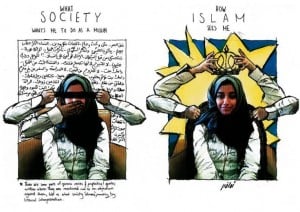
TED Talks and Superheroes: New Representations of Muslim...
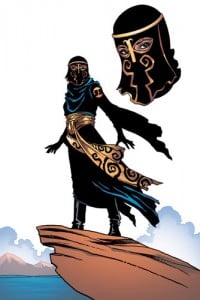
When Bridging Between Cultures Doesn’t Help
TRENDING AT PATHEOS Muslim

25 Years Later: How Much Has Changed for...
As we approach the 25th anniversary of September 11th, I’ve found myself...

Podcast: Third Spaces & The Rise of Yemeni...
In the latest episode of The Artistic Foodies Podcast, hosts Abbas...

HalalFest Picks: Best 60 Halal Spots for Super...
Back in 2016, I came up with a list of 29...

Unity Is America’s Strength — Division Is Its...
by Hidayatullah Ahsan When Valentina Gomez, a Republican candidate for Congress in...

Zohran Mamdani and New York’s Fight Against Islamophobia
This past June, against all odds, Zohran Mamdani won the Democratic primary...

What the Fourth of July Means to a...
As we mark another Fourth of July, millions of Americans will celebrate...
view all Muslim blogs
Ad-Free & Subscriber Log-In Subscription Support
- About Us
- 2026 Calendar
- Videos
- Podcasts
- Library of World Religions
- Faith In Media Tracker
- Advertise With Us
- Write for Us
- Privacy Policy
- Terms of Service
- Do Not Sell My Data
- Contact Us
- Radiant Digital
- Manage Newsletter Subscriptions
- Unsubscribe From Notifications
- Sitemap
Copyright 2008-2026, Patheos. All rights reserved.
Subscription Support Ad-Free & Subscriber Log-In
Follow Patheos