
BuddhistCatholicContemplativeEvangelicalGeneral ChristianHinduJewishLatter-day SaintMuslimNew VisionsProgressive Christian
Beliefs
- Buddhist
- Catholic
- Contemplative
- Evangelical
- General Christian
- Hindu
- Jewish
- Latter-day Saint
- More Voices
- Muslim
- New Visions
- Pagan
- Progressive Christian
Topics
- Religion News
- Food and Religion
- Sports and Religion
- Religious Art
- Religious Music and Entertainment
- Religious Events
- History and Religion
- Style and Religion
- Politics and Religion
- Women in Religion
- Recreation Outdoors and Religion
- Business Finance and Religion
- Careers Workplace and Religion
- Education and Religion
- Family Parenting and Religion
- Health Fitness and Religion
- Home and Religion
- Relationships and Religion
- Technology and Religion
- Travel and Religion
Columnists
- Buddhist Columnists
- Business Finance and Religion Columnists
- Careers Workplace and Religion Columnists
- Catholic Columnists
- Contemplative Columnists
- Education and Religion Columnists
- Evangelists Columnists
- Family Parenting and Religion Columnists
- General Christian Columnists
- Health Fitness and Religion Columnists
- Hindu Columnists
- History and Religion Columnists
- Home and Religion Columnists
- Jewish Columnists
- More Voices Columnists
- Latter Day Columnists
- Muslim Columnists
- New Visions Columnists
- Nonreligious Columnists
- Pagan Columnists
- Politics and Religion Columnists
- Progressive Columnists
- Recreation Outdoors and Religion Columnists
- Relationships and Religion Columnists
- Religion News Columnists
- Religious Art Columnists
- Religious Events Columnists
- Religious Music and Entertainment Columnists
- Sports and Religion Columnists
- Style and Religion Columnists
- Technology and Religion Columnists
- Travel and Religion Columnists
- Women in Religion Columnists
Resource Library
- 2026 Calendar
- Library of World Religions
- The 100 Most Holy Places on Earth
- Patheos Answers
- Podcasts
- Videos
- Faith Leaders Database
- Anglican Episcopalian
- Bahai
- Baptist
- Buddhism
- Christianity
- Confucianism
- Eastern Orthodoxy
- Hinduism
- Holiness and Pentecostal
- ISKCON
- Islam
- Judaism
- Lutheran
- Methodist
- The Church of Jesus Christ of Latter-day Saints
- New Age
- Paganism
- Presbytarian and Reformed
- Protestantism
- Religion Behind the Scenes
- Roman Catholic
- Scientology
- Shia Islam
- Sikhism
- Sufism
- Sunni Islam
- Taoism
- Zen
- See all religions
Research Tools
 Ad-Free & Subscriber Log-In Subscription Support
Ad-Free & Subscriber Log-In Subscription Support
Follow Patheos 

- Trending:
- Forgiveness
- |
- Marriage
- |
- Consciousness
- |
- Death Penalty
- |
- Election
- |
- Halloween
 Muslimah Media Watch
- Home
- Muslim
- Religion News
- How women found their voice in Turkish cinema
How women found their voice in Turkish cinema
Last updated on: January 21, 2012 at 2:31 pm by Guest Contributor
How women found their voice in Turkish cinema 2012-01-21T14:31:12-04:00 Guest Contributor
Patheos Explore the world's faith through different perspectives on religion and spirituality! Patheos has the views of the prevalent religions and spiritualities of the world.
This was written by Emrah Güler and was originally published at the Turkish Daily News.
In light of celebrating Mother’s Day last Sunday and the Flying Broom International Women’s Film Festival continuing in Ankara this week, we take a brief look at women in the history of Turkish cinema.
We look at how women were played by men in the beginning of this century, how the sacred mother was one of the stereotypical images of women in Turkish cinema for decades, the stars and the actresses, and how we see women in cinema now.
When we say mothers were played by men, what we mean is that during the brief period of time when the Ottoman Empire was collapsing and the Turkish Republic was about to be established, the emerging form of art and entertainment that was cinema met with a major obstacle with regard to female characters. The Ottoman regime didn’t allow Muslim women to be part of this new sacrilegious entertainment form. For a decade leading to 1920s, female characters were portrayed by men for a short period of time, and later by non-Muslim women, mostly Armenian or Russian. The first woman who dared to kiss the opposite sex on screen was a minority, Madam Kalitea.
Afife Jale was the first Turkish/Muslim woman to act on stage in 1920. This paved the way for other Turkish women to pursue acting either on stage or on screen. The prolific period of director Muhsin Ertuğrul between 1923 and 1939 (he single-handedly introduced cinema to Turkish masses by being the only director with 29 movies in that period), he introduced actresses to Turkish cinema. Among these women were Feriha Tevfik, the first Miss Turkey after a beauty contest initiated by Mustafa Kemal Atatürk, the founder of modern Turkey; Semiha Berksoy, an opera singer who played and sang in the first sound movie; and İsmet Sırrı, who was the first actress in Turkey’s very first box office success, Ankara Postası (The Ankara Post).
The first Turkish star
Turkey’s very first star was Cahide Sonku (pictured), often compared to Hollywood stars like Greta Garbo and Ingrid Bergman. Sonku became a legend in the 1930s with her onscreen persona of the beautiful heartbreaker coupled with her off-screen image as the irresistible woman whose shoes were used as wine glasses. She became the ultimate movie icon of her period. She was also the first female screenwriter and director with Vatan ve Namık Kemal (Namık Kemal and the Motherland), and the first actress to play the first female protagonist living in rural Anatolia with Bataklı Damın Kızı Aysel.
The next decades confined women to one-dimensional roles where women were either good or bad. The sacrificing mother, untouched virgin, femme fatale, the seductress were some of the stereotypes Turkish cinema got a load of during that period. When movies wandered into rural Turkey, honor and virtue became the driving forces to put women into their places. If a woman lost her “purity,” she was either killed or found herself in a brothel.
Until the 1970s, actresses were typecast for these one-dimensional roles. Neriman Köksal was the blond femme fatale and the home-breaker, Hülya Koçyiğit was the heroine of the tragic love stories, Muhterem Nur was the weak woman doomed to despair, Belgin Doruk was the bourgeois sweetheart, Fatma Girik was the tough street girl, and Filiz Akın was the naive romantic with her blond European look.
Desired by men, respected by women
Türkan Şoray was one name that stood out among these actresses, cementing her name as the legend of Turkish cinema. With her slightly parted lips, and huge eyes, she soon became “the woman everyone wanted to fall in love with.” She tried different roles, while maintaining her dignity despite risky roles. She even directed four films in the 1970s and 1980s, including the classic Yılanı Öldürseler.
It was Müjde Ar, in the 1980s, who connected the split halves of women, playing multi-dimensional women who were in charge of their sexuality. She didn’t fear nudity, but refrained from being objectified. Men desired her, women respected her. Teyzem (My Aunt), Adı Vasfiye (Her Name is Vasfiye), Aaahh Belinda!.., Kupa Kızı (The Queen of Hearts) and Fahriye Abla were some of the famous films that showed Ar in a selection of diverse roles, focusing on desires and frustrations of women from different backgrounds and social classes.
The last two decades saw a plethora of professional actresses who portrayed distinctive female characters, among whom are Hülya Avşar, Lale Mansur, Hande Ataizi (pictured) and Başak Köklükaya. Having broken free from the jailhouse of stereotypes, Turkish cinema finally gave women their own voices, in a rich spectrum of different and unique tones.
Previous Post

May 26, 2008
Outlines Review: Women in Black, Episode 3
Next Post
May 28, 2008 More Than a Pretty Picture
Browse Our Archives
Select a Category Advertisements Art/Theater Books/Magazines Cinema Comics/Cartoons Culture/Society Events Fashion Film Friday Links Merchandise/Commodities MMW Announcements MMW Highlights Music/Radio News Photography Politics Profile Ramadan 2012 Ramadan 2013 Ramadan 2014 Ramadan 2015 Roundtable Satire Social Media Sports Technology/Science Television Uncategorized Video Web
Select a Month November 2015 October 2015 September 2015 August 2015 July 2015 June 2015 May 2015 April 2015 March 2015 January 2015 December 2014 November 2014 October 2014 September 2014 July 2014 June 2014 May 2014 April 2014 March 2014 February 2014 January 2014 December 2013 November 2013 October 2013 September 2013 August 2013 July 2013 June 2013 May 2013 April 2013 March 2013 February 2013 January 2013 December 2012 November 2012 October 2012 September 2012 August 2012 July 2012 June 2012 May 2012 April 2012 March 2012 February 2012 January 2012 December 2011 November 2011 September 2011 August 2011 July 2011 June 2011 May 2011 April 2011 March 2011 February 2011 January 2011 December 2010 November 2010 October 2010 September 2010 August 2010 July 2010 June 2010 May 2010 April 2010 March 2010 February 2010 January 2010 December 2009 November 2009 October 2009 September 2009 August 2009 July 2009 June 2009 May 2009 April 2009 March 2009 February 2009 January 2009 December 2008 November 2008 October 2008 September 2008 August 2008 July 2008 June 2008 May 2008 April 2008 March 2008 February 2008 January 2008 December 2007 November 2007 October 2007 September 2007 August 2007
Follow Us!
TAKE THE
Religious Wisdom Quiz
Who said: "Do not merely listen to the word, and so deceive yourselves. Do what it says"?
Select your answer to see how you score.
Paul Peter James Jesus
Related posts from Muslimah Media Watch

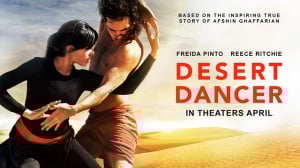
Review of Desert Dancer (2015)


On Hany Abu Asad’s Omar and the “Missing...
TRENDING AT PATHEOS Muslim

25 Years Later: How Much Has Changed for...
As we approach the 25th anniversary of September 11th, I’ve found myself...

Podcast: Third Spaces & The Rise of Yemeni...
In the latest episode of The Artistic Foodies Podcast, hosts Abbas...

HalalFest Picks: Best 60 Halal Spots for Super...
Back in 2016, I came up with a list of 29...

Unity Is America’s Strength — Division Is Its...
by Hidayatullah Ahsan When Valentina Gomez, a Republican candidate for Congress in...

Zohran Mamdani and New York’s Fight Against Islamophobia
This past June, against all odds, Zohran Mamdani won the Democratic primary...

What the Fourth of July Means to a...
As we mark another Fourth of July, millions of Americans will celebrate...
view all Muslim blogs
Ad-Free & Subscriber Log-In Subscription Support
- About Us
- 2026 Calendar
- Videos
- Podcasts
- Library of World Religions
- Faith In Media Tracker
- Advertise With Us
- Write for Us
- Privacy Policy
- Terms of Service
- Do Not Sell My Data
- Contact Us
- Radiant Digital
- Manage Newsletter Subscriptions
- Unsubscribe From Notifications
- Sitemap
Copyright 2008-2026, Patheos. All rights reserved.
Subscription Support Ad-Free & Subscriber Log-In
Follow Patheos