
BuddhistCatholicContemplativeEvangelicalGeneral ChristianHinduJewishLatter-day SaintMuslimNew VisionsProgressive Christian
Beliefs
- Buddhist
- Catholic
- Contemplative
- Evangelical
- General Christian
- Hindu
- Jewish
- Latter-day Saint
- More Voices
- Muslim
- New Visions
- Pagan
- Progressive Christian
Topics
- Religion News
- Food and Religion
- Sports and Religion
- Religious Art
- Religious Music and Entertainment
- Religious Events
- History and Religion
- Style and Religion
- Politics and Religion
- Women in Religion
- Recreation Outdoors and Religion
- Business Finance and Religion
- Careers Workplace and Religion
- Education and Religion
- Family Parenting and Religion
- Health Fitness and Religion
- Home and Religion
- Relationships and Religion
- Technology and Religion
- Travel and Religion
Columnists
- Buddhist Columnists
- Business Finance and Religion Columnists
- Careers Workplace and Religion Columnists
- Catholic Columnists
- Contemplative Columnists
- Education and Religion Columnists
- Evangelists Columnists
- Family Parenting and Religion Columnists
- General Christian Columnists
- Health Fitness and Religion Columnists
- Hindu Columnists
- History and Religion Columnists
- Home and Religion Columnists
- Jewish Columnists
- More Voices Columnists
- Latter Day Columnists
- Muslim Columnists
- New Visions Columnists
- Nonreligious Columnists
- Pagan Columnists
- Politics and Religion Columnists
- Progressive Columnists
- Recreation Outdoors and Religion Columnists
- Relationships and Religion Columnists
- Religion News Columnists
- Religious Art Columnists
- Religious Events Columnists
- Religious Music and Entertainment Columnists
- Sports and Religion Columnists
- Style and Religion Columnists
- Technology and Religion Columnists
- Travel and Religion Columnists
- Women in Religion Columnists
Resource Library
- 2026 Calendar
- Library of World Religions
- The 100 Most Holy Places on Earth
- Patheos Answers
- Podcasts
- Videos
- Faith Leaders Database
- Anglican Episcopalian
- Bahai
- Baptist
- Buddhism
- Christianity
- Confucianism
- Eastern Orthodoxy
- Hinduism
- Holiness and Pentecostal
- ISKCON
- Islam
- Judaism
- Lutheran
- Methodist
- The Church of Jesus Christ of Latter-day Saints
- New Age
- Paganism
- Presbytarian and Reformed
- Protestantism
- Religion Behind the Scenes
- Roman Catholic
- Scientology
- Shia Islam
- Sikhism
- Sufism
- Sunni Islam
- Taoism
- Zen
- See all religions
Research Tools
 Ad-Free & Subscriber Log-In Subscription Support
Ad-Free & Subscriber Log-In Subscription Support
Follow Patheos 

- Trending:
- Forgiveness
- |
- Marriage
- |
- Consciousness
- |
- Death Penalty
- |
- Election
- |
- Halloween
 Muslimah Media Watch
- Home
- Muslim
- Religion News
- When a Woman Runs for President — in Afghanistan
When a Woman Runs for President — in Afghanistan
Last updated on: April 15, 2008 at 9:00 am by Guest Contributor
When a Woman Runs for President — in Afghanistan 2008-04-15T09:00:00-04:00 Guest Contributor
Patheos Explore the world's faith through different perspectives on religion and spirituality! Patheos has the views of the prevalent religions and spiritualities of the world.
Written by Andrea Useem; this was originally published at Religion Writer.
 I’ve just finished watching FrontRunner, the new documentary from New View Films about Massouda Jalal, the only female candidate in Afghanistan’s 2004 elections. It’s hard, of course, to think about a woman running for president without immediately making comparisons to the current presidential race in the U.S. – it’s like a cartoon that needs a caption. But Jalal is no Hillary: She’s a political novice with no obvious constituent base, fighting a U.S.-backed incumbent, Hamid Karzai.
The scrappy, shoe-string nature of Jalal’s campaign is endearing; it seems like a major breakthrough when campaign volunteers receive boxes full of glossy campaign posters they can hand out in traffic and glue to walls around Kabul. As the only female candidate, she receives more Western media coverage than some of the 17 other candidates, but Karzai the incumbent “is” the TV news, quips Jalal, and the runner-up, Qanooni, seems able to buy his share of attention. Before the campaign begins, Jalal does not even have a private vehicle at her disposal.
 But here’s the problem with being the underdog: staying the underdog. As we learn in the closing seconds of the film, Jalal finished sixth in the election, a kind of Afghan Bill Richardson — in other words, she didn’t come close to winning. In a clip that producer and director Virginia Williams includes in the film twice, and the second time as a closing peroration, Jalal says, with a childlike sense of determination, that she will continue to run for president no matter how many times she loses. Interestingly, the movie doesn’t focus much on Jalal’s actual success: being appointed Afghanistan’s Minister for Women’s Affairs in the new Karzai government (a position Richardson can only dream of.) Perhaps focusing on her appointment would be a recognition that Jalal has been politically pidgeon-holed in a way she herself did not want: that is, as a woman who champions women’s rights but is not equipped to lead a country.
While watching the movie, I felt torn. On the one hand, I wanted to see Jalal as a hero, because this is obviously the point of the movie: It is called FrontRunner not because Jalal came anywhere close to achieving that electoral status, but because she is or was a front runner in pushing for women’s political involvement in Afghanistan. Some Afghans obligingly step in front of the camera to deliver their odious and predictable opinion that Islam does not allow women to rule over men. (Jalal rebuts this idea in a radio broadcast, pointing out how women have led Muslim nations like Pakistan, Indonesia and Bangladesh — good points, but not the frontal assault needed to debunk the long-held scholarly view, based on an alleged saying of the Prophet Mohammed, that a country with a female leader cannot prosper. Jalal is stronger when calling to mind the military leadership of the Prophet’s wife Aisha.) Zalmay Khalilzad, then U.S. Ambassador to Afghanistan, chimes in with a neo-conservative view of the same issue, reporting that Afghanistan is probably “not ready” for a female candidate. (This statement takes on a darker shade as the movie progresses, and the film-makers hint at, but do not fully prove, that the U.S., through Khalilzad, works openly to secure Karzai’s reelection. Unfortunately, this allegation is left flapping the breeze; the Afghan-American translator/journalist/Jalal-supporter Halima Kazem is the closest the movie comes to having a reliable source or voice-over, but her 20-something cynicism and idealism lack authority.)

So I want to see Jalal as a hero. But the first problem is I don’t know the first thing about her. It took me half the movie to realize, for example, that the kids running around her campaign office were her children and not her grandchildren, as I’d first assumed. How old is Jalal? Where did she learn to speak English? How did she manage to marry such an open-minded, supportive husband? How did she survive under the Taliban? Why is she choosing politics as the way to make a difference in Afghanistan now? These questions, strangely, are unanswered in the film.
The second problem is it’s hard to see what challenges Jalal faces aside from the regular difficulties of being a political unknown in a national election. I hate to say it, but every time the music got tense, I expected an assassination attempt. In fact, Afghanistan in 2004 was relatively secure. As mentioned, some Afghans seemed to reject the idea of a woman leader, but other embraced Jalal’s candidacy. While women leaders in Muslim nations around the world face difficulties — like the Pakistani minister shot dead last year, apparently by an extremist unhappy that she refused to wear a headscarf — it’s never quite clear what specific challenges Jalal must overcome as a woman.
Because of this lack of personal and political context around Jalal, I am left to simply take the director’s point of view at face value, that Jalal is a hero. I’m just left wondering why, if she is a hero, she wasn’t able to mount a more effective campaign (and I don’t believe that only the U.S. backing of Karzai is to blame.) At the end of the day, or movie, we want our heroes to win. Is Jalal a Shirley Chisholm for Afghanistan, ahead of her time, but a harbinger of things to come? Hopefully, yes. And she obviously has the drive and determination and spousal support to stay in the political game long term. In the meantime, however, Jalal and her supporters make take note of Hillary Clinton’s once or future frontrunner status: when you’re winning, being a woman no longer makes you a hero.
TO SEE THIS MOVIE: FrontRunner premiered in March in Miami, but hopefully it will be playing in Washington D.C. at the June SilverDocs festival, so you can judge it for yourself. In the meantime, you can get a taste for the movie by watching the trailer.
Previous Post

April 14, 2008
A Fashionable Aim: MSLM Magazine
Next Post
April 16, 2008 No Más, Por Favor: Stereotypes of Latina Muslims
Browse Our Archives
Select a Category Advertisements Art/Theater Books/Magazines Cinema Comics/Cartoons Culture/Society Events Fashion Film Friday Links Merchandise/Commodities MMW Announcements MMW Highlights Music/Radio News Photography Politics Profile Ramadan 2012 Ramadan 2013 Ramadan 2014 Ramadan 2015 Roundtable Satire Social Media Sports Technology/Science Television Uncategorized Video Web
Select a Month November 2015 October 2015 September 2015 August 2015 July 2015 June 2015 May 2015 April 2015 March 2015 January 2015 December 2014 November 2014 October 2014 September 2014 July 2014 June 2014 May 2014 April 2014 March 2014 February 2014 January 2014 December 2013 November 2013 October 2013 September 2013 August 2013 July 2013 June 2013 May 2013 April 2013 March 2013 February 2013 January 2013 December 2012 November 2012 October 2012 September 2012 August 2012 July 2012 June 2012 May 2012 April 2012 March 2012 February 2012 January 2012 December 2011 November 2011 September 2011 August 2011 July 2011 June 2011 May 2011 April 2011 March 2011 February 2011 January 2011 December 2010 November 2010 October 2010 September 2010 August 2010 July 2010 June 2010 May 2010 April 2010 March 2010 February 2010 January 2010 December 2009 November 2009 October 2009 September 2009 August 2009 July 2009 June 2009 May 2009 April 2009 March 2009 February 2009 January 2009 December 2008 November 2008 October 2008 September 2008 August 2008 July 2008 June 2008 May 2008 April 2008 March 2008 February 2008 January 2008 December 2007 November 2007 October 2007 September 2007 August 2007
Follow Us!
TAKE THE
Religious Wisdom Quiz
Which empire destroyed the First Temple in Jerusalem?
Select your answer to see how you score.
Babylonian Empire Assyrian Empire Persian Empire Roman Empire
Related posts from Muslimah Media Watch

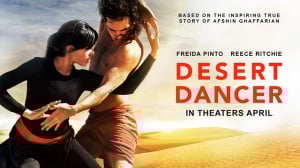
Review of Desert Dancer (2015)


On Hany Abu Asad’s Omar and the “Missing...
TRENDING AT PATHEOS Muslim

25 Years Later: How Much Has Changed for...
As we approach the 25th anniversary of September 11th, I’ve found myself...

Podcast: Third Spaces & The Rise of Yemeni...
In the latest episode of The Artistic Foodies Podcast, hosts Abbas...

HalalFest Picks: Best 60 Halal Spots for Super...
Back in 2016, I came up with a list of 29...

Unity Is America’s Strength — Division Is Its...
by Hidayatullah Ahsan When Valentina Gomez, a Republican candidate for Congress in...

Zohran Mamdani and New York’s Fight Against Islamophobia
This past June, against all odds, Zohran Mamdani won the Democratic primary...

What the Fourth of July Means to a...
As we mark another Fourth of July, millions of Americans will celebrate...
view all Muslim blogs
Ad-Free & Subscriber Log-In Subscription Support
- About Us
- 2026 Calendar
- Videos
- Podcasts
- Library of World Religions
- Faith In Media Tracker
- Advertise With Us
- Write for Us
- Privacy Policy
- Terms of Service
- Do Not Sell My Data
- Contact Us
- Radiant Digital
- Manage Newsletter Subscriptions
- Unsubscribe From Notifications
- Sitemap
Copyright 2008-2026, Patheos. All rights reserved.
Subscription Support Ad-Free & Subscriber Log-In
Follow Patheos