
BuddhistCatholicContemplativeEvangelicalGeneral ChristianHinduJewishLatter-day SaintMuslimNew VisionsProgressive Christian
Beliefs
- Buddhist
- Catholic
- Contemplative
- Evangelical
- General Christian
- Hindu
- Jewish
- Latter-day Saint
- More Voices
- Muslim
- New Visions
- Pagan
- Progressive Christian
Topics
- Religion News
- Food and Religion
- Sports and Religion
- Religious Art
- Religious Music and Entertainment
- Religious Events
- History and Religion
- Style and Religion
- Politics and Religion
- Women in Religion
- Recreation Outdoors and Religion
- Business Finance and Religion
- Careers Workplace and Religion
- Education and Religion
- Family Parenting and Religion
- Health Fitness and Religion
- Home and Religion
- Relationships and Religion
- Technology and Religion
- Travel and Religion
Columnists
- Buddhist Columnists
- Business Finance and Religion Columnists
- Careers Workplace and Religion Columnists
- Catholic Columnists
- Contemplative Columnists
- Education and Religion Columnists
- Evangelists Columnists
- Family Parenting and Religion Columnists
- General Christian Columnists
- Health Fitness and Religion Columnists
- Hindu Columnists
- History and Religion Columnists
- Home and Religion Columnists
- Jewish Columnists
- More Voices Columnists
- Latter Day Columnists
- Muslim Columnists
- New Visions Columnists
- Nonreligious Columnists
- Pagan Columnists
- Politics and Religion Columnists
- Progressive Columnists
- Recreation Outdoors and Religion Columnists
- Relationships and Religion Columnists
- Religion News Columnists
- Religious Art Columnists
- Religious Events Columnists
- Religious Music and Entertainment Columnists
- Sports and Religion Columnists
- Style and Religion Columnists
- Technology and Religion Columnists
- Travel and Religion Columnists
- Women in Religion Columnists
Resource Library
- 2026 Calendar
- Library of World Religions
- The 100 Most Holy Places on Earth
- Patheos Answers
- Podcasts
- Videos
- Faith Leaders Database
- Anglican Episcopalian
- Bahai
- Baptist
- Buddhism
- Christianity
- Confucianism
- Eastern Orthodoxy
- Hinduism
- Holiness and Pentecostal
- ISKCON
- Islam
- Judaism
- Lutheran
- Methodist
- The Church of Jesus Christ of Latter-day Saints
- New Age
- Paganism
- Presbytarian and Reformed
- Protestantism
- Religion Behind the Scenes
- Roman Catholic
- Scientology
- Shia Islam
- Sikhism
- Sufism
- Sunni Islam
- Taoism
- Zen
- See all religions
Research Tools
 Ad-Free & Subscriber Log-In Subscription Support
Ad-Free & Subscriber Log-In Subscription Support
Follow Patheos 

- Trending:
- Forgiveness
- |
- Marriage
- |
- Consciousness
- |
- Death Penalty
- |
- Election
- |
- Halloween

- Home
- Careers, Workplace and Religion
- Your Hands Are Covered With Blood: A Response to Wayne Grudem
Your Hands Are Covered With Blood: A Response to Wayne Grudem
Last updated on: August 2, 2016 at 2:02 pm by Guest Contributor
Your Hands Are Covered With Blood: A Response to Wayne Grudem 2016-08-02T13:59:54-05:00 Guest Contributor
Patheos Explore the world's faith through different perspectives on religion and spirituality! Patheos has the views of the prevalent religions and spiritualities of the world.
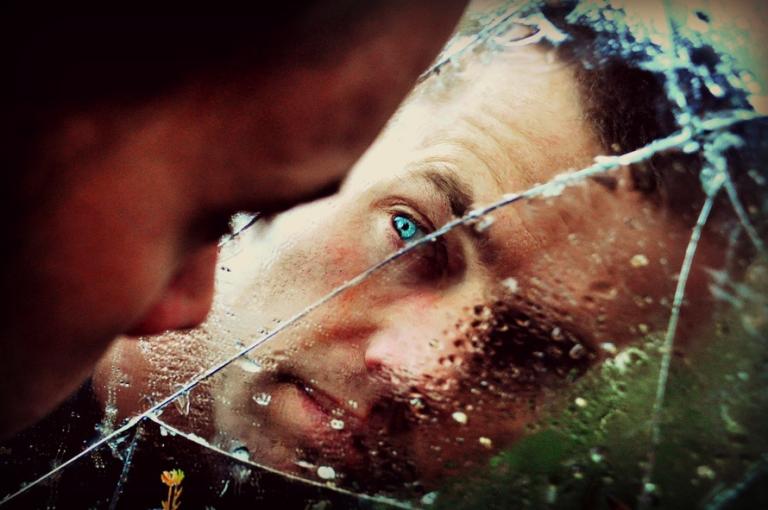 by Zen Hess
Grudem’s Argument: Trump is a “Good candidate with flaws”
Is it moral to choose the lesser of two evils? A better question might be, “Is it moral to have less blood on your hands?” Dr. Wayne Grudem recently wrote an article for Townhall about why voting for Donald Trump is a “morally good” choice. I should say that I respect Grudem immensely and do not mean anything hereafter as a personal attack. I wish only to engage in what Grudem called “patient dialogue” regarding matters of Christianity and politics. That being said, I deeply disagree with Grudem’s approach to the matter as well as his conclusion.
There is not much that is particularly theological about Grudem’s essay. (This is surprising because he is a Christian theologian.) The goal of Grudem’s article is to prove that the Republican presidential nominee will do more “good for the nation” than another nominee. Much of the article reads more like a compare-and-contrast argument than a theological response to a political situation. For example, after having listed several aspects of the Democratic platform and their hypothetical (and, at times, rather far-fetched) consequences, Grudem writes,
“But my conscience won’t let me vote for Donald Trump,” some have told me. But I wonder if their consciences have considered the gravity of these destructive consequences that would come from a Clinton presidency. A vote for Trump would at least be doing something to prevent these things.”
Many evangelical Christians will resonate with Grudem’s approach and conclusion. They already agree with most if not all of the concerns Grudem named about the Democratic platform. They probably also agree that America would be “better” with a Republican in charge, regardless of who that Republican is. That is why many polls (for many months) have shown that a significant percentage of evangelicals support Trump. So, most of Grudem’s 5,000 words are him “preaching to the choir.” Interestingly, he is not preaching to a Christian choir per se, but rather a conservative choir.
What I mean to say is that Grudem has, perhaps unconsciously, assumed that the “goods” of twenty-first century conservatism and the “goods” of Christianity are, for the most part, the same. This is a very thinly supported assumption and one that I doubt can be theologically upheld. Moreover, Grudem is working under another, more dangerous, assumption: namely, that “seeking the welfare of the nation,” that is, the United States of America, requires little reflection upon the welfare of other nations. What follows is an attempt to reflect critically and theologically on these two concerns.
What are the Goods?: Conservatism and Christianity
Grudem based his whole argument on the possibility that Trump would do more “good” for America than another candidate. The “good” Donald Trump would do, as I mentioned above, is based primarily on a politically conservative evaluation of “goods,” rather than a Christian theological evaluation. Take, for example, Dr. Grudem’s evaluation of Trump on the environment.
“Trump has said he will approve the Keystone oil pipeline and grant more oil drilling permits leading to lower energy costs and providing thousands of jobs. Lower energy costs help everybody, but the poor most of all. Clinton, by contrast, will make fracking nearly impossible and essentially abolish the coal industry, causing energy prices to skyrocket.”
Conservatives have fought adamantly for Keystone, at times heralding it as a kind of “fix all” for our economy. Of course, economically speaking, there is big money in oil. But it is not big money for the “unprotected,” those already impoverished. Some estimates indicate that the Keystone deal would create around 50 permanent jobs. Once the oil starts flowing (from Canada), the primary benefactors are those who funded the project in the first place — multimillionaires.
Perhaps I can make this point more clearly by directing your attention toward the damage already done by the pillaging of Canadian “tar sands.” Indigenous peoples, like First Nations, have mounted a serious resistance to the expansion of “tar sand” development. Their communities have been literally devastated by increased levels of cancer, the toxification of water, and, most basically, the widespread destruction of their beloved land — their heritage and their future. Keystone XL, if it were to be approved, ensures ongoing destruction of already unprotected people.
Similar concerns can and should be raised about fracking and coal mining — especially when mining is done via the method of “mountaintop removal.” We do not need to agree on global warming or climate change to see the problem with these practices. We need only to observe the devastation of the people who live in areas with dense energy resources. Driving through Appalachia Country in states like West Virginia will testify to this. Energy corporations have not been good to the people of Appalachia. Their water is poisoned and their lands and their communities are destroyed. Some jobs have been created for Appalachian folks, but at a very high cost.
And because the people of Appalachia have been so extremely marginalized (as they have been for much of American history), the cost they pay for our incessant demand for “cheap energy” goes unnoticed. Corporations who destroy Appalachian communities are seldom held accountable for the extensive damage they cause. Grudem’s acceptance of the default conservative position on energy shows a lack of critical reflection on or investigation into the issue. It also fails to consider that, perhaps, our demand for “cheap” energy is a cultural failure to respect the work and the real costs associated with securing energy.
What is more deeply troubling is how theological reflection further disavows the conservative position. “The earth,” King David writes in Psalm 24, “is the Lord’s and all in it.” There is a serious moral implication in this verse. If the earth and all in it is the Lord’s, then our fundamental understanding of the earth and all in it must be based upon reverence for the Lord. We cannot, as we often do, understand the earth primarily as “a vast storehouse of resources waiting to be mined.” Nor can we see things like land, animals, and air as unimportant to God the Creator. In fact, in Scripture, God often interacts with the rest of Creation and even includes them in covenantal promises (Gen 9). God made the whole world and continues to sustain its existence; God must have some desire to see the earth and all in it flourishing, not just humans.
One might push back, like Republican Governor Rick Santorum, and say “We were put on this Earth as creatures of God to have dominion over the Earth, to use it wisely and steward it wisely, but for our benefit not for the Earth’s benefit.” This is a shallow understanding of the concept of “human dominion,” one crafted to support the conservative agenda to proliferate oil drilling. Biblical human dominion is not human centered. It is God centered. Biblical dominion is only ever the human imitation of God’s love for the world God created. It is unfaithfulness to God that causes destruction of the earth. “The earth,” God says through Isaiah, “is also polluted by its inhabitants, for they transgressed laws, violated statutes, broke the everlasting covenant.” And the future is not bright for those who continue to destroy the earth. John the Seer writes that the time is coming when God will “destroy those who destroy the earth” (Rev 11:18). Full blown reflection on God’s relationship to “the earth and all in it” shows that God’s intention, and the purpose of human dominion, is not to destroy the land for human convenience, but to tend to it with compassion like our ancestors in the Garden of Eden.
These critical and theological reflections, I think, ought to show how Grudem paints with too broad a brush. What conservatives think of as “good” is not always the same as what Bible believing Christians should think of as “good.” We can certainly raise similar questions about other aspects of his article and, so, the conservative political platform: Is securing the borders a Christian good? Do the Republican economic and healthcare policies really serve to better protect and support minorities? Is the Palestine-Israel situation so easily understood? The conservative political platform can easily answer each of these questions. But we Christians cannot accept a political platform, we must live according to a rule set forth not by man, but by God. That requires constant prayer and reflection.
 Zen Hess was born and raised in the Midwest and now lives in Nashville, TN with Jessie, his wife and Spoke, their dog. He recently completed an MTS degree at Duke Divinity School and reads, writes, and gardens in his spare time. See other posts by Zen at theologyforum.wordpress.com. Image: Pexels and Zen Hess.
Previous Post

August 1, 2016
The innovation of the early American church
Next Post

August 2, 2016 Your Hands Are Covered With Blood: A Response to Wayne Grudem, part 2
Browse Our Archives
Select a Category Art Audio posts Bible and Work Book Review Books Budgeting Calling Common Good Community Development Conferences Discipleship Economics Entrepreneurship Ethics Faith and Family Faith and the Marketplace Faith and the Workplace faith and work History of Work and Vocation Leadership Local Church Meaning New Blogger News Prayer Relationships Seminaries Theology of Work Uncategorized Video posts Vocation Worship Resources
Select a Month April 2026 October 2025 September 2025 July 2025 April 2025 January 2025 October 2024 September 2024 August 2024 May 2024 March 2024 February 2024 December 2023 November 2023 August 2023 July 2023 April 2023 January 2023 December 2022 November 2022 September 2022 August 2022 July 2022 May 2022 April 2022 February 2022 January 2022 December 2021 November 2021 October 2021 September 2021 August 2021 June 2021 May 2021 March 2021 February 2021 January 2021 December 2020 November 2020 September 2020 August 2020 July 2020 June 2020 May 2020 April 2020 March 2020 January 2020 December 2019 October 2019 September 2019 August 2019 July 2019 June 2019 May 2019 April 2019 March 2019 February 2019 January 2019 April 2018 March 2018 January 2018 December 2017 November 2017 October 2017 September 2017 August 2017 July 2017 June 2017 May 2017 April 2017 March 2017 February 2017 January 2017 December 2016 November 2016 October 2016 September 2016 August 2016 July 2016 June 2016 May 2016 April 2016 March 2016 February 2016 January 2016 December 2015 November 2015 October 2015 September 2015 August 2015 July 2015 June 2015 May 2015 April 2015 March 2015 February 2015 January 2015 December 2014 November 2014 October 2014 September 2014 August 2014 July 2014 June 2014 May 2014 April 2014 March 2014 February 2014 January 2014 December 2013
Follow Us!
TAKE THE
Religious Wisdom Quiz
What did Jesus say would happen if you build your house on the rock?
Select your answer to see how you score.
It would sink It would stand through storms It would get destroyed It would be fancy
Related posts from MISSION:WORK



Not Nearly So Much Like a Mall

TRENDING AT PATHEOS Careers, Workplace and Religion

Letters on Living the Faith by C.S. Lewis
Most of us met C.S. Lewis as a public intellectual. Mere Christianity....

When Halloween Unmasks Married Hearts
Written by Dr. David K. Ewen from Eternal Truth Bible College Behind...

Aristotle. He’s been called the father of logic, the father of the...

Methodist Central Hall and Westminster Abbey
Situated on the same square is Methodist Central Hall and Westminster Abbey. ...

57th Dove Awards Honor Dolly Parton, Crown New...
On gospel music’s biggest night, the 57th annual GMA Dove Awards honored...

The First Eucharistic Controversy: Christ’s Real Presence
For Catholics, the Eucharist is the source and summit of the Christian...
view all Careers, Workplace and Religion blogs
Ad-Free & Subscriber Log-In Subscription Support
- About Us
- 2026 Calendar
- Videos
- Podcasts
- Library of World Religions
- Faith In Media Tracker
- Advertise With Us
- Write for Us
- Privacy Policy
- Terms of Service
- Do Not Sell My Data
- Contact Us
- Radiant Digital
- Manage Newsletter Subscriptions
- Unsubscribe From Notifications
- Sitemap
Copyright 2008-2026, Patheos. All rights reserved.
Subscription Support Ad-Free & Subscriber Log-In
Follow Patheos