
BuddhistCatholicContemplativeEvangelicalGeneral ChristianHinduJewishLatter-day SaintMuslimNew VisionsProgressive Christian
Beliefs
- Buddhist
- Catholic
- Contemplative
- Evangelical
- General Christian
- Hindu
- Jewish
- Latter-day Saint
- More Voices
- Muslim
- New Visions
- Pagan
- Progressive Christian
Topics
- Religion News
- Food and Religion
- Sports and Religion
- Religious Art
- Religious Music and Entertainment
- Religious Events
- History and Religion
- Style and Religion
- Politics and Religion
- Women in Religion
- Recreation Outdoors and Religion
- Business Finance and Religion
- Careers Workplace and Religion
- Education and Religion
- Family Parenting and Religion
- Health Fitness and Religion
- Home and Religion
- Relationships and Religion
- Technology and Religion
- Travel and Religion
Columnists
- Buddhist Columnists
- Business Finance and Religion Columnists
- Careers Workplace and Religion Columnists
- Catholic Columnists
- Contemplative Columnists
- Education and Religion Columnists
- Evangelists Columnists
- Family Parenting and Religion Columnists
- General Christian Columnists
- Health Fitness and Religion Columnists
- Hindu Columnists
- History and Religion Columnists
- Home and Religion Columnists
- Jewish Columnists
- More Voices Columnists
- Latter Day Columnists
- Muslim Columnists
- New Visions Columnists
- Nonreligious Columnists
- Pagan Columnists
- Politics and Religion Columnists
- Progressive Columnists
- Recreation Outdoors and Religion Columnists
- Relationships and Religion Columnists
- Religion News Columnists
- Religious Art Columnists
- Religious Events Columnists
- Religious Music and Entertainment Columnists
- Sports and Religion Columnists
- Style and Religion Columnists
- Technology and Religion Columnists
- Travel and Religion Columnists
- Women in Religion Columnists
Resource Library
- 2026 Calendar
- Library of World Religions
- The 100 Most Holy Places on Earth
- Patheos Answers
- Podcasts
- Videos
- Faith Leaders Database
- Anglican Episcopalian
- Bahai
- Baptist
- Buddhism
- Christianity
- Confucianism
- Eastern Orthodoxy
- Hinduism
- Holiness and Pentecostal
- ISKCON
- Islam
- Judaism
- Lutheran
- Methodist
- The Church of Jesus Christ of Latter-day Saints
- New Age
- Paganism
- Presbytarian and Reformed
- Protestantism
- Religion Behind the Scenes
- Roman Catholic
- Scientology
- Shia Islam
- Sikhism
- Sufism
- Sunni Islam
- Taoism
- Zen
- See all religions
Research Tools
 Ad-Free & Subscriber Log-In Subscription Support
Ad-Free & Subscriber Log-In Subscription Support
Follow Patheos 

- Trending:
- Forgiveness
- |
- Marriage
- |
- Consciousness
- |
- Death Penalty
- |
- Election
- |
- Halloween

- Home
- Careers, Workplace and Religion
- Ron Reed: I’m a Christian, but I don’t do Christian theater
Ron Reed: I’m a Christian, but I don’t do Christian theater
Last updated on: October 8, 2015 at 9:06 am by Mission:Work
Ron Reed: I’m a Christian, but I don’t do Christian theater 2015-10-07T16:07:01-05:00 Mission:Work
Patheos Explore the world's faith through different perspectives on religion and spirituality! Patheos has the views of the prevalent religions and spiritualities of the world.
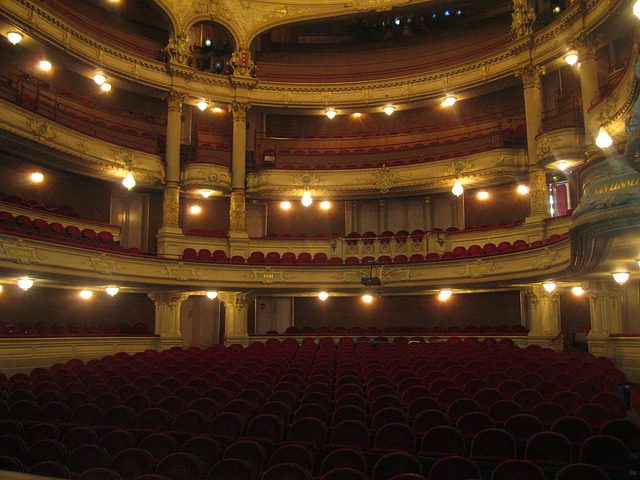
The founder of Pacific Theatre in Vancouver, British Columbia, talks about leadership, the arts and what it means to put on plays that ask spiritual questions from a Christian perspective. This post was first published in Faith and Leadership.
When Ron Reed was preparing to graduate from seminary at Regent College in Vancouver, he asked founding President James Houston whether he should pursue work as a pastor or as an actor. He had done both well.
Regent was founded by Plymouth Brethren Christians, who have a low view of ordination and a high view of Christians’ calling to be salt and light in other professions. Houston said, “We have plenty of pastors, but we don’t have many Christian actors.”
 Reed did Houston one better, founding the Pacific Theatre in Vancouver, British Columbia, in 1984. Last year, PT won more awards from the Jessie Richardson Theatre Award Society — an organization that promotes the Vancouver professional theater community — than any other large theater.
Reed has worked at the theater not only as director but also as a regular actor and playwright. Jason Byassee, the Butler Chair in Homiletics and Biblical Hermeneutics at Vancouver School of Theology, spoke with him about the vibrant institutions that have made Pacific Theatre possible and how it in turn has influenced the city. The following is an edited transcript.
Q: What does Pacific Theatre’s success say about the city of Vancouver?
To make a gross overstatement, all the hippies in Canada gravitated to the West Coast. That permeates evangelicalism, too. The church is more free-spirited here. In the Prairie Provinces, I’d have run into more trouble with some of the art we’ve made. Here, we’ve not had many sermons preached against us, or outraged letters.
Regent College has had an incredible leavening effect here. In many other places, evangelical churches would have had a problem with Pacific Theatre. Regent’s stance toward the arts is not, “Oh, that’s strange; it must be bad” but rather, “Oh, that’s strange; maybe there’s something interesting here.”
My theory is that a place gets the theater it deserves. The artistic director lives in that town, with antennae for what’s happening in the culture. An audience is then drawn to that person’s choices. If those don’t match, it isn’t going to happen.
There are other places where this could have worked, but we’d have been different. I’d have been a different person; I’d have built a different theater. But this place drew me. I’ve often wondered what it would have been like if we’d planted someplace else. But this is the best soil.
Q: Your mission language is surprisingly specific: “Pacific Theatre exists to serve Christ in our community by creating excellent theatre with artistic, spiritual, relational and financial integrity.” How do you hold to that without being narrow?
We’ve never said we do “Christian” theater. That word is a bad adjective but a good noun. I readily say I’m a Christian, but we don’t do Christian theater. We do plays that explore spiritual questions honestly from a Christian perspective.
A community has grown around that. Folks have found that they like what’s on the stage. Many call themselves Christian — not the majority at this point. All know we’re digging into things that matter.
Q: What is PT like as an institution?
We’re very guerrilla. We’ve stayed small. We can fight in any terrain, and we’ve transformed the way we do things many times to survive. We’re an edgy little theater company.
We need to look at succession. I don’t need a legacy theater. My immortality has nothing to do with a theater.
I never started theater because I wanted to run a theater but because I wanted to act, and then to write plays about things I care about. That wasn’t being done in the mid-1980s in North America — even less so in Canada, even less so in Vancouver.
Q: How did you survive early discouragements?
Ignorance and stubbornness. We received no cultural grant money from any level of government for well over 10 years. It was a decade before we were reviewed in local media devoted to theater here.
We got one nasty review. I thought, “Oh, well. Reviews didn’t matter to me a week ago, so they don’t matter now.” That attitude has served me in good stead. I hold all the attention now very lightly.
People celebrate the Jessies we’ve won. I always say, “Yeah, whatever.” I love being part of the theater community now; we unarguably are. Any barriers are ancient history.
What matters to me is acting in a play, having a chance to put that woman’s play on a stage, conversation with people who see beauty in that play. Otherwise, you can’t care. If you cared, you’d quit.
There were four of us partners in our earliest days. We all decided this is what we would do, with no other jobs. Two of us had spouses who worked, as a nurse and a teacher. Our church, Capilano Christian Community, found [the other two] a home to live in for free.
There’s a really common belief that if you’re an artist in the church, you’re an outsider — underappreciated, unsupported. Our experience was that we wouldn’t have lasted 10 years if not for all the Christians that came to shows, supported us and took artists into homes.
The level of support we get from our audience outstrips any other theater. That support grew slowly and made us part of the community. We did have three years when we were nonfunctional and had to cancel seasons, [but] our levels of donations didn’t go down. We weren’t even producing mainstage shows!
Let’s not perpetuate the false narrative about the church not supporting artists. More plumbers have come to our plays than I’ve hired plumbers.
Click below to read about whether Ron thinks he’s influenced the culture.
Previous Post

October 7, 2015
Don't Search for Purpose: You Will Fail
Next Post
October 9, 2015 Sonnet for the Fisherman
Browse Our Archives
Select a Category Art Audio posts Bible and Work Book Review Books Budgeting Calling Common Good Community Development Conferences Discipleship Economics Entrepreneurship Ethics Faith and Family Faith and the Marketplace Faith and the Workplace faith and work History of Work and Vocation Leadership Local Church Meaning New Blogger News Prayer Relationships Seminaries Theology of Work Uncategorized Video posts Vocation Worship Resources
Select a Month April 2026 October 2025 September 2025 July 2025 April 2025 January 2025 October 2024 September 2024 August 2024 May 2024 March 2024 February 2024 December 2023 November 2023 August 2023 July 2023 April 2023 January 2023 December 2022 November 2022 September 2022 August 2022 July 2022 May 2022 April 2022 February 2022 January 2022 December 2021 November 2021 October 2021 September 2021 August 2021 June 2021 May 2021 March 2021 February 2021 January 2021 December 2020 November 2020 September 2020 August 2020 July 2020 June 2020 May 2020 April 2020 March 2020 January 2020 December 2019 October 2019 September 2019 August 2019 July 2019 June 2019 May 2019 April 2019 March 2019 February 2019 January 2019 April 2018 March 2018 January 2018 December 2017 November 2017 October 2017 September 2017 August 2017 July 2017 June 2017 May 2017 April 2017 March 2017 February 2017 January 2017 December 2016 November 2016 October 2016 September 2016 August 2016 July 2016 June 2016 May 2016 April 2016 March 2016 February 2016 January 2016 December 2015 November 2015 October 2015 September 2015 August 2015 July 2015 June 2015 May 2015 April 2015 March 2015 February 2015 January 2015 December 2014 November 2014 October 2014 September 2014 August 2014 July 2014 June 2014 May 2014 April 2014 March 2014 February 2014 January 2014 December 2013
Follow Us!
TAKE THE
Religious Wisdom Quiz
True or False: Mark's Gospel is the shortest of the four Gospels.
Select your answer to see how you score.
TRUE FALSE
Related posts from MISSION:WORK

Three Conversations (in honor of Eastertide)



Not Nearly So Much Like a Mall
TRENDING AT PATHEOS Careers, Workplace and Religion

Jad Gillies on New Hillsong Worship Songs and...
For worship leader Jad Gillies, Hillsong Worship’s next chapter is not about...

Looking at the Largest Orthodox Cathedral on Earth
There is often a considerable amount of anger and, shall we...

The Problem with False Prophets
Miller’s Station UMC| 10/18/26| Anchor Verse: Jeremiah 23: 1, 9-23 I...

Emotion in Early Christianity by Andrew Crislip
Andrew Crislip’s Emotion in Early Christianity examines an often overlooked dimension of...

16 Spiritual Touchstones for a More Grounded Life
After decades of spiritual study, here are 16 principles I try...

Catholic Evangelization: Sharing Your Faith Every Day
Welcome back to the Graceful Awakening mini-series called, “From Faith to Mission.” ...
view all Careers, Workplace and Religion blogs
Ad-Free & Subscriber Log-In Subscription Support
- About Us
- 2026 Calendar
- Videos
- Podcasts
- Library of World Religions
- Faith In Media Tracker
- Advertise With Us
- Write for Us
- Privacy Policy
- Terms of Service
- Do Not Sell My Data
- Contact Us
- Radiant Digital
- Manage Newsletter Subscriptions
- Unsubscribe From Notifications
- Sitemap
Copyright 2008-2026, Patheos. All rights reserved.
Subscription Support Ad-Free & Subscriber Log-In
Follow Patheos