
BuddhistCatholicContemplativeEvangelicalGeneral ChristianHinduJewishLatter-day SaintMuslimNew VisionsProgressive Christian
Beliefs
- Buddhist
- Catholic
- Contemplative
- Evangelical
- General Christian
- Hindu
- Jewish
- Latter-day Saint
- More Voices
- Muslim
- New Visions
- Pagan
- Progressive Christian
Topics
- Religion News
- Food and Religion
- Sports and Religion
- Religious Art
- Religious Music and Entertainment
- Religious Events
- History and Religion
- Style and Religion
- Politics and Religion
- Women in Religion
- Recreation Outdoors and Religion
- Business Finance and Religion
- Careers Workplace and Religion
- Education and Religion
- Family Parenting and Religion
- Health Fitness and Religion
- Home and Religion
- Relationships and Religion
- Technology and Religion
- Travel and Religion
Columnists
- Buddhist Columnists
- Business Finance and Religion Columnists
- Careers Workplace and Religion Columnists
- Catholic Columnists
- Contemplative Columnists
- Education and Religion Columnists
- Evangelists Columnists
- Family Parenting and Religion Columnists
- General Christian Columnists
- Health Fitness and Religion Columnists
- Hindu Columnists
- History and Religion Columnists
- Home and Religion Columnists
- Jewish Columnists
- More Voices Columnists
- Latter Day Columnists
- Muslim Columnists
- New Visions Columnists
- Nonreligious Columnists
- Pagan Columnists
- Politics and Religion Columnists
- Progressive Columnists
- Recreation Outdoors and Religion Columnists
- Relationships and Religion Columnists
- Religion News Columnists
- Religious Art Columnists
- Religious Events Columnists
- Religious Music and Entertainment Columnists
- Sports and Religion Columnists
- Style and Religion Columnists
- Technology and Religion Columnists
- Travel and Religion Columnists
- Women in Religion Columnists
Resource Library
- 2026 Calendar
- Library of World Religions
- The 100 Most Holy Places on Earth
- Patheos Answers
- Podcasts
- Videos
- Faith Leaders Database
- Anglican Episcopalian
- Bahai
- Baptist
- Buddhism
- Christianity
- Confucianism
- Eastern Orthodoxy
- Hinduism
- Holiness and Pentecostal
- ISKCON
- Islam
- Judaism
- Lutheran
- Methodist
- The Church of Jesus Christ of Latter-day Saints
- New Age
- Paganism
- Presbytarian and Reformed
- Protestantism
- Religion Behind the Scenes
- Roman Catholic
- Scientology
- Shia Islam
- Sikhism
- Sufism
- Sunni Islam
- Taoism
- Zen
- See all religions
Research Tools
 Ad-Free & Subscriber Log-In Subscription Support
Ad-Free & Subscriber Log-In Subscription Support
Follow Patheos 

- Trending:
- Forgiveness
- |
- Marriage
- |
- Consciousness
- |
- Death Penalty
- |
- Election
- |
- Halloween

- Home
- Careers, Workplace and Religion
- Changing one congregation: Jobs for Life
Changing one congregation: Jobs for Life
Last updated on: October 16, 2015 at 4:41 am by Mission:Work
Changing one congregation: Jobs for Life 2015-10-08T04:47:16-05:00 Mission:Work
Patheos Explore the world's faith through different perspectives on religion and spirituality! Patheos has the views of the prevalent religions and spiritualities of the world.
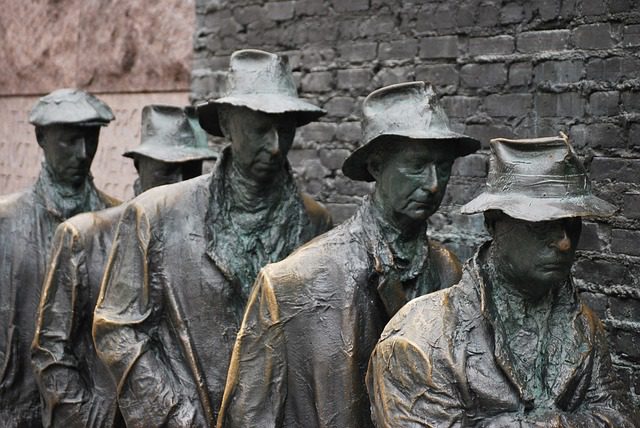
Last year the Patheos Faith and Work Channel contacted leaders of some prominent community development and entrepreneurial organizations to talk about their attempts to transform communities through the growth of new businesses and attention to the dignity of work. The interviews were very popular and we’re going to be running some of them here again over the next few days. Enjoy!
 By David Spickard, Jobs For Life
What is the basic mission of Jobs for Life and how did it come about?
Our mission is to engage and equip local churches to address the impacts of joblessness through the dignity of work. We started in Raleigh, NC in 1996 through the relationship between Chris Mangum who owned CC Mangum Company and Pastor Donald McCoy of Pleasant Hill United Church of Christ, a small African-American church. Chris’s company had paved Pastor McCoy’s church’s parking lot, and through that project, they became friends and decided to meet for lunch each week. During one of those lunches, Chris shared with Pastor McCoy several of his company’s large trucks were sitting parked in his company’s parking lot because he could not find good drivers. Pastor McCoy responded by saying, “I have able bodied men and women in my church and community who are parked just like your trucks because they don’t have a job. They come to our Sunday service homeless, unemployed and underemployed, but no matter how hard I preach the gospel to them, they walk out homeless, unemployed, and underemployed, saying Pastor, I need a job.” In that moment, the concept of Jobs for Life was born.
Chris and Pastor McCoy realized they had something the other needed and they committed to gather 12 business friends and 12 pastors together to see if they had the same needs. Sure enough, during the gathering, a businessman raised his hand and said “I have an open position and we need somebody today.” A pastor responded by saying he knew the exact person for that job. They began to place persons in jobs through relationships, but they learned quickly it was one thing to help someone get a job, quite another to help them keep it. Many people had physical, emotional, and spiritual barriers preventing them from being an effective employee and all God had created them to be. To overcome these barriers, they created what is now the Jobs for Life class – a strategy to mobilize local churches and ministries to teach people a biblical perspective of work, connect them to life giving mentor relationships, and help them find and keep meaningful employment.
Now in 275 cities and 10 countries, JfL classes are being held in urban and suburban churches across race and denomination as well as Christ-centered ministries like prison reentry programs, rescue missions, YMCAs, and programs for at-risk youth. Ultimately we’re trying to equip the church to move beyond temporary assistance of the poor and engage them in ways that deepen relationships and help them take care of themselves and their families.
We talk a lot about “flipping the list.” Based on a study done at Duke University, the top way the Church engages in outreach to the materially poor in America is food, the 2nd housing, the 3rd clothing. Only 2% of American churches do programs related to work and helping people find jobs. What if work were on top of that list?
How have work opportunities and other social projects from your networks actually transformed communities?
We reach about 5,500 people a year. One woman in Alabama named Joy grew up a child of a single mom living on public assistance. Her mom sent her to her grandparents for help, but her grandfather would molest her every time in order for her to get help. Joy grew up in a world of prostitution and drugs, had 6 kids with 5 fathers, and eventually started dealing drugs and got arrested. She encountered a group of women teaching Bible studies in the jail who wanted to do something to help the women transition out of jail. The group ran a JfL class in the jail and used that to connect relationally. Joy was in the class and really connected; she developed a deep relationship with her mentor Margie. They are now lifelong friends. Joy is out of jail, working full time, has a home with her kids, and is teaching a JfL class in the same jail where she had been incarcerated.
Another success story is Dwight, who was in prison for 29 years. When he got out of prison, for a few years he couldn’t get a job. He took a JfL class in a suburban church in Raleigh. One of the businesses that came to class to present had an opening cleaning offices. He pursued this, and loved it so much that he now has his own cleaning business.
These stories don’t fully capture what happens in a local church as well. Once you engage folks around work and help them understand a Biblical perspective of work for themselves, many people in the church grow in their understanding of their own poverty and how God has positioned them in their own work for His glory. Also, once you have helped someone find and keep a job, it makes you feel much differently about the kind of temporary forms of outreach churches have been doing.
Businesspeople also become engaged at a deeper level. Some of our best instructors are CEOs of companies now positioned to teach a Biblical view of work. They recognize the value of the folks in the class and open up their networks on behalf of the students. Finding and keeping a job is so much who you know; the materially poor don’t have those networks. The church is a built-in network we can mobilize on behalf of those in need. Businesses are now thinking of entrepreneurship in communities that are under-resourced and need jobs. Businesspeople have become creative with job creation and entrepreneurship.
Have there been any failures in the process, and what instructive lessons did you take from them?
There are several challenges. One is to keep our eyes focused on equipping and engaging the local church, making sure everything we do is done through the local church. Mistakes have been made when we do work the church is designed to do, or create infrastructure through our work that inhibits the local church. There’s a difference between creating a platform for the church to do the work it’s called to do, unleashing and empowering, versus being the platform and asking for the church’s help, being the solution and asking the church to help us do our work. We’re constantly trying to evaluate whether we’re crossing that line.
The church in my lifetime has been predisposed to the idea that we have systems and structures in place to deal with those in need, like government programs and nonprofits. It’s in the church’s DNA to say “We’re not equipped to do that, we need to use the professionals”. We’ve found over and over again that the church is fully equipped, full of people who are able to walk with people in need, transform their lives, and have their own lives transformed as well.
Also, there’s a different expectation of time. We can think results are going to happen more quickly than they do, and not always build strategies to last over the long haul. We’re beginning to talk about having a generational time frame. There’s an urgency to be engaged in the work today, but the ultimate impact may not be realized until the lifetimes of our children’s children.
Learn more about Jobs for Life here, and read another post from David Spickard here. Images: Pixabay and JfL.
Previous Post

October 14, 2015
Changing one neighborhood: Focused Community Strategies
Next Post
October 17, 2015 From the archives: Working on gratitude
Browse Our Archives
Select a Category Art Audio posts Bible and Work Book Review Books Budgeting Calling Common Good Community Development Conferences Discipleship Economics Entrepreneurship Ethics Faith and Family Faith and the Marketplace Faith and the Workplace faith and work History of Work and Vocation Leadership Local Church Meaning New Blogger News Prayer Relationships Seminaries Theology of Work Uncategorized Video posts Vocation Worship Resources
Select a Month April 2026 October 2025 September 2025 July 2025 April 2025 January 2025 October 2024 September 2024 August 2024 May 2024 March 2024 February 2024 December 2023 November 2023 August 2023 July 2023 April 2023 January 2023 December 2022 November 2022 September 2022 August 2022 July 2022 May 2022 April 2022 February 2022 January 2022 December 2021 November 2021 October 2021 September 2021 August 2021 June 2021 May 2021 March 2021 February 2021 January 2021 December 2020 November 2020 September 2020 August 2020 July 2020 June 2020 May 2020 April 2020 March 2020 January 2020 December 2019 October 2019 September 2019 August 2019 July 2019 June 2019 May 2019 April 2019 March 2019 February 2019 January 2019 April 2018 March 2018 January 2018 December 2017 November 2017 October 2017 September 2017 August 2017 July 2017 June 2017 May 2017 April 2017 March 2017 February 2017 January 2017 December 2016 November 2016 October 2016 September 2016 August 2016 July 2016 June 2016 May 2016 April 2016 March 2016 February 2016 January 2016 December 2015 November 2015 October 2015 September 2015 August 2015 July 2015 June 2015 May 2015 April 2015 March 2015 February 2015 January 2015 December 2014 November 2014 October 2014 September 2014 August 2014 July 2014 June 2014 May 2014 April 2014 March 2014 February 2014 January 2014 December 2013
Follow Us!
TAKE THE
Religious Wisdom Quiz
The light shines in the darkness, and the darkness has not ____ it.
Select your answer to see how you score.
Comprehended Extinguished Understood Accepted
Related posts from MISSION:WORK

Why Beth Felker Jones is Protestant



How to Succeed as an Influencer Without Really...
TRENDING AT PATHEOS Careers, Workplace and Religion

Letters on Living the Faith by C.S. Lewis
Most of us met C.S. Lewis as a public intellectual. Mere Christianity....

When Halloween Unmasks Married Hearts
Written by Dr. David K. Ewen from Eternal Truth Bible College Behind...

Aristotle. He’s been called the father of logic, the father of the...

Methodist Central Hall and Westminster Abbey
Situated on the same square is Methodist Central Hall and Westminster Abbey. ...

57th Dove Awards Honor Dolly Parton, Crown New...
On gospel music’s biggest night, the 57th annual GMA Dove Awards honored...

The First Eucharistic Controversy: Christ’s Real Presence
For Catholics, the Eucharist is the source and summit of the Christian...
view all Careers, Workplace and Religion blogs
Ad-Free & Subscriber Log-In Subscription Support
- About Us
- 2026 Calendar
- Videos
- Podcasts
- Library of World Religions
- Faith In Media Tracker
- Advertise With Us
- Write for Us
- Privacy Policy
- Terms of Service
- Do Not Sell My Data
- Contact Us
- Radiant Digital
- Manage Newsletter Subscriptions
- Unsubscribe From Notifications
- Sitemap
Copyright 2008-2026, Patheos. All rights reserved.
Subscription Support Ad-Free & Subscriber Log-In
Follow Patheos