
BuddhistCatholicContemplativeEvangelicalGeneral ChristianHinduJewishLatter-day SaintMuslimNew VisionsProgressive Christian
Beliefs
- Buddhist
- Catholic
- Contemplative
- Evangelical
- General Christian
- Hindu
- Jewish
- Latter-day Saint
- More Voices
- Muslim
- New Visions
- Pagan
- Progressive Christian
Topics
- Religion News
- Food and Religion
- Sports and Religion
- Religious Art
- Religious Music and Entertainment
- Religious Events
- History and Religion
- Style and Religion
- Politics and Religion
- Women in Religion
- Recreation Outdoors and Religion
- Business Finance and Religion
- Careers Workplace and Religion
- Education and Religion
- Family Parenting and Religion
- Health Fitness and Religion
- Home and Religion
- Relationships and Religion
- Technology and Religion
- Travel and Religion
Columnists
- Buddhist Columnists
- Business Finance and Religion Columnists
- Careers Workplace and Religion Columnists
- Catholic Columnists
- Contemplative Columnists
- Education and Religion Columnists
- Evangelists Columnists
- Family Parenting and Religion Columnists
- General Christian Columnists
- Health Fitness and Religion Columnists
- Hindu Columnists
- History and Religion Columnists
- Home and Religion Columnists
- Jewish Columnists
- More Voices Columnists
- Latter Day Columnists
- Muslim Columnists
- New Visions Columnists
- Nonreligious Columnists
- Pagan Columnists
- Politics and Religion Columnists
- Progressive Columnists
- Recreation Outdoors and Religion Columnists
- Relationships and Religion Columnists
- Religion News Columnists
- Religious Art Columnists
- Religious Events Columnists
- Religious Music and Entertainment Columnists
- Sports and Religion Columnists
- Style and Religion Columnists
- Technology and Religion Columnists
- Travel and Religion Columnists
- Women in Religion Columnists
Resource Library
- 2026 Calendar
- Library of World Religions
- The 100 Most Holy Places on Earth
- Patheos Answers
- Podcasts
- Videos
- Faith Leaders Database
- Anglican Episcopalian
- Bahai
- Baptist
- Buddhism
- Christianity
- Confucianism
- Eastern Orthodoxy
- Hinduism
- Holiness and Pentecostal
- ISKCON
- Islam
- Judaism
- Lutheran
- Methodist
- The Church of Jesus Christ of Latter-day Saints
- New Age
- Paganism
- Presbytarian and Reformed
- Protestantism
- Religion Behind the Scenes
- Roman Catholic
- Scientology
- Shia Islam
- Sikhism
- Sufism
- Sunni Islam
- Taoism
- Zen
- See all religions
Research Tools
 Ad-Free & Subscriber Log-In Subscription Support
Ad-Free & Subscriber Log-In Subscription Support
Follow Patheos 

- Trending:
- Forgiveness
- |
- Marriage
- |
- Consciousness
- |
- Death Penalty
- |
- Election
- |
- Halloween

- Home
- Careers, Workplace and Religion
- The priesthood of all believers
The priesthood of all believers
Last updated on: August 11, 2015 at 1:21 pm by Edwin Woodruff Tait
The priesthood of all believers 2015-08-08T13:27:18-05:00 Edwin Woodruff Tait
Patheos Explore the world's faith through different perspectives on religion and spirituality! Patheos has the views of the prevalent religions and spiritualities of the world.
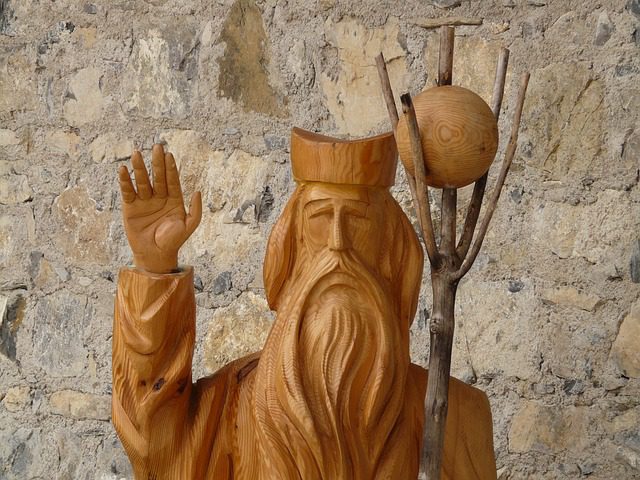
Originally published at Ithilien in 2005.
One of the central slogans that’s come to be identified with the Reformation is the “priesthood of all believers.” For a long time I found this phrase very off-putting, because I associated it with the radical denial of any hierarchy or sacramentality in the Church. In my experience, Protestants used the slogan to turn the Church into a religious counterpart to modern liberal democracy. And I was (and am) convinced that that’s simply a sell-out to modern culture.
Furthermore, as I became more acquainted with modern Catholic theology, I realized that Catholics do not deny the priesthood of all believers. They see the relationship between the universal and ministerial priesthoods as a both/and rather than an either/or. This has been more clearly affirmed by Vatican II and post-Vatican-II theology, and while Catholics are still debating the exact direction this reaffirmation nees to take, it’s clear that some form of the priesthood of all believers is orthodox Catholic teaching.
The two contemporary issues that have forced me to give traditional Protestant arguments more of a hearing are the sex abuse scandal and women’s ordination. Women’s ordination deserves a post of its own, and I’ll address it later. For now I’ll just leave you with this teaser: I think that the priesthood of all believers is the central issue in the women’s ordination debate (as it takes shape in Catholic and high-church circles).
I don’t want to get involved in the horribly complex and sensitive arguments surrounding the sex abuse scandals in the Catholic Church. Of course other churches have scandals of their own, and indeed all large care-giving institutions have some pretty horrible instances of abuse, and have a tendency to try to protect the good name of the institution even at the expense of those they are allegedly trying to serve.
But at the risk of being accused of anti-Catholic bias, I can’t help but think that a culture of clericalism played a large role in giving the Catholic scandal its shape and scope. I see no way around the conclusion that most bishops saw priests as belonging to the “family” in a way that the victimized young people did not. The long history of church-state battles over jurisdiction in cases of clerical wrong-doing, going back to the Gregorian Reforms of the 11th century at least, shaped the episcopal response in ways that have proved disastrous for all concerned.
The Gregorian Reforms have a lot to be said in their defense. The early medieval Church was tied up in the structures of  civil society in ways that severely hindered its ability to proclaim the Word of God and speak authoritatively to social evils. But the measures taken by the reformers widened the gap between clergy and laity and created a set of parallel ecclesiastical power structures that became prey to the same corruptions and temptations as the secular hierarchy (and some of their own).
The Protestant Reformation undid much of the work of the Gregorian Reforms and placed the Church squarely under the authority of the state–at least in Anglicanism and Lutheranism. In some ways this resulted in the worst of all possible situations, with the Established Church benefiting from the coercive force of the state but not having the power to act independently. The “priesthood of all believers” too often translated into the domination of the Church by those who ruled the world of the laity.
Nonetheless, the positive message of the Reformation in this regard was that all baptized Christians are fully members of the Church, and whatever relationship to civil society is possessed by baptized laity is also the lot of the clergy. I think the Anabaptists had some important insights into what that relationship should be, and that the rest of us should pay attention to what they have to say. But the principle as I’ve stated it is common to Anabaptists and “magisterial” Protestants.
Too often we have not lived by this principle. You hear even Protestants talk about being “just laity.” And at the same time, I agree that the priesthood of all believers is often translated into a religious equivalent of secular democracy.
The priesthood of all believers does not necessarily mean that the Church should model its polity on secular democracies–though some degree of democracy is desirable, I think, and I certainly cannot see that a top-down structure is uniquely holy either. Nor does it mean that all baptized Christians should be able to perform all sacramental functions (though I think it does mean that in cases of emergency any baptized Christian can do anything any other baptized Christian can do).
Ordination is a sacred rite within the Church (I have no problems calling it a sacrament) which sets aside certain men (and, in the traditions in which I participate, women) to carry out certain special functions of the Body. I bow when the priest passes me in procession, because the priest is the bearer of a particular sacred function of the whole Body.
The priesthood of all believers, as I understand it, means this: that ordained clergy are particular organs within the Body, but are not in any sense more fully members of the Body than laity. I recognize that Catholics would be unlikely to disagree with this, but the structure and daily operation of the Catholic hierarchy gives the lie to such a claim, except in the most spiritualized way. The abuse scandals were simply the most glaring example of a clericalism that pervades the Catholic Church.
While the current Pope is in my opinion a very holy man and is unquestionably a brilliant theologian (perhaps the finest theologian now living), he has a rather spiritualized conception of the Church which paradoxically leaves the over-centralized bureaucracy of the Catholic Church in a position above criticism. Unquestionably he is right that a merely structural reform is useless.
But I am driven to the conclusion that many of the traditional Protestant criticisms of Catholic clericalism are borne out by the facts. This is not simply an external, political critique. The Protestant claim is that a vital spiritual principle is compromised when the Church proceeds as if only the clergy count. Insofar as Catholic structures have been built on this attitude–and I think it’s clear that they have–they must be reformed, precisely as a part of the genuine spiritual renewal for which the Pope calls so eloquently. To oppose structural reform to inner renewal as if they had nothing to do with each other is to fall into a spiritualism incompatible with orthodox Christianity.
All organs of the Body of Christ are mutually accountable to each other. This does not have to be embodied in institutions analogous to those of modern liberal democracy, but it does need to have some institutional embodiment, or it will become a piece of pious rhetoric.
Previous Post

August 10, 2015
Is the Sunday to Monday gap more perilous than we thought?
Next Post
August 13, 2015 Why it's important to take the RIGHT kind of action
Browse Our Archives
Select a Category Art Audio posts Bible and Work Book Review Books Budgeting Calling Common Good Community Development Conferences Discipleship Economics Entrepreneurship Ethics Faith and Family Faith and the Marketplace Faith and the Workplace faith and work History of Work and Vocation Leadership Local Church Meaning New Blogger News Prayer Relationships Seminaries Theology of Work Uncategorized Video posts Vocation Worship Resources
Select a Month April 2026 October 2025 September 2025 July 2025 April 2025 January 2025 October 2024 September 2024 August 2024 May 2024 March 2024 February 2024 December 2023 November 2023 August 2023 July 2023 April 2023 January 2023 December 2022 November 2022 September 2022 August 2022 July 2022 May 2022 April 2022 February 2022 January 2022 December 2021 November 2021 October 2021 September 2021 August 2021 June 2021 May 2021 March 2021 February 2021 January 2021 December 2020 November 2020 September 2020 August 2020 July 2020 June 2020 May 2020 April 2020 March 2020 January 2020 December 2019 October 2019 September 2019 August 2019 July 2019 June 2019 May 2019 April 2019 March 2019 February 2019 January 2019 April 2018 March 2018 January 2018 December 2017 November 2017 October 2017 September 2017 August 2017 July 2017 June 2017 May 2017 April 2017 March 2017 February 2017 January 2017 December 2016 November 2016 October 2016 September 2016 August 2016 July 2016 June 2016 May 2016 April 2016 March 2016 February 2016 January 2016 December 2015 November 2015 October 2015 September 2015 August 2015 July 2015 June 2015 May 2015 April 2015 March 2015 February 2015 January 2015 December 2014 November 2014 October 2014 September 2014 August 2014 July 2014 June 2014 May 2014 April 2014 March 2014 February 2014 January 2014 December 2013
Follow Us!
TAKE THE
Religious Wisdom Quiz
What does "Apocalypse" mean in Greek?
Select your answer to see how you score.
Destruction Judgment Revelation Victory
Related posts from MISSION:WORK

Three Conversations (in honor of Eastertide)

Why we need a new theology of work
Can your work bring you closer to God?

The Little Jobs Who Won't Sing
TRENDING AT PATHEOS Careers, Workplace and Religion

The Iron Gates and the Lion of the...
Yesterday, I didn't finish my report about, well, yesterday. So I'll...

Dolly Parton’s Last Song Wins Dove Award with...
Bluegrass band The Grascals, speaking on the red carpet at the 57th...

The Image: On the Horror of Capitalism and...
The Image Then went the Pharisees, and took counsel how they might...

We are approaching the date of our new American national holiday: October...

Letters on Living the Faith by C.S. Lewis
Most of us met C.S. Lewis as a public intellectual. Mere Christianity....

When Halloween Unmasks Married Hearts
Written by Dr. David K. Ewen from Eternal Truth Bible College Behind...
view all Careers, Workplace and Religion blogs
Ad-Free & Subscriber Log-In Subscription Support
- About Us
- 2026 Calendar
- Videos
- Podcasts
- Library of World Religions
- Faith In Media Tracker
- Advertise With Us
- Write for Us
- Privacy Policy
- Terms of Service
- Do Not Sell My Data
- Contact Us
- Radiant Digital
- Manage Newsletter Subscriptions
- Unsubscribe From Notifications
- Sitemap
Copyright 2008-2026, Patheos. All rights reserved.
Subscription Support Ad-Free & Subscriber Log-In
Follow Patheos