
BuddhistCatholicContemplativeEvangelicalGeneral ChristianHinduJewishLatter-day SaintMuslimNew VisionsProgressive Christian
Beliefs
- Buddhist
- Catholic
- Contemplative
- Evangelical
- General Christian
- Hindu
- Jewish
- Latter-day Saint
- More Voices
- Muslim
- New Visions
- Pagan
- Progressive Christian
Topics
- Religion News
- Food and Religion
- Sports and Religion
- Religious Art
- Religious Music and Entertainment
- Religious Events
- History and Religion
- Style and Religion
- Politics and Religion
- Women in Religion
- Recreation Outdoors and Religion
- Business Finance and Religion
- Careers Workplace and Religion
- Education and Religion
- Family Parenting and Religion
- Health Fitness and Religion
- Home and Religion
- Relationships and Religion
- Technology and Religion
- Travel and Religion
Columnists
- Buddhist Columnists
- Business Finance and Religion Columnists
- Careers Workplace and Religion Columnists
- Catholic Columnists
- Contemplative Columnists
- Education and Religion Columnists
- Evangelists Columnists
- Family Parenting and Religion Columnists
- General Christian Columnists
- Health Fitness and Religion Columnists
- Hindu Columnists
- History and Religion Columnists
- Home and Religion Columnists
- Jewish Columnists
- More Voices Columnists
- Latter Day Columnists
- Muslim Columnists
- New Visions Columnists
- Nonreligious Columnists
- Pagan Columnists
- Politics and Religion Columnists
- Progressive Columnists
- Recreation Outdoors and Religion Columnists
- Relationships and Religion Columnists
- Religion News Columnists
- Religious Art Columnists
- Religious Events Columnists
- Religious Music and Entertainment Columnists
- Sports and Religion Columnists
- Style and Religion Columnists
- Technology and Religion Columnists
- Travel and Religion Columnists
- Women in Religion Columnists
Resource Library
- 2026 Calendar
- Library of World Religions
- The 100 Most Holy Places on Earth
- Patheos Answers
- Podcasts
- Videos
- Faith Leaders Database
- Anglican Episcopalian
- Bahai
- Baptist
- Buddhism
- Christianity
- Confucianism
- Eastern Orthodoxy
- Hinduism
- Holiness and Pentecostal
- ISKCON
- Islam
- Judaism
- Lutheran
- Methodist
- The Church of Jesus Christ of Latter-day Saints
- New Age
- Paganism
- Presbytarian and Reformed
- Protestantism
- Religion Behind the Scenes
- Roman Catholic
- Scientology
- Shia Islam
- Sikhism
- Sufism
- Sunni Islam
- Taoism
- Zen
- See all religions
Research Tools
 Ad-Free & Subscriber Log-In Subscription Support
Ad-Free & Subscriber Log-In Subscription Support
Follow Patheos 

- Trending:
- Forgiveness
- |
- Marriage
- |
- Consciousness
- |
- Death Penalty
- |
- Election
- |
- Halloween

- Home
- Careers, Workplace and Religion
- The Pope and the farmer
The Pope and the farmer
Last updated on: August 5, 2015 at 1:35 pm by Edwin Woodruff Tait
The Pope and the farmer 2015-08-05T13:35:31-05:00 Edwin Woodruff Tait
Patheos Explore the world's faith through different perspectives on religion and spirituality! Patheos has the views of the prevalent religions and spiritualities of the world.

More of our reports and analysis from the recent Acton University conference. Read the first nine posts here:
- The refreshing difference
- We can’t create heaven on earth
- “Don’t immanentize the eschaton”
- Is there really enough to go around?
- Letting our Jesus Freak flag fly
- Was Jesus a socialist?
- But what about sin?
- The pursuit of wealth is not neutral
- We’re all working for the Pharoah
By Edwin Woodruff Tait
I originally agreed to take on this assignment in part because one of the speakers at Acton this year was the farmer Joel Salatin. Salatin owns a farm in the Shenandoah valley, which he has rejuvenated (after what he describes as centuries of misuse) through innovative land-use practices centered on the pasturing of livestock (as opposed to plowing up the hilly landscape and planting corn in order to feed the livestock). He is a graduate of Bob Jones University, and a fascinating blend of environmentalist, sustainability guru, libertarian, and fundamentalist Christian. Salatin’s talk at Acton had little that surprised me, since I’ve read a fair amount of his work, but it was a treat to hear him in person.
Salatin argues that, in fact, government regulation hurts small, environmentally sensitive farmers like himself and helps the large corporations against which such regulations are supposedly directed. My own experience, limited as it is, supports this observation. Hence, Salatin gives me serious reasons to consider that a lot of the claims made at Acton about the superiority of free-market mechanisms to government regulation may have merit.
And yet, Salatin wasn’t received at Acton with universal acclaim. Jeffrey Tucker, who gave the brilliant and entertaining talk on markets and technology that I attended the day after Salatin’s plenary lecture, admitted that he had almost walked out of Salatin’s talk because of what he saw as Salatin’s simplistic rejection of technology (particularly with regard to GMOs).
However, as I pointed out in the question period, Salatin is in fact a technological innovator, although his “technology” consists of such things as portable chicken coops (“chicken tractors”), soil management techniques, grazing several species of animals together in creative ways, etc. It’s true that Salatin does not have Tucker’s boundless, enthusiastic faith in technology, but from my perspective it’s Tucker, not Salatin, who is being naive in that regard.
The same day that Salatin spoke, Pope Francis’ environmental encyclical Laudato Si was released, and created quite a flurry at Acton. While a good many of the attendees are now Protestant (a majority, I believe), Catholics still largely predominate among the speakers, and of course Acton Institute was founded by a Catholic priest, Fr. Sirico. As Sirico acknowledged, “much of what is in [the encyclical] poses a major challenge for free-market advocates.”
Fr. Raymond DeSouza, in his lecture on 21st-century Catholic social thought, offered a respectful and thoughtful response to the encyclical (among many other topics), suggesting for instance that when the Pope talks about “markets” he appears to be thinking primarily of the “financial sector.” I found this a very helpful insight, as someone who tends to think about these things more or less the same way the Pope does. That is to say, I realized that when I think of “the market” I think first and foremost of stock market speculations, large corporations, etc.
When articles such as this one speak of market economics in terms of a lunchbox trade between two schoolchildren, I find it rather disconcerting (helpfully so), because that isn’t what I think of first and foremost when I think of free-market economics. I think that one important starting point for establishing common ground between free-market advocates and distributists/communitarians like myself is to accept the value of free-market economics in helping us think about personal interactions such as the “lunchbox” example.
Then the hardline free-marketers can try to persuade the rest of us that a major corporation trying to persuade me via TV advertising that I really, really need a new car to be fulfilled as a human being is the same thing as two kids swapping lunch items. Which will be a bit more difficult to do!
The Pope and Joel Salatin, together, sum up many of my remaining misgivings about Acton. With Salatin, I’m attached to an agrarian ideal of humans living in harmony with nature, which many at Acton find to be naive and impractical. With the Pope, I’m deeply concerned about the way the world economy is affecting both the poor and the non-human environment, and I am so far unconvinced by claims that such concerns are based on illusion (i.e., that thanks to the free market everything is really, more or less, getting better). But Acton University was a highly stimulating experience and has given me a lot of fodder to chew on in the years to come. Stay tuned for 10 final thoughts!
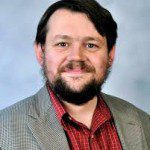 Edwin Woodruff Tait is a freelance writer, farmer, and consulting editor for Christian History magazine. He blogs at Ithilien and tweets as @Amandil3. (Extra points if you get the Tolkien reference.)
Previous Post

July 29, 2015
Business as moral community
Next Post

August 4, 2015 10 final theses about the Acton Institute
Browse Our Archives
Select a Category Art Audio posts Bible and Work Book Review Books Budgeting Calling Common Good Community Development Conferences Discipleship Economics Entrepreneurship Ethics Faith and Family Faith and the Marketplace Faith and the Workplace faith and work History of Work and Vocation Leadership Local Church Meaning New Blogger News Prayer Relationships Seminaries Theology of Work Uncategorized Video posts Vocation Worship Resources
Select a Month April 2026 October 2025 September 2025 July 2025 April 2025 January 2025 October 2024 September 2024 August 2024 May 2024 March 2024 February 2024 December 2023 November 2023 August 2023 July 2023 April 2023 January 2023 December 2022 November 2022 September 2022 August 2022 July 2022 May 2022 April 2022 February 2022 January 2022 December 2021 November 2021 October 2021 September 2021 August 2021 June 2021 May 2021 March 2021 February 2021 January 2021 December 2020 November 2020 September 2020 August 2020 July 2020 June 2020 May 2020 April 2020 March 2020 January 2020 December 2019 October 2019 September 2019 August 2019 July 2019 June 2019 May 2019 April 2019 March 2019 February 2019 January 2019 April 2018 March 2018 January 2018 December 2017 November 2017 October 2017 September 2017 August 2017 July 2017 June 2017 May 2017 April 2017 March 2017 February 2017 January 2017 December 2016 November 2016 October 2016 September 2016 August 2016 July 2016 June 2016 May 2016 April 2016 March 2016 February 2016 January 2016 December 2015 November 2015 October 2015 September 2015 August 2015 July 2015 June 2015 May 2015 April 2015 March 2015 February 2015 January 2015 December 2014 November 2014 October 2014 September 2014 August 2014 July 2014 June 2014 May 2014 April 2014 March 2014 February 2014 January 2014 December 2013
Follow Us!
TAKE THE
Religious Wisdom Quiz
After healing a leper, Jesus sternly warned him to tell no one but show himself to the priest. Did the man obey?
Select your answer to see how you score.
No, he spread the news widely Yes, he told only the priest Yes, he remained silent Partially, he told his family only
Related posts from MISSION:WORK



Things the 2021 Supply Chain Disruptions Have Kept...

That Time I Accidentally Became a Prophet
TRENDING AT PATHEOS Careers, Workplace and Religion

Methodist Central Hall and Westminster Abbey
Situated on the same square is Methodist Central Hall and Westminster Abbey. ...

57th Dove Awards Honor Dolly Parton, Crown New...
On gospel music’s biggest night, the 57th annual GMA Dove Awards honored...

The First Eucharistic Controversy: Christ’s Real Presence
For Catholics, the Eucharist is the source and summit of the Christian...

What a Stop Sign Can Teach Us About...
How to Make a Decision When You Can't Hear God Main point:...

Archdiocese Hosts Military Marriage Retreat in Germany
RASTATT, Germany — The transient military lifestyle, with its frequent deployments and...

Nearly every morning, I make the drive to Detroit with my high-school-age...
view all Careers, Workplace and Religion blogs
Ad-Free & Subscriber Log-In Subscription Support
- About Us
- 2026 Calendar
- Videos
- Podcasts
- Library of World Religions
- Faith In Media Tracker
- Advertise With Us
- Write for Us
- Privacy Policy
- Terms of Service
- Do Not Sell My Data
- Contact Us
- Radiant Digital
- Manage Newsletter Subscriptions
- Unsubscribe From Notifications
- Sitemap
Copyright 2008-2026, Patheos. All rights reserved.
Subscription Support Ad-Free & Subscriber Log-In
Follow Patheos