
BuddhistCatholicContemplativeEvangelicalGeneral ChristianHinduJewishLatter-day SaintMuslimNew VisionsProgressive Christian
Beliefs
- Buddhist
- Catholic
- Contemplative
- Evangelical
- General Christian
- Hindu
- Jewish
- Latter-day Saint
- More Voices
- Muslim
- New Visions
- Pagan
- Progressive Christian
Topics
- Religion News
- Food and Religion
- Sports and Religion
- Religious Art
- Religious Music and Entertainment
- Religious Events
- History and Religion
- Style and Religion
- Politics and Religion
- Women in Religion
- Recreation Outdoors and Religion
- Business Finance and Religion
- Careers Workplace and Religion
- Education and Religion
- Family Parenting and Religion
- Health Fitness and Religion
- Home and Religion
- Relationships and Religion
- Technology and Religion
- Travel and Religion
Columnists
- Buddhist Columnists
- Business Finance and Religion Columnists
- Careers Workplace and Religion Columnists
- Catholic Columnists
- Contemplative Columnists
- Education and Religion Columnists
- Evangelists Columnists
- Family Parenting and Religion Columnists
- General Christian Columnists
- Health Fitness and Religion Columnists
- Hindu Columnists
- History and Religion Columnists
- Home and Religion Columnists
- Jewish Columnists
- More Voices Columnists
- Latter Day Columnists
- Muslim Columnists
- New Visions Columnists
- Nonreligious Columnists
- Pagan Columnists
- Politics and Religion Columnists
- Progressive Columnists
- Recreation Outdoors and Religion Columnists
- Relationships and Religion Columnists
- Religion News Columnists
- Religious Art Columnists
- Religious Events Columnists
- Religious Music and Entertainment Columnists
- Sports and Religion Columnists
- Style and Religion Columnists
- Technology and Religion Columnists
- Travel and Religion Columnists
- Women in Religion Columnists
Resource Library
- 2026 Calendar
- Library of World Religions
- The 100 Most Holy Places on Earth
- Patheos Answers
- Podcasts
- Videos
- Faith Leaders Database
- Anglican Episcopalian
- Bahai
- Baptist
- Buddhism
- Christianity
- Confucianism
- Eastern Orthodoxy
- Hinduism
- Holiness and Pentecostal
- ISKCON
- Islam
- Judaism
- Lutheran
- Methodist
- The Church of Jesus Christ of Latter-day Saints
- New Age
- Paganism
- Presbytarian and Reformed
- Protestantism
- Religion Behind the Scenes
- Roman Catholic
- Scientology
- Shia Islam
- Sikhism
- Sufism
- Sunni Islam
- Taoism
- Zen
- See all religions
Research Tools
 Ad-Free & Subscriber Log-In Subscription Support
Ad-Free & Subscriber Log-In Subscription Support
Follow Patheos 

- Trending:
- Forgiveness
- |
- Marriage
- |
- Consciousness
- |
- Death Penalty
- |
- Election
- |
- Halloween

- Home
- Careers, Workplace and Religion
- “Career services must die!” Thinking holistically about careers
“Career services must die!” Thinking holistically about careers
Last updated on: August 6, 2015 at 2:28 pm by Mission:Work
“Career services must die!” Thinking holistically about careers 2015-08-05T14:40:43-05:00 Mission:Work
Patheos Explore the world's faith through different perspectives on religion and spirituality! Patheos has the views of the prevalent religions and spiritualities of the world.

Wake Forest University has created a new model of career development that integrates all aspects of a student’s life, including faith and spirituality. This article was first published in Faith & Leadership.
When Andy Chan ran the career center at the Stanford Graduate School of Business, he discovered there was a hunger among students to think holistically about careers.
He created a seminar called “Career and Life Vision,” in which students and alumni were challenged to think about a personal vision rather than just narrow work choices and skills. After teaching several thousand students, Chan started looking into what universities were doing to support the college-to-career experience.
“When I asked, ‘What did you learn about how to make good, sound, strategic, well-informed decisions about your career while you were in college?’ most people would say, ‘I didn’t really learn that at all,’” Chan said.
Later, Chan met Wake Forest President Nathan Hatch, who was interested in similar questions, and came to the North Carolina university to transform the way they offered “career services” — a phrase he says is outdated.
“The more you can turn your university into an activated, real-time available network of people and information, the more students are going to use it,” he said.
Chan is vice president of personal and career development (link is external) at Wake Forest University. He was the co-editor of “A Roadmap for Transforming the College-to-Career Experience,” a crowdsourced paper that includes contributions from 20 innovators in higher education and business.
His blog, The Heart of the Matter, has tips and advice for students and others.
He spoke recently to Faith & Leadership about creating a new model and how it might help Christians discerning their work path and thinking about their careers. The following is an edited transcript.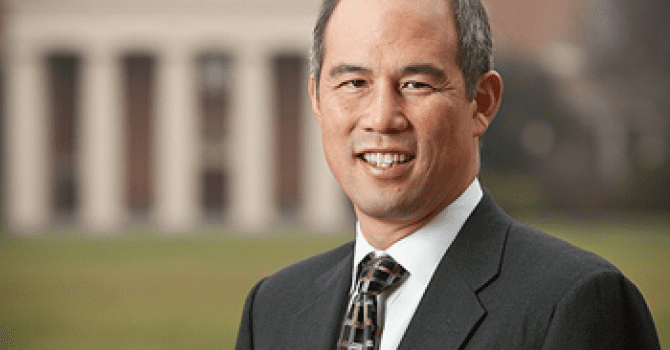
Q: How is your model different from the traditional career services model?
I use this phrase: “Career services must die.” I know it’s dramatic, but I do really want to get rid of the nomenclature, the wording “career services,” because the idea behind career services is that it’s a unit that you go to and you’re served.
So you have to change the brand and the expectations of the student. This is part of their educational and personal development process; this is part of growing into the person they want to be.
And so I look at the career development process as one where we’re joined with the mission of the school, which is trying to help students develop to become the people they want to be and to live it out in their lives when they leave college.
Our job is to build bridges between students, faculty, employers and the information that’s out there to help all these people make decisions. But on top of that, we’re giving them educational frameworks for how to think about all this stuff.
What we’re trying to do is help them understand that this is a four-year process. This is a journey that they’re going to have to own to go from college to career.
We don’t have the 2013 results yet, but for the class of 2012, we were able to collect information for 78 percent of the class. By November after graduation, 95 percent of the class was either in jobs or in graduate school. That’s really positive compared with the national average, which was around 64 percent.
Q: Does this apply to Christian vocation?
One of the things that I’m personally very committed to is introducing the concept of your worldview and your spirituality into the career development concept and process.
So we have some career courses that students can take for credit. The first is “Personal Framework for Career Exploration.” In the course we ask, “Have you ever thought about what you believe? What are your beliefs about work, and what are your beliefs about your future and the idea of who’s in charge? How do you think about that?”
And most students are like, “Seriously? We’re going to talk about this in a career development course?” But because the whole class is about your personal wiring, they are more than open to do it.
We have the chaplain, [the Rev.] Tim Auman, come and talk about why it is important to think about this, even if you decide you want to be atheist or agnostic. It does frame how you think about both the role that work plays in your life and also every choice that you make.
And then we bring in guest panelists who have different belief backgrounds, so one could be from a Muslim background, one from a Jewish background, one from a Christian background, one from an atheist background, and they talk about how their spirituality plays a role in their life.
So students hear the talk. They reflect on it for themselves. And the chaplain says, coming out of that particular class, that he will have many of those students lined up outside his door to come to talk to him and say, “I want to explore this stuff, because I’ve never even thought about it before, and I didn’t even know it was important.”
I love that about our courses. I’ve loved that about the work — that we are opening up doors for students to think about who they are and what matters to them most, even in the spiritual context.
Q: So these questions about spiritual life are not only about a call to ministry?
That’s right. My background is Christian. I go to a Presbyterian church and grew up in the Presbyterian faith.
I go to the NetVUE (link is external) conference every other year [a Lilly Endowment Inc.-funded network of colleges and universities committed to fostering the intellectual and theological exploration of vocation], and many of the schools are Christian and religious schools.
What happens in a lot of the smaller schools is that they run a program about understanding how your faith and vocation align, or exploring careers through your faith, but oftentimes students interpret it as, “You’re trying to help me develop a career in ministry.”
And maybe [the school administrators] don’t mean for that to happen, but that’s the baggage that you carry when you go to a Christian school.
So they end up having these small little interesting programs with 10 to 30 students. And the program itself is really cool, but you’re not actually affecting the school’s culture. You’re not getting 30 to 80 percent of the students engaging.
You’re getting a small number who are actually thinking about this deeply, and that’s not really, to me, the point. The point is everyone needs this, but it needs to be introduced to them in a way that is neutral enough in language for a student to say, “I want to engage, because I am trying to figure out how to think about this career question.
“And if in the process of doing that you build some trust with me, and then you have me think about the spirituality question, I’m OK with that.”
But if you’re going to open with the spirituality question, I think, honestly, at least 80 if not 90 percent of the students, even in a Christian school, will say, “I don’t need to talk about that. I already am going to some other class where I’m learning about spirituality. And besides, I think you have an agenda to steer me into ministry.”
Q: Or maybe you even have students who’ve said, “I’ve already discerned that I don’t have a call to ministry, so that’s off the table.”
That’s right. So it isn’t going to be of value at all. And so we’ve gone the other way and said, “We’re going to teach you holistically about career development, and we’re going to have a very light touch on where does spirituality play a role in this.” I’m sure there’s ways you could add more to it than even what we have.
Q: When did you realize, “OK, small changes aren’t going to fix this; we need to change the model”?
It started with the university president, the business school dean, the provost who was here [at Wake Forest] at the time and myself coming together and saying, “We need to do something, if the world is fundamentally changing.”
The world of work has transformed, and it’s not going back to the way it used to be. I think we all know it, but we’re all in some state of either denial or trying to understand what does it actually mean.
Q: How has career development changed at Wake Forest? Did you have any resistance to changing the old model?
We’ve gone from what historically were service units to what I will call an “ecosystem.”
The existing paradigm at most universities is that the career center is seen as a stand-alone service unit. “Oh, you have a question about a career or a job or internship? You go see that small little office of 10 to 20 people, and they’ll help you.”
One problem with this model is that students want immediate information. They get that on their phones. Why can’t they get it when they’re talking to a faculty member? So they want a better answer than just, “Go talk to the career center.”
And what happens is that in walking across the campus from the faculty member’s office to the career center, I’d say at least 50 percent if not 80 percent of students don’t ever get there. So that’s the existing model that already wasn’t working.
But the second thing is that the complexities of how people actually get jobs, build careers, gather information have changed. Everything is connected, and the more you make those connections easy and transparent and visible, the faster students are able to tap into them and get what they need to go where they want to go.
Q: Do you think your new model more closely resembles the way students expect the world to be?
They’ve used technology their whole lives, and they’re so used to connecting with people and information so easily that in a lot of ways, the university cuts them off from the experiences they had before they came.
So the first day of school they come to orientation. We have an hour with them, and in that hour we run through different things skits, videos, panels. We make it very fast-paced, very interactive, very dynamic.
We use a lot of technology, tailored technology to stay connected to them throughout their four years. And then at the same time, we are doing a lot of things educating and partnering with faculty and staff and student leadership to continually help students know, “If you have these questions, here’s where you go; here’s how you engage,” recognizing that everyone is doing it at different points in time and looking at trying to do it in different kinds of ways.
Because at the end of the day, that’s what we’re trying to achieve: students who make great decisions that are based on real information. It is not all that different from what we’re trying to teach in the classroom.
Q: In your report that there’s a lot of emphasis on students learning how to communicate the value of their education. Is this a new emphasis?
The language that employers use includes words like “productivity” and “efficiency” and “value” and “process” and “customers.” Those are words you don’t hear much in an academic environment unless you happen to go to the business school. The students need some help understanding, “How do I make that type of translation?”
So I’ll give you an example of the kind of thing that has worked well for us. We’ll bring in employers of all different types: consulting and banking, nonprofits, government, international opportunities. And we’ll hold a lunch session with 20 faculty from different academic departments.
And in the session the employers will say, “Let us tell you a little about what your students do in our work. Let us tell you about the kinds of skills and strengths that we want to see them have and be able to talk about when they come to interviews. If they can do these things, we know they’re going to be able to handle working at a place like ours.”
And these faculty, whether they’re in English, in Japanese or in sociology, say, “Oh, I get now the connection between what I’m teaching and what you’re asking my students to do, like making presentations and working in teams. So here’s how we can set this course up so they can do these kinds of things.”
Our office will work, for example, with the history department. On WebEx [online meeting], we’ll bring in four alumni majors who have gone into four different career areas: medicine, nonprofit, government, business.
They could even go back to their parents and say, “Trust me. Majoring in history is going to be OK. It’s going to work out, because I’ve met alums from different areas who have done this.”
Without that, they’re left with their parents saying, “Shouldn’t you double-major in accounting?”
And the faculty are realizing, “I’m not crossing the line and doing something I shouldn’t be doing. I’m helping my students see the practical value of their education.”
Q: What steps did you take to make this kind of deep, fundamental change in the way your office functions?
We talked about changing both culture and operation. The first thing was to clarify that we’re in this for the long haul.
The second was that I knew that I needed to bring in leaders who could help make this vision I’ve described to you real. I said, “How can we find some way to bring the resources to the table?”
And so I partnered with our fundraising department specifically, the group that works with our parents and we raised $5 million in the first two years, and then in the last two years we raised another $5 million. I pretty much committed 30 percent of my time to fundraising, because I recognize that’s the only way you can have the people and resources to do the work.
I didn’t want to be reliant on the school alone to provide those resources, because the school has lots of other priorities, too.
As a result, I’ve been able to bring key leaders into my team and also work across the university. We can work together as a team representing the university as opposed to programmatic allegiances.
I think the other thing is that before I came in I had a lot of good counsel from friends of mine and they said, “Andy, you need to make sure that organizationally you’re in a position where you can have access to the key influencers in the university. If this is really strategic and mission-critical to the university, you need to have that access. You don’t want to be brought in with a big vision but be organizationally in a place where you’re not well-connected.”
This is something the president’s passionate about, and we saw the importance for this to be connected to the academic mission of the school, so I report to both the president and the provost.
Both the president and the provost are extremely supportive, and they are very willing to be vocal with faculty members to talk about why this is important and that they want us all to work together.
Q: Did you have any problems or challenges or failures that you learned from along the way?
Innovation takes time, and we’ve recognized that experiments don’t always succeed, but that doesn’t mean that the long-term view is not still of value.
Q: You mention innovation. The report also talks about building on what already exists, building on the successful traditions. So is that part of it, too?
Yes, innovating on behalf of tradition. At Wake Forest we have a phrase for our faculty model: it’s called the “teacher-scholar” model. It’s the idea that our faculty are teachers first, scholars second, but both are very, very important. That is part of our value structure.
The motto of the school is Pro humanitate, “for humanity.” And the idea is that what we do is about helping and serving others and working to make the world a better place. So we’re looking at careers from the standpoint of, “How can I make a difference in the world and help others?”
And I think that, too, is another component that emerges from why this model also works and is something that people are very excited about.
We said, “Not a lot of schools are innovating, and so let’s find a way to innovate here and do something very big, and in doing so maybe we could be a model for how others do it.”
I recognize that the chance of its being replicated is low, just because every school has its own different structures and resources and culture. But the idea that every school will embrace the philosophy of intentionally investing in and making mission-critical the personal and career development experience to really uplift it so that students are getting the full education they need to navigate in the world today that’s something we all are very inspired to do.
Previous Post

August 5, 2015
Running away from our shadow: racism in America
Next Post
August 6, 2015 The ideal church member
Browse Our Archives
Select a Category Art Audio posts Bible and Work Book Review Books Budgeting Calling Common Good Community Development Conferences Discipleship Economics Entrepreneurship Ethics Faith and Family Faith and the Marketplace Faith and the Workplace faith and work History of Work and Vocation Leadership Local Church Meaning New Blogger News Prayer Relationships Seminaries Theology of Work Uncategorized Video posts Vocation Worship Resources
Select a Month April 2026 October 2025 September 2025 July 2025 April 2025 January 2025 October 2024 September 2024 August 2024 May 2024 March 2024 February 2024 December 2023 November 2023 August 2023 July 2023 April 2023 January 2023 December 2022 November 2022 September 2022 August 2022 July 2022 May 2022 April 2022 February 2022 January 2022 December 2021 November 2021 October 2021 September 2021 August 2021 June 2021 May 2021 March 2021 February 2021 January 2021 December 2020 November 2020 September 2020 August 2020 July 2020 June 2020 May 2020 April 2020 March 2020 January 2020 December 2019 October 2019 September 2019 August 2019 July 2019 June 2019 May 2019 April 2019 March 2019 February 2019 January 2019 April 2018 March 2018 January 2018 December 2017 November 2017 October 2017 September 2017 August 2017 July 2017 June 2017 May 2017 April 2017 March 2017 February 2017 January 2017 December 2016 November 2016 October 2016 September 2016 August 2016 July 2016 June 2016 May 2016 April 2016 March 2016 February 2016 January 2016 December 2015 November 2015 October 2015 September 2015 August 2015 July 2015 June 2015 May 2015 April 2015 March 2015 February 2015 January 2015 December 2014 November 2014 October 2014 September 2014 August 2014 July 2014 June 2014 May 2014 April 2014 March 2014 February 2014 January 2014 December 2013
Follow Us!
TAKE THE
Religious Wisdom Quiz
"I am the Alpha and the Omega, the ____ and the End,” says the Lord God.
Select your answer to see how you score.
Light Beginning Truth Eternal
Related posts from MISSION:WORK

Three Conversations (in honor of Eastertide)

Why Beth Felker Jones is Protestant


Every Vocation Everywhere All At Once
TRENDING AT PATHEOS Careers, Workplace and Religion

When Halloween Unmasks Married Hearts
Written by Dr. David K. Ewen from Eternal Truth Bible College Behind...

Aristotle. He’s been called the father of logic, the father of the...

Methodist Central Hall and Westminster Abbey
Situated on the same square is Methodist Central Hall and Westminster Abbey. ...

57th Dove Awards Honor Dolly Parton, Crown New...
On gospel music’s biggest night, the 57th annual GMA Dove Awards honored...

The First Eucharistic Controversy: Christ’s Real Presence
For Catholics, the Eucharist is the source and summit of the Christian...

What a Stop Sign Can Teach Us About...
How to Make a Decision When You Can't Hear God Main point:...
view all Careers, Workplace and Religion blogs
Ad-Free & Subscriber Log-In Subscription Support
- About Us
- 2026 Calendar
- Videos
- Podcasts
- Library of World Religions
- Faith In Media Tracker
- Advertise With Us
- Write for Us
- Privacy Policy
- Terms of Service
- Do Not Sell My Data
- Contact Us
- Radiant Digital
- Manage Newsletter Subscriptions
- Unsubscribe From Notifications
- Sitemap
Copyright 2008-2026, Patheos. All rights reserved.
Subscription Support Ad-Free & Subscriber Log-In
Follow Patheos