
BuddhistCatholicContemplativeEvangelicalGeneral ChristianHinduJewishLatter-day SaintMuslimNew VisionsProgressive Christian
Beliefs
- Buddhist
- Catholic
- Contemplative
- Evangelical
- General Christian
- Hindu
- Jewish
- Latter-day Saint
- More Voices
- Muslim
- New Visions
- Pagan
- Progressive Christian
Topics
- Religion News
- Food and Religion
- Sports and Religion
- Religious Art
- Religious Music and Entertainment
- Religious Events
- History and Religion
- Style and Religion
- Politics and Religion
- Women in Religion
- Recreation Outdoors and Religion
- Business Finance and Religion
- Careers Workplace and Religion
- Education and Religion
- Family Parenting and Religion
- Health Fitness and Religion
- Home and Religion
- Relationships and Religion
- Technology and Religion
- Travel and Religion
Columnists
- Buddhist Columnists
- Business Finance and Religion Columnists
- Careers Workplace and Religion Columnists
- Catholic Columnists
- Contemplative Columnists
- Education and Religion Columnists
- Evangelists Columnists
- Family Parenting and Religion Columnists
- General Christian Columnists
- Health Fitness and Religion Columnists
- Hindu Columnists
- History and Religion Columnists
- Home and Religion Columnists
- Jewish Columnists
- More Voices Columnists
- Latter Day Columnists
- Muslim Columnists
- New Visions Columnists
- Nonreligious Columnists
- Pagan Columnists
- Politics and Religion Columnists
- Progressive Columnists
- Recreation Outdoors and Religion Columnists
- Relationships and Religion Columnists
- Religion News Columnists
- Religious Art Columnists
- Religious Events Columnists
- Religious Music and Entertainment Columnists
- Sports and Religion Columnists
- Style and Religion Columnists
- Technology and Religion Columnists
- Travel and Religion Columnists
- Women in Religion Columnists
Resource Library
- 2026 Calendar
- Library of World Religions
- The 100 Most Holy Places on Earth
- Patheos Answers
- Podcasts
- Videos
- Faith Leaders Database
- Anglican Episcopalian
- Bahai
- Baptist
- Buddhism
- Christianity
- Confucianism
- Eastern Orthodoxy
- Hinduism
- Holiness and Pentecostal
- ISKCON
- Islam
- Judaism
- Lutheran
- Methodist
- The Church of Jesus Christ of Latter-day Saints
- New Age
- Paganism
- Presbytarian and Reformed
- Protestantism
- Religion Behind the Scenes
- Roman Catholic
- Scientology
- Shia Islam
- Sikhism
- Sufism
- Sunni Islam
- Taoism
- Zen
- See all religions
Research Tools
 Ad-Free & Subscriber Log-In Subscription Support
Ad-Free & Subscriber Log-In Subscription Support
Follow Patheos 

- Trending:
- Forgiveness
- |
- Marriage
- |
- Consciousness
- |
- Death Penalty
- |
- Election
- |
- Halloween

- Home
- Careers, Workplace and Religion
- Letting our Jesus Freak flag fly: more reports from #ActonU
Letting our Jesus Freak flag fly: more reports from #ActonU
Last updated on: August 5, 2015 at 1:35 pm by Edwin Woodruff Tait
Letting our Jesus Freak flag fly: more reports from #ActonU 2015-08-05T13:35:33-05:00 Edwin Woodruff Tait
Patheos Explore the world's faith through different perspectives on religion and spirituality! Patheos has the views of the prevalent religions and spiritualities of the world.

More of our reports from the recent Acton University conference. Read the first four posts here:
- The refreshing difference
- We can’t create heaven on earth
- “Don’t immanentize the eschaton”
- Is there really enough to go around?
Wednesday night’s plenary was delivered by Gregory Thornbury of The King’s College in New York. Thornbury is 45, if Wikipedia is to be trusted, but (as I did before I grew a beard) he looks about 20 years younger than he is. He claimed in his introductory remarks that some media report had said he looked like Harry Potter, and commented that he’d rather look like Dr. Who. Well, he should rest happy, because I think he does look like Dr. Who (any of the actors since the reboot). The BBC should contact him if the present Doctor decides to quit.
Thornbury’s speech was a memorable and impressive performance, peppered with wry humor and a dazzling array of literary and intellectual allusions. The main theme was a rousing call for Christians to be boldly counter-cultural–”let your Jesus Freak flag fly.” Secular people, Thornbury argued, aren’t impressed by Christians compromising their beliefs for acceptance; “the cool kids aren’t going to like us.” Thornbury believes that the secular world needs a robust, orthodox Christianity as a foil–that at some level unbelievers are disappointed when Christians fail to mount the vigorous resistance to the spirit of the age that the secular world expects of us.
Thornbury appealed to Hegel’s concept of the “negation of the negation” to illustrate this. The common way of describing Hegel’s theory of history is that a thesis (the French “ancien regime,” say) is opposed by an antithesis (the French Revolution) and out of this comes a synthesis (Napoleon). But, Thornbury pointed out, there’s an additional step that is often ignored.
Hegel believed that between the antithesis and the synthesis comes “the negation of the negation”–something that opposes the antithesis and keeps it from simply sweeping the thesis away, thus forcing a synthesis. (At least, that’s what I understood the role of this concept to be in Hegel–it’s not a concept I understand very well.) Apparently in Hegel’s original example of the French Revolution, the negation of the negation was the Reign of Terror. Thornbury is calling on Christians to be the negation of the negation, which given the historical example might actually be an unfortunate concept to invoke. . . . .
Regardless of how Hegel used the concept or how Hegel’s original historical illustration plays out, Thornbury pointed out that mathematically the “negation of the negation” is positive. Hence, Christians are called to mount a positive witness precisely by a vigorous negation of the negations of modern secularism. He cited the postmodern Marxist Slavoj Zizek’s strange and fascinating book The Puppet and the Dwarf, which rejects the truth of Christianity but at the same time expresses great admiration for G. K. Chesterton, precisely because Chesterton embodies “the negation of the negation.”
Chesterton’s exuberant, joyful affirmation of the value of life obviously impresses Zizek even though Zizek views Chesterton’s Christian faith as obviously a delusion. As Thornbury put it, “let’s make the world wonder if it’s really those Puritans who know how to enjoy themselves.”
The most obvious objection to Thornbury’s clarion call for uncompromising Christianity is that yes, the world “needs” us to be its opposite, but is that a need that we ought to be fulfilling? Secular people need Christians to be dogmatic, “hateful” bigots so that they can see themselves as the tolerant, humane alternative. Obviously that’s not what Thornbury means–his point is precisely that Christians need to defend historic orthodoxy in a joyful, life-affirming, gracious way.
But even on matters of doctrinal substance such as the authority of Scripture, the Atonement, the necessity of Christ for salvation, and so on, those who reject Christianity frequently reject what appears to most of us believers to be a blatant caricature of the faith. As N. T. Wright once put it in my hearing, he often tells atheists that he very likely doesn’t believe in the “god” that they don’t believe in. It’s not enough, surely, to say, “yes, we believe all the horrible things you disbelieve in, but look what a good time we’re having believing those things.” Often, apologetics consists in explaining how different orthodoxy is from what its opponents believe it to be.
Furthermore, historically Christian orthodoxy has developed and been reformulated, often in response to outside pressures. C. S. Lewis saw himself as a staunch defender of unadulterated, historic orthodoxy. But Lewis’ view of hell, which is very common among conservative Christian intellectuals today, (“the doors are locked on the inside”) is clearly a response to two centuries of passionate attacks on the view of hell found, for instance, in Edwards’ “Sinners in the Hands of an Angry God.” Lewis reaffirmed orthodoxy, but he reaffirmed in a nuanced form that took valid criticisms of past formulations into account.
Lewis and other effective modern apologists do not say, “yes, we all dangle over hell like a spider hanging by a thread, and look how happy I am about that.”
A third problem with Thornbury’s way of putting things is that many Christians disagree with what Thornbury takes to be orthodoxy precisely because they think the Christian faith requires them to do so. One of the common tropes of conservative evangelicalism these days is that young “progressives” are essentially suffering from a failure of nerve. In this narrative, millennials don’t want to tackle the tough issues that separate Christians from secular society because they want to be nice and to be respected by their unbelieving friends.
Chelsen Vicari’s Charisma article in March on “How the New Christian Left is Twisting the Gospel” exemplified this approach. My friend David Schell, a “progressive” Christian blogger, responded “We didn’t surrender the culture wars. We joined the other side.” David and other young Christians who grew up evangelical and have embraced more liberal forms of Christianity do so not out of cowardice but out of conviction, even if (as I believe) many of their convictions are mistaken.
Thornbury, of course, was not addressing his appeal to people who have rejected conservative, traditional Christianity outright, but to people like me who want to affirm it in a highly nuanced, moderate way. His speech was a rhetorical trumpet call summoning Christians to be bold and unapologetic in affirming their faith. He obviously wasn’t dealing with all the nuances of how to present the faith to unbelievers.. Clearly he thinks that modern evangelicals have done too much apologizing and backing away and trying desperately not to sound “fundamentalist,” and that the other side of the coin needs to be emphasized.
And to a great extent I think he’s right. I think it’s quite possible to be nuanced and to explain how the faith is misunderstood without the kind of nervous hunger for acceptance that he rightly criticizes. There does come a point where orthodox Christians need to be willing to say, “yes, I believe something you find irrational or repugnant, and this faith is a source of joy and a light that makes sense of everything.” That point might come for me at a different place than for Thornbury. But precisely for that reason, his exhortation was one I very much needed to hear.
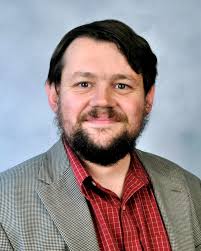 Edwin Woodruff Tait is a freelance writer, farmer, and consulting editor for Christian History magazine. He blogs at Ithilien and tweets as @Amandil3. (Extra points if you get the Tolkien reference.)
Previous Post

June 22, 2015
Why we can--and should--grieve at work
Next Post
June 23, 2015 Defining financial success: part 1 of an interview with Gloria Nelund
Browse Our Archives
Select a Category Art Audio posts Bible and Work Book Review Books Budgeting Calling Common Good Community Development Conferences Discipleship Economics Entrepreneurship Ethics Faith and Family Faith and the Marketplace Faith and the Workplace faith and work History of Work and Vocation Leadership Local Church Meaning New Blogger News Prayer Relationships Seminaries Theology of Work Uncategorized Video posts Vocation Worship Resources
Select a Month April 2026 October 2025 September 2025 July 2025 April 2025 January 2025 October 2024 September 2024 August 2024 May 2024 March 2024 February 2024 December 2023 November 2023 August 2023 July 2023 April 2023 January 2023 December 2022 November 2022 September 2022 August 2022 July 2022 May 2022 April 2022 February 2022 January 2022 December 2021 November 2021 October 2021 September 2021 August 2021 June 2021 May 2021 March 2021 February 2021 January 2021 December 2020 November 2020 September 2020 August 2020 July 2020 June 2020 May 2020 April 2020 March 2020 January 2020 December 2019 October 2019 September 2019 August 2019 July 2019 June 2019 May 2019 April 2019 March 2019 February 2019 January 2019 April 2018 March 2018 January 2018 December 2017 November 2017 October 2017 September 2017 August 2017 July 2017 June 2017 May 2017 April 2017 March 2017 February 2017 January 2017 December 2016 November 2016 October 2016 September 2016 August 2016 July 2016 June 2016 May 2016 April 2016 March 2016 February 2016 January 2016 December 2015 November 2015 October 2015 September 2015 August 2015 July 2015 June 2015 May 2015 April 2015 March 2015 February 2015 January 2015 December 2014 November 2014 October 2014 September 2014 August 2014 July 2014 June 2014 May 2014 April 2014 March 2014 February 2014 January 2014 December 2013
Follow Us!
TAKE THE
Religious Wisdom Quiz
What theme is central to both Isaiah and Jeremiah's prophecies?
Select your answer to see how you score.
Priestly leadership Judgment and restoration Military conquest Genealogy
Related posts from MISSION:WORK



Things the 2021 Supply Chain Disruptions Have Kept...

That Time I Accidentally Became a Prophet
TRENDING AT PATHEOS Careers, Workplace and Religion

In one sense walking into Westminster Abbey is like walking down the...

'Super Scam Me' Exposes AI Jon Bon Jovi...
Leslie Pickett believed she was in a relationship with Jon Bon Jovi....

The Brazilian Remake of Kendricks' 'Flywheel' Opens in...
“Flywheel,” the story that launched the Kendrick Brothers’ filmmaking career is getting...

The Dangers of Gradual Accommodation (Winking at Sin)
Recently, the “law of gradualness” resurfaced during the opening of a weeklong,...

The Iron Gates and the Lion of the...
Yesterday, I didn't finish my report about, well, yesterday. So I'll...

The Image: On the Horror of Capitalism and...
The Image Then went the Pharisees, and took counsel how they might...
view all Careers, Workplace and Religion blogs
Ad-Free & Subscriber Log-In Subscription Support
- About Us
- 2026 Calendar
- Videos
- Podcasts
- Library of World Religions
- Faith In Media Tracker
- Advertise With Us
- Write for Us
- Privacy Policy
- Terms of Service
- Do Not Sell My Data
- Contact Us
- Radiant Digital
- Manage Newsletter Subscriptions
- Unsubscribe From Notifications
- Sitemap
Copyright 2008-2026, Patheos. All rights reserved.
Subscription Support Ad-Free & Subscriber Log-In
Follow Patheos