
BuddhistCatholicContemplativeEvangelicalGeneral ChristianHinduJewishLatter-day SaintMuslimNew VisionsProgressive Christian
Beliefs
- Buddhist
- Catholic
- Contemplative
- Evangelical
- General Christian
- Hindu
- Jewish
- Latter-day Saint
- More Voices
- Muslim
- New Visions
- Pagan
- Progressive Christian
Topics
- Religion News
- Food and Religion
- Sports and Religion
- Religious Art
- Religious Music and Entertainment
- Religious Events
- History and Religion
- Style and Religion
- Politics and Religion
- Women in Religion
- Recreation Outdoors and Religion
- Business Finance and Religion
- Careers Workplace and Religion
- Education and Religion
- Family Parenting and Religion
- Health Fitness and Religion
- Home and Religion
- Relationships and Religion
- Technology and Religion
- Travel and Religion
Columnists
- Buddhist Columnists
- Business Finance and Religion Columnists
- Careers Workplace and Religion Columnists
- Catholic Columnists
- Contemplative Columnists
- Education and Religion Columnists
- Evangelists Columnists
- Family Parenting and Religion Columnists
- General Christian Columnists
- Health Fitness and Religion Columnists
- Hindu Columnists
- History and Religion Columnists
- Home and Religion Columnists
- Jewish Columnists
- More Voices Columnists
- Latter Day Columnists
- Muslim Columnists
- New Visions Columnists
- Nonreligious Columnists
- Pagan Columnists
- Politics and Religion Columnists
- Progressive Columnists
- Recreation Outdoors and Religion Columnists
- Relationships and Religion Columnists
- Religion News Columnists
- Religious Art Columnists
- Religious Events Columnists
- Religious Music and Entertainment Columnists
- Sports and Religion Columnists
- Style and Religion Columnists
- Technology and Religion Columnists
- Travel and Religion Columnists
- Women in Religion Columnists
Resource Library
- 2026 Calendar
- Library of World Religions
- The 100 Most Holy Places on Earth
- Patheos Answers
- Podcasts
- Videos
- Faith Leaders Database
- Anglican Episcopalian
- Bahai
- Baptist
- Buddhism
- Christianity
- Confucianism
- Eastern Orthodoxy
- Hinduism
- Holiness and Pentecostal
- ISKCON
- Islam
- Judaism
- Lutheran
- Methodist
- The Church of Jesus Christ of Latter-day Saints
- New Age
- Paganism
- Presbytarian and Reformed
- Protestantism
- Religion Behind the Scenes
- Roman Catholic
- Scientology
- Shia Islam
- Sikhism
- Sufism
- Sunni Islam
- Taoism
- Zen
- See all religions
Research Tools
 Ad-Free & Subscriber Log-In Subscription Support
Ad-Free & Subscriber Log-In Subscription Support
Follow Patheos 

- Trending:
- Forgiveness
- |
- Marriage
- |
- Consciousness
- |
- Death Penalty
- |
- Election
- |
- Halloween

- Home
- Careers, Workplace and Religion
- But what about sin? more from #ActonU
But what about sin? more from #ActonU
Last updated on: August 5, 2015 at 1:35 pm by Edwin Woodruff Tait
But what about sin? more from #ActonU 2015-08-05T13:35:32-05:00 Edwin Woodruff Tait
Patheos Explore the world's faith through different perspectives on religion and spirituality! Patheos has the views of the prevalent religions and spiritualities of the world.

More of our reports from the recent Acton University conference. Read the first six posts here:
- The refreshing difference
- We can’t create heaven on earth
- “Don’t immanentize the eschaton”
- Is there really enough to go around?
- Letting our Jesus Freak flag fly
- Was Jesus a socialist?
First of all, my friend Brandon Harnish has straightened me out about Austrian economics and “methodological individualism.” He says that Austrian economics is about “if-then” scenarios rather than predicting how people will behave. Austrian economics is distinct from many other forms of economics in not treating people as “incentive maximizers.” That makes a lot more sense of the concept of “methodological individualism” and the way Reed (and others) described it.
The issue that primarily concerns me, however, is not so much whether a given economic theory is sound as how our understanding of economics interacts with our Christian faith. Evolution, again, is a helpful parallel. The best strategy for transmitting one’s genes, from a Darwinian point of view, may not be one that we want to emulate individually or encourage on a societal level (in part because no reasonable and moral person consciously places “transmitting my genes” as their highest priority in life, above such things as acting with justice and compassion). So even granted that the economic models favored at Acton best describe how the world works, it does not follow that they should be a guide either to personal behavior or to public policy.
There are two lines of argument for why free-market economics should, in fact, be fostered and encouraged. One is that free-market economics is the best way to lift people out of poverty and enable them to “flourish.” If you want to help the poor, then you should start small businesses, not government programs or even, perhaps, soup kitchens (not that anyone at Acton is against soup kitchens, but they reasonably see them as a short-term solution).
Linked to this is the argument that the wealth of the world is not a static “pie” such that more for one means less for another. Wealth can be created. The total amount of wealth in the world can be increased. Hence, people who increase their own wealth are not necessarily harming others–they may in fact be helping them.
Clearly, on a pragmatic level, this is a powerful argument. There is no doubt that capitalism has greatly increased the amount of wealth in the world and has raised the material standard of living for many people. And this rise in the material standard of living has non-material benefits as well–generally speaking, richer societies are more peaceful, more likely to be ruled by law, kinder to the environment, and so on. Clearly the way we try to help the poor should be shaped by an understanding of economic reality and should be focused on helping them stand on their own two feet. That much should not be controversial.
The problem with this line of argument is that, taken on its own, it’s fundamentally utilitarian. This is where the pragmatic, economic side of Acton seems to me to run up against the ontological foundations laid by Gregg and other “foundational” speakers. If, as Miller said in the second foundations lecture, the common good is not a utilitarian calculus, then we have to ask more questions about economic policy than simply “does it increase the total amount of wealth” or “does it make the average person better off.”
From a virtue ethics point of view, we have to ask “what kind of people are our economic practices turning us into?”
This is where the second line of argument comes into play. In this argument, put very well by Fr. Sirico in the closing plenary, free-market economics corresponds to the truth of the human person because it celebrates human freedom and creativity. Economic activity is a chaotic interaction of billions of free, unpredictable human choices that gives rise to patterns of spectacular beauty as well as utility. (Jeffrey Tucker’s witty, mesmerizing lecture on technology and the market in history was a rhapsodic expression of this view). Acton speakers vary on what kinds of limits they want to put on market activity, but all seem to see it as essentially a form of “subcreation” that expresses the goodness of the created order.
But what about sin? As Christians, do we not believe that the created order is, in fact fallen? Do we not believe that sin affects, on a fundamental level, the way in which we interact with each other and with the non-human goods of the created world? If we follow Augustine, then sin is fundamentally about disordered desire–the misuse of created goods in order to stoke our own egos rather than glorifying God.
And historic Christianity, whether Augustinian or not, has consistently held the desire for wealth (not the possession of wealth) to be one of the aspects of human behavior affected in a particularly profound way by sin. The great Byzantine theologian St. Gregory Palamas, for instance, distinguishes “love of possessions” from “the desires that help men live,” seeing the former as less natural and thus more intrinsically “blameworthy.” Indeed, he concludes, “there is no justification in aspiring to become rich even in a good cause.” (“To the Most Reverend Nun Xenia,” sect. 31, in the Philokalia vol. 4, trans. Palmer, Sherrard and Ware, Faber and Faber 1995, pp. 304-5.)
More in my next post on the Biblical and traditional teaching on wealth and how the speakers at Acton address it.
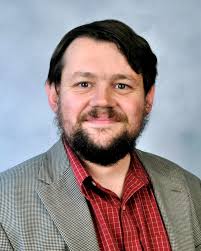 Edwin Woodruff Tait is a freelance writer, farmer, and consulting editor for Christian History magazine. He blogs at Ithilien and tweets as @Amandil3. (Extra points if you get the Tolkien reference.)
Previous Post

June 26, 2015
Was Jesus a socialist? More from #ActonU
Next Post
June 28, 2015 Faith and profit are not mutually exclusive: an interview
Browse Our Archives
Select a Category Art Audio posts Bible and Work Book Review Books Budgeting Calling Common Good Community Development Conferences Discipleship Economics Entrepreneurship Ethics Faith and Family Faith and the Marketplace Faith and the Workplace faith and work History of Work and Vocation Leadership Local Church Meaning New Blogger News Prayer Relationships Seminaries Theology of Work Uncategorized Video posts Vocation Worship Resources
Select a Month April 2026 October 2025 September 2025 July 2025 April 2025 January 2025 October 2024 September 2024 August 2024 May 2024 March 2024 February 2024 December 2023 November 2023 August 2023 July 2023 April 2023 January 2023 December 2022 November 2022 September 2022 August 2022 July 2022 May 2022 April 2022 February 2022 January 2022 December 2021 November 2021 October 2021 September 2021 August 2021 June 2021 May 2021 March 2021 February 2021 January 2021 December 2020 November 2020 September 2020 August 2020 July 2020 June 2020 May 2020 April 2020 March 2020 January 2020 December 2019 October 2019 September 2019 August 2019 July 2019 June 2019 May 2019 April 2019 March 2019 February 2019 January 2019 April 2018 March 2018 January 2018 December 2017 November 2017 October 2017 September 2017 August 2017 July 2017 June 2017 May 2017 April 2017 March 2017 February 2017 January 2017 December 2016 November 2016 October 2016 September 2016 August 2016 July 2016 June 2016 May 2016 April 2016 March 2016 February 2016 January 2016 December 2015 November 2015 October 2015 September 2015 August 2015 July 2015 June 2015 May 2015 April 2015 March 2015 February 2015 January 2015 December 2014 November 2014 October 2014 September 2014 August 2014 July 2014 June 2014 May 2014 April 2014 March 2014 February 2014 January 2014 December 2013
Follow Us!
TAKE THE
Religious Wisdom Quiz
What does the name "Abraham" mean?
Select your answer to see how you score.
My joy He laughs God is my judge Father of many
Related posts from MISSION:WORK



Things the 2021 Supply Chain Disruptions Have Kept...

That Time I Accidentally Became a Prophet
TRENDING AT PATHEOS Careers, Workplace and Religion

57th Dove Awards Honor Dolly Parton, Crown New...
On gospel music’s biggest night, the 57th annual GMA Dove Awards honored...

The First Eucharistic Controversy: Christ’s Real Presence
For Catholics, the Eucharist is the source and summit of the Christian...

What a Stop Sign Can Teach Us About...
How to Make a Decision When You Can't Hear God Main point:...

Archdiocese Hosts Military Marriage Retreat in Germany
RASTATT, Germany — The transient military lifestyle, with its frequent deployments and...

Nearly every morning, I make the drive to Detroit with my high-school-age...

The Real AI Story Is Adoption Without Trust
Artificial intelligence has crossed a political threshold. It is no longer a...
view all Careers, Workplace and Religion blogs
Ad-Free & Subscriber Log-In Subscription Support
- About Us
- 2026 Calendar
- Videos
- Podcasts
- Library of World Religions
- Faith In Media Tracker
- Advertise With Us
- Write for Us
- Privacy Policy
- Terms of Service
- Do Not Sell My Data
- Contact Us
- Radiant Digital
- Manage Newsletter Subscriptions
- Unsubscribe From Notifications
- Sitemap
Copyright 2008-2026, Patheos. All rights reserved.
Subscription Support Ad-Free & Subscriber Log-In
Follow Patheos