
BuddhistCatholicContemplativeEvangelicalGeneral ChristianHinduJewishLatter-day SaintMuslimNew VisionsProgressive Christian
Beliefs
- Buddhist
- Catholic
- Contemplative
- Evangelical
- General Christian
- Hindu
- Jewish
- Latter-day Saint
- More Voices
- Muslim
- New Visions
- Pagan
- Progressive Christian
Topics
- Religion News
- Food and Religion
- Sports and Religion
- Religious Art
- Religious Music and Entertainment
- Religious Events
- History and Religion
- Style and Religion
- Politics and Religion
- Women in Religion
- Recreation Outdoors and Religion
- Business Finance and Religion
- Careers Workplace and Religion
- Education and Religion
- Family Parenting and Religion
- Health Fitness and Religion
- Home and Religion
- Relationships and Religion
- Technology and Religion
- Travel and Religion
Columnists
- Buddhist Columnists
- Business Finance and Religion Columnists
- Careers Workplace and Religion Columnists
- Catholic Columnists
- Contemplative Columnists
- Education and Religion Columnists
- Evangelists Columnists
- Family Parenting and Religion Columnists
- General Christian Columnists
- Health Fitness and Religion Columnists
- Hindu Columnists
- History and Religion Columnists
- Home and Religion Columnists
- Jewish Columnists
- More Voices Columnists
- Latter Day Columnists
- Muslim Columnists
- New Visions Columnists
- Nonreligious Columnists
- Pagan Columnists
- Politics and Religion Columnists
- Progressive Columnists
- Recreation Outdoors and Religion Columnists
- Relationships and Religion Columnists
- Religion News Columnists
- Religious Art Columnists
- Religious Events Columnists
- Religious Music and Entertainment Columnists
- Sports and Religion Columnists
- Style and Religion Columnists
- Technology and Religion Columnists
- Travel and Religion Columnists
- Women in Religion Columnists
Resource Library
- 2026 Calendar
- Library of World Religions
- The 100 Most Holy Places on Earth
- Patheos Answers
- Podcasts
- Videos
- Faith Leaders Database
- Anglican Episcopalian
- Bahai
- Baptist
- Buddhism
- Christianity
- Confucianism
- Eastern Orthodoxy
- Hinduism
- Holiness and Pentecostal
- ISKCON
- Islam
- Judaism
- Lutheran
- Methodist
- The Church of Jesus Christ of Latter-day Saints
- New Age
- Paganism
- Presbytarian and Reformed
- Protestantism
- Religion Behind the Scenes
- Roman Catholic
- Scientology
- Shia Islam
- Sikhism
- Sufism
- Sunni Islam
- Taoism
- Zen
- See all religions
Research Tools
 Ad-Free & Subscriber Log-In Subscription Support
Follow Patheos 

- Trending:
- Advent
- |
- Forgiveness
- |
- Thanksgiving
- |
- Election
- |
- Seasonal Holidays
- |
- Marriage

- Home
- Careers, Workplace and Religion
- 10 things you don’t know about the Clapham Sect
10 things you don’t know about the Clapham Sect
Last updated on: May 2, 2015 at 4:15 pm by Chris Armstrong
10 things you don’t know about the Clapham Sect 2015-05-02T16:15:19-05:00 Chris Armstrong
Patheos Explore the world's faith through different perspectives on religion and spirituality! Patheos has the views of the prevalent religions and spiritualities of the world.
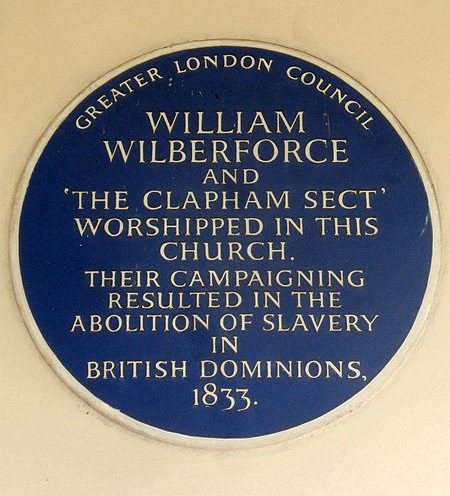
From Wikimedia

Attending the Q Conference in Boston this past week, I was reminded that almost any evangelical who wants to leverage their vocation to change the world takes William Wilberforce’s Clapham group as a sort of knights-of-the-round-table paradigm. But few seem to know much about this remarkable group. So as a public service, here’s my . . .
10 Things You Don’t Know about the Clapham Sect
First the basics: The Clapham Sect was a group of aristocratic evangelical Anglicans, prominent in England from about 1790 to 1830, who campaigned for the abolition of slavery (among many other causes) and promoted missionary work at home and abroad. The group centered on the church of John Venn, rector of Clapham in south London.
Today these activists are frequently held up as an example of Christian social-justice reform to be emulated. It’s always good to know a few things about someone you’re going to emulate, so here are 10 things you probably don’t know about the Clapham Sect:
-
Aside from the great parliamentarian William Wilberforce and several other MPs, the group also included a
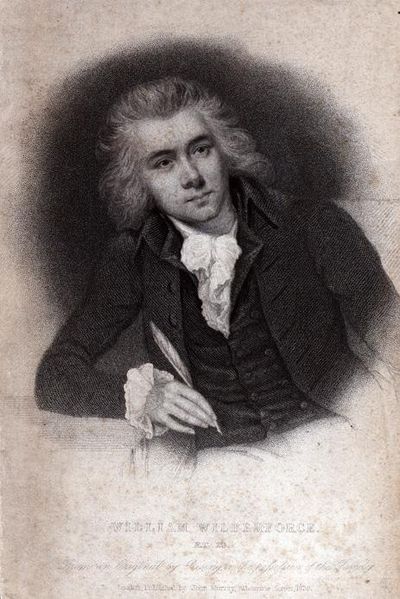
Wilberforce, from Wikimedia.
brewer, a banker, several clergymen, the father of the great English historian Thomas Babington Macaulay (Zachary Macaulay), and the great-grandfather of Virginia Woolf (James Stephen). Two of its prominent members were women: the evangelist Katherine Hankey and the writer and philanthropist Hannah More. . (Read more about More in this wonderful new biography of her by Karen Swallow Prior.)
-
The term “Clapham Sect” was a later invention by James Stephen in an article of 1844 which celebrated and romanticized the work of these reformers. In their own time the group used no particular name, but they were lampooned by outsiders as “the saints.”
-
Though they were of aristocratic background and many of held positions of power and influence, the Clapham group’s involvement in the abolition cause brought significant social stigma on their heads. The English ruling classes viewed abolitionists as radical and dangerous, similar to French revolutionaries of the day.
-
Despite this radical reputation, these aristocratic activists proved to have remarkable staying power politically. Wilberforce was one of the five members of the Clapham Sect who held seats in the House of Commons who never lost a parliamentary election.
-
Scratch the radical surface and you actually got conservative social thinkers who believed in the preservation of ranks and orders within society and preached philanthropic benevolence from above. Indeed, the Clapham group became the “tip of the spear” of British imperialism in Africa. They founded the first major British colony in Africa, Freetown in Sierra Leone, whose purpose in Thomas Clarkson‘s words was “the abolition of the slave trade, the civilisation of Africa, and the introduction of the gospel there.”
-
For the Clapham Sect, the Christianizing of India became a cause second only to abolition. In 1793 the Claphamites tried but failed to alter the charter of the East India Company to allow for missionaries (the company feared that missionaries would try to reform host countries and cause civil unrest that would cut into profits). They were able, though, to get evangelicals, such as Henry Martyn, appointed as East India Company chaplains–who in fact did missionary work as well. In a momentous action in 1813, when the company’s charter came due for renewal, Wilberforce and his friends joined forces with East India Company chairman and director Charles Grant to overturn the vested interests of the company and gained a “Missionary Clause” in the new charter.
-
The revision of the East India Company’s charter built on other Claphamite efforts to set the table for British missionaries to go anywhere Britain had an international presence–which in the 19th century meant a lot of the world. We’ve mentioned the founding of Freetown. Even more significant in this vein was the Clapham group’s 1799 founding of the Church Missionary Society for Africa and the East. This was to become one of the most prolific sending agencies of the nineteenth century, the “Great Century” of missions.
-
At the top of the Clapham circle’s agenda—even above missions—was, of course, abolition. Antislavery bills of one
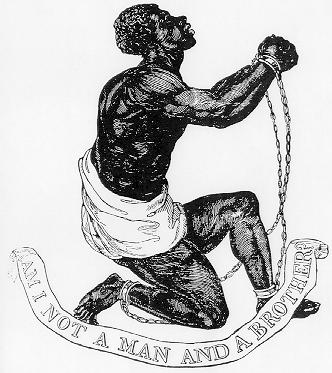
Medallion of the British Anti-Slavery Society, designed by Wedgewood. From Wikimedia.
sort or another brought by the Claphamites and their friends were defeated in Parliament for 11 consecutive years before the act abolishing the slave trade was passed in 1807.
-
But slavery wasn’t the only social issue that troubled nineteenth-century British Christians, included but not limited to the Clapham Sect. Between 1780 and 1844 Christian activists like the Claphamites founded at least 223 national religious, moral, educational, and philanthropic institutions and societies to alleviate child abuse, poverty, illiteracy, and other social ills. The Clapham group themselves also ran political campaigns to achieve prison reform, prevent cruel sports, and suspend the game laws and the lottery.
-
The Claphamites and their genteel reforming brethren had a particular penchant for founding religious and benevolent societies on behalf of impoverished or exploited women. The names of these societies provide a quirky window into the world and concerns of early Victorian evangelicals:
—Forlorn Females Fund of Mercy;
—Maritime Female Penitent Refuge for Poor, Degraded Females;
—Society for Returning Young Women to Their Friends in the Country;
—Friendly Female Society for the Relief of Poor, Infirm, Aged Widows, and Single Women of Good Character Who Have Seen Better Days.


Some items here are borrowed from Richard Pierard, “William Wilberforce and the Abolition of the Slave Trade: Did You Know?” and Bruce Hindmarsh, “A Long Reach: The Clapham Sect’s impact in India—and the world,” from Christian History magazine’s issue #53: William Wilberforce: Fighting the Slave Trade. Other sources: Wikipedia, Encyclopedia Britannica.
Next Post

May 5, 2015 A slow leak
Browse Our Archives
Select a Category Art Audio posts Bible and Work Book Review Books Budgeting Calling Common Good Community Development Conferences Discipleship Economics Entrepreneurship Ethics Faith and Family Faith and the Marketplace Faith and the Workplace faith and work History of Work and Vocation Leadership Local Church Meaning New Blogger News Prayer Relationships Seminaries Theology of Work Uncategorized Video posts Vocation Worship Resources
Select a Month April 2026 October 2025 September 2025 July 2025 April 2025 January 2025 October 2024 September 2024 August 2024 May 2024 March 2024 February 2024 December 2023 November 2023 August 2023 July 2023 April 2023 January 2023 December 2022 November 2022 September 2022 August 2022 July 2022 May 2022 April 2022 February 2022 January 2022 December 2021 November 2021 October 2021 September 2021 August 2021 June 2021 May 2021 March 2021 February 2021 January 2021 December 2020 November 2020 September 2020 August 2020 July 2020 June 2020 May 2020 April 2020 March 2020 January 2020 December 2019 October 2019 September 2019 August 2019 July 2019 June 2019 May 2019 April 2019 March 2019 February 2019 January 2019 April 2018 March 2018 January 2018 December 2017 November 2017 October 2017 September 2017 August 2017 July 2017 June 2017 May 2017 April 2017 March 2017 February 2017 January 2017 December 2016 November 2016 October 2016 September 2016 August 2016 July 2016 June 2016 May 2016 April 2016 March 2016 February 2016 January 2016 December 2015 November 2015 October 2015 September 2015 August 2015 July 2015 June 2015 May 2015 April 2015 March 2015 February 2015 January 2015 December 2014 November 2014 October 2014 September 2014 August 2014 July 2014 June 2014 May 2014 April 2014 March 2014 February 2014 January 2014 December 2013
Follow Us!
TAKE THE
Religious Wisdom Quiz
Which city did the Philistines give David as a base during his exile?
Select your answer to see how you score.
Hebron Gibeah Bethlehem Ziklag
Related posts from MISSION:WORK

Three Conversations (in honor of Eastertide)



Not Nearly So Much Like a Mall
TRENDING AT PATHEOS Careers, Workplace and Religion

Rock N' Roll-- Morphing into/for a New Generation...
Well, should we be grateful, or is rock n' roll just dead? ...

Ansley Gordon Brings Faith and Fresh Stories to...
For screenwriter and actress Ansley Gordon, Christmas has always been about more...

Chris Pratt on Veterans, Faith, “The Way of...
For Chris Pratt, service is not something that ends when a person...

Chapter 5, Sarah: The Quest for Safety in...
Open and Relational Theology & Social Psychology About this series: This series...

When Worry Gets You Nowhere, How Can Faith...
Sometimes, we think that by worrying, we can somehow predict the future....

The Wasp And I: Meditations on Repentance
How can we enter the power and joy of the repentant self...
view all Careers, Workplace and Religion blogs
Ad-Free & Subscriber Log-In Subscription Support
- About Us
- 2026 Calendar
- Videos
- Podcasts
- Library of World Religions
- Faith In Media Tracker
- Advertise With Us
- Write for Us
- Privacy Policy
- Terms of Service
- Do Not Sell My Data
- Contact Us
- Radiant Digital
- Manage Newsletter Subscriptions
- Unsubscribe From Notifications
- Sitemap
Copyright 2008-2026, Patheos, part of the Radiant Digital network of media brands. All rights reserved.
Subscription Support Ad-Free & Subscriber Log-In
Follow Patheos