
BuddhistCatholicContemplativeEvangelicalGeneral ChristianHinduJewishLatter-day SaintMuslimNew VisionsProgressive Christian
Beliefs
- Buddhist
- Catholic
- Contemplative
- Evangelical
- General Christian
- Hindu
- Jewish
- Latter-day Saint
- More Voices
- Muslim
- New Visions
- Pagan
- Progressive Christian
Topics
- Religion News
- Food and Religion
- Sports and Religion
- Religious Art
- Religious Music and Entertainment
- Religious Events
- History and Religion
- Style and Religion
- Politics and Religion
- Women in Religion
- Recreation Outdoors and Religion
- Business Finance and Religion
- Careers Workplace and Religion
- Education and Religion
- Family Parenting and Religion
- Health Fitness and Religion
- Home and Religion
- Relationships and Religion
- Technology and Religion
- Travel and Religion
Columnists
- Buddhist Columnists
- Business Finance and Religion Columnists
- Careers Workplace and Religion Columnists
- Catholic Columnists
- Contemplative Columnists
- Education and Religion Columnists
- Evangelists Columnists
- Family Parenting and Religion Columnists
- General Christian Columnists
- Health Fitness and Religion Columnists
- Hindu Columnists
- History and Religion Columnists
- Home and Religion Columnists
- Jewish Columnists
- More Voices Columnists
- Latter Day Columnists
- Muslim Columnists
- New Visions Columnists
- Nonreligious Columnists
- Pagan Columnists
- Politics and Religion Columnists
- Progressive Columnists
- Recreation Outdoors and Religion Columnists
- Relationships and Religion Columnists
- Religion News Columnists
- Religious Art Columnists
- Religious Events Columnists
- Religious Music and Entertainment Columnists
- Sports and Religion Columnists
- Style and Religion Columnists
- Technology and Religion Columnists
- Travel and Religion Columnists
- Women in Religion Columnists
Resource Library
- 2026 Calendar
- Library of World Religions
- The 100 Most Holy Places on Earth
- Patheos Answers
- Podcasts
- Videos
- Faith Leaders Database
- Anglican Episcopalian
- Bahai
- Baptist
- Buddhism
- Christianity
- Confucianism
- Eastern Orthodoxy
- Hinduism
- Holiness and Pentecostal
- ISKCON
- Islam
- Judaism
- Lutheran
- Methodist
- The Church of Jesus Christ of Latter-day Saints
- New Age
- Paganism
- Presbytarian and Reformed
- Protestantism
- Religion Behind the Scenes
- Roman Catholic
- Scientology
- Shia Islam
- Sikhism
- Sufism
- Sunni Islam
- Taoism
- Zen
- See all religions
Research Tools
 Ad-Free & Subscriber Log-In Subscription Support
Ad-Free & Subscriber Log-In Subscription Support
Follow Patheos 

- Trending:
- Forgiveness
- |
- Marriage
- |
- Consciousness
- |
- Death Penalty
- |
- Election
- |
- Halloween

- Home
- Careers, Workplace and Religion
- No super-Christians: #2 in a series
No super-Christians: #2 in a series
Last updated on: March 18, 2015 at 10:57 am by Guest Contributor
No super-Christians: #2 in a series 2015-03-18T10:57:37-05:00 Guest Contributor
Patheos Explore the world's faith through different perspectives on religion and spirituality! Patheos has the views of the prevalent religions and spiritualities of the world.
Second in a series of posts on Luther, Lutherans, and calling by Lutheran pastor Adam Roe with responses over at Cranach by Gene Veith. See the whole series at the bottom of this post, and Gene’s response to this post here. They’ll appear from time to time in this space for the next couple of weeks. Enjoy!
Popular depictions imagine Luther to be an entirely conflicted monk who spent day and night obsessing over his failures. 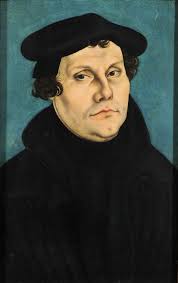 Such opinions too simply dismiss that, on the whole, Luther was Catholic through and through. Luther spent 19 years wearing the monastic habit, and most of his time in the monastery was spent going about his daily routines.
But one of Luther’s battles was grounded in his interior reaction against the idea that priests, monks, and nuns were a more elevated class of Christians. The early Luther was a believer in the idea that vocation was specifically designated for the theological classes. In this worldview, priests, monks, and nuns are called to a battleground for souls, and folks in secular life are relegated to a sort of second-class spiritual citizenship. Indeed, Luther’s purpose for becoming a monk was to follow the way of the “holier”vocational classes. As Roland Bainton noted in Here I Stand: “The man who was later to revolt against monasticism became a monk for exactly the same reason as thousands of others, namely, in order to save his soul.”
Over time, though, Luther realized that such views tended to cripple the vitality of Christians individually, and the church as a whole. Certainly, much in his observations were the result of his own psychology, but for the priest or monk who was particularly sensitive to the ugliness of his sin, there were two very great dangers to the ecclesiastical discipline of the medieval period. First, it led to despair, for an honest priest or monk realized that the exercises designed to lead to holier living did not, on the whole, remove the sense of unworthiness. In Luther’s case, the more precise and devoted he became, the worse he felt. He could never achieve the perfection necessary to stand before a perfect and holy God–a reality that later led him to state, “I was myself more than once driven to the very abyss of despair so that I wished I had never been created. Love God? I hated him!”
Luther fell into a web of despair, not because he failed to see God’s true nature, but because he saw God’s perfection and could not stand justified before it. For Luther, therefore, there were no super Christians. A person of the cloth is a sinner, just as the person in secular life.
The second danger in making ecclesiastical offices a more holy state for humans than secular employment is that it assumes that lay life is in some way less than holy. In such a view, God is not in the secular work, at least not to the degree as He is in religious work. The baker, the farmer, the bookkeeper, and the doctor might be believers, but their work is not necessarily an extension of their faith. The result, from Luther’s perspective, was that people who were not in religious work assumed that their stations in life are of lesser spiritual significance. Indeed, the person who is doing important and valuable work for society may begin to see his other work as comparatively unimportant.
That is not to say that Luther and the Lutheran reformers failed to see the importance of religious work. It is simply to note that Luther, and the Lutheran reformers, believed strongly that all Christians had been given a specific vocation by God, and this vocation is a kind of ministry.
 Adam Roe is the pastor of New Life Lutheran Church in Sterling, IL.
Previous posts in this series:
Previous Post

March 15, 2015
From the archives: Vocation, the holy grail of corporate America
Next Post
March 17, 2015 From the archives: [VIDEO] How is failure part of life?
Browse Our Archives
Select a Category Art Audio posts Bible and Work Book Review Books Budgeting Calling Common Good Community Development Conferences Discipleship Economics Entrepreneurship Ethics Faith and Family Faith and the Marketplace Faith and the Workplace faith and work History of Work and Vocation Leadership Local Church Meaning New Blogger News Prayer Relationships Seminaries Theology of Work Uncategorized Video posts Vocation Worship Resources
Select a Month April 2026 October 2025 September 2025 July 2025 April 2025 January 2025 October 2024 September 2024 August 2024 May 2024 March 2024 February 2024 December 2023 November 2023 August 2023 July 2023 April 2023 January 2023 December 2022 November 2022 September 2022 August 2022 July 2022 May 2022 April 2022 February 2022 January 2022 December 2021 November 2021 October 2021 September 2021 August 2021 June 2021 May 2021 March 2021 February 2021 January 2021 December 2020 November 2020 September 2020 August 2020 July 2020 June 2020 May 2020 April 2020 March 2020 January 2020 December 2019 October 2019 September 2019 August 2019 July 2019 June 2019 May 2019 April 2019 March 2019 February 2019 January 2019 April 2018 March 2018 January 2018 December 2017 November 2017 October 2017 September 2017 August 2017 July 2017 June 2017 May 2017 April 2017 March 2017 February 2017 January 2017 December 2016 November 2016 October 2016 September 2016 August 2016 July 2016 June 2016 May 2016 April 2016 March 2016 February 2016 January 2016 December 2015 November 2015 October 2015 September 2015 August 2015 July 2015 June 2015 May 2015 April 2015 March 2015 February 2015 January 2015 December 2014 November 2014 October 2014 September 2014 August 2014 July 2014 June 2014 May 2014 April 2014 March 2014 February 2014 January 2014 December 2013
Follow Us!
TAKE THE
Religious Wisdom Quiz
Where was Timothy from?
Select your answer to see how you score.
Derbe Antioch Iconium Lystra
Related posts from MISSION:WORK

Three Conversations (in honor of Eastertide)

Why Beth Felker Jones is Protestant


Every Vocation Everywhere All At Once
TRENDING AT PATHEOS Careers, Workplace and Religion

Methodist Central Hall and Westminster Abbey
Situated on the same square is Methodist Central Hall and Westminster Abbey. ...

57th Dove Awards Honor Dolly Parton, Crown New...
On gospel music’s biggest night, the 57th annual GMA Dove Awards honored...

The First Eucharistic Controversy: Christ’s Real Presence
For Catholics, the Eucharist is the source and summit of the Christian...

What a Stop Sign Can Teach Us About...
How to Make a Decision When You Can't Hear God Main point:...

Archdiocese Hosts Military Marriage Retreat in Germany
RASTATT, Germany — The transient military lifestyle, with its frequent deployments and...

Nearly every morning, I make the drive to Detroit with my high-school-age...
view all Careers, Workplace and Religion blogs
Ad-Free & Subscriber Log-In Subscription Support
- About Us
- 2026 Calendar
- Videos
- Podcasts
- Library of World Religions
- Faith In Media Tracker
- Advertise With Us
- Write for Us
- Privacy Policy
- Terms of Service
- Do Not Sell My Data
- Contact Us
- Radiant Digital
- Manage Newsletter Subscriptions
- Unsubscribe From Notifications
- Sitemap
Copyright 2008-2026, Patheos. All rights reserved.
Subscription Support Ad-Free & Subscriber Log-In
Follow Patheos