
BuddhistCatholicContemplativeEvangelicalGeneral ChristianHinduJewishLatter-day SaintMuslimNew VisionsProgressive Christian
Beliefs
- Buddhist
- Catholic
- Contemplative
- Evangelical
- General Christian
- Hindu
- Jewish
- Latter-day Saint
- More Voices
- Muslim
- New Visions
- Pagan
- Progressive Christian
Topics
- Religion News
- Food and Religion
- Sports and Religion
- Religious Art
- Religious Music and Entertainment
- Religious Events
- History and Religion
- Style and Religion
- Politics and Religion
- Women in Religion
- Recreation Outdoors and Religion
- Business Finance and Religion
- Careers Workplace and Religion
- Education and Religion
- Family Parenting and Religion
- Health Fitness and Religion
- Home and Religion
- Relationships and Religion
- Technology and Religion
- Travel and Religion
Columnists
- Buddhist Columnists
- Business Finance and Religion Columnists
- Careers Workplace and Religion Columnists
- Catholic Columnists
- Contemplative Columnists
- Education and Religion Columnists
- Evangelists Columnists
- Family Parenting and Religion Columnists
- General Christian Columnists
- Health Fitness and Religion Columnists
- Hindu Columnists
- History and Religion Columnists
- Home and Religion Columnists
- Jewish Columnists
- More Voices Columnists
- Latter Day Columnists
- Muslim Columnists
- New Visions Columnists
- Nonreligious Columnists
- Pagan Columnists
- Politics and Religion Columnists
- Progressive Columnists
- Recreation Outdoors and Religion Columnists
- Relationships and Religion Columnists
- Religion News Columnists
- Religious Art Columnists
- Religious Events Columnists
- Religious Music and Entertainment Columnists
- Sports and Religion Columnists
- Style and Religion Columnists
- Technology and Religion Columnists
- Travel and Religion Columnists
- Women in Religion Columnists
Resource Library
- 2026 Calendar
- Library of World Religions
- The 100 Most Holy Places on Earth
- Patheos Answers
- Podcasts
- Videos
- Faith Leaders Database
- Anglican Episcopalian
- Bahai
- Baptist
- Buddhism
- Christianity
- Confucianism
- Eastern Orthodoxy
- Hinduism
- Holiness and Pentecostal
- ISKCON
- Islam
- Judaism
- Lutheran
- Methodist
- The Church of Jesus Christ of Latter-day Saints
- New Age
- Paganism
- Presbytarian and Reformed
- Protestantism
- Religion Behind the Scenes
- Roman Catholic
- Scientology
- Shia Islam
- Sikhism
- Sufism
- Sunni Islam
- Taoism
- Zen
- See all religions
Research Tools
 Ad-Free & Subscriber Log-In Subscription Support
Ad-Free & Subscriber Log-In Subscription Support
Follow Patheos 

- Trending:
- Forgiveness
- |
- Marriage
- |
- Consciousness
- |
- Death Penalty
- |
- Election
- |
- Halloween

- Home
- Careers, Workplace and Religion
- From the archives: 5 tools for applying faith, work, & economics to your life
From the archives: 5 tools for applying faith, work, & economics to your life
Last updated on: March 8, 2015 at 9:22 pm by Institute for Faith, Work, and Economics
From the archives: 5 tools for applying faith, work, & economics to your life 2015-02-26T11:35:10-05:00 Institute for Faith, Work, and Economics
Patheos Explore the world's faith through different perspectives on religion and spirituality! Patheos has the views of the prevalent religions and spiritualities of the world.
By Hugh Whelchel
Thinking Biblically
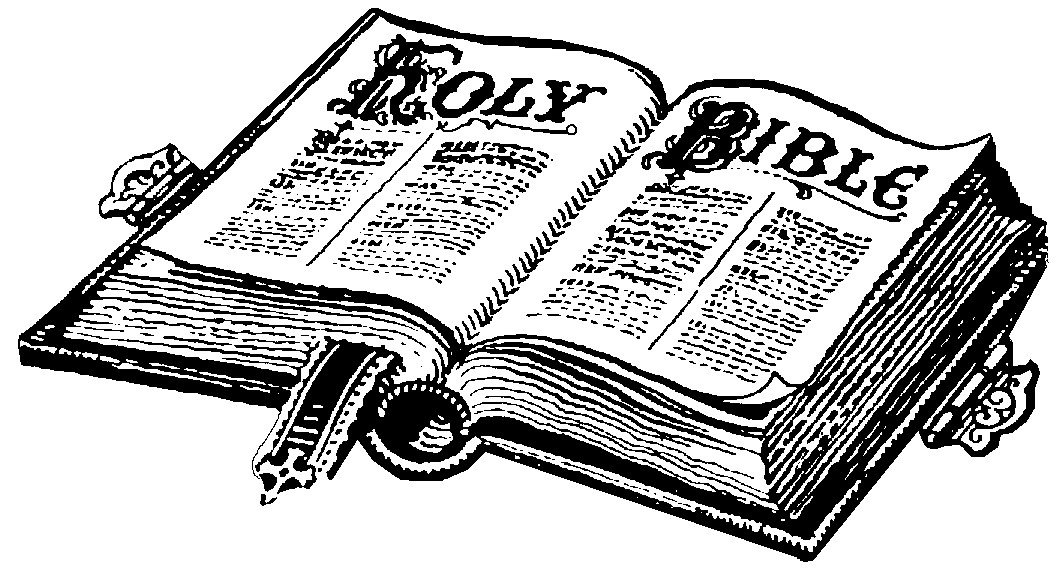
In a world of differing voices competing for our allegiance, God tells us that we must learn to “think biblically” so we can distinguish good from evil and act accordingly. We must learn to think differently – to think biblically – because what we think shapes who we are.
John MacArthur writes in his book Think Biblically,
A truly Christian worldview begins with the conviction that God himself has spoken in Scripture. As Christians, we are committed to the Bible as the inerrant and authoritative Word of God. Scripture is the standard by which we must test all other truth-claims.
But thinking biblically requires much more than memorizing a lot of Scripture. It requires learning to think critically and practically about what the Bible has to say. It requires understanding the Bible in its original intent, its contexts, and its modern day relevance. It requires being able to combine all of these things in order to make sense of the daily decisions we must make to live out our lives.
Five Tools for Applying Faith, Work, and Economics to Your Life
One question I am often asked when I speak to groups about both my book and what we do at IFWE is,
How do I apply the principles that you are teaching to what I do every day?
In order to answer that question, I want to offer five cognitive tools based on scriptural teaching that can help us simplify and organize all of the countless input we get from the world around us.
These tools should shape and support Christian thinking and decision-making, as well as enable us to build a holistic biblical worldview. By using these tools, we can take biblical principles and apply them to the various contexts we encounter in our daily lives.
These five tools are:
1. Personal Vision – Understanding who God has created you to be and what he has called you to do.
2. Gifts and Talents – Understanding your comparative advantage.
3. Wisdom and Knowledge – Understanding that Christians trust the Bible as our only authoritative source for faith and practice.
4. Stewardship – Understanding that we are accountable to God for what we do with everything that he has given us.
5. Biblical Self-Interest – Understanding that obedience to God’s call on our lives is in our own best interest.
These five cognitive tools are similar to what some have described as mental models. Susan Carey’s journal article, “Cognitive Science and Science Education” (1986) defines a mental model as,
…a person’s thought process for how something works (i.e. a person’s understanding of the surrounding world. Mental models are based on incomplete facts, past experiences, and even intuitive perceptions. They help shape actions and behavior, influence what people pay attention to in complicated situations, and define how people approach and solve problems.
The problem many of us experience is that the models we use to understand the world around us and make decisions are often based on our experiences and on surrounding culture, not on biblical principles.
The Call to God’s Grand Story
These five tools help us form a matrix, or framework, through which we can fulfill our calling in a way that glorifies God, serves the common good, and furthers his kingdom.
As Michael W. Goheen writes,
The question is not whether the whole of our lives will by shaped by some grand story. The only question is which grand story will shape our lives. For the one who has heard Jesus’ call to follow him, the call comes with a summons to enter the story of which he was the climatic moment – the story narrated in the Bible. It is an invitation to find our place in that story.
Read more about how these five tools can help us think biblically about this grand story, and how faith, work, and economics fit together within it, at the rest of TIFWE’s series on Five Tools for Thinking Biblically About Faith, Work, & Economics:
- Part 2: Why Is Personal Vision Important?
- Part 3: Discovering Your Personal Vision
- Part 4: Writing Your Personal Vision
- Part 5: Why I Am Not A Plumber
- Part 6: Gifts, Talents, and Virtue
- Part 7: Putting Virtue into Practice, Part 1
- Part 8: Putting Virtue Into Practice, Part 2
- Part 9: You Don’t Know What You Don’t Know: Knowledge, Understanding, and Wisdom
- Part 10: General & Special Revelation: the Knowledge of God
- Part 11: Why Humility Matters for Faith, Work, & Economics
- Part 12: How Do We Create Long-Term Value for the Kingdom of God?
From the Institute for Faith, Work, and Economics
Institute for Faith Work and Economics
Previous Post

March 6, 2015
The work of our hands
Next Post
March 9, 2015 [VIDEO] A final encouraging word from the Faith@Work Summit
Browse Our Archives
Select a Category Art Audio posts Bible and Work Book Review Books Budgeting Calling Common Good Community Development Conferences Discipleship Economics Entrepreneurship Ethics Faith and Family Faith and the Marketplace Faith and the Workplace faith and work History of Work and Vocation Leadership Local Church Meaning New Blogger News Prayer Relationships Seminaries Theology of Work Uncategorized Video posts Vocation Worship Resources
Select a Month April 2026 October 2025 September 2025 July 2025 April 2025 January 2025 October 2024 September 2024 August 2024 May 2024 March 2024 February 2024 December 2023 November 2023 August 2023 July 2023 April 2023 January 2023 December 2022 November 2022 September 2022 August 2022 July 2022 May 2022 April 2022 February 2022 January 2022 December 2021 November 2021 October 2021 September 2021 August 2021 June 2021 May 2021 March 2021 February 2021 January 2021 December 2020 November 2020 September 2020 August 2020 July 2020 June 2020 May 2020 April 2020 March 2020 January 2020 December 2019 October 2019 September 2019 August 2019 July 2019 June 2019 May 2019 April 2019 March 2019 February 2019 January 2019 April 2018 March 2018 January 2018 December 2017 November 2017 October 2017 September 2017 August 2017 July 2017 June 2017 May 2017 April 2017 March 2017 February 2017 January 2017 December 2016 November 2016 October 2016 September 2016 August 2016 July 2016 June 2016 May 2016 April 2016 March 2016 February 2016 January 2016 December 2015 November 2015 October 2015 September 2015 August 2015 July 2015 June 2015 May 2015 April 2015 March 2015 February 2015 January 2015 December 2014 November 2014 October 2014 September 2014 August 2014 July 2014 June 2014 May 2014 April 2014 March 2014 February 2014 January 2014 December 2013
Follow Us!
TAKE THE
Religious Wisdom Quiz
True or False: Jacob deceived his father Isaac by pretending to be Esau to receive the blessing.
Select your answer to see how you score.
FALSE TRUE
Related posts from MISSION:WORK
Ten Things I Know Now I Didn't Know...


My Name is Karen, and I Want to...

Ten Things About Work We've Learned From COVID-19
TRENDING AT PATHEOS Careers, Workplace and Religion

The Iron Gates and the Lion of the...
Yesterday, I didn't finish my report about, well, yesterday. So I'll...

Dolly Parton’s Last Song Wins Dove Award with...
Bluegrass band The Grascals, speaking on the red carpet at the 57th...

The Image: On the Horror of Capitalism and...
The Image Then went the Pharisees, and took counsel how they might...

We are approaching the date of our new American national holiday: October...

Letters on Living the Faith by C.S. Lewis
Most of us met C.S. Lewis as a public intellectual. Mere Christianity....

When Halloween Unmasks Married Hearts
Written by Dr. David K. Ewen from Eternal Truth Bible College Behind...
view all Careers, Workplace and Religion blogs
Ad-Free & Subscriber Log-In Subscription Support
- About Us
- 2026 Calendar
- Videos
- Podcasts
- Library of World Religions
- Faith In Media Tracker
- Advertise With Us
- Write for Us
- Privacy Policy
- Terms of Service
- Do Not Sell My Data
- Contact Us
- Radiant Digital
- Manage Newsletter Subscriptions
- Unsubscribe From Notifications
- Sitemap
Copyright 2008-2026, Patheos. All rights reserved.
Subscription Support Ad-Free & Subscriber Log-In
Follow Patheos