
BuddhistCatholicContemplativeEvangelicalGeneral ChristianHinduJewishLatter-day SaintMuslimNew VisionsProgressive Christian
Beliefs
- Buddhist
- Catholic
- Contemplative
- Evangelical
- General Christian
- Hindu
- Jewish
- Latter-day Saint
- More Voices
- Muslim
- New Visions
- Pagan
- Progressive Christian
Topics
- Religion News
- Food and Religion
- Sports and Religion
- Religious Art
- Religious Music and Entertainment
- Religious Events
- History and Religion
- Style and Religion
- Politics and Religion
- Women in Religion
- Recreation Outdoors and Religion
- Business Finance and Religion
- Careers Workplace and Religion
- Education and Religion
- Family Parenting and Religion
- Health Fitness and Religion
- Home and Religion
- Relationships and Religion
- Technology and Religion
- Travel and Religion
Columnists
- Buddhist Columnists
- Business Finance and Religion Columnists
- Careers Workplace and Religion Columnists
- Catholic Columnists
- Contemplative Columnists
- Education and Religion Columnists
- Evangelists Columnists
- Family Parenting and Religion Columnists
- General Christian Columnists
- Health Fitness and Religion Columnists
- Hindu Columnists
- History and Religion Columnists
- Home and Religion Columnists
- Jewish Columnists
- More Voices Columnists
- Latter Day Columnists
- Muslim Columnists
- New Visions Columnists
- Nonreligious Columnists
- Pagan Columnists
- Politics and Religion Columnists
- Progressive Columnists
- Recreation Outdoors and Religion Columnists
- Relationships and Religion Columnists
- Religion News Columnists
- Religious Art Columnists
- Religious Events Columnists
- Religious Music and Entertainment Columnists
- Sports and Religion Columnists
- Style and Religion Columnists
- Technology and Religion Columnists
- Travel and Religion Columnists
- Women in Religion Columnists
Resource Library
- 2026 Calendar
- Library of World Religions
- The 100 Most Holy Places on Earth
- Patheos Answers
- Podcasts
- Videos
- Faith Leaders Database
- Anglican Episcopalian
- Bahai
- Baptist
- Buddhism
- Christianity
- Confucianism
- Eastern Orthodoxy
- Hinduism
- Holiness and Pentecostal
- ISKCON
- Islam
- Judaism
- Lutheran
- Methodist
- The Church of Jesus Christ of Latter-day Saints
- New Age
- Paganism
- Presbytarian and Reformed
- Protestantism
- Religion Behind the Scenes
- Roman Catholic
- Scientology
- Shia Islam
- Sikhism
- Sufism
- Sunni Islam
- Taoism
- Zen
- See all religions
Research Tools
 Ad-Free & Subscriber Log-In Subscription Support
Ad-Free & Subscriber Log-In Subscription Support
Follow Patheos 

- Trending:
- Forgiveness
- |
- Marriage
- |
- Consciousness
- |
- Death Penalty
- |
- Election
- |
- Halloween

- Home
- Careers, Workplace and Religion
- Does the perfect job exist? A Lenten thought
Does the perfect job exist? A Lenten thought
Last updated on: February 18, 2015 at 4:40 pm by Mission:Work
Does the perfect job exist? A Lenten thought 2015-02-18T16:40:32-05:00 Mission:Work
Patheos Explore the world's faith through different perspectives on religion and spirituality! Patheos has the views of the prevalent religions and spiritualities of the world.
 Madison Perry of the Washington Institute for Faith, Vocation, and Culture has been wondering that himself:
Do you feel trapped in an occupation? When asked to describe the perfect job, I often find myself frustrated, exclaiming: “It doesn’t exist!”
Recently, a friend confessed a dark day-dream: at least once a day he imagines that if he were to die, the world would go on fine without him. He imagines this because his job isn’t that important. Everywhere he goes he is reduced to his occupation: on Facebook, on LinkedIn, at church where he isn’t recruited to be a vestry member (he would be if he were in finance), at wedding receptions where people grimace slightly when asking him just what he is doing. The narrative of his occupation has engulfed the narrative of his life.
In today’s world, where our occupations are constantly shifting and changing, what can we hang on to instead? Our vocations, Perry says (there’s more on that thought from Steve Garber here, too):
What exceeds our occupations? Our vocations. They are intrinsic to who we are, to the stories of our lives. Even in times of immense turmoil, our vocations remain. Over Christmas I read The Cellist of Sarajevo. It tells the story of a cellist during the siege of Sarajevo. This former Olympic host was surrounded by snipers and mortar canons, trapping the valleyed city in a siege. Sarajevo’s population is reduced to an animal existence – scampering through public areas as they dodge bullets, barely acknowledging their neighbors whom they cannot afford to trust. In the midst of this, a weary cellist dons his tux, pulls a chair out into the street, and sings a commemoration for the dead on his cello. He does this once a day for twenty-two days despite bullets and bombs. As he performs his vocation in the midst of terror, his performance inspires others to return to the gestures that constitute their common humanity – to speak to one another again – to recall the vocation of being humans in community.
Perry points out that the story of Lent reminds us what Christ’s vocation cost him:
When the angry mob rejects Christ’s occupation as ruler, his vocation reaches its peak.Christ’s vocation costs him his occupation. And as all hell breaks loose, we see him perform his vocation to the end, pausing to ask a friend to take Mary as his mother in the future.
1st Peter 2 tells us to regard the Lenten story as an example: Christ sacrifices his perceived occupation and life in fidelity to his vocation, providing a model for us to do the same. Our vocation will define and outlast our occupation, even those occupations that are at first glance embarrassing and painful.
He challenges all of us to see in Lent the suffering our occupations may cause us as a way to live out our vocations. Will you take the challenge?
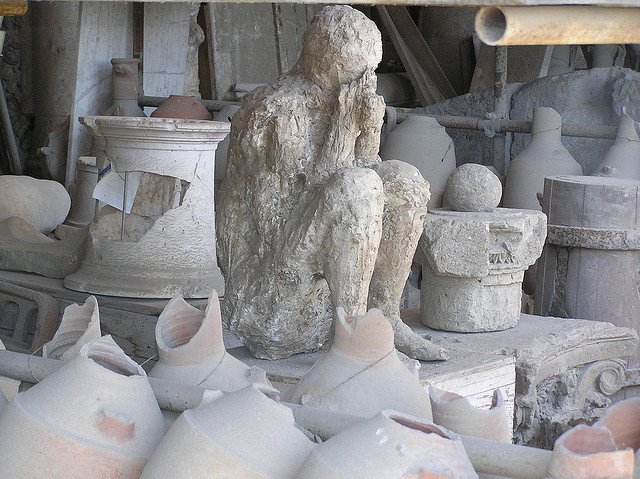
Image: “Volcano Ash Man” by @Doug88888, used under a Creative Commons license.
Washington Institute for Faith Vocation and Culture
Previous Post

February 17, 2015
The miracles of the everyday
Next Post
February 19, 2015 [VIDEO] The next set of encouraging videos from the Faith@Work Summit
Browse Our Archives
Select a Category Art Audio posts Bible and Work Book Review Books Budgeting Calling Common Good Community Development Conferences Discipleship Economics Entrepreneurship Ethics Faith and Family Faith and the Marketplace Faith and the Workplace faith and work History of Work and Vocation Leadership Local Church Meaning New Blogger News Prayer Relationships Seminaries Theology of Work Uncategorized Video posts Vocation Worship Resources
Select a Month April 2026 October 2025 September 2025 July 2025 April 2025 January 2025 October 2024 September 2024 August 2024 May 2024 March 2024 February 2024 December 2023 November 2023 August 2023 July 2023 April 2023 January 2023 December 2022 November 2022 September 2022 August 2022 July 2022 May 2022 April 2022 February 2022 January 2022 December 2021 November 2021 October 2021 September 2021 August 2021 June 2021 May 2021 March 2021 February 2021 January 2021 December 2020 November 2020 September 2020 August 2020 July 2020 June 2020 May 2020 April 2020 March 2020 January 2020 December 2019 October 2019 September 2019 August 2019 July 2019 June 2019 May 2019 April 2019 March 2019 February 2019 January 2019 April 2018 March 2018 January 2018 December 2017 November 2017 October 2017 September 2017 August 2017 July 2017 June 2017 May 2017 April 2017 March 2017 February 2017 January 2017 December 2016 November 2016 October 2016 September 2016 August 2016 July 2016 June 2016 May 2016 April 2016 March 2016 February 2016 January 2016 December 2015 November 2015 October 2015 September 2015 August 2015 July 2015 June 2015 May 2015 April 2015 March 2015 February 2015 January 2015 December 2014 November 2014 October 2014 September 2014 August 2014 July 2014 June 2014 May 2014 April 2014 March 2014 February 2014 January 2014 December 2013
Follow Us!
TAKE THE
Religious Wisdom Quiz
To whom does Paul say he has become all things so that by all possible means he might save some?
Select your answer to see how you score.
The weak The Jews The Gentiles Everyone
Related posts from MISSION:WORK

Three Conversations (in honor of Eastertide)

Why Beth Felker Jones is Protestant

Not Nearly So Much Like a Mall

Ten Things I'm Glad I Saw On Rings...
TRENDING AT PATHEOS Careers, Workplace and Religion

The Image: On the Horror of Capitalism and...
The Image Then went the Pharisees, and took counsel how they might...

We are approaching the date of our new American national holiday: October...

Letters on Living the Faith by C.S. Lewis
Most of us met C.S. Lewis as a public intellectual. Mere Christianity....

When Halloween Unmasks Married Hearts
Written by Dr. David K. Ewen from Eternal Truth Bible College Behind...

Aristotle. He’s been called the father of logic, the father of the...

Methodist Central Hall and Westminster Abbey
Situated on the same square is Methodist Central Hall and Westminster Abbey. ...
view all Careers, Workplace and Religion blogs
Ad-Free & Subscriber Log-In Subscription Support
- About Us
- 2026 Calendar
- Videos
- Podcasts
- Library of World Religions
- Faith In Media Tracker
- Advertise With Us
- Write for Us
- Privacy Policy
- Terms of Service
- Do Not Sell My Data
- Contact Us
- Radiant Digital
- Manage Newsletter Subscriptions
- Unsubscribe From Notifications
- Sitemap
Copyright 2008-2026, Patheos. All rights reserved.
Subscription Support Ad-Free & Subscriber Log-In
Follow Patheos