
BuddhistCatholicContemplativeEvangelicalGeneral ChristianHinduJewishLatter-day SaintMuslimNew VisionsProgressive Christian
Beliefs
- Buddhist
- Catholic
- Contemplative
- Evangelical
- General Christian
- Hindu
- Jewish
- Latter-day Saint
- More Voices
- Muslim
- New Visions
- Pagan
- Progressive Christian
Topics
- Religion News
- Food and Religion
- Sports and Religion
- Religious Art
- Religious Music and Entertainment
- Religious Events
- History and Religion
- Style and Religion
- Politics and Religion
- Women in Religion
- Recreation Outdoors and Religion
- Business Finance and Religion
- Careers Workplace and Religion
- Education and Religion
- Family Parenting and Religion
- Health Fitness and Religion
- Home and Religion
- Relationships and Religion
- Technology and Religion
- Travel and Religion
Columnists
- Buddhist Columnists
- Business Finance and Religion Columnists
- Careers Workplace and Religion Columnists
- Catholic Columnists
- Contemplative Columnists
- Education and Religion Columnists
- Evangelists Columnists
- Family Parenting and Religion Columnists
- General Christian Columnists
- Health Fitness and Religion Columnists
- Hindu Columnists
- History and Religion Columnists
- Home and Religion Columnists
- Jewish Columnists
- More Voices Columnists
- Latter Day Columnists
- Muslim Columnists
- New Visions Columnists
- Nonreligious Columnists
- Pagan Columnists
- Politics and Religion Columnists
- Progressive Columnists
- Recreation Outdoors and Religion Columnists
- Relationships and Religion Columnists
- Religion News Columnists
- Religious Art Columnists
- Religious Events Columnists
- Religious Music and Entertainment Columnists
- Sports and Religion Columnists
- Style and Religion Columnists
- Technology and Religion Columnists
- Travel and Religion Columnists
- Women in Religion Columnists
Resource Library
- 2026 Calendar
- Library of World Religions
- The 100 Most Holy Places on Earth
- Patheos Answers
- Podcasts
- Videos
- Faith Leaders Database
- Anglican Episcopalian
- Bahai
- Baptist
- Buddhism
- Christianity
- Confucianism
- Eastern Orthodoxy
- Hinduism
- Holiness and Pentecostal
- ISKCON
- Islam
- Judaism
- Lutheran
- Methodist
- The Church of Jesus Christ of Latter-day Saints
- New Age
- Paganism
- Presbytarian and Reformed
- Protestantism
- Religion Behind the Scenes
- Roman Catholic
- Scientology
- Shia Islam
- Sikhism
- Sufism
- Sunni Islam
- Taoism
- Zen
- See all religions
Research Tools
 Ad-Free & Subscriber Log-In Subscription Support
Ad-Free & Subscriber Log-In Subscription Support
Follow Patheos 

- Trending:
- Forgiveness
- |
- Marriage
- |
- Consciousness
- |
- Death Penalty
- |
- Election
- |
- Halloween

- Home
- Careers, Workplace and Religion
- John Wesley’s messages on work and economics
John Wesley’s messages on work and economics
Last updated on: January 30, 2015 at 1:48 pm by Chris Armstrong
John Wesley’s messages on work and economics 2014-12-30T13:58:57-05:00 Chris Armstrong
Patheos Explore the world's faith through different perspectives on religion and spirituality! Patheos has the views of the prevalent religions and spiritualities of the world.
When we ran our recent series of posts on work and vocation (linked at the bottom of this post) in Christian history by Faith and Work Channel senior editor and Christian History magazine senior editor Chris Armstrong, we accidentally missed this one. Ooops! Enjoy. If you want to read more of what Wesley had to say in his own words, you can check out our series of posts on Wesley’s sermon “The Use of Money”:
- Business advice from John Wesley
- More business advice from John Wesley
- Even more business advice from John Wesley
While Wesley (1703–1791) claimed that Christians ought to preach repentance often and politics rarely, except when 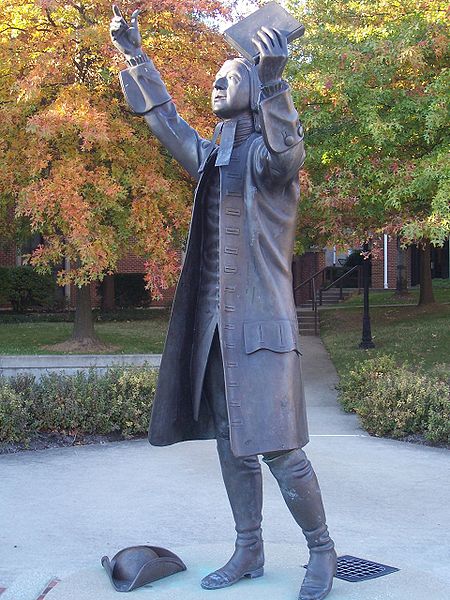 necessary to defend the king, he was actually not shy about expressing his political and economic opinions. Those opinions were typical of an upper-middle-class, Oxford-educated clergyman, but that did not mean he was unconcerned about the problems of English society.
One of his responses was to issue scathing indictments of those who profited off of others. His tract “Thoughts on the Present Scarcity of Provisions,” for instance, claimed that the poor were hungry because of the influence of “distilling, taxes, and luxury.”
He also tried to help. His book Primitive Physic (1746) was an inexpensive compilation of home remedies for those too poor to pay doctor’s bills. Wesley’s system of organizing his followers into classes and bands within the Methodist “societies” not only discipled them in spiritual growth but also distributed relief funds collected from society members. He established a medical clinic and maintained the dispensary himself, although it eventually had to close for lack of funds. He founded tuition-free schools for poor children, one in his own home. Under his direction the Foundry Chapel in London administered a revolving loan fund that served over 200 people a year. And he also founded a house for widows and orphans and regularly ate his meals with them.
In short, Wesley taught not only personal holiness, but also, quite centrally, social holiness. In examining the motives behind John Wesley’s extraordinary lifelong dedication toward bringing material as well as spiritual flourishing to the poor, Duke’s Richard Heitzenrater argues that it comes from a Christian virtue ethic. For Wesley, ethical behavior in the workplace, for example, came not from an ethic of obligation—gritting your teeth and performing a series of duties. It came from a changed heart. Only a changed heart could restore the individual dignity of human beings created in the image of God. And only the restoration of individual lives could finally restore society. In other words, Wesley’s theology of human dignity and virtue laid a firm Christian foundation for economic virtue.
In addressing the needs of the poor, Wesley did not rail against capitalism, though he did preach against its abuses. The best way to flourish economically and socially was not to change an economic system, but rather to put all else second to the Gospel, and let the transformation of our hearts that the Gospel brings influence every other area of our lives and work. He did recognize that very few people reached what he called “entire sanctification” or “perfect love,” in which all their impulses and desires were shaped by that central desire for God. But he insisted that the truly Christian person was also a flourishing person – someone largely happy and content in all his or her ways. Seek first the kingdom of God, and all these other things – our worldly lives, our work – will follow after in their proper order.
Though this might seem an individualistic creed, it was not. First, Wesley established brilliant organizational forms to nurture Christians in both personal and social holiness: the societies, the classes, the bands, the annual conferences. Think of the class meetings, for example, in which one confessed one’s deepest struggles in a close circle of people. This came from a great insight into our nature as communal beings—an insight that even as recently as the 1960s, secular Americans were trying to recapture in their encounter group therapies and their communes. The truth is, you need communal forms if you are to become a better person—you need to be open to the edifying and challenging words of others, to being sharpened as iron sharpens iron. Wesley brought organizational genius to his movement.
And he applied that genius to the betterment of the world and the adding of value to communities through many economic means. Like his network of entrepreneurial dispensaries – essentially drug stores – that he founded in order to provide the necessary medicines for poor folks, or his multimillion dollar publishing operations, which left him with huge amounts of money that he had to figure out how to give to the poor.
This post originally appeared at Grateful to the Dead.
Previous posts in this series:
- Getting the beginning and end of the story right
- We were made to work
- Jesus the incarnate worker God’
- A brass-tacks, real-world theology of work and vocation
- Early Christianity and everyday work
- The contemplative contribution
- Luther on ordinary work and vocation
- Calvinists, Puritans, and the Wesleyan response
- How and why Methodists moved the market economy forward
- God’s beer mogul
- If God really does work through our work, then what do we do about that?
- Pastors and lay leaders: I hate my job
- Let’s get practical: faith-and-work pointers for pastors and lay leaders
- How do we understand our work in the light of our faith?
- Next steps and resources for church leaders
Image: Statue of John Wesley at Asbury Theological Seminary, photographed by Adam Davenport, sourced via Wikipedia.

Previous Post

January 28, 2015
The craftsman and her environment: Work driven by an ethic of care
Next Post
January 31, 2015 The necessity of risk
Browse Our Archives
Select a Category Art Audio posts Bible and Work Book Review Books Budgeting Calling Common Good Community Development Conferences Discipleship Economics Entrepreneurship Ethics Faith and Family Faith and the Marketplace Faith and the Workplace faith and work History of Work and Vocation Leadership Local Church Meaning New Blogger News Prayer Relationships Seminaries Theology of Work Uncategorized Video posts Vocation Worship Resources
Select a Month April 2026 October 2025 September 2025 July 2025 April 2025 January 2025 October 2024 September 2024 August 2024 May 2024 March 2024 February 2024 December 2023 November 2023 August 2023 July 2023 April 2023 January 2023 December 2022 November 2022 September 2022 August 2022 July 2022 May 2022 April 2022 February 2022 January 2022 December 2021 November 2021 October 2021 September 2021 August 2021 June 2021 May 2021 March 2021 February 2021 January 2021 December 2020 November 2020 September 2020 August 2020 July 2020 June 2020 May 2020 April 2020 March 2020 January 2020 December 2019 October 2019 September 2019 August 2019 July 2019 June 2019 May 2019 April 2019 March 2019 February 2019 January 2019 April 2018 March 2018 January 2018 December 2017 November 2017 October 2017 September 2017 August 2017 July 2017 June 2017 May 2017 April 2017 March 2017 February 2017 January 2017 December 2016 November 2016 October 2016 September 2016 August 2016 July 2016 June 2016 May 2016 April 2016 March 2016 February 2016 January 2016 December 2015 November 2015 October 2015 September 2015 August 2015 July 2015 June 2015 May 2015 April 2015 March 2015 February 2015 January 2015 December 2014 November 2014 October 2014 September 2014 August 2014 July 2014 June 2014 May 2014 April 2014 March 2014 February 2014 January 2014 December 2013
Follow Us!
TAKE THE
Religious Wisdom Quiz
Which Christian denomination is most associated with the Reformation led by Martin Luther?
Select your answer to see how you score.
Anglican Lutheran Catholic Orthodox
Related posts from MISSION:WORK

Three Conversations (in honor of Eastertide)

Why Beth Felker Jones is Protestant


TRENDING AT PATHEOS Careers, Workplace and Religion

Methodist Central Hall and Westminster Abbey
Situated on the same square is Methodist Central Hall and Westminster Abbey. ...

57th Dove Awards Honor Dolly Parton, Crown New...
On gospel music’s biggest night, the 57th annual GMA Dove Awards honored...

The First Eucharistic Controversy: Christ’s Real Presence
For Catholics, the Eucharist is the source and summit of the Christian...

What a Stop Sign Can Teach Us About...
How to Make a Decision When You Can't Hear God Main point:...

Archdiocese Hosts Military Marriage Retreat in Germany
RASTATT, Germany — The transient military lifestyle, with its frequent deployments and...

Nearly every morning, I make the drive to Detroit with my high-school-age...
view all Careers, Workplace and Religion blogs
Ad-Free & Subscriber Log-In Subscription Support
- About Us
- 2026 Calendar
- Videos
- Podcasts
- Library of World Religions
- Faith In Media Tracker
- Advertise With Us
- Write for Us
- Privacy Policy
- Terms of Service
- Do Not Sell My Data
- Contact Us
- Radiant Digital
- Manage Newsletter Subscriptions
- Unsubscribe From Notifications
- Sitemap
Copyright 2008-2026, Patheos. All rights reserved.
Subscription Support Ad-Free & Subscriber Log-In
Follow Patheos