
BuddhistCatholicContemplativeEvangelicalGeneral ChristianHinduJewishLatter-day SaintMuslimNew VisionsProgressive Christian
Beliefs
- Buddhist
- Catholic
- Contemplative
- Evangelical
- General Christian
- Hindu
- Jewish
- Latter-day Saint
- More Voices
- Muslim
- New Visions
- Pagan
- Progressive Christian
Topics
- Religion News
- Food and Religion
- Sports and Religion
- Religious Art
- Religious Music and Entertainment
- Religious Events
- History and Religion
- Style and Religion
- Politics and Religion
- Women in Religion
- Recreation Outdoors and Religion
- Business Finance and Religion
- Careers Workplace and Religion
- Education and Religion
- Family Parenting and Religion
- Health Fitness and Religion
- Home and Religion
- Relationships and Religion
- Technology and Religion
- Travel and Religion
Columnists
- Buddhist Columnists
- Business Finance and Religion Columnists
- Careers Workplace and Religion Columnists
- Catholic Columnists
- Contemplative Columnists
- Education and Religion Columnists
- Evangelists Columnists
- Family Parenting and Religion Columnists
- General Christian Columnists
- Health Fitness and Religion Columnists
- Hindu Columnists
- History and Religion Columnists
- Home and Religion Columnists
- Jewish Columnists
- More Voices Columnists
- Latter Day Columnists
- Muslim Columnists
- New Visions Columnists
- Nonreligious Columnists
- Pagan Columnists
- Politics and Religion Columnists
- Progressive Columnists
- Recreation Outdoors and Religion Columnists
- Relationships and Religion Columnists
- Religion News Columnists
- Religious Art Columnists
- Religious Events Columnists
- Religious Music and Entertainment Columnists
- Sports and Religion Columnists
- Style and Religion Columnists
- Technology and Religion Columnists
- Travel and Religion Columnists
- Women in Religion Columnists
Resource Library
- 2026 Calendar
- Library of World Religions
- The 100 Most Holy Places on Earth
- Patheos Answers
- Podcasts
- Videos
- Faith Leaders Database
- Anglican Episcopalian
- Bahai
- Baptist
- Buddhism
- Christianity
- Confucianism
- Eastern Orthodoxy
- Hinduism
- Holiness and Pentecostal
- ISKCON
- Islam
- Judaism
- Lutheran
- Methodist
- The Church of Jesus Christ of Latter-day Saints
- New Age
- Paganism
- Presbytarian and Reformed
- Protestantism
- Religion Behind the Scenes
- Roman Catholic
- Scientology
- Shia Islam
- Sikhism
- Sufism
- Sunni Islam
- Taoism
- Zen
- See all religions
Research Tools
 Ad-Free & Subscriber Log-In Subscription Support
Ad-Free & Subscriber Log-In Subscription Support
Follow Patheos 

- Trending:
- Forgiveness
- |
- Marriage
- |
- Consciousness
- |
- Death Penalty
- |
- Election
- |
- Halloween

- Home
- Careers, Workplace and Religion
- If God really does work through our work, then what do we do about that?
If God really does work through our work, then what do we do about that?
Last updated on: January 11, 2015 at 12:09 pm by Chris Armstrong
If God really does work through our work, then what do we do about that? 2014-12-30T12:29:40-05:00 Chris Armstrong
Patheos Explore the world's faith through different perspectives on religion and spirituality! Patheos has the views of the prevalent religions and spiritualities of the world.
We’re returning to our occasional series of posts on work and vocation (linked at the bottom of this post) in Christian history by Faith and Work Channel senior editor and Christian History magazine senior editor Chris Armstrong. Enjoy!
We’ve done a rapid survey of the New Testament, the early church, and the medieval church on faith, work, and economics, and then settled into the massive changes wrought by the industrial revolution of the late 18th through late 19th centuries, looking at that era through the eyes of John Wesley and some key industrialists.
I’d like to suggest now that just as the industrial revolution left in its wake many kinds of social misery as workers left the moral and spiritual boundaries of the Christianized towns of the West and tried to navigate the tempting and alienating cities, we are again today seeing economic dislocation, social misery, and a loss of moral moorings. And Christians must address these realities – not exclusively through charity (though the worst of the current social problems do demand this), but also – and more importantly – through economic action grounded in economic understanding.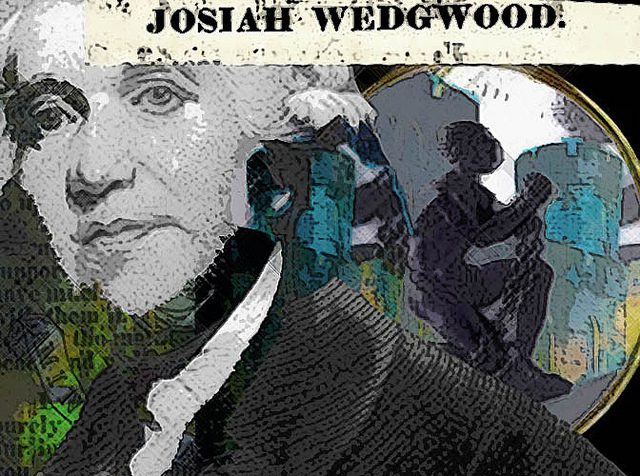
As Greg Forster has said, “The economy is a moral system, a web of human relationships in which each person’s work benefits others through a vast system of exchange.” Pure and simple, there are good and bad ways of behaving in this system. And over the past decade or two, we’ve seen plenty of the bad: greed, fraud, hedonism and conspicuous consumption, addictive spending and spiraling debt have destroyed thousands of lives and made many others miserable, reducing their created dignity as bearers of the image of God.
And just as church leaders such as John Wesley and business leaders such as the Guinnesses, Welches, as well as the dissenter Josiah Wedgwood and the Quaker Cadburys and Rowntrees (also stories worth knowing, and told clearly and powerfully in Jennifer Woodruff Tait’s excellent article “Godless Capitalists?” on p. 33 of Christian History Issue #104: Christians in the New Industrial Economy) sought to restore human dignity to those caught in economic and moral distress, so today we need leaders – both lay and pastoral – who can “discern the times” and respond appropriately.
In Forster’s words, “we need a new generation of entrepreneurially minded business leaders who use their Christian perspectives to identify better ways to operate. We need pastors and church structures to form, train, and prepare us to live out Christianity in the earthly economy.”
If we can figure out how to do this, then it will not only be good for us morally and spiritually, it will be good for us materially as well, just as the businesses of those 19th-century Christian industrialists were more productive because they were more humane – and in fact they were also more humane because they were more productive. These are the kinds of impacts that we could have if we set out to act in the economic sphere in the belief that by doing so, we are working with God for human flourishing.
a place to start: seeing the value of ordinary work
Most churches are good at figuring out what to do with their congregations during the hours on Sunday morning in which they have a captive audience. But what about the rest of the week? What does the church have to say about the struggles and joys, trials and triumphs, and inherent worth of our working lives?
“The average person will work 100,000 hours in their lifetime,” says Jeff Van Duzer, dean of the Seattle Pacific University School of Business and Economics. “This seems like an enormous waste if it’s spent doing fundamentally meaningless things whose only value is a paycheck.” To be sure, many Christians develop, at some point in their lives, a sense that daily work does indeed matter to God. And eventually, some come to understand that, as we’ve seen, their own work complements God’s work — the six days of creation, the redemptive love of Jesus, the ushering in of new heavens and new earth. God sustains the world, but God’s creatures do their part in caring for it as well.
But does the church have anything more profound to say about the value of work? Princeton scholar David Miller explores this question in his 2006 book God at Work: The History and Promise of the Faith at Work Movement. As Miller explains, the 1980s saw an explosion of books, magazines, conferences, networks, and organizations focused on putting the two halves of life together: worship and “the other 100,000 hours.”
Significantly, these efforts have been almost entirely led by lay people. Evidence of churches, denominations, or theological educators helping the laity see work as a daily calling is still thin on the ground. “Sermon topics, liturgical content, prayers, and pastoral care rarely address — much less recognize — the spiritual questions, pastoral needs, ethical challenges, and vocational possibilities faced by those who work in the marketplace and world of business,” Miller says.
To be continued . . .
This post originally appeared at Grateful to the Dead.
Previous posts in this series:
- Getting the beginning and end of the story right
- We were made to work
- Jesus the incarnate worker God’
- A brass-tacks, real-world theology of work and vocation
- Early Christianity and everyday work
- The contemplative contribution
- Luther on ordinary work and vocation
- Calvinists, Puritans, and the Wesleyan response
- How and why Methodists moved the market economy forward
- God’s beer mogul
Images: Josiah Wedgewood by AK Rockefeller and Josiah Wedgewood by Simon Harriyott, sourced via Flickr and used under a Creative Commons license.
Previous Post

January 10, 2015
[VIDEO] How do you define leadership?
Next Post
January 12, 2015 Pastors and lay leaders: I hate my job
Browse Our Archives
Select a Category Art Audio posts Bible and Work Book Review Books Budgeting Calling Common Good Community Development Conferences Discipleship Economics Entrepreneurship Ethics Faith and Family Faith and the Marketplace Faith and the Workplace faith and work History of Work and Vocation Leadership Local Church Meaning New Blogger News Prayer Relationships Seminaries Theology of Work Uncategorized Video posts Vocation Worship Resources
Select a Month April 2026 October 2025 September 2025 July 2025 April 2025 January 2025 October 2024 September 2024 August 2024 May 2024 March 2024 February 2024 December 2023 November 2023 August 2023 July 2023 April 2023 January 2023 December 2022 November 2022 September 2022 August 2022 July 2022 May 2022 April 2022 February 2022 January 2022 December 2021 November 2021 October 2021 September 2021 August 2021 June 2021 May 2021 March 2021 February 2021 January 2021 December 2020 November 2020 September 2020 August 2020 July 2020 June 2020 May 2020 April 2020 March 2020 January 2020 December 2019 October 2019 September 2019 August 2019 July 2019 June 2019 May 2019 April 2019 March 2019 February 2019 January 2019 April 2018 March 2018 January 2018 December 2017 November 2017 October 2017 September 2017 August 2017 July 2017 June 2017 May 2017 April 2017 March 2017 February 2017 January 2017 December 2016 November 2016 October 2016 September 2016 August 2016 July 2016 June 2016 May 2016 April 2016 March 2016 February 2016 January 2016 December 2015 November 2015 October 2015 September 2015 August 2015 July 2015 June 2015 May 2015 April 2015 March 2015 February 2015 January 2015 December 2014 November 2014 October 2014 September 2014 August 2014 July 2014 June 2014 May 2014 April 2014 March 2014 February 2014 January 2014 December 2013
Follow Us!
TAKE THE
Religious Wisdom Quiz
Who gave birth to Isaac at a very old age?
Select your answer to see how you score.
Sarah Leah Rebekah Rachel
Related posts from MISSION:WORK

Three Conversations (in honor of Eastertide)

Not Nearly So Much Like a Mall

Ten Things I'm Glad I Saw On Rings...

Every Vocation Everywhere All At Once
TRENDING AT PATHEOS Careers, Workplace and Religion

57th Dove Awards Honor Dolly Parton, Crown New...
On gospel music’s biggest night, the 57th annual GMA Dove Awards honored...

The First Eucharistic Controversy: Christ’s Real Presence
For Catholics, the Eucharist is the source and summit of the Christian...

What a Stop Sign Can Teach Us About...
How to Make a Decision When You Can't Hear God Main point:...

Archdiocese Hosts Military Marriage Retreat in Germany
RASTATT, Germany — The transient military lifestyle, with its frequent deployments and...

Nearly every morning, I make the drive to Detroit with my high-school-age...

The Real AI Story Is Adoption Without Trust
Artificial intelligence has crossed a political threshold. It is no longer a...
view all Careers, Workplace and Religion blogs
Ad-Free & Subscriber Log-In Subscription Support
- About Us
- 2026 Calendar
- Videos
- Podcasts
- Library of World Religions
- Faith In Media Tracker
- Advertise With Us
- Write for Us
- Privacy Policy
- Terms of Service
- Do Not Sell My Data
- Contact Us
- Radiant Digital
- Manage Newsletter Subscriptions
- Unsubscribe From Notifications
- Sitemap
Copyright 2008-2026, Patheos. All rights reserved.
Subscription Support Ad-Free & Subscriber Log-In
Follow Patheos