
BuddhistCatholicContemplativeEvangelicalGeneral ChristianHinduJewishLatter-day SaintMuslimNew VisionsProgressive Christian
Beliefs
- Buddhist
- Catholic
- Contemplative
- Evangelical
- General Christian
- Hindu
- Jewish
- Latter-day Saint
- More Voices
- Muslim
- New Visions
- Pagan
- Progressive Christian
Topics
- Religion News
- Food and Religion
- Sports and Religion
- Religious Art
- Religious Music and Entertainment
- Religious Events
- History and Religion
- Style and Religion
- Politics and Religion
- Women in Religion
- Recreation Outdoors and Religion
- Business Finance and Religion
- Careers Workplace and Religion
- Education and Religion
- Family Parenting and Religion
- Health Fitness and Religion
- Home and Religion
- Relationships and Religion
- Technology and Religion
- Travel and Religion
Columnists
- Buddhist Columnists
- Business Finance and Religion Columnists
- Careers Workplace and Religion Columnists
- Catholic Columnists
- Contemplative Columnists
- Education and Religion Columnists
- Evangelists Columnists
- Family Parenting and Religion Columnists
- General Christian Columnists
- Health Fitness and Religion Columnists
- Hindu Columnists
- History and Religion Columnists
- Home and Religion Columnists
- Jewish Columnists
- More Voices Columnists
- Latter Day Columnists
- Muslim Columnists
- New Visions Columnists
- Nonreligious Columnists
- Pagan Columnists
- Politics and Religion Columnists
- Progressive Columnists
- Recreation Outdoors and Religion Columnists
- Relationships and Religion Columnists
- Religion News Columnists
- Religious Art Columnists
- Religious Events Columnists
- Religious Music and Entertainment Columnists
- Sports and Religion Columnists
- Style and Religion Columnists
- Technology and Religion Columnists
- Travel and Religion Columnists
- Women in Religion Columnists
Resource Library
- 2026 Calendar
- Library of World Religions
- The 100 Most Holy Places on Earth
- Patheos Answers
- Podcasts
- Videos
- Faith Leaders Database
- Anglican Episcopalian
- Bahai
- Baptist
- Buddhism
- Christianity
- Confucianism
- Eastern Orthodoxy
- Hinduism
- Holiness and Pentecostal
- ISKCON
- Islam
- Judaism
- Lutheran
- Methodist
- The Church of Jesus Christ of Latter-day Saints
- New Age
- Paganism
- Presbytarian and Reformed
- Protestantism
- Religion Behind the Scenes
- Roman Catholic
- Scientology
- Shia Islam
- Sikhism
- Sufism
- Sunni Islam
- Taoism
- Zen
- See all religions
Research Tools
 Ad-Free & Subscriber Log-In Subscription Support
Ad-Free & Subscriber Log-In Subscription Support
Follow Patheos 

- Trending:
- Forgiveness
- |
- Marriage
- |
- Consciousness
- |
- Death Penalty
- |
- Election
- |
- Halloween

- Home
- Careers, Workplace and Religion
- Jesus the incarnate worker God
Jesus the incarnate worker God
Last updated on: January 12, 2015 at 10:51 am by Chris Armstrong
Jesus the incarnate worker God 2015-01-12T10:51:56-05:00 Chris Armstrong
Patheos Explore the world's faith through different perspectives on religion and spirituality! Patheos has the views of the prevalent religions and spiritualities of the world.
 We’re returning to our occasional series of posts on work and vocation (linked at the bottom of this post) in Christian history by Faith and Work Channel senior editor and Christian History magazine senior editor Chris Armstrong. Enjoy!
In the last post, we looked briefly at the story and doctrine of Creation – what it means to us as human workers.
But we also miss the wonder and dignity of work because, although we love to meditate on the cross, the resurrection, and the salvation that comes from those events, we don’t stop to be amazed and edified by the Incarnation. If you look at the thousand years of Western medieval art, you’ll find lots of depictions of the crucifixion and the empty tomb, but neither of these is the most-painted scene of that millennium.
What was the most-painted scene? The Annunciation: the moment that the Angel appears to Mary and tells her that God is about to come to earth, to take on human form, through her own womb. This is the moment that the incredible news first comes to humanity: God is about to become Incarnate—to become part of his own creation.
Of all the subjects that Martin Luther loved to dwell on, he was most fascinated by the story of how Jesus was born from Mary—the whole story, right from her obedient response, to the angel’s “magnificat,” to the birth in that lowly, bare, cold stable, to Mary suckling the babe and wrapping him in rough cloths. What an amazing, shocking thing is the Incarnation: that God would not only come to earth, but that he would do it through a frightened Nazarene teenager, in a dirty stable.
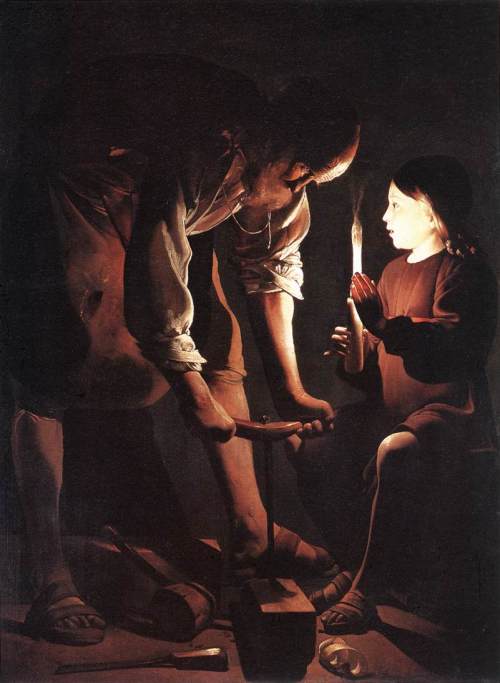
But the shockingly earthy story of the Incarnation doesn’t end at the stable. For what does Jesus do before he begins his ministry—which he is traditionally said to have done at the age of 30? Right, he works as a carpenter, in his earthly father’s shop. By the way, the word for “carpenter” in the gospel accounts is actually more like what we would call a contractor or builder. He no doubt worked not only in wood—which was fairly scarce in his part of the world—but also in stone. And scholars suspect that more than one building in first-century Galilee featured the workmanship of Joseph and Jesus.
Building. What an amazing thing for God to have done when he came to earth. Or is it so amazing? Maybe not so much when we remember the Genesis story of Creation: how the first thing we see God doing is working with material stuff, and how we, made in his image, are given similar tasks to do from the beginning. So really, what else would we expect the Second Person of the Trinity to be doing when he visits us on earth? As Keller says, “In Genesis we see God as a gardener, and in the New Testament we see him as a carpenter.”
And of course, Jesus doesn’t stop working with material stuff once he begins his ministry. He walks with people on the dusty roads. He heals them—once even by applying mud to their eyes. He feeds them with fish and bread, a couple of times by the thousands and a couple in an intimate gathering—in an upper room, and on a beach. And speaking of the upper room, Jesus gives his disciples and all who would follow them a sacrament to do after he’s gone: a meal of bread and wine.
Have you ever thought about the Lord’s Supper as it relates to work? God could have chosen any elements for this holy ceremony. What did he choose? Two products of human manual labor: bread and wine. These take time and care and work to make. And God chooses to be represented, in the church’s most sacred activity, by these good things made by human hands.
Originally published at Grateful to the Dead.
Previous posts in this series:
Image: Wikimedia Commons.

Previous Post

December 6, 2014
We were made to work (really! It's there in the book of Genesis!)
Next Post
December 8, 2014 WEEKLY ROUNDUP: More news to challenge and encourage about faith and work
Browse Our Archives
Select a Category Art Audio posts Bible and Work Book Review Books Budgeting Calling Common Good Community Development Conferences Discipleship Economics Entrepreneurship Ethics Faith and Family Faith and the Marketplace Faith and the Workplace faith and work History of Work and Vocation Leadership Local Church Meaning New Blogger News Prayer Relationships Seminaries Theology of Work Uncategorized Video posts Vocation Worship Resources
Select a Month April 2026 October 2025 September 2025 July 2025 April 2025 January 2025 October 2024 September 2024 August 2024 May 2024 March 2024 February 2024 December 2023 November 2023 August 2023 July 2023 April 2023 January 2023 December 2022 November 2022 September 2022 August 2022 July 2022 May 2022 April 2022 February 2022 January 2022 December 2021 November 2021 October 2021 September 2021 August 2021 June 2021 May 2021 March 2021 February 2021 January 2021 December 2020 November 2020 September 2020 August 2020 July 2020 June 2020 May 2020 April 2020 March 2020 January 2020 December 2019 October 2019 September 2019 August 2019 July 2019 June 2019 May 2019 April 2019 March 2019 February 2019 January 2019 April 2018 March 2018 January 2018 December 2017 November 2017 October 2017 September 2017 August 2017 July 2017 June 2017 May 2017 April 2017 March 2017 February 2017 January 2017 December 2016 November 2016 October 2016 September 2016 August 2016 July 2016 June 2016 May 2016 April 2016 March 2016 February 2016 January 2016 December 2015 November 2015 October 2015 September 2015 August 2015 July 2015 June 2015 May 2015 April 2015 March 2015 February 2015 January 2015 December 2014 November 2014 October 2014 September 2014 August 2014 July 2014 June 2014 May 2014 April 2014 March 2014 February 2014 January 2014 December 2013
Follow Us!
TAKE THE
Religious Wisdom Quiz
Which Christian group follows the Five Points of Calvinism?
Select your answer to see how you score.
Methodists Baptists Reformed Pentecostals
Related posts from MISSION:WORK


The Curse of Hard Work: Another View

Do All People (Even Shut-Ins) Have a Calling...

The Christian Call to Work Yourself Out of...
TRENDING AT PATHEOS Careers, Workplace and Religion

The Iron Gates and the Lion of the...
Yesterday, I didn't finish my report about, well, yesterday. So I'll...

Dolly Parton’s Last Song Wins Dove Award with...
Bluegrass band The Grascals, speaking on the red carpet at the 57th...

The Image: On the Horror of Capitalism and...
The Image Then went the Pharisees, and took counsel how they might...

We are approaching the date of our new American national holiday: October...

Letters on Living the Faith by C.S. Lewis
Most of us met C.S. Lewis as a public intellectual. Mere Christianity....

When Halloween Unmasks Married Hearts
Written by Dr. David K. Ewen from Eternal Truth Bible College Behind...
view all Careers, Workplace and Religion blogs
Ad-Free & Subscriber Log-In Subscription Support
- About Us
- 2026 Calendar
- Videos
- Podcasts
- Library of World Religions
- Faith In Media Tracker
- Advertise With Us
- Write for Us
- Privacy Policy
- Terms of Service
- Do Not Sell My Data
- Contact Us
- Radiant Digital
- Manage Newsletter Subscriptions
- Unsubscribe From Notifications
- Sitemap
Copyright 2008-2026, Patheos. All rights reserved.
Subscription Support Ad-Free & Subscriber Log-In
Follow Patheos