
BuddhistCatholicContemplativeEvangelicalGeneral ChristianHinduJewishLatter-day SaintMuslimNew VisionsProgressive Christian
Beliefs
- Buddhist
- Catholic
- Contemplative
- Evangelical
- General Christian
- Hindu
- Jewish
- Latter-day Saint
- More Voices
- Muslim
- New Visions
- Pagan
- Progressive Christian
Topics
- Religion News
- Food and Religion
- Sports and Religion
- Religious Art
- Religious Music and Entertainment
- Religious Events
- History and Religion
- Style and Religion
- Politics and Religion
- Women in Religion
- Recreation Outdoors and Religion
- Business Finance and Religion
- Careers Workplace and Religion
- Education and Religion
- Family Parenting and Religion
- Health Fitness and Religion
- Home and Religion
- Relationships and Religion
- Technology and Religion
- Travel and Religion
Columnists
- Buddhist Columnists
- Business Finance and Religion Columnists
- Careers Workplace and Religion Columnists
- Catholic Columnists
- Contemplative Columnists
- Education and Religion Columnists
- Evangelists Columnists
- Family Parenting and Religion Columnists
- General Christian Columnists
- Health Fitness and Religion Columnists
- Hindu Columnists
- History and Religion Columnists
- Home and Religion Columnists
- Jewish Columnists
- More Voices Columnists
- Latter Day Columnists
- Muslim Columnists
- New Visions Columnists
- Nonreligious Columnists
- Pagan Columnists
- Politics and Religion Columnists
- Progressive Columnists
- Recreation Outdoors and Religion Columnists
- Relationships and Religion Columnists
- Religion News Columnists
- Religious Art Columnists
- Religious Events Columnists
- Religious Music and Entertainment Columnists
- Sports and Religion Columnists
- Style and Religion Columnists
- Technology and Religion Columnists
- Travel and Religion Columnists
- Women in Religion Columnists
Resource Library
- 2026 Calendar
- Library of World Religions
- The 100 Most Holy Places on Earth
- Patheos Answers
- Podcasts
- Videos
- Faith Leaders Database
- Anglican Episcopalian
- Bahai
- Baptist
- Buddhism
- Christianity
- Confucianism
- Eastern Orthodoxy
- Hinduism
- Holiness and Pentecostal
- ISKCON
- Islam
- Judaism
- Lutheran
- Methodist
- The Church of Jesus Christ of Latter-day Saints
- New Age
- Paganism
- Presbytarian and Reformed
- Protestantism
- Religion Behind the Scenes
- Roman Catholic
- Scientology
- Shia Islam
- Sikhism
- Sufism
- Sunni Islam
- Taoism
- Zen
- See all religions
Research Tools
 Ad-Free & Subscriber Log-In Subscription Support
Ad-Free & Subscriber Log-In Subscription Support
Follow Patheos 

- Trending:
- Forgiveness
- |
- Marriage
- |
- Consciousness
- |
- Death Penalty
- |
- Election
- |
- Halloween

- Home
- Careers, Workplace and Religion
- How and why Methodists moved the market economy forward
How and why Methodists moved the market economy forward
Last updated on: January 12, 2015 at 10:41 am by Chris Armstrong
How and why Methodists moved the market economy forward 2015-01-12T10:41:18-05:00 Chris Armstrong
Patheos Explore the world's faith through different perspectives on religion and spirituality! Patheos has the views of the prevalent religions and spiritualities of the world.
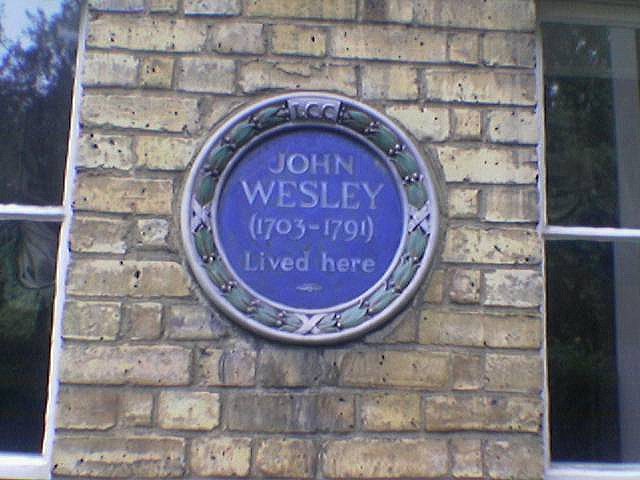 We’re returning to our occasional series of posts on work and vocation (linked at the bottom of this post) in Christian history by Faith and Work Channel senior editor and Christian History magazine senior editor Chris Armstrong. Enjoy!
It is well known that early Methodism flourished most among the new working and middle classes – the artisans and entrepreneurs who were rising up above their formerly lowly status in the ancestral class system, in which for example Anglican priests were members of the upper class, and wielded disproportionate social as well as religious authority in the towns. It was the newly discovered mobility that allowed them to rise through industry, frugality, and investment of their time, talents, and treasures that also allowed them to question and challenge the Anglican religious establishment. Such people naturally gravitated to the fervent, warm-hearted, and freeing message of Wesley’s “born-again” religion and its free, democratic organization in small groups and mutual aid societies.
Methodism itself was in many ways entrepreneurial, and so it shouldn’t surprise that it enjoyed good relations with business such as the mining companies of Cornwall. Many of Wesley’s early converts were miners and other workers. The Wesleyan message, meetings, and organizations gave confidence to the people working in the mining businesses, and helped those who led the businesses to do so in ways that made their communities more healthy. Numerous mine captains were also Methodist preachers who communicated to their communities the powerful messages of respectability and self-improvement, thus helping to ensure that Methodism became the most relevant religious institution for laborers and the working class – far more so than the Established Church of England. Through their religion of social as well as personal holiness, Wesleyans found ways to create meaningful and rewarding work that helped to ensure that community needs were met.
Within a few short decades of its introduction in this country, Methodism became the most dominant social organization on the landscape of 19th-century America, and a key part of the “market revolution” that changed this nation’s economic landscape. Thrift, sobriety, hard work, education, a willingness to delay gratification and invest—all of these made Methodists good workers who flourished in the new industrial economy, and within two generations of arriving on American shores, Methodists were building glorious cathedrals in the great cities of their new home. When American Methodist Bishop Matthew Simpson published his 1,000-page Cyclopedia of Methodism in the mid-1870s, many of the figures profiled in its pages were businessmen—a class of people for whom he clearly had the greatest respect.
Then the hugely influential Wesleyan holiness movement burst onto the scene, first in Orange Scott’s 1840 movement, then in the Free Methodist Church, and then in the mid-1860s, through the genteel, middle-class New York City parlor meetings of Methodist laywoman Phoebe Palmer and a small circle of other leaders. Later the branches of the holiness movement that emerged from this third wave would decide, like the first two, that Methodists were becoming too comfortable in their middle-class respectability and ignoring the plight of the poor – also a legacy of John Wesley.
They turned against such rigid class-separating practices as renting the choice pews at the front of the church to wealthy community members and (more famously) the keeping of slaves. But none of that amounted to a turning away from the capitalist system of free enterprise. Rather, it indicated a deep commitment, inherited from Wesley himself, to address the social ills that sometimes arose from unchecked industrial growth, as well as the unscrupulous greed of some at the top of the capitalist heap. Methodism, like Puritanism before it, both fostered industry and entrepreneurship and sought to act as the Christian conscience of the marketplace.
Much more could be said about this influential Methodist and Wesleyan stream – but this will have to do for now. I hope you can see the legacy – both biblical and historical – on which we can build today in presenting a solid theology of work, vocation, and economics.
Originally published at Grateful to the Dead.
Previous posts in this series:
- Getting the beginning and end of the story right
- We were made to work
- Jesus the incarnate worker God’
- A brass-tacks, real-world theology of work and vocation
- Early Christianity and everyday work
- The contemplative contribution
- Luther on ordinary work and vocation
- Calvinists, Puritans, and the Wesleyan response
Image: “Wesley,” Nick Richards.
Next Post

December 20, 2014 God's beer mogul
Browse Our Archives
Select a Category Art Audio posts Bible and Work Book Review Books Budgeting Calling Common Good Community Development Conferences Discipleship Economics Entrepreneurship Ethics Faith and Family Faith and the Marketplace Faith and the Workplace faith and work History of Work and Vocation Leadership Local Church Meaning New Blogger News Prayer Relationships Seminaries Theology of Work Uncategorized Video posts Vocation Worship Resources
Select a Month April 2026 October 2025 September 2025 July 2025 April 2025 January 2025 October 2024 September 2024 August 2024 May 2024 March 2024 February 2024 December 2023 November 2023 August 2023 July 2023 April 2023 January 2023 December 2022 November 2022 September 2022 August 2022 July 2022 May 2022 April 2022 February 2022 January 2022 December 2021 November 2021 October 2021 September 2021 August 2021 June 2021 May 2021 March 2021 February 2021 January 2021 December 2020 November 2020 September 2020 August 2020 July 2020 June 2020 May 2020 April 2020 March 2020 January 2020 December 2019 October 2019 September 2019 August 2019 July 2019 June 2019 May 2019 April 2019 March 2019 February 2019 January 2019 April 2018 March 2018 January 2018 December 2017 November 2017 October 2017 September 2017 August 2017 July 2017 June 2017 May 2017 April 2017 March 2017 February 2017 January 2017 December 2016 November 2016 October 2016 September 2016 August 2016 July 2016 June 2016 May 2016 April 2016 March 2016 February 2016 January 2016 December 2015 November 2015 October 2015 September 2015 August 2015 July 2015 June 2015 May 2015 April 2015 March 2015 February 2015 January 2015 December 2014 November 2014 October 2014 September 2014 August 2014 July 2014 June 2014 May 2014 April 2014 March 2014 February 2014 January 2014 December 2013
Follow Us!
TAKE THE
Religious Wisdom Quiz
Which letter of Paul is addressed to a slave owner about a runaway slave?
Select your answer to see how you score.
Colossians Titus Galatians Philemon
Related posts from MISSION:WORK

Three Conversations (in honor of Eastertide)

Why Beth Felker Jones is Protestant

Missing the Night Sky: or, the Industrial Revolution...

Why we need a new theology of work
TRENDING AT PATHEOS Careers, Workplace and Religion

We are approaching the date of our new American national holiday: October...

Letters on Living the Faith by C.S. Lewis
Most of us met C.S. Lewis as a public intellectual. Mere Christianity....

When Halloween Unmasks Married Hearts
Written by Dr. David K. Ewen from Eternal Truth Bible College Behind...

Aristotle. He’s been called the father of logic, the father of the...

Methodist Central Hall and Westminster Abbey
Situated on the same square is Methodist Central Hall and Westminster Abbey. ...

57th Dove Awards Honor Dolly Parton, Crown New...
On gospel music’s biggest night, the 57th annual GMA Dove Awards honored...
view all Careers, Workplace and Religion blogs
Ad-Free & Subscriber Log-In Subscription Support
- About Us
- 2026 Calendar
- Videos
- Podcasts
- Library of World Religions
- Faith In Media Tracker
- Advertise With Us
- Write for Us
- Privacy Policy
- Terms of Service
- Do Not Sell My Data
- Contact Us
- Radiant Digital
- Manage Newsletter Subscriptions
- Unsubscribe From Notifications
- Sitemap
Copyright 2008-2026, Patheos. All rights reserved.
Subscription Support Ad-Free & Subscriber Log-In
Follow Patheos