
BuddhistCatholicContemplativeEvangelicalGeneral ChristianHinduJewishLatter-day SaintMuslimNew VisionsProgressive Christian
Beliefs
- Buddhist
- Catholic
- Contemplative
- Evangelical
- General Christian
- Hindu
- Jewish
- Latter-day Saint
- More Voices
- Muslim
- New Visions
- Pagan
- Progressive Christian
Topics
- Religion News
- Food and Religion
- Sports and Religion
- Religious Art
- Religious Music and Entertainment
- Religious Events
- History and Religion
- Style and Religion
- Politics and Religion
- Women in Religion
- Recreation Outdoors and Religion
- Business Finance and Religion
- Careers Workplace and Religion
- Education and Religion
- Family Parenting and Religion
- Health Fitness and Religion
- Home and Religion
- Relationships and Religion
- Technology and Religion
- Travel and Religion
Columnists
- Buddhist Columnists
- Business Finance and Religion Columnists
- Careers Workplace and Religion Columnists
- Catholic Columnists
- Contemplative Columnists
- Education and Religion Columnists
- Evangelists Columnists
- Family Parenting and Religion Columnists
- General Christian Columnists
- Health Fitness and Religion Columnists
- Hindu Columnists
- History and Religion Columnists
- Home and Religion Columnists
- Jewish Columnists
- More Voices Columnists
- Latter Day Columnists
- Muslim Columnists
- New Visions Columnists
- Nonreligious Columnists
- Pagan Columnists
- Politics and Religion Columnists
- Progressive Columnists
- Recreation Outdoors and Religion Columnists
- Relationships and Religion Columnists
- Religion News Columnists
- Religious Art Columnists
- Religious Events Columnists
- Religious Music and Entertainment Columnists
- Sports and Religion Columnists
- Style and Religion Columnists
- Technology and Religion Columnists
- Travel and Religion Columnists
- Women in Religion Columnists
Resource Library
- 2026 Calendar
- Library of World Religions
- The 100 Most Holy Places on Earth
- Patheos Answers
- Podcasts
- Videos
- Faith Leaders Database
- Anglican Episcopalian
- Bahai
- Baptist
- Buddhism
- Christianity
- Confucianism
- Eastern Orthodoxy
- Hinduism
- Holiness and Pentecostal
- ISKCON
- Islam
- Judaism
- Lutheran
- Methodist
- The Church of Jesus Christ of Latter-day Saints
- New Age
- Paganism
- Presbytarian and Reformed
- Protestantism
- Religion Behind the Scenes
- Roman Catholic
- Scientology
- Shia Islam
- Sikhism
- Sufism
- Sunni Islam
- Taoism
- Zen
- See all religions
Research Tools
 Ad-Free & Subscriber Log-In Subscription Support
Ad-Free & Subscriber Log-In Subscription Support
Follow Patheos 

- Trending:
- Forgiveness
- |
- Marriage
- |
- Consciousness
- |
- Death Penalty
- |
- Election
- |
- Halloween

- Home
- Careers, Workplace and Religion
- God’s beer mogul
God’s beer mogul
Last updated on: January 12, 2015 at 10:32 am by Chris Armstrong
God’s beer mogul 2015-01-12T10:32:28-05:00 Chris Armstrong
Patheos Explore the world's faith through different perspectives on religion and spirituality! Patheos has the views of the prevalent religions and spiritualities of the world.
We’re returning to our occasional series of posts on work and vocation (linked at the bottom of this post) in Christian history by Faith and Work Channel senior editor and Christian History magazine senior editor Chris Armstrong. Enjoy!
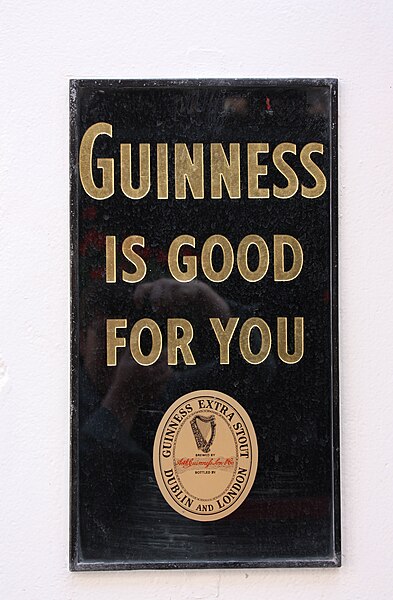 In the early days of Methodism as now, not every capitalist operated out of corrupt motives of greed. One contrary example, a contemporary of Wesley and deeply influenced by the Methodist leader, was Young Arthur Guinness, an up-and-coming eighteenth-century businessman in Dublin. Guinness was a brewer, during a time when beer had a significant health benefit over many other kinds of beverage, including water. No one in those days understood micro-organisms and how disease is spread. They routinely drank from the same waters in which they dumped their garbage and their sewage. Unknowingly, they polluted the rivers and lakes around their cities. People died as a result, and this made nearly everyone in Guinness’ day avoid water entirely. Instead, they drank alcoholic beverages.
Usually, this was done in moderation and all was well. Occasionally, though, excess set in. This is what happened in the years just before Guinness was born, in the period historians call “The Gin Craze.” Parliament had forbidden the importation of liquor in 1689, so the people of Ireland and Britain began making their own, and drunkenness became widespread. Every sixth house in England was a “gin house.” An advertisement for one of these dens of squalor read, “Drunk for one penny, dead drunk for two pence, clean straw for nothing.” Poverty deepened; crime rose. And to help heal their tortured society, some turned to brewing beer. It was much lower in alcohol, the process of brewing and the alcohol that resulted killed the germs that made water dangerous, and it was nutritious in ways scientists are only now beginning to understand.
This young brewer, Arthur Guinness, fell under John Wesley’s influence. He heard Wesley teach “Earn all you can. Save all you can. Give all you can.” He understood from Wesley that the wealth he gained through business was evidence of a calling from God, and that it carried with it a responsibility to use his abundance for the good of humankind.
In 1759 Guinness had bought a little brewery. Within five years he acquired a great deal of public respect and profit. Influenced by a visit from Wesley himself, Guinness began a multitude of reforming and evangelizing efforts in Dublin even as he continued his work as a brewer – never perceiving a conflict of interest in the two endeavors. Just two examples: he founded the first Sunday school in Dublin and worked for an organization that tried to prevent dueling.
He also taught his own children the values he had learned from Wesley. Arthur’s children flourished in business and good works, and his grandsons Benjamin Lee and Arthur Lee gave generously to assist those made destitute by the potato blight that struck Ireland in the late 1840s. Arthur Lee (1797–1863) so aided his workers that they erected a monument of Connemara marble in his honor. Arthur’s grandson Edward Cecil engaged in far-reaching efforts to improve working-class conditions. After Guinness stock went public in 1886, he became the richest man in Ireland and used £250,000 to establish the Guinness Trust for “the creation of dwellings for the laboring poor” of Dublin and London.
Edward also encouraged the radical idealism of his company doctor, John Lumsden (1869–1944). With company approval, Lumsden tried to visit the home of every Guinness worker (nearly 3,000 people) as well as all the homes surrounding the brewery. He found nearly 35 percent of them inadequate, marked by stench, inadequate water supply, and alcoholism. In the wake of these discoveries, Guinness workers became the highest-paid per hour in Ireland. They were given access to company-provided educational and recreational opportunities: lectures, concerts, socials, exercise, cooking, and financial management classes. The company built playing fields, swimming pools, reading rooms, day-care centers, and parks, and allowed Lumsden to make his medical staff and equipment the best that money could buy.
That’s a small taste (so to speak) of the story of the godly Guinnesses. Now one more quick example—an American one. Across the Atlantic, Charles Welch (1852–1926), the former dentist who turned the “unfermented wine” invented by his father, Thomas, into the Welch’s Grape Juice empire, preferred to hire Methodists, as he thought this would create a wholesome environment at his Westfield, New York, factory. He built allegiance through annual picnics at the company camp on Chautauqua Lake, where employees gathered for, a newspaper noted, “baseball, motor boating, tennis, quoits, rowing, and swimming parties.”
Salesmen were invited to annual conventions featuring lectures, picnics, and prizes, as well as to services at the Westfield Methodist Episcopal Church, and to musical evenings. Welch was also generous to the town of Westfield and to worldwide Methodism, giving lavishly and signing all his checks “Charles E. Welch, Trustee.”
The Guinnesses, Welch, and many other godly businessmen saw themselves, in some sense, as trustees for the Lord. Their responses were heartfelt, their faith real, and their concern for improving the lives of their workers genuine. Certainly there were limits to their theology of work and economics. Many of their efforts, for example, come off today as patriarchal or patronizing rather than truly participatory–not drawing fully on the gifts and human agency of their workers. But their example can provide a positive challenge today for entrepreneurs and leaders in every field of economic work.
Originally published at Grateful to the Dead.
Previous posts in this series:
- Getting the beginning and end of the story right
- We were made to work
- Jesus the incarnate worker God’
- A brass-tacks, real-world theology of work and vocation
- Early Christianity and everyday work
- The contemplative contribution
- Luther on ordinary work and vocation
- Calvinists, Puritans, and the Wesleyan response
- How and why Methodists moved the market economy forward
Image: Wikimedia Commons.

Previous Post

December 19, 2014
How and why Methodists moved the market economy forward
Browse Our Archives
Select a Category Art Audio posts Bible and Work Book Review Books Budgeting Calling Common Good Community Development Conferences Discipleship Economics Entrepreneurship Ethics Faith and Family Faith and the Marketplace Faith and the Workplace faith and work History of Work and Vocation Leadership Local Church Meaning New Blogger News Prayer Relationships Seminaries Theology of Work Uncategorized Video posts Vocation Worship Resources
Select a Month April 2026 October 2025 September 2025 July 2025 April 2025 January 2025 October 2024 September 2024 August 2024 May 2024 March 2024 February 2024 December 2023 November 2023 August 2023 July 2023 April 2023 January 2023 December 2022 November 2022 September 2022 August 2022 July 2022 May 2022 April 2022 February 2022 January 2022 December 2021 November 2021 October 2021 September 2021 August 2021 June 2021 May 2021 March 2021 February 2021 January 2021 December 2020 November 2020 September 2020 August 2020 July 2020 June 2020 May 2020 April 2020 March 2020 January 2020 December 2019 October 2019 September 2019 August 2019 July 2019 June 2019 May 2019 April 2019 March 2019 February 2019 January 2019 April 2018 March 2018 January 2018 December 2017 November 2017 October 2017 September 2017 August 2017 July 2017 June 2017 May 2017 April 2017 March 2017 February 2017 January 2017 December 2016 November 2016 October 2016 September 2016 August 2016 July 2016 June 2016 May 2016 April 2016 March 2016 February 2016 January 2016 December 2015 November 2015 October 2015 September 2015 August 2015 July 2015 June 2015 May 2015 April 2015 March 2015 February 2015 January 2015 December 2014 November 2014 October 2014 September 2014 August 2014 July 2014 June 2014 May 2014 April 2014 March 2014 February 2014 January 2014 December 2013
Follow Us!
TAKE THE
Religious Wisdom Quiz
What destroyed Pharaoh's army as they pursued the Israelites?
Select your answer to see how you score.
Fire from heaven Earthquake The sea Plague of locusts
Related posts from MISSION:WORK

Three Conversations (in honor of Eastertide)

Why Beth Felker Jones is Protestant

Why we need a new theology of work
Can your work bring you closer to God?
TRENDING AT PATHEOS Careers, Workplace and Religion

Letters on Living the Faith by C.S. Lewis
Most of us met C.S. Lewis as a public intellectual. Mere Christianity....

When Halloween Unmasks Married Hearts
Written by Dr. David K. Ewen from Eternal Truth Bible College Behind...

Aristotle. He’s been called the father of logic, the father of the...

Methodist Central Hall and Westminster Abbey
Situated on the same square is Methodist Central Hall and Westminster Abbey. ...

57th Dove Awards Honor Dolly Parton, Crown New...
On gospel music’s biggest night, the 57th annual GMA Dove Awards honored...

The First Eucharistic Controversy: Christ’s Real Presence
For Catholics, the Eucharist is the source and summit of the Christian...
view all Careers, Workplace and Religion blogs
Ad-Free & Subscriber Log-In Subscription Support
- About Us
- 2026 Calendar
- Videos
- Podcasts
- Library of World Religions
- Faith In Media Tracker
- Advertise With Us
- Write for Us
- Privacy Policy
- Terms of Service
- Do Not Sell My Data
- Contact Us
- Radiant Digital
- Manage Newsletter Subscriptions
- Unsubscribe From Notifications
- Sitemap
Copyright 2008-2026, Patheos. All rights reserved.
Subscription Support Ad-Free & Subscriber Log-In
Follow Patheos