
BuddhistCatholicContemplativeEvangelicalGeneral ChristianHinduJewishLatter-day SaintMuslimNew VisionsProgressive Christian
Beliefs
- Buddhist
- Catholic
- Contemplative
- Evangelical
- General Christian
- Hindu
- Jewish
- Latter-day Saint
- More Voices
- Muslim
- New Visions
- Pagan
- Progressive Christian
Topics
- Religion News
- Food and Religion
- Sports and Religion
- Religious Art
- Religious Music and Entertainment
- Religious Events
- History and Religion
- Style and Religion
- Politics and Religion
- Women in Religion
- Recreation Outdoors and Religion
- Business Finance and Religion
- Careers Workplace and Religion
- Education and Religion
- Family Parenting and Religion
- Health Fitness and Religion
- Home and Religion
- Relationships and Religion
- Technology and Religion
- Travel and Religion
Columnists
- Buddhist Columnists
- Business Finance and Religion Columnists
- Careers Workplace and Religion Columnists
- Catholic Columnists
- Contemplative Columnists
- Education and Religion Columnists
- Evangelists Columnists
- Family Parenting and Religion Columnists
- General Christian Columnists
- Health Fitness and Religion Columnists
- Hindu Columnists
- History and Religion Columnists
- Home and Religion Columnists
- Jewish Columnists
- More Voices Columnists
- Latter Day Columnists
- Muslim Columnists
- New Visions Columnists
- Nonreligious Columnists
- Pagan Columnists
- Politics and Religion Columnists
- Progressive Columnists
- Recreation Outdoors and Religion Columnists
- Relationships and Religion Columnists
- Religion News Columnists
- Religious Art Columnists
- Religious Events Columnists
- Religious Music and Entertainment Columnists
- Sports and Religion Columnists
- Style and Religion Columnists
- Technology and Religion Columnists
- Travel and Religion Columnists
- Women in Religion Columnists
Resource Library
- 2026 Calendar
- Library of World Religions
- The 100 Most Holy Places on Earth
- Patheos Answers
- Podcasts
- Videos
- Faith Leaders Database
- Anglican Episcopalian
- Bahai
- Baptist
- Buddhism
- Christianity
- Confucianism
- Eastern Orthodoxy
- Hinduism
- Holiness and Pentecostal
- ISKCON
- Islam
- Judaism
- Lutheran
- Methodist
- The Church of Jesus Christ of Latter-day Saints
- New Age
- Paganism
- Presbytarian and Reformed
- Protestantism
- Religion Behind the Scenes
- Roman Catholic
- Scientology
- Shia Islam
- Sikhism
- Sufism
- Sunni Islam
- Taoism
- Zen
- See all religions
Research Tools
 Ad-Free & Subscriber Log-In Subscription Support
Ad-Free & Subscriber Log-In Subscription Support
Follow Patheos 

- Trending:
- Forgiveness
- |
- Marriage
- |
- Consciousness
- |
- Death Penalty
- |
- Election
- |
- Halloween

- Home
- Careers, Workplace and Religion
- Politics in the Pulpit? Yes and No
Politics in the Pulpit? Yes and No
Last updated on: November 3, 2014 at 10:27 pm by Greg Forster
Politics in the Pulpit? Yes and No 2014-11-03T22:27:51-05:00 Greg Forster
Patheos Explore the world's faith through different perspectives on religion and spirituality! Patheos has the views of the prevalent religions and spiritualities of the world.
Editors’ Note: This article is part of the Patheos Public Square on Politics in the Pulpit. Read other perspectives here.
Growing numbers of Americans want pastors to talk about politics. A generation ago, we learned the hard way that when churches take sides in partisan and ideological disputes, the result is disaster. But there is a legitimate reason public demand for political theology is rising, and there are ways to meet that need without having pastors endorse candidates.
The Pew Foundation reports that the number of Americans who want pastors to talk about politics has risen to 49%, rising six points in the last four years. A full 32% want pastors to endorse specific candidates. It’s not clear how many of them are aware that churches are (rightly) forbidden to do this as long as they are tax-exempt entities.
There are a lot of reasons for churches to be wary of getting involved in elections and public policy. It discredits the gospel; 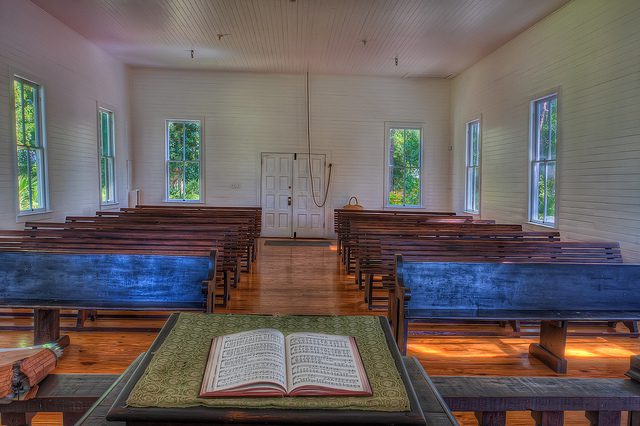 when the stewards of the gospel message advocate political programs, people naturally get the idea that the gospel message is a political program. Pastors often compromise moral standards in order to forge alliances with the least-imperfect of the very imperfect candidates available. And it prevents the church from being the “church universal,” the place where everyone meets on equal terms.
Moreover, politics is simply not an area of giftedness for religious leaders. Unscruplous politicians are very skillful at manipulating well-meaning pastors. That seems to be their area of giftedness.
We saw all these lessons in the debacle of the Religious Right movement. However, that was not just a one-time event. Throughout the last century, American churches became the dupes of cynical politicians time and again. Richard Nixon was caught on the Watergate tapes discussing how to manipulate evangelicals, saying things like “you have to give the nuts 20% of what they want.” Billy Graham, who had done a great deal for Nixon, wept when he heard those tapes.
Does that mean churches should steer clear of anything political? Actually, it depends on what you mean by “political.”
The hunger for churches to speak into politics is perennial for a good reason. Every area of life needs a moral purpose and clear ethical boundaries, and no area of life needs it more desperately than this one. Where no one is casting a profound vision for the transcendent meaning and purpose of an activity, that activity quickly descends into shallow narcissism and brutal exploitation. And because politics involves the use of coercive power, it descends into brutality more quickly than most activities.
For the last century, we’ve been caught in a vicious circle. Churches keep getting drawn into politics because people are desperate for a moral vision that can humanize politics and point it toward its proper end: justice. Then, churches take sides in elections and ideological disputes, resulting in disaster. So churches withdraw from politics, and the cycle begins anew.
I think we might break out of this cycle if we rethink what we mean by “politics.” This word comes from the Greek polis, which simply means “city” – that is, the civil community. The deepest level of politics concerns the way the public business of the civil community is structured. As the editors of the journal First Things once put it, politics in the profoundest sense is “free persons deliberating the question, How ought we to order our life together?”
The “politics” that really count in America is not who wins the election. It’s whether we will remain a nation dedicated to what have been our central political commitments: religious freedom, constitutional democracy, the rule of law, recognition of the household as the central social building block, equal dignity for women, an entrepreneurial economy based on opportunity and hard work, and a special concern to extend opportunity to the poor and the marginalized. Are these commitments just? Do we even remember what they mean? Those are the real political questions of our day.
If you think these commitments are just platitudes – so obviously right that they can be taken for granted and don’t need strong champions to speak out for them – you aren’t paying attention. I don’t think we need pastors to pick candidates or debate the tax rate. I do think we need pastors to remind us that the purpose of politics is justice, and to remind us of what justice requires.
This is exactly what the pastor is supposed to be doing anyway: helping people interpret the meaning of their lives and understand what God requires of them in all areas of life. Human beings are political creatures, and a gospel that has nothing to say about politics (in the sense of the polis) is a gospel that doesn’t renew the whole human person for Christ. If pastors learned to preach about public justice effectively, there would be more public justice – and, therefore, less demand for pastors to pick candidates.
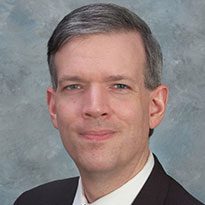 Greg Forster has participated in previous Public Squares on capitalism and religious trends.
Images: Kern Family Foundation and Matthew Pearson, “From the Pulpit.”
Previous Post

November 2, 2014
Can you follow your calling by standing still?
Next Post
November 4, 2014 A little late for All Saints' Day, but....
Browse Our Archives
Select a Category Art Audio posts Bible and Work Book Review Books Budgeting Calling Common Good Community Development Conferences Discipleship Economics Entrepreneurship Ethics Faith and Family Faith and the Marketplace Faith and the Workplace faith and work History of Work and Vocation Leadership Local Church Meaning New Blogger News Prayer Relationships Seminaries Theology of Work Uncategorized Video posts Vocation Worship Resources
Select a Month April 2026 October 2025 September 2025 July 2025 April 2025 January 2025 October 2024 September 2024 August 2024 May 2024 March 2024 February 2024 December 2023 November 2023 August 2023 July 2023 April 2023 January 2023 December 2022 November 2022 September 2022 August 2022 July 2022 May 2022 April 2022 February 2022 January 2022 December 2021 November 2021 October 2021 September 2021 August 2021 June 2021 May 2021 March 2021 February 2021 January 2021 December 2020 November 2020 September 2020 August 2020 July 2020 June 2020 May 2020 April 2020 March 2020 January 2020 December 2019 October 2019 September 2019 August 2019 July 2019 June 2019 May 2019 April 2019 March 2019 February 2019 January 2019 April 2018 March 2018 January 2018 December 2017 November 2017 October 2017 September 2017 August 2017 July 2017 June 2017 May 2017 April 2017 March 2017 February 2017 January 2017 December 2016 November 2016 October 2016 September 2016 August 2016 July 2016 June 2016 May 2016 April 2016 March 2016 February 2016 January 2016 December 2015 November 2015 October 2015 September 2015 August 2015 July 2015 June 2015 May 2015 April 2015 March 2015 February 2015 January 2015 December 2014 November 2014 October 2014 September 2014 August 2014 July 2014 June 2014 May 2014 April 2014 March 2014 February 2014 January 2014 December 2013
Follow Us!
TAKE THE
Religious Wisdom Quiz
Which book of the Bible has the longest chapter?
Select your answer to see how you score.
Isaiah Jeremiah Psalms Genesis
Related posts from MISSION:WORK



How to Succeed as an Influencer Without Really...

Things the 2021 Supply Chain Disruptions Have Kept...
TRENDING AT PATHEOS Careers, Workplace and Religion

16 Spiritual Touchstones for a More Grounded Life
After decades of spiritual study, here are 16 principles I try...

Catholic Evangelization: Sharing Your Faith Every Day
Welcome back to the Graceful Awakening mini-series called, “From Faith to Mission.” ...

The Pillar of the Boatmen: the Ancient Monument...
The Pillar of the Boatmen is a Romano-Gaulish sculpture that dates from...

In one sense walking into Westminster Abbey is like walking down the...

'Super Scam Me' Exposes AI Jon Bon Jovi...
Leslie Pickett believed she was in a relationship with Jon Bon Jovi....

The Brazilian Remake of Kendricks' 'Flywheel' Opens in...
“Flywheel,” the story that launched the Kendrick Brothers’ filmmaking career is getting...
view all Careers, Workplace and Religion blogs
Ad-Free & Subscriber Log-In Subscription Support
- About Us
- 2026 Calendar
- Videos
- Podcasts
- Library of World Religions
- Faith In Media Tracker
- Advertise With Us
- Write for Us
- Privacy Policy
- Terms of Service
- Do Not Sell My Data
- Contact Us
- Radiant Digital
- Manage Newsletter Subscriptions
- Unsubscribe From Notifications
- Sitemap
Copyright 2008-2026, Patheos. All rights reserved.
Subscription Support Ad-Free & Subscriber Log-In
Follow Patheos