
BuddhistCatholicContemplativeEvangelicalGeneral ChristianHinduJewishLatter-day SaintMuslimNew VisionsProgressive Christian
Beliefs
- Buddhist
- Catholic
- Contemplative
- Evangelical
- General Christian
- Hindu
- Jewish
- Latter-day Saint
- More Voices
- Muslim
- New Visions
- Pagan
- Progressive Christian
Topics
- Religion News
- Food and Religion
- Sports and Religion
- Religious Art
- Religious Music and Entertainment
- Religious Events
- History and Religion
- Style and Religion
- Politics and Religion
- Women in Religion
- Recreation Outdoors and Religion
- Business Finance and Religion
- Careers Workplace and Religion
- Education and Religion
- Family Parenting and Religion
- Health Fitness and Religion
- Home and Religion
- Relationships and Religion
- Technology and Religion
- Travel and Religion
Columnists
- Buddhist Columnists
- Business Finance and Religion Columnists
- Careers Workplace and Religion Columnists
- Catholic Columnists
- Contemplative Columnists
- Education and Religion Columnists
- Evangelists Columnists
- Family Parenting and Religion Columnists
- General Christian Columnists
- Health Fitness and Religion Columnists
- Hindu Columnists
- History and Religion Columnists
- Home and Religion Columnists
- Jewish Columnists
- More Voices Columnists
- Latter Day Columnists
- Muslim Columnists
- New Visions Columnists
- Nonreligious Columnists
- Pagan Columnists
- Politics and Religion Columnists
- Progressive Columnists
- Recreation Outdoors and Religion Columnists
- Relationships and Religion Columnists
- Religion News Columnists
- Religious Art Columnists
- Religious Events Columnists
- Religious Music and Entertainment Columnists
- Sports and Religion Columnists
- Style and Religion Columnists
- Technology and Religion Columnists
- Travel and Religion Columnists
- Women in Religion Columnists
Resource Library
- 2026 Calendar
- Library of World Religions
- The 100 Most Holy Places on Earth
- Patheos Answers
- Podcasts
- Videos
- Faith Leaders Database
- Anglican Episcopalian
- Bahai
- Baptist
- Buddhism
- Christianity
- Confucianism
- Eastern Orthodoxy
- Hinduism
- Holiness and Pentecostal
- ISKCON
- Islam
- Judaism
- Lutheran
- Methodist
- The Church of Jesus Christ of Latter-day Saints
- New Age
- Paganism
- Presbytarian and Reformed
- Protestantism
- Religion Behind the Scenes
- Roman Catholic
- Scientology
- Shia Islam
- Sikhism
- Sufism
- Sunni Islam
- Taoism
- Zen
- See all religions
Research Tools
 Ad-Free & Subscriber Log-In Subscription Support
Ad-Free & Subscriber Log-In Subscription Support
Follow Patheos 

- Trending:
- Forgiveness
- |
- Marriage
- |
- Consciousness
- |
- Death Penalty
- |
- Election
- |
- Halloween

- Home
- Careers, Workplace and Religion
- Which is a higher calling: building churches or building fences?
Which is a higher calling: building churches or building fences?
Last updated on: October 6, 2014 at 11:55 am by Guest Contributor
Which is a higher calling: building churches or building fences? 2014-10-06T11:55:26-05:00 Guest Contributor
Patheos Explore the world's faith through different perspectives on religion and spirituality! Patheos has the views of the prevalent religions and spiritualities of the world.
Here’s another post in an occasional series about blue-collar work and meaning that we’re running here on MISSION:WORK. (You can read the first one here.) Here a pastor and former fence-builder reflects on the differences between the two callings.
By Jonathan Huddleston
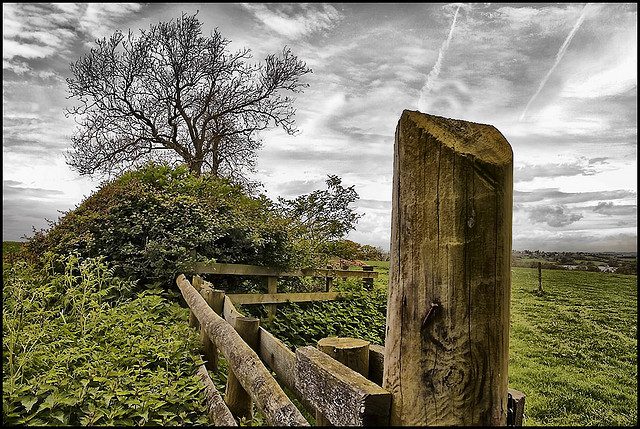 My first day of building fences, my boss took his workers aside during break. He gave us a few snacks and drinks, and read us two poems. One was, I think, a country song; the other he had written. They were about building fences, doing your best, leaving something straight and well-built behind you. He cried as he read them.
I have no doubt that fence-building was a calling for him. It was also a calling for at least one of my co-workers. In some ways, that made it harder for them. As in any job, things sometimes went wrong, and it was harder for them to be satisfied with a less-than-perfect job. It was also hard for them to accept those orders where the customer wanted cheaper materials, resulting in an inferior fence. They built what was ordered, but you could see that it pained them. These gentle men, so patient with my bumbling mistakes, would get surprisingly angry at anything that got between them and a job well done.
On most days, however, they had no problem feeling that their work had purpose. One of them had worked in ministry and teaching, and often talked proudly about his Master’s degree. He didn’t leave the church, he wasn’t fired, he wasn’t cynical. He just got tired of people, drama, and offices. He wanted to be outside, making things.
Things were different for me. Working with my hands, whenever I have had to do it full-time, is always a rude awakening. The sheer physical effort is deeply exhausting. I’ve never understood the people who claim that teaching, writing papers, preaching sermons, and similar tasks are “just as hard” as physical labor. Not every blue-collar job involves slamming post-hole diggers into rock-filled clay, but I’ve noticed a pattern with dish-washing, meal-serving, mopping, factory work, and construction. These jobs have pushed me to the edge of my endurance and beyond—usually before the first break.
Speaking of breaks, often I only had time to devour a few crackers, swig some water, and run to the bathroom before going back to the grind. I’d remember fondly all those “work hours” which involved sipping coffee, leaning back to ruminate, chatting with a friend, and (let’s be honest) checking Facebook. The papers—and sermons—still got written.
What’s odd is that some of my friends seem to think physical labor is either less challenging, or less meaningful, than “ministry.” It hasn’t seemed that way to me. After all, a “minister” gets paid money largely to organize, inspire, and facilitate “service.” (I know there’s more to it than that, but. . . .) The problem is that so much of it is words, written or preached, in sermons or meetings or even hospital rooms—seldom knowing whether anybody is being helped or not. From time to time you’d get people together to paint a house, or you’d get a chance to feed a meal to an elderly person, and you’d feel like you were really getting something done.
“Ministry” has its place, and I’m not knocking it. But it’s hard for me to see why this is more meaningful than the cafeteria server, hot-water-heater-factory-line worker, or construction employee who is getting these things done hour by hour, day by day. We can play up the challenges of ministry, but I’m kind of skeptical. All life is hard, all work is work. And while we like to think that we’re doing it for the Lord instead of for money, we’re getting paid just like the blue-collar workers are—usually more.
In the end, pay was the main reason I didn’t stay long in blue-collar work. Maybe it’s just because of I’m not very skilled as a craftsman or salesman, but I’ve never really understood my preacher friends who talk as though ministers and teachers could make more money elsewhere. With my personality, connections, and talents, I’ve generally found that supporting my family requires the sort of position that is directly or indirectly underwritten by the church.
And so I return to ministry, knowing I am good at many of its tasks (schoolwork, teaching, writing, preaching). I hope desperately that the things I do well, the things people will pay me to do, are also somehow contributing to the Kingdom. But I start to squirm whenever people act like my work is more Godly than theirs, more significant, more of a calling. I often suspect that the reverse is true.
 Often when I’m preaching one more sermon on Acts to a congregation that’s probably heard it before, or teaching Hebrew verb forms, or putting together another Vacation Bible School, or fumbling to show concrete love to a parishioner whose life is hard—I miss the hard clarity of a well-built fence, or a water heater that makes an immediate difference for the person who uses what I have made.
I remember that boss, tearing up as he read poems about fence-building, and I wish my ministry-work meant that much to me.
Jonathan Huddleston, Ph.D., is minister of First Christian Church in Hobbs, NM.
Images: Pat Dalton, “The Fence Post;” Peter Liu Photography, “Fence.”
Previous Post

October 3, 2014
[VIDEO] How has your work ethic changed over the years?
Next Post
October 5, 2014 Do Christianity and business go together?
Browse Our Archives
Select a Category Art Audio posts Bible and Work Book Review Books Budgeting Calling Common Good Community Development Conferences Discipleship Economics Entrepreneurship Ethics Faith and Family Faith and the Marketplace Faith and the Workplace faith and work History of Work and Vocation Leadership Local Church Meaning New Blogger News Prayer Relationships Seminaries Theology of Work Uncategorized Video posts Vocation Worship Resources
Select a Month April 2026 October 2025 September 2025 July 2025 April 2025 January 2025 October 2024 September 2024 August 2024 May 2024 March 2024 February 2024 December 2023 November 2023 August 2023 July 2023 April 2023 January 2023 December 2022 November 2022 September 2022 August 2022 July 2022 May 2022 April 2022 February 2022 January 2022 December 2021 November 2021 October 2021 September 2021 August 2021 June 2021 May 2021 March 2021 February 2021 January 2021 December 2020 November 2020 September 2020 August 2020 July 2020 June 2020 May 2020 April 2020 March 2020 January 2020 December 2019 October 2019 September 2019 August 2019 July 2019 June 2019 May 2019 April 2019 March 2019 February 2019 January 2019 April 2018 March 2018 January 2018 December 2017 November 2017 October 2017 September 2017 August 2017 July 2017 June 2017 May 2017 April 2017 March 2017 February 2017 January 2017 December 2016 November 2016 October 2016 September 2016 August 2016 July 2016 June 2016 May 2016 April 2016 March 2016 February 2016 January 2016 December 2015 November 2015 October 2015 September 2015 August 2015 July 2015 June 2015 May 2015 April 2015 March 2015 February 2015 January 2015 December 2014 November 2014 October 2014 September 2014 August 2014 July 2014 June 2014 May 2014 April 2014 March 2014 February 2014 January 2014 December 2013
Follow Us!
TAKE THE
Religious Wisdom Quiz
In Hebrews, what did Moses consider more valuable than the treasures of Egypt?
Select your answer to see how you score.
Disgrace for the sake of Christ God's covenant Eternal life The promised land
Related posts from MISSION:WORK

Why Beth Felker Jones is Protestant

Every Vocation Everywhere All At Once

If You're Suffering at Work, Here's a Song...

TRENDING AT PATHEOS Careers, Workplace and Religion

When Halloween Unmasks Married Hearts
Written by Dr. David K. Ewen from Eternal Truth Bible College Behind...

Aristotle. He’s been called the father of logic, the father of the...

Methodist Central Hall and Westminster Abbey
Situated on the same square is Methodist Central Hall and Westminster Abbey. ...

57th Dove Awards Honor Dolly Parton, Crown New...
On gospel music’s biggest night, the 57th annual GMA Dove Awards honored...

The First Eucharistic Controversy: Christ’s Real Presence
For Catholics, the Eucharist is the source and summit of the Christian...

What a Stop Sign Can Teach Us About...
How to Make a Decision When You Can't Hear God Main point:...
view all Careers, Workplace and Religion blogs
Ad-Free & Subscriber Log-In Subscription Support
- About Us
- 2026 Calendar
- Videos
- Podcasts
- Library of World Religions
- Faith In Media Tracker
- Advertise With Us
- Write for Us
- Privacy Policy
- Terms of Service
- Do Not Sell My Data
- Contact Us
- Radiant Digital
- Manage Newsletter Subscriptions
- Unsubscribe From Notifications
- Sitemap
Copyright 2008-2026, Patheos. All rights reserved.
Subscription Support Ad-Free & Subscriber Log-In
Follow Patheos