
BuddhistCatholicContemplativeEvangelicalGeneral ChristianHinduJewishLatter-day SaintMuslimNew VisionsProgressive Christian
Beliefs
- Buddhist
- Catholic
- Contemplative
- Evangelical
- General Christian
- Hindu
- Jewish
- Latter-day Saint
- More Voices
- Muslim
- New Visions
- Pagan
- Progressive Christian
Topics
- Religion News
- Food and Religion
- Sports and Religion
- Religious Art
- Religious Music and Entertainment
- Religious Events
- History and Religion
- Style and Religion
- Politics and Religion
- Women in Religion
- Recreation Outdoors and Religion
- Business Finance and Religion
- Careers Workplace and Religion
- Education and Religion
- Family Parenting and Religion
- Health Fitness and Religion
- Home and Religion
- Relationships and Religion
- Technology and Religion
- Travel and Religion
Columnists
- Buddhist Columnists
- Business Finance and Religion Columnists
- Careers Workplace and Religion Columnists
- Catholic Columnists
- Contemplative Columnists
- Education and Religion Columnists
- Evangelists Columnists
- Family Parenting and Religion Columnists
- General Christian Columnists
- Health Fitness and Religion Columnists
- Hindu Columnists
- History and Religion Columnists
- Home and Religion Columnists
- Jewish Columnists
- More Voices Columnists
- Latter Day Columnists
- Muslim Columnists
- New Visions Columnists
- Nonreligious Columnists
- Pagan Columnists
- Politics and Religion Columnists
- Progressive Columnists
- Recreation Outdoors and Religion Columnists
- Relationships and Religion Columnists
- Religion News Columnists
- Religious Art Columnists
- Religious Events Columnists
- Religious Music and Entertainment Columnists
- Sports and Religion Columnists
- Style and Religion Columnists
- Technology and Religion Columnists
- Travel and Religion Columnists
- Women in Religion Columnists
Resource Library
- 2026 Calendar
- Library of World Religions
- The 100 Most Holy Places on Earth
- Patheos Answers
- Podcasts
- Videos
- Faith Leaders Database
- Anglican Episcopalian
- Bahai
- Baptist
- Buddhism
- Christianity
- Confucianism
- Eastern Orthodoxy
- Hinduism
- Holiness and Pentecostal
- ISKCON
- Islam
- Judaism
- Lutheran
- Methodist
- The Church of Jesus Christ of Latter-day Saints
- New Age
- Paganism
- Presbytarian and Reformed
- Protestantism
- Religion Behind the Scenes
- Roman Catholic
- Scientology
- Shia Islam
- Sikhism
- Sufism
- Sunni Islam
- Taoism
- Zen
- See all religions
Research Tools
 Ad-Free & Subscriber Log-In Subscription Support
Ad-Free & Subscriber Log-In Subscription Support
Follow Patheos 

- Trending:
- Forgiveness
- |
- Marriage
- |
- Consciousness
- |
- Death Penalty
- |
- Election
- |
- Halloween

- Home
- Careers, Workplace and Religion
- More business advice from John Wesley
More business advice from John Wesley
Last updated on: August 21, 2014 at 10:34 am by Mission:Work
More business advice from John Wesley 2014-08-20T21:53:26-05:00 Mission:Work
Patheos Explore the world's faith through different perspectives on religion and spirituality! Patheos has the views of the prevalent religions and spiritualities of the world.
 As we said a few days ago, John Wesley, founder of the Methodist movement, was famous for telling his followers to gain, save, and give all they could. Allowing for his eighteenth-century language, he has some good advice about all three in this sermon, “The Use of Money.”
We’ve talked about how to gain all you can–ethically; in this post, we’re excerpting the “save all you can” advice (which may sound harsh to modern ears, but is worth pondering!) Later we’ll sample his wisdom on how to give it away.
1. Having gained all you can, by honest wisdom and unwearied diligence, the second rule of Christian prudence is,” Save all you can.” Do not throw the precious talent into the sea: Leave that folly to heathen philosophers. Do not throw it away in idle expenses, which is just the same as throwing it into the sea. Expend no part of it merely to gratify the desire of the flesh, the desire of the eye, or the pride of life.
2. Do not waste any part of so precious a talent merely in gratifying the desires of the flesh; in procuring the pleasures of sense of whatever kind; particularly, in enlarging the pleasure of tasting. I do not mean, avoid gluttony and drunkenness only: An honest heathen would condemn these. But there is a regular, reputable kind of sensuality, an elegant epicurism, which does not immediately disorder the stomach, nor (sensibly, at least) impair the understanding. And yet (to mention no other effects of it now) it cannot be maintained without considerable expense. Cut off all this expense! Despise delicacy and variety, and be content with what plain nature requires.
3. Do not waste any part of so precious a talent merely in gratifying the desire of the eye by superfluous or expensive apparel, or by needless ornaments. Waste no part of it in curiously adorning your houses; in superfluous or expensive furniture; in costly pictures, painting, gilding, books; in elegant rather than useful gardens. Let your neighbours, who know nothing better, do this: “Let the dead bury their dead.” But “what is that to thee?” says our Lord: “Follow thou me.” Are you willing? Then you are able so to do.
4. Lay out nothing to gratify the pride of life, to gain the admiration or praise of men. This motive of expense is frequently interwoven with one or both of the former. Men are expensive in diet, or apparel, or furniture, not barely to please their appetite, or to gratify their eye, their imagination, but their vanity too. “So long as thou dost well unto thyself, men will speak good of thee.” So long as thou art “clothed in purple and fine linen, and farest sumptuously” every day,” no doubt many will applaud thy elegance of taste, thy generosity and hospitality. But do not buy their applause so dear. Rather be content with the honour that cometh from God.
5. Who would expend anything in gratifying these desires if he considered that to gratify them is to increase them? Nothing can be more certain than this: Daily experience shows, the more they are indulged, they increase the more. Whenever, therefore, you expend anything to please your taste or other senses, you pay so much for sensuality. When you lay out money to please your eye, you give so much for an increase of curiosity, — for a stronger attachment to these pleasures which perish in the using. While you are purchasing anything which men use to applaud, you are purchasing more vanity. Had you not then enough of vanity, sensuality, curiosity before? Was there need of any addition? And would you pay for it, too? What manner of wisdom is this? Would not the literally throwing your money into the sea be a less mischievous folly?
6. And why should you throw away money upon your children, any more than upon yourself, in delicate food, in gay or costly apparel, in superfluities of any kind? Why should you purchase for them more pride or lust, more vanity, or foolish and hurtful desires? They do not want any more; they have enough already; nature has made ample provision for them: Why should you be at farther expense to increase their temptations and snares, and to pierce them through with more sorrows?
7. Do not leave it to them to throw away. If you have good reason to believe that they would waste what is now in your possession in gratifying and thereby increasing the desire of the flesh, the desire of the eye, or the pride of life at the peril of theirs and your own soul, do not set these traps in their way. Do not offer your sons or your daughters unto Belial, any more than unto Moloch. Have pity upon them, and remove out of their way what you may easily foresee would increase their sins, and consequently plunge them deeper into everlasting perdition! How amazing then is the infatuation of those parents who think they can never leave their children enough! What! cannot you leave them enough of arrows, firebrands, and death? Not enough of foolish and hurtful desires? Not enough of pride, lust, ambition vanity? not enough of everlasting burnings? Poor wretch! thou fearest where no fear is. Surely both thou and they, when ye are lifting up your eyes in hell, will have enough both of the “worm that never dieth,” and of “the fire that never shall be quenched!”
8. “What then would you do, if you was in my case? If you had a considerable fortune to leave?” Whether I would do it or no, I know what I ought to do: This will admit of no reasonable question. If I had one child, elder or younger, who knew the value of money; one who I believed, would put it to the true use, I should think it my absolute, indispensable duty to leave that child the bulk of my fortune; and to the rest just so much as would enable them to live in the manner they had been accustomed to do. “But what, if all your children were equally ignorant of the true use of money?” I ought then (hard saying! who can hear it?) to give each what would keep him above want, and to bestow all the rest in such a manner as I judged would be most for the glory of God.
Image: “Money cash” by @Doug88888.
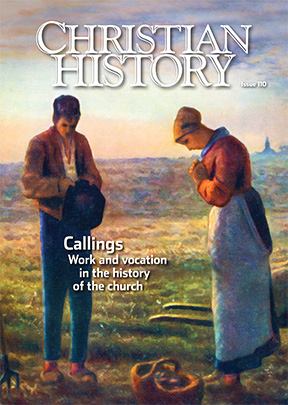 PS. This post comes courtesy of our friends at Christian History Institute and their new issue on work and vocation in the history of the church. Get a copy here, or read it for free online !
Previous Post

August 20, 2014
Another new blog on the Patheos Faith and Work Channel!
Next Post
August 23, 2014 Even more business advice from John Wesley
Browse Our Archives
Select a Category Art Audio posts Bible and Work Book Review Books Budgeting Calling Common Good Community Development Conferences Discipleship Economics Entrepreneurship Ethics Faith and Family Faith and the Marketplace Faith and the Workplace faith and work History of Work and Vocation Leadership Local Church Meaning New Blogger News Prayer Relationships Seminaries Theology of Work Uncategorized Video posts Vocation Worship Resources
Select a Month April 2026 October 2025 September 2025 July 2025 April 2025 January 2025 October 2024 September 2024 August 2024 May 2024 March 2024 February 2024 December 2023 November 2023 August 2023 July 2023 April 2023 January 2023 December 2022 November 2022 September 2022 August 2022 July 2022 May 2022 April 2022 February 2022 January 2022 December 2021 November 2021 October 2021 September 2021 August 2021 June 2021 May 2021 March 2021 February 2021 January 2021 December 2020 November 2020 September 2020 August 2020 July 2020 June 2020 May 2020 April 2020 March 2020 January 2020 December 2019 October 2019 September 2019 August 2019 July 2019 June 2019 May 2019 April 2019 March 2019 February 2019 January 2019 April 2018 March 2018 January 2018 December 2017 November 2017 October 2017 September 2017 August 2017 July 2017 June 2017 May 2017 April 2017 March 2017 February 2017 January 2017 December 2016 November 2016 October 2016 September 2016 August 2016 July 2016 June 2016 May 2016 April 2016 March 2016 February 2016 January 2016 December 2015 November 2015 October 2015 September 2015 August 2015 July 2015 June 2015 May 2015 April 2015 March 2015 February 2015 January 2015 December 2014 November 2014 October 2014 September 2014 August 2014 July 2014 June 2014 May 2014 April 2014 March 2014 February 2014 January 2014 December 2013
Follow Us!
TAKE THE
Religious Wisdom Quiz
What was the primary inheritance method in biblical times?
Select your answer to see how you score.
Equal division Firstborn son Youngest child Oldest daughter
Related posts from MISSION:WORK

Why Beth Felker Jones is Protestant



Not Nearly So Much Like a Mall
TRENDING AT PATHEOS Careers, Workplace and Religion

Methodist Central Hall and Westminster Abbey
Situated on the same square is Methodist Central Hall and Westminster Abbey. ...

57th Dove Awards Honor Dolly Parton, Crown New...
On gospel music’s biggest night, the 57th annual GMA Dove Awards honored...

The First Eucharistic Controversy: Christ’s Real Presence
For Catholics, the Eucharist is the source and summit of the Christian...

What a Stop Sign Can Teach Us About...
How to Make a Decision When You Can't Hear God Main point:...

Archdiocese Hosts Military Marriage Retreat in Germany
RASTATT, Germany — The transient military lifestyle, with its frequent deployments and...

Nearly every morning, I make the drive to Detroit with my high-school-age...
view all Careers, Workplace and Religion blogs
Ad-Free & Subscriber Log-In Subscription Support
- About Us
- 2026 Calendar
- Videos
- Podcasts
- Library of World Religions
- Faith In Media Tracker
- Advertise With Us
- Write for Us
- Privacy Policy
- Terms of Service
- Do Not Sell My Data
- Contact Us
- Radiant Digital
- Manage Newsletter Subscriptions
- Unsubscribe From Notifications
- Sitemap
Copyright 2008-2026, Patheos. All rights reserved.
Subscription Support Ad-Free & Subscriber Log-In
Follow Patheos