
BuddhistCatholicContemplativeEvangelicalGeneral ChristianHinduJewishLatter-day SaintMuslimNew VisionsProgressive Christian
Beliefs
- Buddhist
- Catholic
- Contemplative
- Evangelical
- General Christian
- Hindu
- Jewish
- Latter-day Saint
- More Voices
- Muslim
- New Visions
- Pagan
- Progressive Christian
Topics
- Religion News
- Food and Religion
- Sports and Religion
- Religious Art
- Religious Music and Entertainment
- Religious Events
- History and Religion
- Style and Religion
- Politics and Religion
- Women in Religion
- Recreation Outdoors and Religion
- Business Finance and Religion
- Careers Workplace and Religion
- Education and Religion
- Family Parenting and Religion
- Health Fitness and Religion
- Home and Religion
- Relationships and Religion
- Technology and Religion
- Travel and Religion
Columnists
- Buddhist Columnists
- Business Finance and Religion Columnists
- Careers Workplace and Religion Columnists
- Catholic Columnists
- Contemplative Columnists
- Education and Religion Columnists
- Evangelists Columnists
- Family Parenting and Religion Columnists
- General Christian Columnists
- Health Fitness and Religion Columnists
- Hindu Columnists
- History and Religion Columnists
- Home and Religion Columnists
- Jewish Columnists
- More Voices Columnists
- Latter Day Columnists
- Muslim Columnists
- New Visions Columnists
- Nonreligious Columnists
- Pagan Columnists
- Politics and Religion Columnists
- Progressive Columnists
- Recreation Outdoors and Religion Columnists
- Relationships and Religion Columnists
- Religion News Columnists
- Religious Art Columnists
- Religious Events Columnists
- Religious Music and Entertainment Columnists
- Sports and Religion Columnists
- Style and Religion Columnists
- Technology and Religion Columnists
- Travel and Religion Columnists
- Women in Religion Columnists
Resource Library
- 2026 Calendar
- Library of World Religions
- The 100 Most Holy Places on Earth
- Patheos Answers
- Podcasts
- Videos
- Faith Leaders Database
- Anglican Episcopalian
- Bahai
- Baptist
- Buddhism
- Christianity
- Confucianism
- Eastern Orthodoxy
- Hinduism
- Holiness and Pentecostal
- ISKCON
- Islam
- Judaism
- Lutheran
- Methodist
- The Church of Jesus Christ of Latter-day Saints
- New Age
- Paganism
- Presbytarian and Reformed
- Protestantism
- Religion Behind the Scenes
- Roman Catholic
- Scientology
- Shia Islam
- Sikhism
- Sufism
- Sunni Islam
- Taoism
- Zen
- See all religions
Research Tools
 Ad-Free & Subscriber Log-In Subscription Support
Ad-Free & Subscriber Log-In Subscription Support
Follow Patheos 

- Trending:
- Forgiveness
- |
- Marriage
- |
- Consciousness
- |
- Death Penalty
- |
- Election
- |
- Halloween

- Home
- Careers, Workplace and Religion
- What the Image of God Means for Our Dignity and Work
What the Image of God Means for Our Dignity and Work
Last updated on: April 3, 2014 at 10:18 am by Institute for Faith, Work, and Economics
What the Image of God Means for Our Dignity and Work 2014-04-03T10:18:48-05:00 Institute for Faith, Work, and Economics
Patheos Explore the world's faith through different perspectives on religion and spirituality! Patheos has the views of the prevalent religions and spiritualities of the world.
 By Art Lindsley
The number one fear of the millennial generation is living a meaningless life.
In a recent informal survey of undergraduate students at Regent University, 27 percent of students asked expressed anxiety when considering their vocation. “Scared”, “uneasy”, “unsure”, “confused”, and “apprehensive” were common words in describing the way they felt about their future vocation.
But college students aren’t the only ones struggling. Many adults fail to discover their calling in life, too. Why is it so hard to find this thing we call our “vocation?”
When I use the words “calling” and “vocation,” I am referring to what Os Guinness calls our secondary calling. As Guinness points out, following in the footsteps of Luther, Calvin, and many other Protestant Reformers, our primary calling is the call to faith in Christ. Several secondary callings flow from this primary calling, including the call to work.
Every person is created in the image of God, full of dignity, with unique talents and gifts to use for the glory of God in their work. One reason why so many Christians fail to discover their vocation is because they don’t fully understand what it means to be made in the image of God.
Imago Dei
Most Christians have heard theologians and pastors say over and over again that we are all made in the image of God, but what does this mean? It’s a complex idea.
The image of God is a foundational concept for understanding our significance and purpose in life. Understanding how we are made in God’s image helps us understand our inherent dignity as human beings created by our heavenly Father.
Genesis 1:26-28 declares that human beings are made in the image of God:
Then God said ‘Let us make man in our image, according to our likeness, and let them rule over the fish of the sea and over the birds of the sky and over the cattle and over all the earth.’ And God created man in His own image, in the image of God He created him; male and female He created them.
From these verses, we understand that our worth is connected to our Creator. If God is of great and inestimable worth, then human beings made in his image must be of immense value too.
Not only is human dignity present in creation, but also after the fall into sin. For example, in Genesis 9:5-6, God reminds Noah that man is made in God’s image:
Whoever sheds man’s blood by man his blood shall be shed, for in the image of God He made man.
In other words, this verse is saying, “to attack a person is to attack God through his image bearer.” Though humankind is tainted by sin, sin does not eradicate the doctrine of the Imago Dei.
We are also told again in the New Testament that human beings are made in God’s image. James 3:9 says,
With the tongue we bless our Lord and Father and with it we curse men, who have been made in the likeness of God.
Both of these verses remind us that the way we treat people is an indication of how we value God.
One of my favorite quotes from C.S. Lewis appears in his book The Weight of Glory:
There are no ordinary people. You have never met a mere mortal.
The people you see every day, even the ones to whom you give little regard, are ones that are going to live forever either under salvation or judgment. Even the most obscure person is not ordinary in God’s eyes because they are all made in God’s image.
In light of this truth, how do we affirm the dignity of the people around us?
Fallen, yet redeemed
Today, some Christians focus on our dignity and self-worth without much mention of our sinfulness. Others emphasize our utter unworthiness and sinfulness without any note of our dignity or God’s grace.
We should not focus on our sin for long without also noting God’s grace and our own God-given dignity. The apostle Paul never mentions the depth of his sin without also mentioning God’s grace:
For I am the least of the apostles and do not even deserve to be called an apostle… But by the grace of God I am what I am, and his grace to me was not without effect. (1 Corinthians 15:9-10)
In 1 Timothy 1:16, Paul calls himself the “foremost of sinners,” but also notes, “yet for this reason I found mercy…that in me, Christ Jesus might display his immense patience…”
We can say the same. No matter what we have done, God’s grace works in us. To deny or fail to acknowledge this truth is to say that God’s grace is in vain.
Certainly it is right to take time for self-examination, confession, and repentance. But we should eventually come back to God’s grace and to our own dignity from being made in the image of God.
The restored image of God looks like Christ
While the image of God remains after the fall, it is certainly marred and defaced. As we are redeemed, what will we look like when the process is completed?
As God restores us, our individuality will shine even more brightly and our gifts will reach their full potential. We will also look like Christ.
Romans 8:29 reminds us that we are being “conformed to the image of his Son.” Jesus is the perfect representative of the image of God, and we are being made like him.
What this means for our work
Being made in the image of God provides the basis for our work and vocation. If we are made in the image of God, we share his characteristics. For example, because God is creative, we can be creative in our work.
Knowing the basis for our dignity and worth helps us believe that we have gifts and talents to employ. I have conducted hundreds of vocational profiles with people who hadn’t discovered their calling because they didn’t think they had anything to offer. Oftentimes, traumatic events from their past defined their identity and kept them from recognizing their dignity, worth, and God-given creativity.
Yet when they realized the implications of being made in God’s image, their outlook changed. I could see the change in their lives, as this truth became the basis for their identities instead of the brokenness of their pasts.
As they understood what it means to be made in the image of God, these people I worked with began to believe they were unique and talented. They realized how God had gifted them, and used this knowledge to find their vocations.
Being made in the image of God is a powerful concept for finding our vocations and living a purposeful life.
Art Lindsley, Ph.D. is vice president of theological initiatives at the Institute for Faith, Work & Economics (www.tifwe.org) and author of C.S. Lewis’s Case for Christ, True Truth, Love: The Ultimate Apologetic, and co-author with R.C. Sproul and John Gerstner of Classical Apologetics.
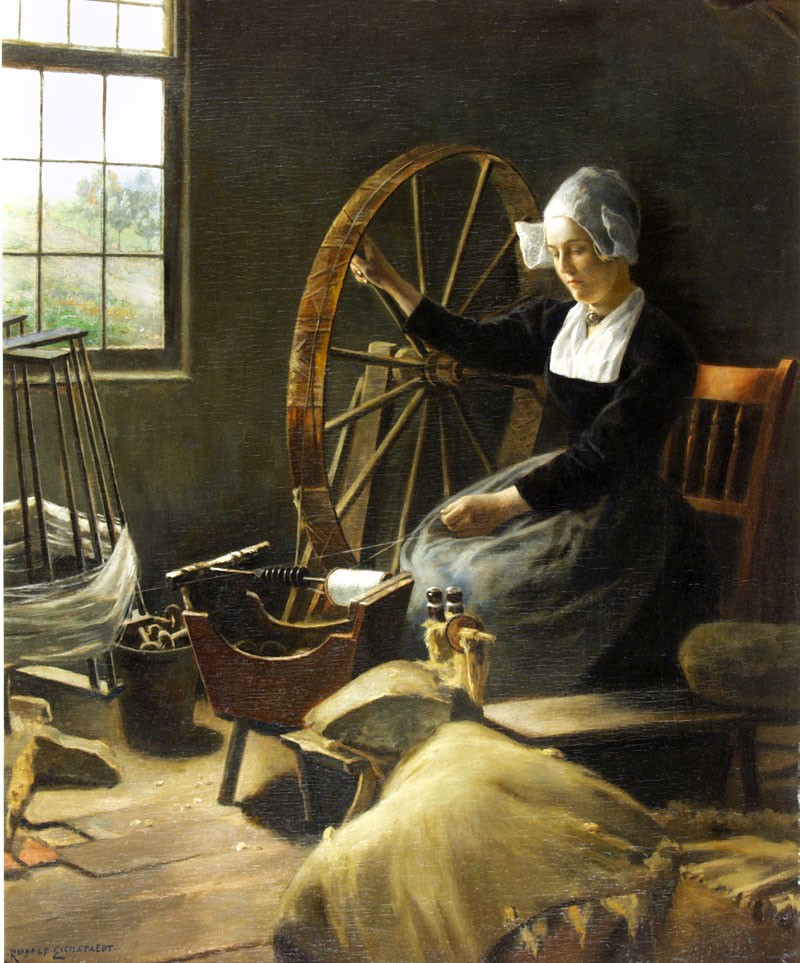
From The Institute for Faith, Work, and Economics Image: “Dutch Spooling Woman,” Rudolf Eichstaedt. Courtesy of the Grohmann Museum at the Milwaukee School of Engineering.
Institute for Faith Work and Economics
Previous Post

April 1, 2014
Work as a means to social shalom
Browse Our Archives
Select a Category Art Audio posts Bible and Work Book Review Books Budgeting Calling Common Good Community Development Conferences Discipleship Economics Entrepreneurship Ethics Faith and Family Faith and the Marketplace Faith and the Workplace faith and work History of Work and Vocation Leadership Local Church Meaning New Blogger News Prayer Relationships Seminaries Theology of Work Uncategorized Video posts Vocation Worship Resources
Select a Month April 2026 October 2025 September 2025 July 2025 April 2025 January 2025 October 2024 September 2024 August 2024 May 2024 March 2024 February 2024 December 2023 November 2023 August 2023 July 2023 April 2023 January 2023 December 2022 November 2022 September 2022 August 2022 July 2022 May 2022 April 2022 February 2022 January 2022 December 2021 November 2021 October 2021 September 2021 August 2021 June 2021 May 2021 March 2021 February 2021 January 2021 December 2020 November 2020 September 2020 August 2020 July 2020 June 2020 May 2020 April 2020 March 2020 January 2020 December 2019 October 2019 September 2019 August 2019 July 2019 June 2019 May 2019 April 2019 March 2019 February 2019 January 2019 April 2018 March 2018 January 2018 December 2017 November 2017 October 2017 September 2017 August 2017 July 2017 June 2017 May 2017 April 2017 March 2017 February 2017 January 2017 December 2016 November 2016 October 2016 September 2016 August 2016 July 2016 June 2016 May 2016 April 2016 March 2016 February 2016 January 2016 December 2015 November 2015 October 2015 September 2015 August 2015 July 2015 June 2015 May 2015 April 2015 March 2015 February 2015 January 2015 December 2014 November 2014 October 2014 September 2014 August 2014 July 2014 June 2014 May 2014 April 2014 March 2014 February 2014 January 2014 December 2013
Follow Us!
TAKE THE
Religious Wisdom Quiz
What event occurred immediately after Jesus died?
Select your answer to see how you score.
A great flood The temple curtain tore An earthquake split the land The sun turned red
Related posts from MISSION:WORK


The One Where Jennifer Gets New Glasses and...

Do We Need a Theology of Sleep?

It's Really Hard to Say Anything About Work...
TRENDING AT PATHEOS Careers, Workplace and Religion

In one sense walking into Westminster Abbey is like walking down the...

'Super Scam Me' Exposes AI Jon Bon Jovi...
Leslie Pickett believed she was in a relationship with Jon Bon Jovi....

The Brazilian Remake of Kendricks' 'Flywheel' Opens in...
“Flywheel,” the story that launched the Kendrick Brothers’ filmmaking career is getting...

The Dangers of Gradual Accommodation (Winking at Sin)
Recently, the “law of gradualness” resurfaced during the opening of a weeklong,...

The Iron Gates and the Lion of the...
Yesterday, I didn't finish my report about, well, yesterday. So I'll...

The Image: On the Horror of Capitalism and...
The Image Then went the Pharisees, and took counsel how they might...
view all Careers, Workplace and Religion blogs
Ad-Free & Subscriber Log-In Subscription Support
- About Us
- 2026 Calendar
- Videos
- Podcasts
- Library of World Religions
- Faith In Media Tracker
- Advertise With Us
- Write for Us
- Privacy Policy
- Terms of Service
- Do Not Sell My Data
- Contact Us
- Radiant Digital
- Manage Newsletter Subscriptions
- Unsubscribe From Notifications
- Sitemap
Copyright 2008-2026, Patheos. All rights reserved.
Subscription Support Ad-Free & Subscriber Log-In
Follow Patheos