
BuddhistCatholicContemplativeEvangelicalGeneral ChristianHinduJewishLatter-day SaintMuslimNew VisionsProgressive Christian
Beliefs
- Buddhist
- Catholic
- Contemplative
- Evangelical
- General Christian
- Hindu
- Jewish
- Latter-day Saint
- More Voices
- Muslim
- New Visions
- Pagan
- Progressive Christian
Topics
- Religion News
- Food and Religion
- Sports and Religion
- Religious Art
- Religious Music and Entertainment
- Religious Events
- History and Religion
- Style and Religion
- Politics and Religion
- Women in Religion
- Recreation Outdoors and Religion
- Business Finance and Religion
- Careers Workplace and Religion
- Education and Religion
- Family Parenting and Religion
- Health Fitness and Religion
- Home and Religion
- Relationships and Religion
- Technology and Religion
- Travel and Religion
Columnists
- Buddhist Columnists
- Business Finance and Religion Columnists
- Careers Workplace and Religion Columnists
- Catholic Columnists
- Contemplative Columnists
- Education and Religion Columnists
- Evangelists Columnists
- Family Parenting and Religion Columnists
- General Christian Columnists
- Health Fitness and Religion Columnists
- Hindu Columnists
- History and Religion Columnists
- Home and Religion Columnists
- Jewish Columnists
- More Voices Columnists
- Latter Day Columnists
- Muslim Columnists
- New Visions Columnists
- Nonreligious Columnists
- Pagan Columnists
- Politics and Religion Columnists
- Progressive Columnists
- Recreation Outdoors and Religion Columnists
- Relationships and Religion Columnists
- Religion News Columnists
- Religious Art Columnists
- Religious Events Columnists
- Religious Music and Entertainment Columnists
- Sports and Religion Columnists
- Style and Religion Columnists
- Technology and Religion Columnists
- Travel and Religion Columnists
- Women in Religion Columnists
Resource Library
- 2026 Calendar
- Library of World Religions
- The 100 Most Holy Places on Earth
- Patheos Answers
- Podcasts
- Videos
- Faith Leaders Database
- Anglican Episcopalian
- Bahai
- Baptist
- Buddhism
- Christianity
- Confucianism
- Eastern Orthodoxy
- Hinduism
- Holiness and Pentecostal
- ISKCON
- Islam
- Judaism
- Lutheran
- Methodist
- The Church of Jesus Christ of Latter-day Saints
- New Age
- Paganism
- Presbytarian and Reformed
- Protestantism
- Religion Behind the Scenes
- Roman Catholic
- Scientology
- Shia Islam
- Sikhism
- Sufism
- Sunni Islam
- Taoism
- Zen
- See all religions
Research Tools
 Ad-Free & Subscriber Log-In Subscription Support
Ad-Free & Subscriber Log-In Subscription Support
Follow Patheos 

- Trending:
- Forgiveness
- |
- Marriage
- |
- Consciousness
- |
- Death Penalty
- |
- Election
- |
- Halloween

- Home
- Careers, Workplace and Religion
- Engaging the culture
Engaging the culture
Last updated on: April 18, 2014 at 9:43 pm by Made to Flourish
Engaging the culture 2014-04-18T21:43:42-05:00 Made to Flourish
Patheos Explore the world's faith through different perspectives on religion and spirituality! Patheos has the views of the prevalent religions and spiritualities of the world.
 Kyle Bushre
I have no casual register.
This is a running joke among my friends who live in generational poverty. They delight in poking fun at the way I speak, because it is not all that different from the way I write. My sentences are correct grammatically. There is very little slang. Once I read aloud from a book during one of our educational sessions together, and my generationally poor friends said they could listen to me for hours because it sounded like I was performing the material instead of just reading aloud from an instructional manual (which is, in fact, what I was doing). That is a nice compliment, but the flip side is hilarious ridicule when I attempt to awkwardly work phrases of the street into my otherwise pristine, middle-class vernacular. No one is my homeboy. The only peeps I have come at Easter. The skills that help me thrive at work would marginalize and separate me out on the street.
When people who grew up with middle-class norms sit across the table from people who grew up in poverty, there are far more invisible walls dividing them than bank statements and access to resources. There is a cultural collision not unlike the one a Westerner experiences when he travels to Uganda, Haiti, or China and sits across the table from new friends. I went to a restaurant with a Chinese pastor in downtown Hong Kong and took a seat at a round table with my back to the wall, facing the room. I was the youngest guy in our party, and my gracious host informed me, somewhere around dessert, that I had taken the seat of honor usually reserved for the most powerful or honorable in the group (i.e. not the young guy). We all enjoyed the moment, but nevertheless I had broken an invisible, cultural rule based on traditions, values, and common sense—a rule unknown to me because I did not grow up learning the rules of Asian culture instinctively. When a missionary enters a new culture, identifying such rules is an essential part of the mission.
Though we are less apt to identify them, the same sort of hidden rules divide the cultures of the middle class and the generationally poor. In their excellent work Bridges Out of Poverty Ruby Payne, Philip DeVol, and Terie Dreussi Smith reveal some of these hidden rules. The differences are too many to list here, but a few give us a flavor. The middle class cares deeply about the quality of their food, whereas in generational poverty, the quantity of food is more important. In generational poverty, who you know and to whom you belong is far more of a status symbol than what you do for a living. Language of the street spoken casually is a more important form of communication in generational poverty than the formal register of the middle class with its linear storytelling. There are many more cultural differences, but just these three examples give us a sense for how difficult even a normal conversation over dinner can be when cultures collide.
This cultural divide matters for a church that desires biblical, socio-economic diversity within its body. James implores the church not to favor the rich over the poor (James 2:1-13). Of course, one of the ways to ensure this does not happen is by not even having the rich and poor interact within the same local body. There is no fear of partiality if everyone is the same. And so we create homogenous units of middle-class churches, poor churches, white churches, black churches, Hispanic churches, old churches, and young churches. If the poor are most comfortable among their own, we reason, let us encourage them to remain separate, because surely that will create a more comfortable atmosphere for the middle class as well. I must admit, it is appealing to spend time with people who are exactly like me. And yet, the New Testament church includes instructions such as those given by James precisely because the church was never intended to separate itself in this way. The gospel of Jesus calls us not to separate for the sake of comfort, but to unify for the sake of proclaiming the message of oneness in Christ. In the gospel, we find the diverse family that cannot be found in the society around us, and that counter-cultural diversity itself is part of the world-changing message of the gospel. Churches that do not care to study the culture of generational poverty will never engage and befriend the poor, and will thus fail to reflect the glory of God’s rich diversity.
So where do we begin? How does the middle-class church, with its high production values, strong work ethic, emphasis on appearance, and individualistic bent begin to engage, understand, befriend, include, and eventually value the contributions of the generationally poor and their culture? Progress begins with a commitment to creating a church culture where all are loved and valued, and this will need to come first from the middle class, who enjoy the privilege of controlling the resources. Middle-class churches must decide they will not be content with doing ministry for the poor at arm’s length, but will come alongside and live in warm Christian community with poor brothers and sisters within the family of the church. Simply providing material resources for the poor neither creates community, nor breaks the cycle of unsustainable poverty. What will? Relationships! Relationships are the hammer that breaks the cycle.
- Do you identify with the culture of the middle class or the culture of generational poverty? What is one behavior or value from the other culture that confuses you and causes you to be judgmental?
- What is one common practice or value of middle-class church life that might cause someone from generational poverty to feel uncomfortable? How might a church change to help the poor feel included and loved?
Kyle Bushre is the Pastor of Outreach at King Street Church in Chambersburg, Pa. He’s an alumnus of Trinity Evangelical Divinity School and a Kern Scholar. Bushre is pursuing a doctor of ministry degree and exploring more effective ways for the church to show compassion.
Read the first post in this series, Generational Poverty.
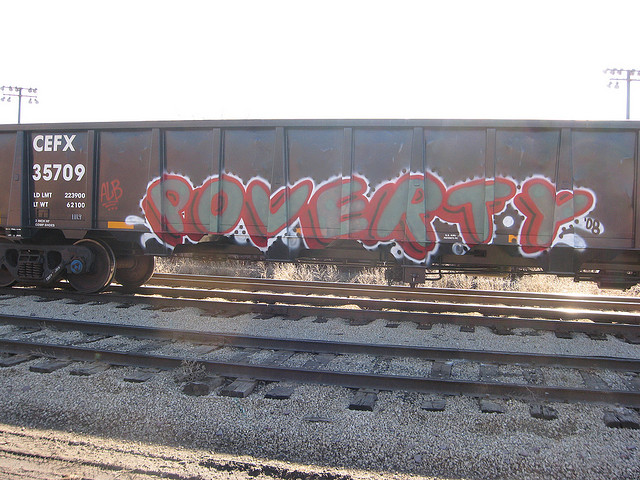
From the Kern Pastors Network. Image: Aaaarrrrgggghhhh, Flickr.
Previous Post

April 17, 2014
Does the moral consensus on human trafficking apply to economics?
Next Post
April 21, 2014 A book worth another look
Browse Our Archives
Select a Category Art Audio posts Bible and Work Book Review Books Budgeting Calling Common Good Community Development Conferences Discipleship Economics Entrepreneurship Ethics Faith and Family Faith and the Marketplace Faith and the Workplace faith and work History of Work and Vocation Leadership Local Church Meaning New Blogger News Prayer Relationships Seminaries Theology of Work Uncategorized Video posts Vocation Worship Resources
Select a Month April 2026 October 2025 September 2025 July 2025 April 2025 January 2025 October 2024 September 2024 August 2024 May 2024 March 2024 February 2024 December 2023 November 2023 August 2023 July 2023 April 2023 January 2023 December 2022 November 2022 September 2022 August 2022 July 2022 May 2022 April 2022 February 2022 January 2022 December 2021 November 2021 October 2021 September 2021 August 2021 June 2021 May 2021 March 2021 February 2021 January 2021 December 2020 November 2020 September 2020 August 2020 July 2020 June 2020 May 2020 April 2020 March 2020 January 2020 December 2019 October 2019 September 2019 August 2019 July 2019 June 2019 May 2019 April 2019 March 2019 February 2019 January 2019 April 2018 March 2018 January 2018 December 2017 November 2017 October 2017 September 2017 August 2017 July 2017 June 2017 May 2017 April 2017 March 2017 February 2017 January 2017 December 2016 November 2016 October 2016 September 2016 August 2016 July 2016 June 2016 May 2016 April 2016 March 2016 February 2016 January 2016 December 2015 November 2015 October 2015 September 2015 August 2015 July 2015 June 2015 May 2015 April 2015 March 2015 February 2015 January 2015 December 2014 November 2014 October 2014 September 2014 August 2014 July 2014 June 2014 May 2014 April 2014 March 2014 February 2014 January 2014 December 2013
Follow Us!
TAKE THE
Religious Wisdom Quiz
What does Proverbs often contrast with wisdom?
Select your answer to see how you score.
Foolishness Poverty Priesthood Strength
Related posts from MISSION:WORK

Why Beth Felker Jones is Protestant


I Want to Bless People. In Person.
TRENDING AT PATHEOS Careers, Workplace and Religion

When Halloween Unmasks Married Hearts
Written by Dr. David K. Ewen from Eternal Truth Bible College Behind...

Aristotle. He’s been called the father of logic, the father of the...

Methodist Central Hall and Westminster Abbey
Situated on the same square is Methodist Central Hall and Westminster Abbey. ...

57th Dove Awards Honor Dolly Parton, Crown New...
On gospel music’s biggest night, the 57th annual GMA Dove Awards honored...

The First Eucharistic Controversy: Christ’s Real Presence
For Catholics, the Eucharist is the source and summit of the Christian...

What a Stop Sign Can Teach Us About...
How to Make a Decision When You Can't Hear God Main point:...
view all Careers, Workplace and Religion blogs
Ad-Free & Subscriber Log-In Subscription Support
- About Us
- 2026 Calendar
- Videos
- Podcasts
- Library of World Religions
- Faith In Media Tracker
- Advertise With Us
- Write for Us
- Privacy Policy
- Terms of Service
- Do Not Sell My Data
- Contact Us
- Radiant Digital
- Manage Newsletter Subscriptions
- Unsubscribe From Notifications
- Sitemap
Copyright 2008-2026, Patheos. All rights reserved.
Subscription Support Ad-Free & Subscriber Log-In
Follow Patheos