
BuddhistCatholicContemplativeEvangelicalGeneral ChristianHinduJewishLatter-day SaintMuslimNew VisionsProgressive Christian
Beliefs
- Buddhist
- Catholic
- Contemplative
- Evangelical
- General Christian
- Hindu
- Jewish
- Latter-day Saint
- More Voices
- Muslim
- New Visions
- Pagan
- Progressive Christian
Topics
- Religion News
- Food and Religion
- Sports and Religion
- Religious Art
- Religious Music and Entertainment
- Religious Events
- History and Religion
- Style and Religion
- Politics and Religion
- Women in Religion
- Recreation Outdoors and Religion
- Business Finance and Religion
- Careers Workplace and Religion
- Education and Religion
- Family Parenting and Religion
- Health Fitness and Religion
- Home and Religion
- Relationships and Religion
- Technology and Religion
- Travel and Religion
Columnists
- Buddhist Columnists
- Business Finance and Religion Columnists
- Careers Workplace and Religion Columnists
- Catholic Columnists
- Contemplative Columnists
- Education and Religion Columnists
- Evangelists Columnists
- Family Parenting and Religion Columnists
- General Christian Columnists
- Health Fitness and Religion Columnists
- Hindu Columnists
- History and Religion Columnists
- Home and Religion Columnists
- Jewish Columnists
- More Voices Columnists
- Latter Day Columnists
- Muslim Columnists
- New Visions Columnists
- Nonreligious Columnists
- Pagan Columnists
- Politics and Religion Columnists
- Progressive Columnists
- Recreation Outdoors and Religion Columnists
- Relationships and Religion Columnists
- Religion News Columnists
- Religious Art Columnists
- Religious Events Columnists
- Religious Music and Entertainment Columnists
- Sports and Religion Columnists
- Style and Religion Columnists
- Technology and Religion Columnists
- Travel and Religion Columnists
- Women in Religion Columnists
Resource Library
- 2026 Calendar
- Library of World Religions
- The 100 Most Holy Places on Earth
- Patheos Answers
- Podcasts
- Videos
- Faith Leaders Database
- Anglican Episcopalian
- Bahai
- Baptist
- Buddhism
- Christianity
- Confucianism
- Eastern Orthodoxy
- Hinduism
- Holiness and Pentecostal
- ISKCON
- Islam
- Judaism
- Lutheran
- Methodist
- The Church of Jesus Christ of Latter-day Saints
- New Age
- Paganism
- Presbytarian and Reformed
- Protestantism
- Religion Behind the Scenes
- Roman Catholic
- Scientology
- Shia Islam
- Sikhism
- Sufism
- Sunni Islam
- Taoism
- Zen
- See all religions
Research Tools
 Ad-Free & Subscriber Log-In Subscription Support
Ad-Free & Subscriber Log-In Subscription Support
Follow Patheos 

- Trending:
- Forgiveness
- |
- Marriage
- |
- Consciousness
- |
- Death Penalty
- |
- Election
- |
- Halloween

- Home
- Careers, Workplace and Religion
- Why does the clergy tax exemption matter?
Why does the clergy tax exemption matter?
Last updated on: December 20, 2013 at 5:27 pm by Acton Institute
Why does the clergy tax exemption matter? 2013-12-20T17:27:17-05:00 Acton Institute
Patheos Explore the world's faith through different perspectives on religion and spirituality! Patheos has the views of the prevalent religions and spiritualities of the world.
 By Joe Carter
A federal judge recently ruled that an Internal Revenue Service exemption that gives clergy tax-free housing allowances is unconstitutional. In her ruling U.S. District Court Judge Crabb claims: “Some might view a rule against preferential treatment as exhibiting hostility toward religion, but equality should never be mistaken for hostility.”
But appealing to “equality” is not enough to make the action non-hostile nor is it in line with previous court decisions. Not only has the Supreme Court previously stated that the Establishment Clause prohibits hostility against religion as much as it prohibits the establishment of a state religion, it has also noted that its “precedents plainly contemplate that on occasion some advancement of religion will result from governmental action.”
But aside from the question of constitutionality, the clergy exemption raises a question that many people — whether religious or not — are likely to be wondering: Why exactly do ministers receive a tax exemption for their housing allowance?
To answer the question we must first consider how taxation of church property, including clergy housing, has historically been considered.
Since at least the time when Joseph served in Pharaoh’s Egypt, religious property has been exempt from certain forms of taxation. (Genesis 47:26) The practice continued in the Roman Empire and through medieval Europe and was part of the common law which America adopted from England. The common law granted tax exemptions to established churches and, through the equity law tradition, to all churches. From the 15th century to the 19th century, most pastors lived in the parsonage, a house provided by the church. Housing was thus a form of non-cash payment that was exempt from taxation since the parsonage was church property.
By the early 20th century, though, both clergy housing and taxation had changed considerably. So in 1921, Congress passed the Revenue Act, which exempted from the gross income of ministers the rental value of any “dwelling house and appurtenances thereof” provided by a church as a part of paying its clergy. This exemption, however, applied only to ministers who lived on property owned by their church. It put at a disadvantage ministers whose churches provided a housing allowance rather than a church-owned parsonage. In 1954, Congress amended the tax code to allow ministers to exempt a portion of their income to the extent the minister used it for housing. The purpose of this addition was to eliminate the disparity in the tax code between ministers who lived in a church-owned parsonage and those who were given a stipend with which to secure housing.
The clergy, of course, are not the only ones to receive such an exemption. Congress included several categories of tax-free housing allowances to demonstrate a willingness to give tax breaks to classes of taxpayers who have little choice about their personal living space, such as members of the military, members of the Peace Corps, members of the Foreign Service, etc.
The constitutionality of the parsonage exemption is difficult to challenge since it has been encoded in statutory law for over almost a hundred years. That is why critics of clergy exemptions have focused instead on the housing allowance.
The obvious counter might appear to be for churches to simply buy a parsonage and directly provide housing for their ministers. But this ignores the fact there may be theological reasons based on church polity for not providing a parsonage. As Justin Butterfield, Hiram Sasser, and Reed Smith explain in an article for The Texas Review of Law and Politics, a “congregation’s choice to offer a housing allowance rather than allow the minister to live in a church-owned dwelling is not one of mere accounting or convenience, but rather one rich with theological and ecclesiastical underpinnings.”
The parsonage exemption, for instance, provides a preference for institutional churches whose ecclesiastical properties are owned by a central governing body (e.g., Roman Catholic, United Methodist). Smaller, independent, local churches often have less money to provide a parsonage. It also presents a bias in favor of wealthy, established churches over younger congregations and church startups. For instance, how could a congregation that can’t even afford a church building afford to buy a parsonage?
Because of this reality, the courts cannot allow the parsonage exemption and exclude the housing exemption without showing preference for certain religious groups over others.
Both the parsonage and pastor housing exemption are part of a legal tradition that serve to prevent the entanglement of the state in ecclesiological concerns. By her decision, though, Judge Crabb has — albeit unintentionally — incorporated a form of denominational favoritism into the tax code. In her attempt to prevent an imaginary violation of the Establishment Clause she has inadvertently created a real infringement.
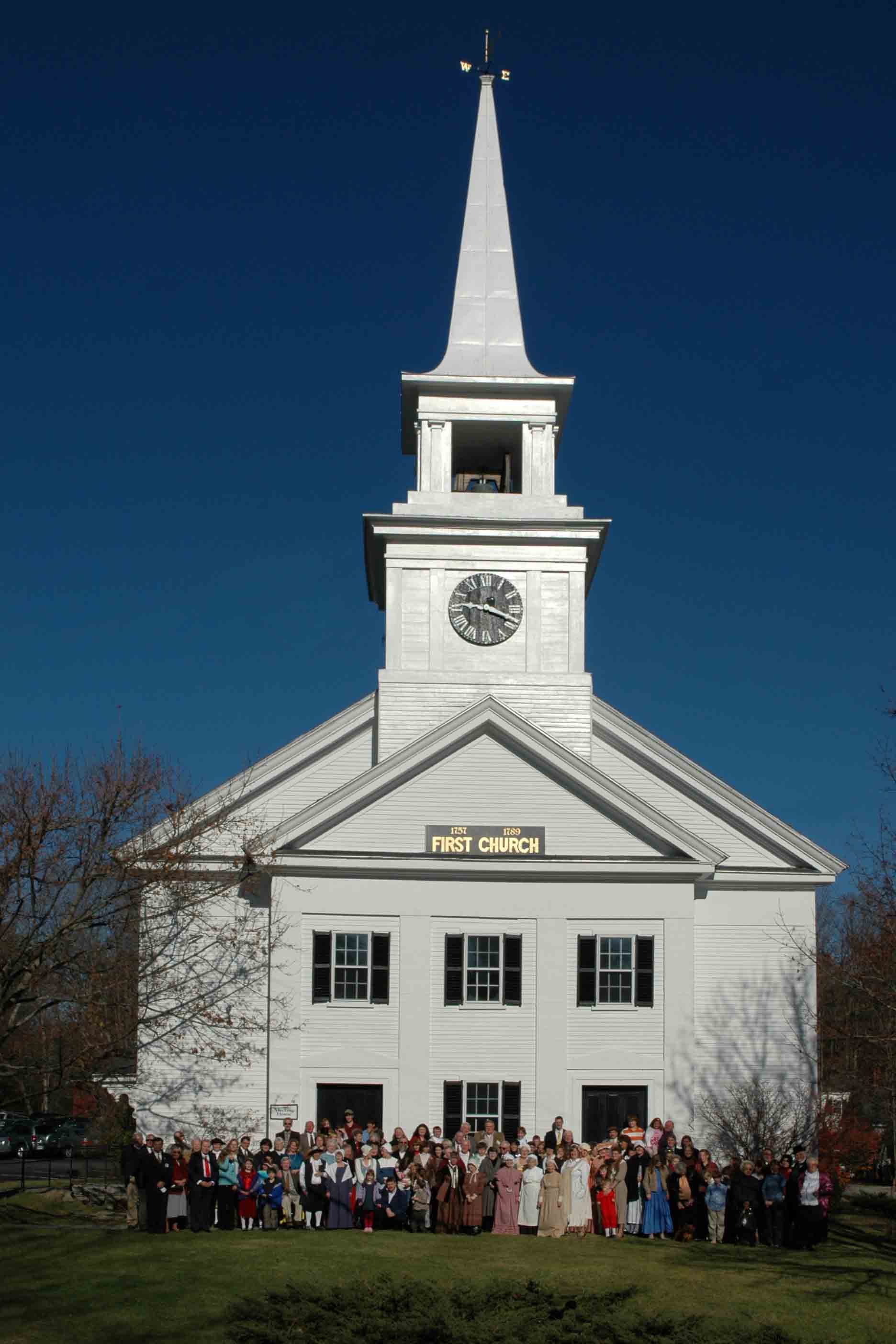
From ERLC via Acton Institute PowerBlog. Image: First Congregational Church (UCC), Hopkinton, NH.
Previous Post

December 20, 2013
The tragedy of Detroit
Next Post
December 20, 2013 The end of urban ministry
Browse Our Archives
Select a Category Art Audio posts Bible and Work Book Review Books Budgeting Calling Common Good Community Development Conferences Discipleship Economics Entrepreneurship Ethics Faith and Family Faith and the Marketplace Faith and the Workplace faith and work History of Work and Vocation Leadership Local Church Meaning New Blogger News Prayer Relationships Seminaries Theology of Work Uncategorized Video posts Vocation Worship Resources
Select a Month April 2026 October 2025 September 2025 July 2025 April 2025 January 2025 October 2024 September 2024 August 2024 May 2024 March 2024 February 2024 December 2023 November 2023 August 2023 July 2023 April 2023 January 2023 December 2022 November 2022 September 2022 August 2022 July 2022 May 2022 April 2022 February 2022 January 2022 December 2021 November 2021 October 2021 September 2021 August 2021 June 2021 May 2021 March 2021 February 2021 January 2021 December 2020 November 2020 September 2020 August 2020 July 2020 June 2020 May 2020 April 2020 March 2020 January 2020 December 2019 October 2019 September 2019 August 2019 July 2019 June 2019 May 2019 April 2019 March 2019 February 2019 January 2019 April 2018 March 2018 January 2018 December 2017 November 2017 October 2017 September 2017 August 2017 July 2017 June 2017 May 2017 April 2017 March 2017 February 2017 January 2017 December 2016 November 2016 October 2016 September 2016 August 2016 July 2016 June 2016 May 2016 April 2016 March 2016 February 2016 January 2016 December 2015 November 2015 October 2015 September 2015 August 2015 July 2015 June 2015 May 2015 April 2015 March 2015 February 2015 January 2015 December 2014 November 2014 October 2014 September 2014 August 2014 July 2014 June 2014 May 2014 April 2014 March 2014 February 2014 January 2014 December 2013
Follow Us!
TAKE THE
Religious Wisdom Quiz
I danced before the ark with all my might, wearing only a linen ephod. Who am I?
Select your answer to see how you score.
David Solomon Saul Jonathan
Related posts from MISSION:WORK

Why Beth Felker Jones is Protestant


I Want to Bless People. In Person.
TRENDING AT PATHEOS Careers, Workplace and Religion

The Image: On the Horror of Capitalism and...
The Image Then went the Pharisees, and took counsel how they might...

We are approaching the date of our new American national holiday: October...

Letters on Living the Faith by C.S. Lewis
Most of us met C.S. Lewis as a public intellectual. Mere Christianity....

When Halloween Unmasks Married Hearts
Written by Dr. David K. Ewen from Eternal Truth Bible College Behind...

Aristotle. He’s been called the father of logic, the father of the...

Methodist Central Hall and Westminster Abbey
Situated on the same square is Methodist Central Hall and Westminster Abbey. ...
view all Careers, Workplace and Religion blogs
Ad-Free & Subscriber Log-In Subscription Support
- About Us
- 2026 Calendar
- Videos
- Podcasts
- Library of World Religions
- Faith In Media Tracker
- Advertise With Us
- Write for Us
- Privacy Policy
- Terms of Service
- Do Not Sell My Data
- Contact Us
- Radiant Digital
- Manage Newsletter Subscriptions
- Unsubscribe From Notifications
- Sitemap
Copyright 2008-2026, Patheos. All rights reserved.
Subscription Support Ad-Free & Subscriber Log-In
Follow Patheos