
BuddhistCatholicContemplativeEvangelicalGeneral ChristianHinduJewishLatter-day SaintMuslimNew VisionsProgressive Christian
Beliefs
- Buddhist
- Catholic
- Contemplative
- Evangelical
- General Christian
- Hindu
- Jewish
- Latter-day Saint
- More Voices
- Muslim
- New Visions
- Pagan
- Progressive Christian
Topics
- Religion News
- Food and Religion
- Sports and Religion
- Religious Art
- Religious Music and Entertainment
- Religious Events
- History and Religion
- Style and Religion
- Politics and Religion
- Women in Religion
- Recreation Outdoors and Religion
- Business Finance and Religion
- Careers Workplace and Religion
- Education and Religion
- Family Parenting and Religion
- Health Fitness and Religion
- Home and Religion
- Relationships and Religion
- Technology and Religion
- Travel and Religion
Columnists
- Buddhist Columnists
- Business Finance and Religion Columnists
- Careers Workplace and Religion Columnists
- Catholic Columnists
- Contemplative Columnists
- Education and Religion Columnists
- Evangelists Columnists
- Family Parenting and Religion Columnists
- General Christian Columnists
- Health Fitness and Religion Columnists
- Hindu Columnists
- History and Religion Columnists
- Home and Religion Columnists
- Jewish Columnists
- More Voices Columnists
- Latter Day Columnists
- Muslim Columnists
- New Visions Columnists
- Nonreligious Columnists
- Pagan Columnists
- Politics and Religion Columnists
- Progressive Columnists
- Recreation Outdoors and Religion Columnists
- Relationships and Religion Columnists
- Religion News Columnists
- Religious Art Columnists
- Religious Events Columnists
- Religious Music and Entertainment Columnists
- Sports and Religion Columnists
- Style and Religion Columnists
- Technology and Religion Columnists
- Travel and Religion Columnists
- Women in Religion Columnists
Resource Library
- 2026 Calendar
- Library of World Religions
- The 100 Most Holy Places on Earth
- Patheos Answers
- Podcasts
- Videos
- Faith Leaders Database
- Anglican Episcopalian
- Bahai
- Baptist
- Buddhism
- Christianity
- Confucianism
- Eastern Orthodoxy
- Hinduism
- Holiness and Pentecostal
- ISKCON
- Islam
- Judaism
- Lutheran
- Methodist
- The Church of Jesus Christ of Latter-day Saints
- New Age
- Paganism
- Presbytarian and Reformed
- Protestantism
- Religion Behind the Scenes
- Roman Catholic
- Scientology
- Shia Islam
- Sikhism
- Sufism
- Sunni Islam
- Taoism
- Zen
- See all religions
Research Tools
 Ad-Free & Subscriber Log-In Subscription Support
Ad-Free & Subscriber Log-In Subscription Support
Follow Patheos 

- Trending:
- Forgiveness
- |
- Marriage
- |
- Consciousness
- |
- Death Penalty
- |
- Election
- |
- Halloween
 Missional Shift
- Home
- Progressive Christian
- This World Is Where the Action Is: Rob Bell on Church and Mission
This World Is Where the Action Is: Rob Bell on Church and Mission
Last updated on: November 21, 2012 at 12:59 am by Steve Knight
This World Is Where the Action Is: Rob Bell on Church and Mission 2012-11-21T00:59:17-03:00 Steve Knight
Patheos Explore the world's faith through different perspectives on religion and spirituality! Patheos has the views of the prevalent religions and spiritualities of the world.
 Not many Christian preachers get featured in The New Yorker or have full-length biographies written about them, but Rob Bell is unique. His remarkable contributions have earned him this kind of respect and attention, one which has author James K. Wellman Jr. asking “in what ways [Bell] is a harbinger — a representative of what is coming in the future of American Christian faith.”
If you are fascinated by trends in religion and or by Bell in particular, Wellman’s new book Rob Bell and a New American Christianity will be an easy and intriguing read. I find myself being one of those caught up in wonder at Bell’s stellar success and the implications of his work and theological journey. (The only point in the book that I really felt bogged down was when Wellman quoted Kevin DeYoung’s critique of Love Wins at length. Enough of that, already!)
Wellman writes,
“As a scholar of American religion, I believe that the decline and even the end of the Protestant establishment is an inevitable outcome of our religious history. … The center of American Christianity no longer holds, if it ever did. Is Bell’s work and person catalyzing a new kind of American Christianity? And what are the contours of this new form?”
In seven elegant chapters, Wellman tells Bell’s story, from his original mission statement (“Disciples who make disciples, who make disciples, who make disciples, who make disciples …”) to “the Don Golden years” of translating liberation theology for white evangelical suburbanites (which really should’ve been Bell’s “Farewell” moment) to his later years focused on “the personal journey of creativity and self-discovery.”
My main interests in this book are the development of Bell’s theology about church and mission, as well as the numerous quotes from author interviews with Bell, which have not been shared anywhere else before now. For instance, Bell tells Wellman, “The way that you witness in the world is you do what you do to the very best of our ability with integrity and honesty and excellence.”
That’s classic 2012 Rob Bell. That was not always Bell’s missional theology. Even from earlier days until his time at Mars Hill Bible Church in Grand Rapids came to an end, Bell was proclaiming “the church is the mission,” which, to my ears sounds like the old paradigm of mission thinking. But for Bell it means, “What if instead of the church having a mission, what if the church was the mission — its very organizational heart served the poor, helped the needy, and listened to the cry of the oppressed? … If you had a couple thousand priests in one place, the earth would tremble.”
Wellman explains that, for Bell,
“In Christ the goal of discipleship is to restore the new creation and to proclaim the kingdom of God, the state and condition of shalom. … The life, death, and resurrection of Jesus Christ inaugurate a new creation, and the church is the extension and messenger of that new story — or as Bell proclaims, ‘a better story.'”
Bell’s theology of a “priesthood of all believers” extended as far as believing that setting some people aside as missionaries “undercuts the notion that everyone in the church is in mission. To call some missionaries sends all the wrong messages — that somehow business people, educators, or social workers are not missionaries. Everyone, if they are a Christian, is in full-time ministry.” And, “for Bell, the idea that churches should be sending money to separate organizations that feed the poor or help the needy makes little sense. … As he would say, ‘Why do the agencies get to have all the fun?'”
In this sense, Bell really was a leader of the missional church movement in North America, but Wellman notes “his refusal to see himself as a leader of a movement” and says that Bell, most recently, has become “less committed to sustaining a religious movement per se. In fact, Bell’s interest in creating a social movement seems to have come to an end. … His future is less about creating social movements than about sharing his spiritual findings.” Bell is clearly still a leader, a “postmodern evangelist, slam poet, Billy Graham type” (in Wellman’s terms), and I doubt his dreams for making an impact for God’s kingdom have died in his short time in Hollywood.
In conversation with Wellman, Bell explains, “Developmentally, the church should be a catalyst for the kingdom of God; it awakens and aligns us.” But then, Bell adds (almost as a warning), “We gather together, but if we stay together too long we’ll start creating a separate thing and start working against the thing we wanted to do in the first place.”
Mission then, for Bell, “is not a message given but a life lived; there is no ticket for another world,” according to Wellman. “It is a life pressed into God’s ecstatic power that produces what is true, good, and beautiful in this world.”
“This world is where the action is,” Wellman writes. Or in Bell’s words, from his closing message to Mars Hill Grand Rapids,
“Remember, the movement is word to flesh. Beware of those who will take the flesh and want to turn it back into words.”
I think that’s what Rob Bell is doing now. He’s living out his faith by living into his true calling, his true self. Which is a deeply missional, incarnational move.
And I won’t be surprised if Bell’s journey of personal faithfulness to the Gospel results in something really significant for the wider world. It’s happened before. It could happen again.
What do you think about Rob Bell? Are you intrigued enough to read a whole book about him? Why or why not?
 This sponsored post is part of the Patheos Book Club. Check out the Book Club for more posts on this book, an interview with the author, and for responses from other bloggers and columnists.
Previous Post

November 16, 2012
A Guide Book for Neo-Monastics and Other Intentional Christians
Next Post

November 22, 2012 Spend This Thanksgiving With Mary ... and Jesus
Browse Our Archives
Select a Category Books Definitions Events Funding Funny History Mainline denominations Missional Mondays Networks Offers Startups Tech Theology Video Youth-Young Adult Ministry
Select a Month January 2014 October 2013 September 2013 August 2013 June 2013 April 2013 March 2013 February 2013 December 2012 November 2012 October 2012 September 2012 August 2012 July 2012 June 2012 May 2012
Follow Us!
TAKE THE
Religious Wisdom Quiz
Which animal did Jesus ride into Jerusalem on, fulfilling prophecy?
Select your answer to see how you score.
Donkey Camel Horse Ox
Related posts from Missional Shift
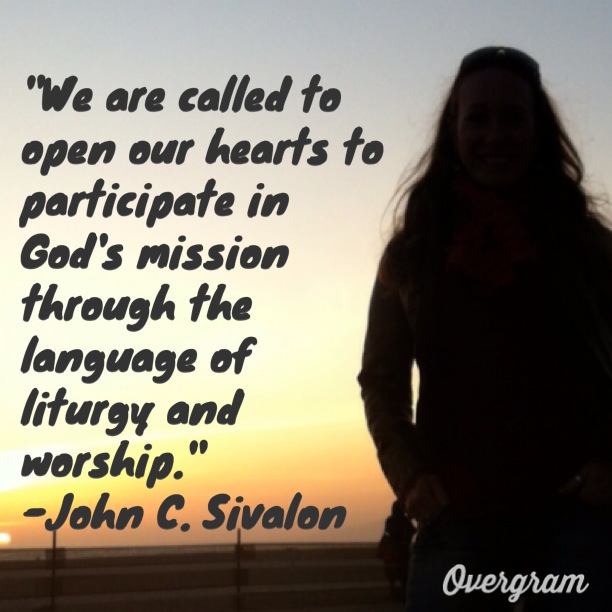
Is This The Link Between Mission and Liturgy/Worship?


How Is Fasting for Lent Missional?
Who Wants to Spend 4 Hours Watching Reggie...
TRENDING AT PATHEOS Progressive Christian

Why Christians Have a Sacred Duty to Vote:...
The Bible offers strong support for the sacred duty to vote. Here...

What Being a Modern-Day Apostle Means to Me
In my last column, I discussed the ins and outs of modern-day...

Did Ancient China Once Worship the God of...
Across human history, a common thread weaves through the origins of the...

Love Your Neighbor – Including Earth-Kin: Lev. 19,...
God’s command to love your neighbor means acting in an ethical and...

Lead a Church Study of “Jesus and Lao...
Guest writer Jack Thomas (The Irreverent Reverend) reflects on leading his church...

Principles for Understanding the Apostolic Ministry Today
Whenever people discover that my formal ministry title is "apostle," as in...
view all Progressive Christian blogs
Ad-Free & Subscriber Log-In Subscription Support
- About Us
- 2026 Calendar
- Videos
- Podcasts
- Library of World Religions
- Faith In Media Tracker
- Advertise With Us
- Write for Us
- Privacy Policy
- Terms of Service
- Do Not Sell My Data
- Contact Us
- Radiant Digital
- Manage Newsletter Subscriptions
- Unsubscribe From Notifications
- Sitemap
Copyright 2008-2026, Patheos. All rights reserved.
Subscription Support Ad-Free & Subscriber Log-In
Follow Patheos