
BuddhistCatholicContemplativeEvangelicalGeneral ChristianHinduJewishLatter-day SaintMuslimNew VisionsProgressive Christian
Beliefs
- Buddhist
- Catholic
- Contemplative
- Evangelical
- General Christian
- Hindu
- Jewish
- Latter-day Saint
- More Voices
- Muslim
- New Visions
- Pagan
- Progressive Christian
Topics
- Religion News
- Food and Religion
- Sports and Religion
- Religious Art
- Religious Music and Entertainment
- Religious Events
- History and Religion
- Style and Religion
- Politics and Religion
- Women in Religion
- Recreation Outdoors and Religion
- Business Finance and Religion
- Careers Workplace and Religion
- Education and Religion
- Family Parenting and Religion
- Health Fitness and Religion
- Home and Religion
- Relationships and Religion
- Technology and Religion
- Travel and Religion
Columnists
- Buddhist Columnists
- Business Finance and Religion Columnists
- Careers Workplace and Religion Columnists
- Catholic Columnists
- Contemplative Columnists
- Education and Religion Columnists
- Evangelists Columnists
- Family Parenting and Religion Columnists
- General Christian Columnists
- Health Fitness and Religion Columnists
- Hindu Columnists
- History and Religion Columnists
- Home and Religion Columnists
- Jewish Columnists
- More Voices Columnists
- Latter Day Columnists
- Muslim Columnists
- New Visions Columnists
- Nonreligious Columnists
- Pagan Columnists
- Politics and Religion Columnists
- Progressive Columnists
- Recreation Outdoors and Religion Columnists
- Relationships and Religion Columnists
- Religion News Columnists
- Religious Art Columnists
- Religious Events Columnists
- Religious Music and Entertainment Columnists
- Sports and Religion Columnists
- Style and Religion Columnists
- Technology and Religion Columnists
- Travel and Religion Columnists
- Women in Religion Columnists
Resource Library
- 2026 Calendar
- Library of World Religions
- The 100 Most Holy Places on Earth
- Patheos Answers
- Podcasts
- Videos
- Faith Leaders Database
- Anglican Episcopalian
- Bahai
- Baptist
- Buddhism
- Christianity
- Confucianism
- Eastern Orthodoxy
- Hinduism
- Holiness and Pentecostal
- ISKCON
- Islam
- Judaism
- Lutheran
- Methodist
- The Church of Jesus Christ of Latter-day Saints
- New Age
- Paganism
- Presbytarian and Reformed
- Protestantism
- Religion Behind the Scenes
- Roman Catholic
- Scientology
- Shia Islam
- Sikhism
- Sufism
- Sunni Islam
- Taoism
- Zen
- See all religions
Research Tools
 Ad-Free & Subscriber Log-In Subscription Support
Ad-Free & Subscriber Log-In Subscription Support
Follow Patheos 

- Trending:
- Forgiveness
- |
- Marriage
- |
- Consciousness
- |
- Death Penalty
- |
- Election
- |
- Halloween
 Outside the Charmed Circle
- Home
- Pagan
- The Veil of Ignorance: Reclaiming Our Power, Understanding Our Privilege
The Veil of Ignorance: Reclaiming Our Power, Understanding Our Privilege
Last updated on: November 15, 2017 at 6:20 am by Misha Magdalene
The Veil of Ignorance: Reclaiming Our Power, Understanding Our Privilege 2017-11-15T06:20:04-08:00 Misha Magdalene
Patheos Explore the world's faith through different perspectives on religion and spirituality! Patheos has the views of the prevalent religions and spiritualities of the world.
Hello again, beautiful creatures. Previously on Outside the Charmed Circle, I continued my thoughts on the issue of separating politics from spirituality, and concluded with the following statement: “…compartmentalizing our lives so we can claim to be apolitical is a privilege, one afforded to those whose lives aren’t endangered by politics.”
Today, I’m going to try to expand on that statement some, and to fold in some practical suggestions for folks who might see themselves unpleasantly reflected in that statement. And, just so it’s clear, I absolutely include myself in that number. I belong to some marginalized groups: I’m a multiply-queer, nonbinary survivor of child abuse who grew up poor, and I belong to a minority religious group with a dubious reputation in much of American culture. However, I also belong to some highly privileged groups: I’m a white, mostly able-bodied, university-educated American, semi-comfortably ensconced in the dwindling middle class of the U.S., who can pass for a cisgender, heterosexual male.
I don’t bring up my marginalizations to dismiss my privileges, but to put both categories in context with one another. I am directly subjected to some political developments, and largely insulated from others. Political movements targeting queer and trans people and legislation enforcing Christian religious doctrine in the public sphere have a direct impact on me, while political movements targeting people of color and legislation disempowering people with disabilities have less of an impact.
To put it more viscerally: while in some ways, America hates me, in other ways I’m as safe as houses. That’s privilege.
Like politics, privilege is a loaded term in today’s America, and many people have what I can only describe as an allergic reaction when it comes up in conversation. I will also note that, in my experience, the vast majority of those allergic folks are white Americans of European descent. As a possible treatment for these allergies—which are deeply, inextricably related—I’d like to suggest a practical course of action, in two parts: education and contemplation.
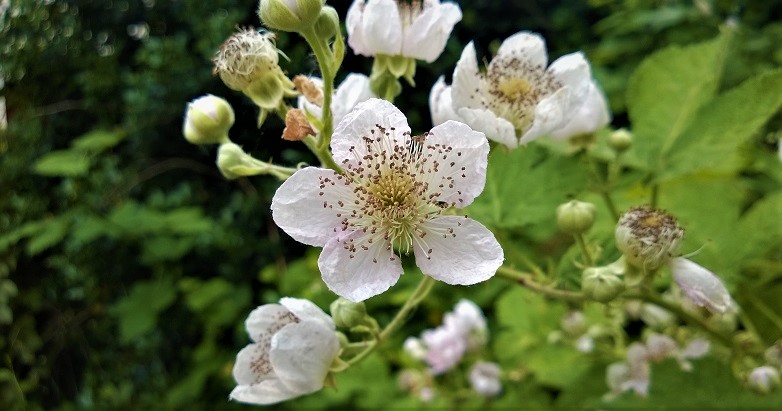
Think of these as antihistamines for the soul. (Souldafed? Ugh. Never mind.)
Education, or, “Why Is Everyone So Mad at Me All The Time?”
One of my mother’s favorite saying when I was growing up was, “I can deal with anything, as long as I know what’s going on.” The obvious corollary is that we can’t deal with anything if we don’t know what’s going on. Those of us who’ve engaged in social and political discourse around issues of privilege, especially where race or gender are concerned, may have encountered the phrase “educate yourself,” sometimes spoken with rather more ire than we might be comfortable hearing. This can be an uncomfortable, even painful thing to hear, especially when we feel like we’re trying to be allies, but it’s often a necessary indicator that we’ve missed something. People with privilege are told to educate ourselves because…
- it’s obvious we don’t understand the situation,
- our lack of understanding is what creates and perpetuates the systems of power in place,
- those systems of power are literally killing people, and
- the people marginalized by those systems are too busy trying to stay alive to take on the job of educating us.
Of course, when we don’t even know what it is we don’t know, being told to go educate ourselves can feel less than helpful, and can leave us feeling rejected, attacked, frustrated, and hurt when we’re sincerely trying to do the right thing.
And that can really suck.
Fortunately, there are a lot of folks out here who’ve taken on the task of educating people on these issues. Writers like Ta-Nehisi Coates, Ijeoma Oluo, and Damon Young have made a breathtaking amount of work on race (and gender, sexuality, and politics) available in print and online. Similarly, writers like Julia Serano, Emi Koyama, and Lindy West offer a breadth and depth of perspectives on feminism (and gender, sexuality, and politics), also in print and online. Any of these folks would be a marvelous place to begin your self-education on the issues they address. (And if you feel you’ve gotten value from their work, I highly encourage you to buy their books, buy tickets to see them in person, and share their writings with others.)
How does that all intersect with politics?
Contemplation: A Thought Experiment in Politics, Privilege, and Power
In the post previous to the previous one, I put forward the notion that politics doesn’t mean “what politicians do,” but rather “the ways we negotiate power in community.” I know this is a repellent notion for some folks, but I really do think it’s an important point to get. Politics is about how we share (or don’t share) power with each other, and if we consign it to the nether realms, we are literally giving away power, surrendering it to a professional political class which is more than happy to accept it. Can we honestly be surprised, then, when that political class acts in its own best interests, rather than ours? (Spoiler alert: no.)
The trouble is, we’re responsible for what’s done with our power, whether we claim it or deny it. If we claim it, or reclaim it, we accept that responsibility, but we also get to choose. We can decide how (or if) that power is used, and for whom. We can act in what we think are our own best interests, or on behalf of everyone in our community, for the greater good. That’s the problem democracy was intended to solve, but all too often, democracy is derailed by that desire to advance our own status, usually at someone else’s expense… and we’re back to privilege, and power.
Philosopher John Rawls posited a solution for this question in his 1971 book A Theory of Justice. Consider the following thought experiment: you have been appointed supreme legislator, occupying what Rawls calls the original position. Starting tomorrow, society will be reordered to your wishes, and all laws, ethical standards, and cultural norms will be whatever you dictate. There’s a catch, though: you don’t get to know what position you’ll hold in this new society. You’re behind the veil of ignorance: you won’t know your own skin color, your economic status, your sexual orientation or tastes, not even your gender, until the big reveal tomorrow. Do you construct a society where some groups of people are privileged over others, banking on the possibility that you’ll get lucky… and risking the possibility of ending up at the bottom of the social hierarchy? Or do you try to make society as level as possible, out of enlightened self-interest?
And if we know that the second answer is the best and wisest choice, why aren’t we making it?
Stay safe, dear ones, until next time. ♥
- Note that I said “less of an impact,” not “no impact.” I have multiple family members who are people of color, or at varying levels of ability. I’m not part of either group, so the impact isn’t as direct, but it’s still extant.
Previous Post

November 8, 2017
The Politics of (Spiral) Dancing, and Giving Away Your Power
Next Post

November 16, 2017 Book Review: "Sigil Witchery" by Laura Tempest Zakroff
Browse Our Archives
Select a Category Interviews Politics Reviews Social Justice Theology Uncategorized
Select a Month January 2021 December 2020 October 2020 August 2020 July 2020 May 2020 April 2020 March 2020 February 2020 January 2020 December 2019 November 2019 October 2019 September 2019 August 2019 July 2019 June 2019 May 2019 April 2019 March 2019 February 2019 January 2019 December 2018 November 2018 October 2018 September 2018 August 2018 July 2018 June 2018 May 2018 April 2018 March 2018 February 2018 January 2018 December 2017 November 2017 October 2017 September 2017 August 2017
Follow Us!
TAKE THE
Religious Wisdom Quiz
What does "Shiloh" mean in Hebrew?
Select your answer to see how you score.
Prince of peace God’s dwelling The chosen one He whose it is
Related posts from Outside the Charmed Circle

The Company We Keep: On Ethics, Values, and...

A Word Before the Drop: On Politics, Ethics,...

Critique as She Is Spoke: On Being "Pagan...

Poking Bears, Striking Nerves: Talking to White Pagans...
TRENDING AT PATHEOS Pagan

I was recently chatting with someone on Instagram. She asked me what...

While there are many people who share their results, the end of...

On July 23, I saw Christopher Nolan's The Odyssey which is Homer’s...

As I write this two big events have just finished up. One...

Restoring the Watershed of Divine Love
Perhaps cooperation is not something we manufacture through legislation, ideology, or moral...

Many UUs don’t pray because of bad experiences in a previous religion,...
view all Pagan blogs
Ad-Free & Subscriber Log-In Subscription Support
- About Us
- 2026 Calendar
- Videos
- Podcasts
- Library of World Religions
- Faith In Media Tracker
- Advertise With Us
- Write for Us
- Privacy Policy
- Terms of Service
- Do Not Sell My Data
- Contact Us
- Radiant Digital
- Manage Newsletter Subscriptions
- Unsubscribe From Notifications
- Sitemap
Copyright 2008-2026, Patheos. All rights reserved.
Subscription Support Ad-Free & Subscriber Log-In
Follow Patheos