
BuddhistCatholicContemplativeEvangelicalGeneral ChristianHinduJewishLatter-day SaintMuslimNew VisionsProgressive Christian
Beliefs
- Buddhist
- Catholic
- Contemplative
- Evangelical
- General Christian
- Hindu
- Jewish
- Latter-day Saint
- More Voices
- Muslim
- New Visions
- Pagan
- Progressive Christian
Topics
- Religion News
- Food and Religion
- Sports and Religion
- Religious Art
- Religious Music and Entertainment
- Religious Events
- History and Religion
- Style and Religion
- Politics and Religion
- Women in Religion
- Recreation Outdoors and Religion
- Business Finance and Religion
- Careers Workplace and Religion
- Education and Religion
- Family Parenting and Religion
- Health Fitness and Religion
- Home and Religion
- Relationships and Religion
- Technology and Religion
- Travel and Religion
Columnists
- Buddhist Columnists
- Business Finance and Religion Columnists
- Careers Workplace and Religion Columnists
- Catholic Columnists
- Contemplative Columnists
- Education and Religion Columnists
- Evangelists Columnists
- Family Parenting and Religion Columnists
- General Christian Columnists
- Health Fitness and Religion Columnists
- Hindu Columnists
- History and Religion Columnists
- Home and Religion Columnists
- Jewish Columnists
- More Voices Columnists
- Latter Day Columnists
- Muslim Columnists
- New Visions Columnists
- Nonreligious Columnists
- Pagan Columnists
- Politics and Religion Columnists
- Progressive Columnists
- Recreation Outdoors and Religion Columnists
- Relationships and Religion Columnists
- Religion News Columnists
- Religious Art Columnists
- Religious Events Columnists
- Religious Music and Entertainment Columnists
- Sports and Religion Columnists
- Style and Religion Columnists
- Technology and Religion Columnists
- Travel and Religion Columnists
- Women in Religion Columnists
Resource Library
- 2026 Calendar
- Library of World Religions
- The 100 Most Holy Places on Earth
- Patheos Answers
- Podcasts
- Videos
- Faith Leaders Database
- Anglican Episcopalian
- Bahai
- Baptist
- Buddhism
- Christianity
- Confucianism
- Eastern Orthodoxy
- Hinduism
- Holiness and Pentecostal
- ISKCON
- Islam
- Judaism
- Lutheran
- Methodist
- The Church of Jesus Christ of Latter-day Saints
- New Age
- Paganism
- Presbytarian and Reformed
- Protestantism
- Religion Behind the Scenes
- Roman Catholic
- Scientology
- Shia Islam
- Sikhism
- Sufism
- Sunni Islam
- Taoism
- Zen
- See all religions
Research Tools
 Ad-Free & Subscriber Log-In Subscription Support
Ad-Free & Subscriber Log-In Subscription Support
Follow Patheos 

- Trending:
- Forgiveness
- |
- Marriage
- |
- Consciousness
- |
- Death Penalty
- |
- Election
- |
- Halloween

- Home
- Catholic
- Home and Religion
- Better to Be a Hammer Than an Anvil
Better to Be a Hammer Than an Anvil
Last updated on: August 28, 2024 at 8:42 pm by Patrick Laorden
Better to Be a Hammer Than an Anvil 2024-08-28T20:42:45-04:00 Patrick Laorden
Patheos Explore the world's faith through different perspectives on religion and spirituality! Patheos has the views of the prevalent religions and spiritualities of the world.
This past Sunday, I had the joy of being with the Lay Dominicans at Our Lady of Grace Monastery in Guilford, CT. I myself am discerning to be a Lay Dominican, currently in a temporary profession. Some of us were sitting outside the monastery grounds before a statue of St. Dominic.
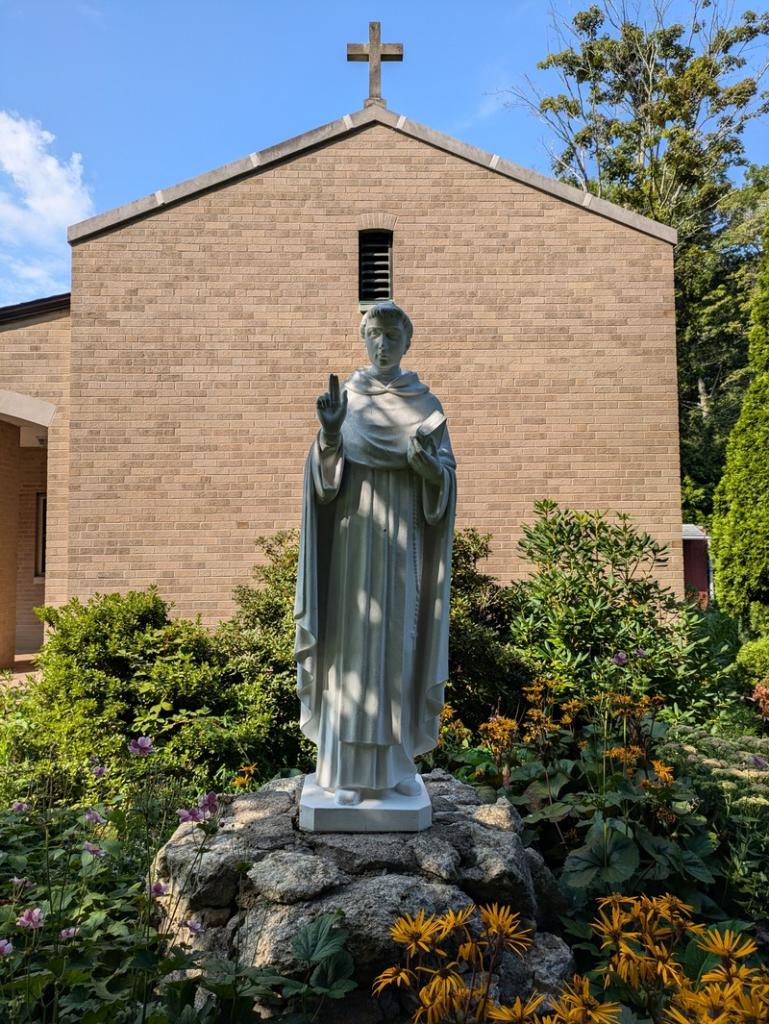
St. Dominic Statue at Our Lady of Grace Monastery
As we were engaged in study, I found myself reflecting on St. Dominic since his feast day (August 8th) was recent. I recall a particular quote that St. Dominic once said when I first learned about him as a saint:
“A man who governs his passions is master of his world. We must either command them or be enslaved by them. It is better to be a hammer than an anvil.”
Ever since I was little, managing anger was something that I always found difficult. Being in formation as a Dominican friar for a time helped me to understand more about anger in my life and how to best approach it. Now as a husband and father, these life milestones present new situations in which anger can manifest: disagreeing with your spouse, disciplining your child your, waiting to hear from family, etc.
Anger as a Passion
Edward Sri in an article “Anger and Virtue” notes that anger by itself is neither bad nor good. “It can be noble if it is directed toward maintaining justice and correcting vice. One can think of anger as a passionate desire to set things right in the face of a perceived evil.” What Sri notes here is that anger is about protecting what is good. With this understanding, we can get a better glimpse into Jesus’ interactions with those selling oxen, sheep, and dover in the Jerusalem temple as Passover approached:
“He made a whip out of cords and drove them all out of the temple area with the sheep and oxen, and spilled the coins of the money-changers and overturned their tables, and to those who sold doves he said, “Take these out of here, and stop making my Father’s house a marketplace.” (John 2: 15-16)

Jesus protected the temple as a place of prayer. Scarsellino/Wikimedia Commons
When I think about anger in the way Sri explains, it helps me to understand the importance of circumstance and intention. St. Dominic mentioned that a man who governs his passions is master of his world. When one becomes angry, they need to understand the environment in which they are in. What are the circumstances that are causing one to be angry? The other important thing to consider is the intention. When one is angry, what do one intend to do? If one can ask ourselves these two questions, it’s a good opportunity to keep oneself in check.
Command or Be Enslaved
St. Dominic continues on by saying that we can either command them or be enslaved by them. I’m reminded of what St. Paul said to the community at Ephesus, “Be angry but do not sin, do not let the sun set on your anger, and do not leave room for the devil.” (Ephesians 4: 26-27). The Catechism of the Catholic Church notes this about passions:
“They are morally qualified only to the extent that they effectively engage reason and will. Passions are said to be voluntary, ‘either because they are commanded by the will or because the will does not place obstacles in their way.’ It belongs to the perfection of the moral or human good that the passions are governed by reason.” (no. 1767)
When we are angered, what’s most important is what anger causes us to do. Furthermore, it’s important to be attentive to what our anger is prompting. Sri notes:
“Being angry about the right things and in the right way is virtuous. But avoiding anger at all times may be a sign of weakness. St. Thomas Aquinas notes how it is a vice not get angry over things one should. He calls it “unreasonable patience.” A failure to correct the wicked encourages them to persist in their evil deeds, since there are no reprimands for their wrong actions. It also causes confusion in the community over what is truly right and wrong, and thus may lead even good people to do evil.”
This gets at the last past of the quote, that it is better to be a hammer than an anvil. I come to understand that it is ok to get angry and we have to allow that anger to prompt us in a constructive manner. Here, we are taking an active role and striking at the hot metal like with the hammer. On the other hand, if we become the anvil, we take on a passive role and we fall prey to unreasonable patience. As mentioned, this passiveness leads to evil persisting and confusion.
St. Jerome and Dealing with Anger
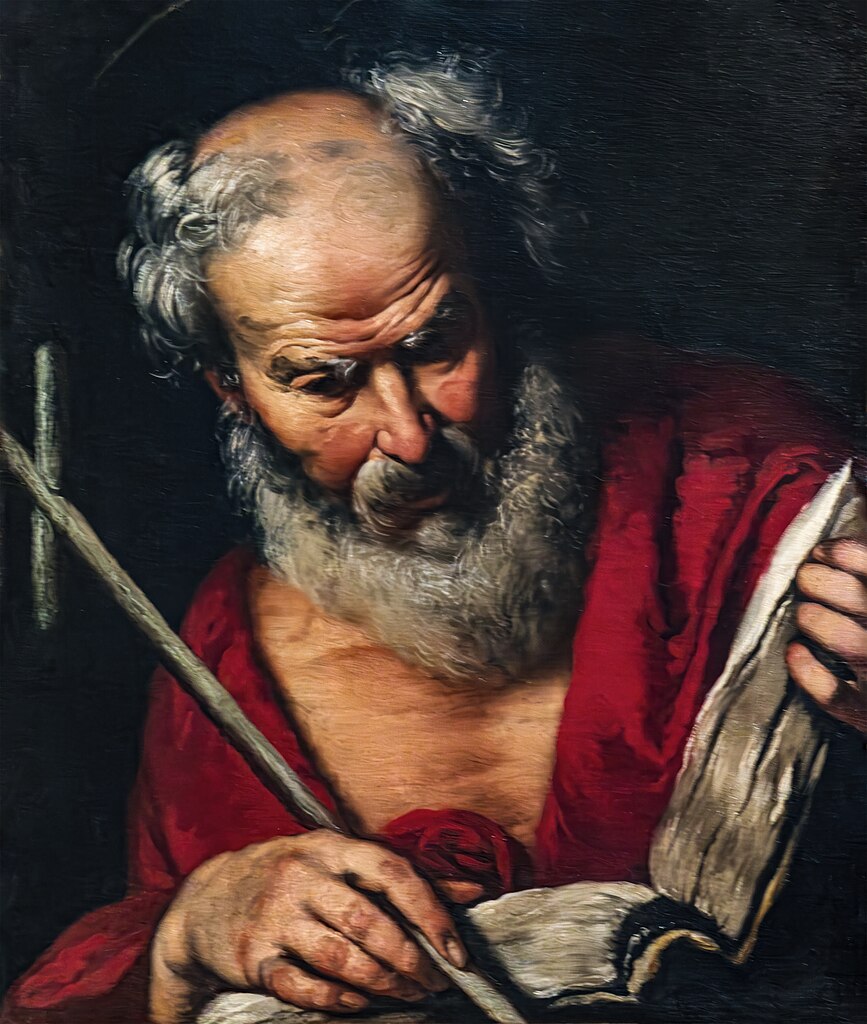
Like St. Jerome, do you have a means to overcome anger?
One saint that I have a devotion to is St. Jerome, priest and Doctor of the Church. His major contribution was the Latin translation of Holy Scripture, the Vulgate. St. Jerome was no stranger to anger. Through his correspondences with others, he came across as uncharitable because of his name calling, biting words, and grudges he held. Being a learned man, pride was at the root of his anger. He overcame his anger through penance by carrying a stone around and using it to strike himself in the chest whenever he became angry.
St. Jerome directed his passions and gifts to scholarship and love for Scripture. Pope Francis writes in the apostolic letter Scripturae Sacrae Affectus, “Thus, in the pursuit of knowledge that marked his entire life, he put to good use his youthful studies and Roman education, redirecting his scholarship to the greater service of God and the ecclesial community.”
Reflecting on St. Dominic’s quote and the example of St. Jerome, anger is a passion that moves us. If our response is properly ordered, towards God and love of neighbor, it can be virtuous. There are ways for us to overcome anger, perhaps taking on a penance, but what is most important is drawing closer to God and allowing this prompting to use our gifts instead of reclining to sin.
Previous Post

August 12, 2024
Faster, Higher, Stronger - Together
Next Post

September 18, 2024 A Sense of Family at the Workplace
Browse Our Archives
Select a Category Acceptance Community Courage Creativity Father Growth Jesus Man Missionary Pope Francis Prayer St. Joseph Teamwork Uncategorized Work
Select a Month January 2025 December 2024 November 2024 October 2024 September 2024 August 2024 July 2024 June 2024 May 2024
Follow Us!
TAKE THE
Religious Wisdom Quiz
What empire defeated the Assyrians and took control of Israel?
Select your answer to see how you score.
Persian Babylonian Egyptian Greek
Related posts from Mirror of Patience

“He Loved Us" Pt. 3 - A Deeper...
"He Loved Us" Pt. 1 - Returning to...
New Reflection Series on Pope Francis's Latest Encyclical

Love is Found Through Community
TRENDING AT PATHEOS Catholic

57th Dove Awards Honor Dolly Parton, Crown New...
On gospel music’s biggest night, the 57th annual GMA Dove Awards honored...

The First Eucharistic Controversy: Christ’s Real Presence
For Catholics, the Eucharist is the source and summit of the Christian...

What a Stop Sign Can Teach Us About...
How to Make a Decision When You Can't Hear God Main point:...

Archdiocese Hosts Military Marriage Retreat in Germany
RASTATT, Germany — The transient military lifestyle, with its frequent deployments and...

Nearly every morning, I make the drive to Detroit with my high-school-age...

The Real AI Story Is Adoption Without Trust
Artificial intelligence has crossed a political threshold. It is no longer a...
view all Catholic blogs
Ad-Free & Subscriber Log-In Subscription Support
- About Us
- 2026 Calendar
- Videos
- Podcasts
- Library of World Religions
- Faith In Media Tracker
- Advertise With Us
- Write for Us
- Privacy Policy
- Terms of Service
- Do Not Sell My Data
- Contact Us
- Radiant Digital
- Manage Newsletter Subscriptions
- Unsubscribe From Notifications
- Sitemap
Copyright 2008-2026, Patheos. All rights reserved.
Subscription Support Ad-Free & Subscriber Log-In
Follow Patheos