
BuddhistCatholicContemplativeEvangelicalGeneral ChristianHinduJewishLatter-day SaintMuslimNew VisionsProgressive Christian
Beliefs
- Buddhist
- Catholic
- Contemplative
- Evangelical
- General Christian
- Hindu
- Jewish
- Latter-day Saint
- More Voices
- Muslim
- New Visions
- Pagan
- Progressive Christian
Topics
- Religion News
- Food and Religion
- Sports and Religion
- Religious Art
- Religious Music and Entertainment
- Religious Events
- History and Religion
- Style and Religion
- Politics and Religion
- Women in Religion
- Recreation Outdoors and Religion
- Business Finance and Religion
- Careers Workplace and Religion
- Education and Religion
- Family Parenting and Religion
- Health Fitness and Religion
- Home and Religion
- Relationships and Religion
- Technology and Religion
- Travel and Religion
Columnists
- Buddhist Columnists
- Business Finance and Religion Columnists
- Careers Workplace and Religion Columnists
- Catholic Columnists
- Contemplative Columnists
- Education and Religion Columnists
- Evangelists Columnists
- Family Parenting and Religion Columnists
- General Christian Columnists
- Health Fitness and Religion Columnists
- Hindu Columnists
- History and Religion Columnists
- Home and Religion Columnists
- Jewish Columnists
- More Voices Columnists
- Latter Day Columnists
- Muslim Columnists
- New Visions Columnists
- Nonreligious Columnists
- Pagan Columnists
- Politics and Religion Columnists
- Progressive Columnists
- Recreation Outdoors and Religion Columnists
- Relationships and Religion Columnists
- Religion News Columnists
- Religious Art Columnists
- Religious Events Columnists
- Religious Music and Entertainment Columnists
- Sports and Religion Columnists
- Style and Religion Columnists
- Technology and Religion Columnists
- Travel and Religion Columnists
- Women in Religion Columnists
Resource Library
- 2026 Calendar
- Library of World Religions
- The 100 Most Holy Places on Earth
- Patheos Answers
- Podcasts
- Videos
- Faith Leaders Database
- Anglican Episcopalian
- Bahai
- Baptist
- Buddhism
- Christianity
- Confucianism
- Eastern Orthodoxy
- Hinduism
- Holiness and Pentecostal
- ISKCON
- Islam
- Judaism
- Lutheran
- Methodist
- The Church of Jesus Christ of Latter-day Saints
- New Age
- Paganism
- Presbytarian and Reformed
- Protestantism
- Religion Behind the Scenes
- Roman Catholic
- Scientology
- Shia Islam
- Sikhism
- Sufism
- Sunni Islam
- Taoism
- Zen
- See all religions
Research Tools
 Ad-Free & Subscriber Log-In Subscription Support
Ad-Free & Subscriber Log-In Subscription Support
Follow Patheos 

- Trending:
- Forgiveness
- |
- Marriage
- |
- Consciousness
- |
- Death Penalty
- |
- Election
- |
- Halloween
 Michelle Arnold
- Home
- Catholic
- If Castro Comes Home, It Is a Cause for Joy
If Castro Comes Home, It Is a Cause for Joy
Last updated on: May 11, 2015 at 7:02 am by Michelle Arnold
If Castro Comes Home, It Is a Cause for Joy 2015-05-11T07:02:43-07:00 Michelle Arnold
Patheos Explore the world's faith through different perspectives on religion and spirituality! Patheos has the views of the prevalent religions and spiritualities of the world.
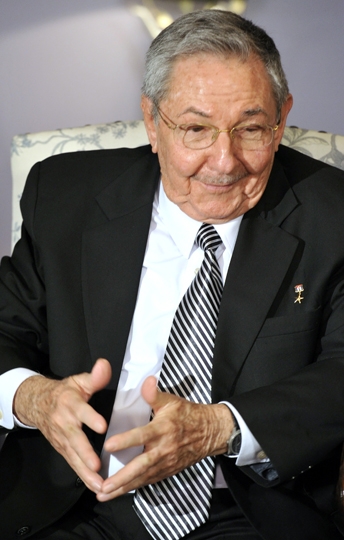 Call me cynical, but the moment I saw in my Facebook newsfeed that Cuba’s president, Raúl Castro, was thinking of returning to the Catholic Church, I knew that it would not be a cause for joy for many American Catholics but an opportunity for kveteching. First, let’s take a quick look at the story that’s been making the rounds today:
President Raúl Castro said the teachings of Pope Francis had persuaded him not only to take a softer line on religion, but perhaps to return to the Catholic Church and begin worshipping again as he once did, growing up in Jesuit schools.
[Castro said:] “As I’ve already told my council of advisers, I read all of the Pope’s speeches. . . . If the Pope continues to speak like this, sooner or later I will start praying again and I will return to the Catholic Church—and I’m not saying this jokingly. . . . I promise that I will go to all of his Masses [when Pope Francis visits Cuba in September]—and with satisfaction. I left the meeting this morning impressed, very impressed by his knowledge, his wisdom, modesty, and by all the virtues that we know he has.”
Without even stopping to look for reactions from Facebook Friends to confirm my suspicion, I wrote a comment on the article:
Quick quiz: Did you look at this headline and immediately think, “Wow, that’s wonderful!”? Or did you immediately think, “Pope Francis is turning the Church over to the commie bastards!”?
If the latter reaction is anywhere close to your immediate reaction, you may be in need of a soul transplant.
Then I went to look up the chatter, and found that I may be cynical, but in this case I was also correct. There was no joy in St. Blogville over the possibility of President Castro’s return to the Church. The prevailing sentiment seemed to be that there is no reason to think that Castro has had any change of heart, and that he probably thinks the Church is simply a pretty place in which to die as a Stalinist. (Never mind that Joseph Stalin himself did not display any such inclination near the end of his life, at least not publicly, to return to the Russian Orthodoxy of his youth.)
Raúl Castro is nearly 84 years old. He is in the twilight of his life. It is extremely rare for a man who has fallen away from the practice of religion for many decades, who has spent most of his adult life in the service of a regime dedicated to atheistic communism, to publicly declare that he is interested in returning to the Church of his youth. As I wrote in a blog post on how our choices shape the person we become:
Something to keep in mind is the nature of choice. Angels, because they are pure spirit, made one eternal choice either for or against God. Because they do not have material bodies subject to the limitations of change, their choice was eternal and irrevocable [at the moment the choice was made]. Human beings, because they have bodies, can change over the course of their lifetimes; but radical, life-altering change from the shaping of a lifetime of choices is as rare as a deathbed conversion precisely because our choices shape us into who we are. At death, that lifetime of shaping through the choices we make becomes as permanent and irrevocable as the one eternal choice made by the angels.
Any movement Godward by a man is a positive development, no matter who he is, no matter what he has done, and no matter what the hell his politics are. To those fretting over whether or not Castro’s remarks are indication of a genuine conversion, and worrying that there will be no positive change in Cuba because of his conversion (if it occurs), I say:
Exactly how do you expect to discern the state of a man’s soul through media reports? Perhaps the more charitable route would be to rejoice that a fallen-away Catholic is considering returning home to the Church in the twilight of his life, and worry about negative consequences if and when those consequences actually occur.
A lot of Christians love the story of the prodigal son. It ranks high as one of Jesus’ best parables. But, when you think about it, did the dissolute son really demonstrate a “genuine” change of heart? Let’s look:
Not many days later, the younger son gathered all he had and took his journey into a far country, and there he squandered his property in loose living. And when he had spent everything, a great famine arose in that country, and he began to be in want. So he went and joined himself to one of the citizens of that country, who sent him into his fields to feed swine. And he would gladly have fed on the pods that the swine ate; and no one gave him anything.
But when he came to himself he said, “How many of my father’s hired servants have bread enough and to spare, but I perish here with hunger! I will arise and go to my father, and I will say to him, ‘Father, I have sinned against heaven and before you; I am no longer worthy to be called your son; treat me as one of your hired servants.'” And he arose and came to his father (Luke 15:13–20).
If I were to allow myself to be as cynical about conversions as I am about the attitudes of many American Catholics on matters of politics, I’d observe that the father’s younger son seemed to be more worried about the contents of his belly than he was about the state of his soul. He went home because he was hungry, and he figured that his father would at least hire him on and let him earn his keep if he laced his plea with appropriately contrite remarks. There was no evidence, at least at this point, that he was genuinely remorseful over the shabby way he’d treated his father.
And how did his father respond? Even before his son reached home, the father raced out to meet him. Before his son could say a word, the father snatched him up and kissed him. He didn’t even allow his son to finish his prepared remarks before welcoming his son back as his son. (cf. Luke 15:20–24).
As much as we love the story of the prodigal son, we all too often take on the role of the elder brother in that parable when it comes to high-profile conversions. We roll our eyes, we question motives, we question the wisdom of Church leaders in receiving these people into the Church. The one thing we don’t often do is the one thing Jesus said we should do in his preface to the prodigal son’s story: Rejoice.
What man of you, having a hundred sheep, if he has lost one of them, does not leave the ninety-nine in the wilderness, and go after the one which is lost, until he finds it? And when he has found it, he lays it on his shoulders, rejoicing. And when he comes home, he calls together his friends and his neighbors, saying to them, “Rejoice with me, for I have found my sheep which was lost.” Just so, I tell you, there will be more joy in heaven over one sinner who repents than over ninety-nine righteous persons who need no repentance (Luke 15:4–7).
(Image credit: Wikimedia Commons)

Previous Post

May 8, 2015
The Bitter Spinster's Guide to Mother's Day
Next Post

May 19, 2015 One Day in the Life of an Apologist
Browse Our Archives
Select a Category Apologetics News Personal Popular Culture Uncategorized
Select a Month August 2024 May 2024 February 2024 December 2023 July 2023 December 2022 October 2022 June 2022 May 2022 April 2022 March 2022 November 2021 October 2021 September 2021 June 2021 April 2021 January 2021 December 2020 November 2020 October 2020 September 2020 August 2020 December 2015 July 2015 June 2015 May 2015 April 2015
Follow Us!
TAKE THE
Religious Wisdom Quiz
What is the meaning of Emmanuel?
Select your answer to see how you score.
Jehovah Saves Messiah Praise the Lord God with Us
Related posts from Michelle Arnold

When Converting the World Isn't All It's Cracked...

Conversions and Catholic Sola Scriptura
To Whom Would Jesus Deny Communion?
TRENDING AT PATHEOS Catholic

Creation, Preservation, and Teleology in Catholic Theology
As I write this, it is very early Monday morning. Like millions...

The Parable Of The Sower And The Word...
One of Christ’s most famous parables is that of the sower who...

Rejecting Doom: Christian Hope And Human Action
Christianity is a religion of hope. We are to have hope and...

Why I Choose the Eucharist Over the Sermon
Choose the Eucharist, Not the Sermon What are we supposed to get...

5 Design Elements Found in Spiritually Rooted Homes
Putting Spirituality Into Home Decor Our homes are more than our living...

Credo: A Story of God Told with the...
About 10 years ago, I began to imagine a personal "Credo" that...
view all Catholic blogs
Ad-Free & Subscriber Log-In Subscription Support
- About Us
- 2026 Calendar
- Videos
- Podcasts
- Library of World Religions
- Faith In Media Tracker
- Advertise With Us
- Write for Us
- Privacy Policy
- Terms of Service
- Do Not Sell My Data
- Contact Us
- Radiant Digital
- Manage Newsletter Subscriptions
- Unsubscribe From Notifications
- Sitemap
Copyright 2008-2026, Patheos. All rights reserved.
Subscription Support Ad-Free & Subscriber Log-In
Follow Patheos