
BuddhistCatholicContemplativeEvangelicalGeneral ChristianHinduJewishLatter-day SaintMuslimNew VisionsProgressive Christian
Beliefs
- Buddhist
- Catholic
- Contemplative
- Evangelical
- General Christian
- Hindu
- Jewish
- Latter-day Saint
- More Voices
- Muslim
- New Visions
- Pagan
- Progressive Christian
Topics
- Religion News
- Food and Religion
- Sports and Religion
- Religious Art
- Religious Music and Entertainment
- Religious Events
- History and Religion
- Style and Religion
- Politics and Religion
- Women in Religion
- Recreation Outdoors and Religion
- Business Finance and Religion
- Careers Workplace and Religion
- Education and Religion
- Family Parenting and Religion
- Health Fitness and Religion
- Home and Religion
- Relationships and Religion
- Technology and Religion
- Travel and Religion
Columnists
- Buddhist Columnists
- Business Finance and Religion Columnists
- Careers Workplace and Religion Columnists
- Catholic Columnists
- Contemplative Columnists
- Education and Religion Columnists
- Evangelists Columnists
- Family Parenting and Religion Columnists
- General Christian Columnists
- Health Fitness and Religion Columnists
- Hindu Columnists
- History and Religion Columnists
- Home and Religion Columnists
- Jewish Columnists
- More Voices Columnists
- Latter Day Columnists
- Muslim Columnists
- New Visions Columnists
- Nonreligious Columnists
- Pagan Columnists
- Politics and Religion Columnists
- Progressive Columnists
- Recreation Outdoors and Religion Columnists
- Relationships and Religion Columnists
- Religion News Columnists
- Religious Art Columnists
- Religious Events Columnists
- Religious Music and Entertainment Columnists
- Sports and Religion Columnists
- Style and Religion Columnists
- Technology and Religion Columnists
- Travel and Religion Columnists
- Women in Religion Columnists
Resource Library
- 2026 Calendar
- Library of World Religions
- The 100 Most Holy Places on Earth
- Patheos Answers
- Podcasts
- Videos
- Faith Leaders Database
- Anglican Episcopalian
- Bahai
- Baptist
- Buddhism
- Christianity
- Confucianism
- Eastern Orthodoxy
- Hinduism
- Holiness and Pentecostal
- ISKCON
- Islam
- Judaism
- Lutheran
- Methodist
- The Church of Jesus Christ of Latter-day Saints
- New Age
- Paganism
- Presbytarian and Reformed
- Protestantism
- Religion Behind the Scenes
- Roman Catholic
- Scientology
- Shia Islam
- Sikhism
- Sufism
- Sunni Islam
- Taoism
- Zen
- See all religions
Research Tools
 Ad-Free & Subscriber Log-In Subscription Support
Ad-Free & Subscriber Log-In Subscription Support
Follow Patheos 

- Trending:
- Forgiveness
- |
- Marriage
- |
- Consciousness
- |
- Death Penalty
- |
- Election
- |
- Halloween
 Micha Boyett
- Home
- Family, Parenting and Religion
- Andrea Palpant Dilley: Doubt, Flat Tires and the Goodness of God
Andrea Palpant Dilley: Doubt, Flat Tires and the Goodness of God
Last updated on: April 12, 2012 at 6:00 am by michaboyett
Andrea Palpant Dilley: Doubt, Flat Tires and the Goodness of God 2012-04-12T06:00:59-07:00 michaboyett
Patheos Explore the world's faith through different perspectives on religion and spirituality! Patheos has the views of the prevalent religions and spiritualities of the world.
I first noticed Andrea Palpant Dilley when she shared her testimony in front of our church. That was sometime in September, four weeks into my new life in Austin. And, I couldn’t help but notice: She spoke like somebody who loved words. I decided right then, I’m gonna make her be my friend*.*
Thankfully, she started a writing group and I jumped on the email list and once a month I get to sit in a circle while she leads a discussion about literary things (and, sometimes, Jesus). I love this lady. (And I don’t think I’ve had to force her into our friendship so that’s a relief.)
I’m also proud of Andrea, whose first book Faith and Other Flat Tires: Searching for God on the Rough Road of Doubt, came out last month. Her story is fascinating: She spent her early childhood as the daughter of Quaker medical missionaries in Kenya. When her parents left the mission field, she moved to Washington state, began to question God’s goodness as teenager, and by her twenties had left the church. The memoir is the story of that journey and her eventual return to faith.
I’ve read memoirs about doubt before that were near reflections of my childhood and story: my brother Jason Boyett’s O Me of Little Faith and Rachel Held Evans’ Evolving in Monkey Town. But rare is a childhood like Andrea’s. Her faith experience was braided right alongside the deep suffering of the people her parents served. Her story is fascinating to me because she isn’t responding in any way to an overbearing evangelical culture (as I would expect). Her story is about the problem of suffering and the search for God’s goodness.
Here’s a bit of our conversation about her book:
Micha: You talk about the Rift Valley in Kenya as being the origin of all humanity, but also the origin of your childhood. Do you think your childhood in a developing country made you even more predisposed to question God’s goodness in the midst of suffering and poverty?
Andrea: Absolutely. In the book I poke fun at the fact that, while most kids my age were playing Pac Man and eating pop tarts after school, I was visiting patients at my dad’s hospital. I spent time with sick people who died the next day. I attended funerals. I watched women wail in public, which was part of the mourning ritual of life in rural Kenya. Even the hospital morgue sat only fifty feet from the front door of our house. So yes, growing up as a medical missionary kid exposed me to more death and darkness than most kids my age would ever be exposed to, living in a western country. And those experiences very much informed my view of the world and my view of God. As a child, I don’t think I fully understood what was going on or why it was significant. But I carried those stories with me over the years. Eventually, as a young adult, they came to bear on my faith crisis.
M: Music also plays a major theme in your book. Good music brings about in you some sort of deep spiritual longing for something that you can’t find the church or even in your personal encounters with God. Do you feel like your coming back to the church carried with it any kind of experience that mirrored what you experienced in music when you were younger?
A: I recently visited some friends up in Dallas and went to church with them at an Episcopal cathedral called Church of the Incarnation. I might as well have been attending worship at an Anglican church in London. The cathedral itself was stunning. The liturgy and music were holy. As I walked forward to take communion at the front of the sanctuary, I passed by the choir, which flanked both sides of the altar space and surrounded me with singing. I felt deeply moved by the experience of hearing those hymns and taking communion beneath the high stained glass windows.
Now that I’m back at church, that kind of high-church liturgy really draws out my longing in the same way that some pop music did when I was a young adult. Maybe I’m getting old and boring, or maybe I’m moving deeper into the reflective spaces of art. Art will always play a part in my faith life. I’m a very tactile person, so I find myself compelled by the ceremonial aspects of faith in practice—the liturgy, the sacraments, the music, all those embodied experiences that speak to the senses. Some people might call it false religion, focusing on icons instead of ideas. But I believe that God engages us through our bodies and through visceral experiences that draw us closer to goodness and beauty and truth. Art is a mark of the imago Dei, the image of God in and around us.
M: The goodness of God– “Mungu yu mwema”– becomes a major theme in this book as you journey through doubt and your departure from the church. God remaining / continuing to be good despite your rejection of him (and despite his apparent rejection of the orphaned children you spent time with in Kenya while in college). What does it mean to you now that “God is so good”?
A: When people ask me what drove me out the doors of the church and then what brought me back, my answer to both questions is the same. I left the church in part because I was mad at God about human suffering and injustice. And I came back to church because of that same struggle. I realized that I couldn’t even talk about justice without standing inside of a theistic framework. In a naturalistic worldview, a parentless orphan in the slums of Nairobi can only be explained in terms of survival of the fittest. We’re all just animals slumming it in a godless world, fighting for space and resources. The idea of justice doesn’t really mean anything. To talk about justice, you have to talk about objective morality, and to talk about objective morality, you have to talk about God.
After that realization, I found myself driven back to the doors of the church. More than that, I realized that I had to think about the problem of good. Why is there any goodness at all in the world? Now that I’m practicing faith again and back at church, I can say with more confidence that “God is so good.” God is the source of justice, goodness, beauty, and art. Evil, injustice, and suffering are just a lack of goodness and a lack of God. That vision doesn’t necessarily answer the question of suffering—I still struggle with it—but it draws me deeper into a positive view of God’s enduring love and goodness. I fight to believe what Julian of Norwich believed, that “All shall be well, and all shall be well, and all manner of thing shall be well.”
M: One of the things I appreciate about your story is that it’s not tidy. It’s easy to want a book about doubt to offer a simple answer at the end: This is how to believe! But your story was a journey and even as you come back into the church and find a place for yourself in the Christian story, you’re still journeying and your questions and past are not neatly bound. As you come back to faith in the story, you say that somehow your “doubt was your desire” in a spiritual sense: “To possess the presence of God.” What did that mean for you then? What does that mean now in your faith experience?
A: In the book, I tell a story about walking into an Episcopal cathedral in San Francisco one Sunday morning while I was in the middle of my faith crisis. I didn’t know a soul. I sat at the back of the church. When communion started, I went forward, knelt at the altar, took the sacrament, and then watched the priest stretch out his hand to bless me on my head. In that moment, I felt a strong sense of longing for God at the very same time that I felt frustrated with church and ambivalent about faith.
That story really embodies my spiritual journey then, and in some ways, my spiritual journey now. I believe that doubt and faith—rather than standing in opposition to each other all the time—can actually go hand in hand. In Mark 9:24, the father of the demon-possessed child says to Jesus, “I believe, help my unbelief.” Flannery O’Connor calls it the foundation prayer of faith. I pray that prayer often. Both then and now, my doubt actually grows out of a longing for God, in this way: I feel disappointed with God when I feel disappointed with the messed up world. I feel disappointed with the world because I hope for something better. And I hope for something better because God has given me this inborn desire for goodness, justice and most importantly, God himself. So in that strange, circular way, my doubt often leads me back to faith and reminds me of my desire to know God and “possess his presence.”
M: Sometimes I feel like I battle a laundry list of intellectual questions toward God, only to have His answer be a presence, an experience, rather than a clear-cut response to my issues. That’s why I so related to the moment toward the end of the book when you experience God’s hand on your head in the middle of the night, and are overcome with the presence of peace. Was that your experience of God’s goodness? Was that some sort of answer for you to the long list of questions in your head?
To be perfectly honest, I still struggle to make sense of that experience of feeling God’s hand on my head. It didn’t answer all of my intellectual questions. But it gave me comfort at a low point in my personal and spiritual life. More than that, it assured me of God’s presence in the midst of my own spiritual uncertainty. When I think about that moment, it brings to mind that scene in the Grand Inquisitor chapter of the Brothers Karamazov where the Inquisitor fires off a series of questions and criticisms at Christ. At the end of the scene, Christ steps forward and kisses the Inquisitor on his “bloodless, aged lips” instead of answering him. He doesn’t say a thing. He doesn’t offer a counterargument. He says in action rather than with words, “I Am.” That’s how I feel about my own experience of God’s presence. I didn’t get the answers. But the great I Am made his presence known to me in a still, small moment.
* If you live in Austin, Andrea will be giving a reading tonight at Book People at 7. The rest of you should take a look at her book here.
Previous Post

April 11, 2012
{Practicing Benedict} Do not disappoint me...
Next Post
April 13, 2012 A Very Thankful Poem-a-Day Friday
Browse Our Archives
Select a Category A Deeper Church Beautiful Beautiful and Broken Books Broken Deeper Story Family and the Christian Year Family Life Found Friends Guest Post Invitation Motherhood My Chalkboard One Good Phrase Pinterest Place and Stability Poetry Practicing Benedict Thankful Tuesday The Daily The Mama Monk the Praying Life The Pursuit of Enough This Sacred Everyday Uncategorized Vlog Women and the Church World Vision
Select a Month March 2014 February 2014 January 2014 December 2013 November 2013 October 2013 September 2013 August 2013 July 2013 June 2013 May 2013 April 2013 March 2013 February 2013 January 2013 December 2012 November 2012 October 2012 September 2012 August 2012 July 2012 June 2012 May 2012 April 2012 March 2012 February 2012 January 2012 December 2011 November 2011 October 2011 September 2011 August 2011 July 2011 June 2011 May 2011 April 2011 March 2011 February 2011 January 2011 December 2010 November 2010 October 2010 September 2010 August 2010 July 2010 June 2010 May 2010 April 2010 March 2010 February 2010
Follow Us!
TAKE THE
Religious Wisdom Quiz
What is the Christian view of "servant leadership"?
Select your answer to see how you score.
Greatest serves others Servants never lead Leaders demand first Only the boss leads
Related posts from Micha Boyett
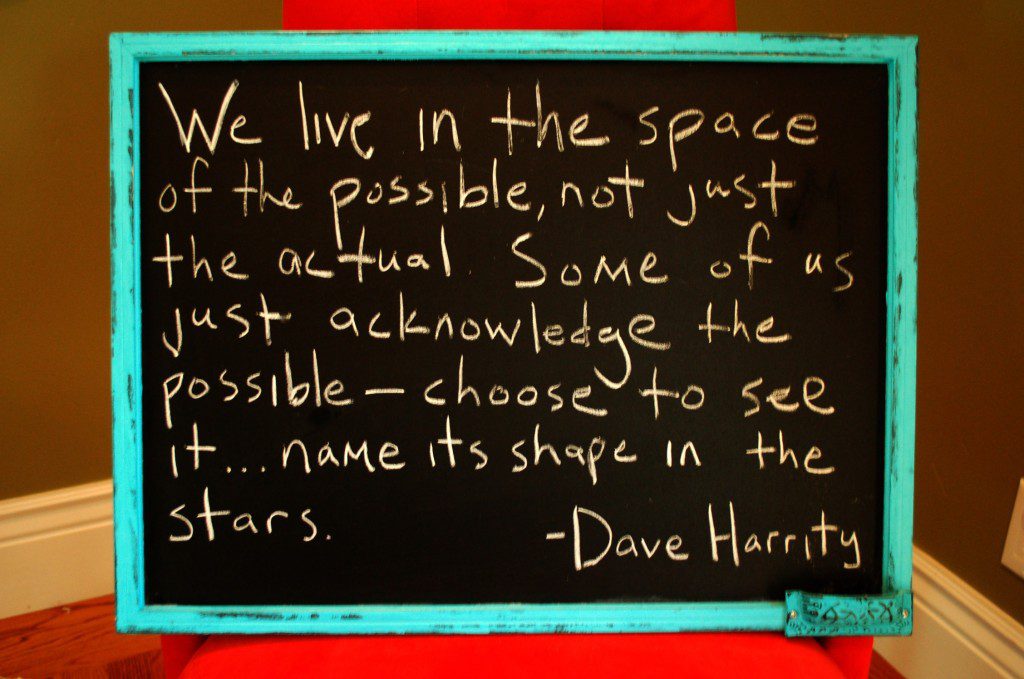
Good Words (What's on my chalkboard this week)

The Finding and the Being Found: Introducing my...
TRENDING AT PATHEOS Family, Parenting and Religion

Looking at the Largest Orthodox Cathedral on Earth
There is often a considerable amount of anger and, shall we...

The Problem with False Prophets
Miller’s Station UMC| 10/18/26| Anchor Verse: Jeremiah 23: 1, 9-23 I...

Emotion in Early Christianity by Andrew Crislip
Andrew Crislip’s Emotion in Early Christianity examines an often overlooked dimension of...

16 Spiritual Touchstones for a More Grounded Life
After decades of spiritual study, here are 16 principles I try...

Catholic Evangelization: Sharing Your Faith Every Day
Welcome back to the Graceful Awakening mini-series called, “From Faith to Mission.” ...

The Pillar of the Boatmen: the Ancient Monument...
The Pillar of the Boatmen is a Romano-Gaulish sculpture that dates from...
view all Family, Parenting and Religion blogs
Ad-Free & Subscriber Log-In Subscription Support
- About Us
- 2026 Calendar
- Videos
- Podcasts
- Library of World Religions
- Faith In Media Tracker
- Advertise With Us
- Write for Us
- Privacy Policy
- Terms of Service
- Do Not Sell My Data
- Contact Us
- Radiant Digital
- Manage Newsletter Subscriptions
- Unsubscribe From Notifications
- Sitemap
Copyright 2008-2026, Patheos. All rights reserved.
Subscription Support Ad-Free & Subscriber Log-In
Follow Patheos