
BuddhistCatholicContemplativeEvangelicalGeneral ChristianHinduJewishLatter-day SaintMuslimNew VisionsProgressive Christian
Beliefs
- Buddhist
- Catholic
- Contemplative
- Evangelical
- General Christian
- Hindu
- Jewish
- Latter-day Saint
- More Voices
- Muslim
- New Visions
- Pagan
- Progressive Christian
Topics
- Religion News
- Food and Religion
- Sports and Religion
- Religious Art
- Religious Music and Entertainment
- Religious Events
- History and Religion
- Style and Religion
- Politics and Religion
- Women in Religion
- Recreation Outdoors and Religion
- Business Finance and Religion
- Careers Workplace and Religion
- Education and Religion
- Family Parenting and Religion
- Health Fitness and Religion
- Home and Religion
- Relationships and Religion
- Technology and Religion
- Travel and Religion
Columnists
- Buddhist Columnists
- Business Finance and Religion Columnists
- Careers Workplace and Religion Columnists
- Catholic Columnists
- Contemplative Columnists
- Education and Religion Columnists
- Evangelists Columnists
- Family Parenting and Religion Columnists
- General Christian Columnists
- Health Fitness and Religion Columnists
- Hindu Columnists
- History and Religion Columnists
- Home and Religion Columnists
- Jewish Columnists
- More Voices Columnists
- Latter Day Columnists
- Muslim Columnists
- New Visions Columnists
- Nonreligious Columnists
- Pagan Columnists
- Politics and Religion Columnists
- Progressive Columnists
- Recreation Outdoors and Religion Columnists
- Relationships and Religion Columnists
- Religion News Columnists
- Religious Art Columnists
- Religious Events Columnists
- Religious Music and Entertainment Columnists
- Sports and Religion Columnists
- Style and Religion Columnists
- Technology and Religion Columnists
- Travel and Religion Columnists
- Women in Religion Columnists
Resource Library
- 2026 Calendar
- Library of World Religions
- The 100 Most Holy Places on Earth
- Patheos Answers
- Podcasts
- Videos
- Faith Leaders Database
- Anglican Episcopalian
- Bahai
- Baptist
- Buddhism
- Christianity
- Confucianism
- Eastern Orthodoxy
- Hinduism
- Holiness and Pentecostal
- ISKCON
- Islam
- Judaism
- Lutheran
- Methodist
- The Church of Jesus Christ of Latter-day Saints
- New Age
- Paganism
- Presbytarian and Reformed
- Protestantism
- Religion Behind the Scenes
- Roman Catholic
- Scientology
- Shia Islam
- Sikhism
- Sufism
- Sunni Islam
- Taoism
- Zen
- See all religions
Research Tools
 Ad-Free & Subscriber Log-In Subscription Support
Ad-Free & Subscriber Log-In Subscription Support
Follow Patheos 

- Trending:
- Forgiveness
- |
- Marriage
- |
- Consciousness
- |
- Death Penalty
- |
- Election
- |
- Halloween
 Messy Inspirations
- Home
- Catholic
- Word of God—What Does That Mean?
Word of God—What Does That Mean?
Last updated on: August 14, 2021 at 10:39 pm by Fellow Dying Inmate
Word of God—What Does That Mean? 2021-08-14T22:39:50-04:00 Fellow Dying Inmate
Patheos Explore the world's faith through different perspectives on religion and spirituality! Patheos has the views of the prevalent religions and spiritualities of the world.
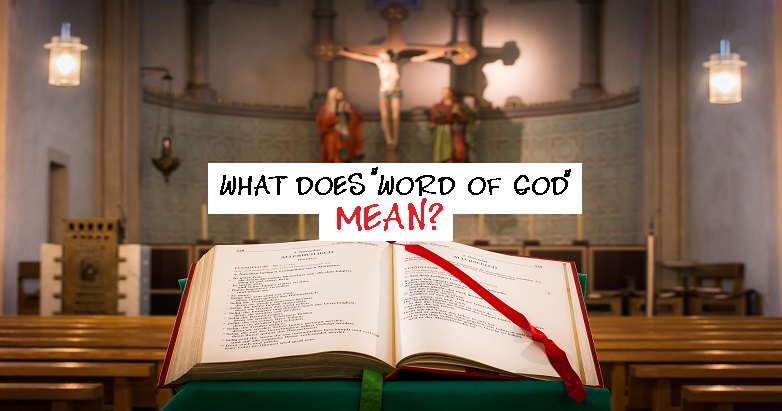
Word of God? / Image by Thomas B. from Pixabay
Word of God, the expression, rolls off the tongue for Christians—but what does it even mean?
Catholics and other Christians use the expression “word of God” all the time and apply it to the Scriptures, the sayings of God and Jesus in those Scriptures, and especially to Jesus.
But what does “God’s word” mean? If we are honest, we’d admit the expression “God’s Word” is ambiguous. Humans use words, but what about God? Could it be that when we call either Jesus or the Bible the “Word of God,” we mean something very human?
We are talking about revelation, of course. But what is revelation anyway? It’s a lot like asking about the meaning of the “God’s utterance.” Catholics and other Christians say “amen” and head nod to these things but seldom critically reflect on them.
Here is a video presentation about “Word of God”—
Word of God = God’s Human Word
When we call the Bible the “God’s Wprd,” we mean to say that it is God’s human word. In other words, the Bible is God’s inspired self-communication or “word” in many messy human words and stories. “God’s word” is a human reality—being divine makes it more human, not less.
Therefore, the “God’s word” does not mean something chemically isolated from humanity. There is no such thing as a “pure” word of God. God did not physically write the Bible or dictate its contents. Therefore the inspired authors are not comparable to secretaries or stenographers. The Church does not accept a plenary view or dictation theory of inspiration. To hold such a view is absurd. Indeed, inspiration is messy!
The expression “word of God” implies a communicator, communication, and a recipient to the communication. What good is a word without a listener? But is it easy to hear God’s communication? What amount of effort goes into discerning revelation?
Receiving the divine word is messy. Who can be metaphysically certain that they interpreted their experience with God correctly? God communicates to us exclusively in ways conditioned by our history and culture. How we understand, interpret, and express divine revelation is always limited. That’s true of the inspired authors of Scripture also.
Divine Word as Revelation
Look here—
Revelation > Tradition > Scripture.
According to official Catholic teaching, revelation is greater than Tradition, which is greater than Sacred Scripture. The divine word is not only to be found in the Bible or in our Tradition. Every created thing is filled with the word of God.
Revelation means God’s self-disclosure. Therefore, the Holy and Absolute Mystery called “God” is both the “Revealer” and the content of what is revealed. Thus, revelation is not limited to Catholic Tradition or Sacred Scripture because God is—or at least can be—disclosed in all things. This is the basic Catholic understanding of sacramentality.
Transmission of the Word of God
Tradition means “the transmission of divine revelation.” Since revelation is always received according to the mode of the receiver, and the recipients are human, revelation and its transmission must be a messy business!
Scripture is the normative and inspired part of Tradition. But by “inspired,” we do not mean that God dictated it a set of books (God did not dictate the contents of the Bible—and the Scriptures are not cognitively inerrant). When we call the Scriptures the word of God, we mean that we are dealing with something that has two aspects. One aspect is divine, and the other, human.
God’s word is a messy business. Therefore, to call the Bible “God’s word” means “God’s human word”—and that is definitely messy. By “Word of God,” we mean God’s self-expression in many messy human words, given throughout a library (ta Biblia), which is normative literature for Christians. The Bible presents a first word for the Church, but it is not the only word about God and humankind, and it definitely is not the final word about God and humanity.
There is much more to say. We’ll come back to this topic soon.
Previous Post

August 11, 2021
Johannine Anti-language
Next Post
August 15, 2021 Assumptions about the Assumption
Browse Our Archives
Select a Category Uncategorized
Select a Month August 2021 July 2021 June 2021 May 2021 April 2021 March 2021 February 2021 January 2021 December 2020 November 2020 October 2020 September 2020 August 2020 July 2020 June 2020 May 2020 April 2020 March 2020 February 2020 January 2020 December 2019 November 2019 October 2019 September 2019 August 2019
Follow Us!
TAKE THE
Religious Wisdom Quiz
A virgin will conceive and bear a son whose name means 'God with us.' What is this prophetic name?
Select your answer to see how you score.
Messiah Rabboni Immanuel Jesus
Support this
Column


Related posts from Messy Inspirations

Understanding Apocalypse & Its Creatures



TRENDING AT PATHEOS Catholic

Rejecting Doom: Christian Hope And Human Action
Christianity is a religion of hope. We are to have hope and...

It’s What Comes From Within Which Matters
One of the most difficult things for us to understand is why...

Why I Choose the Eucharist Over the Sermon
Choose the Eucharist, Not the Sermon What are we supposed to get...

5 Design Elements Found in Spiritually Rooted Homes
Putting Spirituality Into Home Decor Our homes are more than our living...

Credo: A Story of God Told with the...
About 10 years ago, I began to imagine a personal "Credo" that...

The Anatomy of Divine Revelation in Catholic Thought
The claim that God has made Himself known to human beings is...
view all Catholic blogs
Ad-Free & Subscriber Log-In Subscription Support
- About Us
- 2026 Calendar
- Videos
- Podcasts
- Library of World Religions
- Faith In Media Tracker
- Advertise With Us
- Write for Us
- Privacy Policy
- Terms of Service
- Do Not Sell My Data
- Contact Us
- Radiant Digital
- Manage Newsletter Subscriptions
- Unsubscribe From Notifications
- Sitemap
Copyright 2008-2026, Patheos. All rights reserved.
Subscription Support Ad-Free & Subscriber Log-In
Follow Patheos